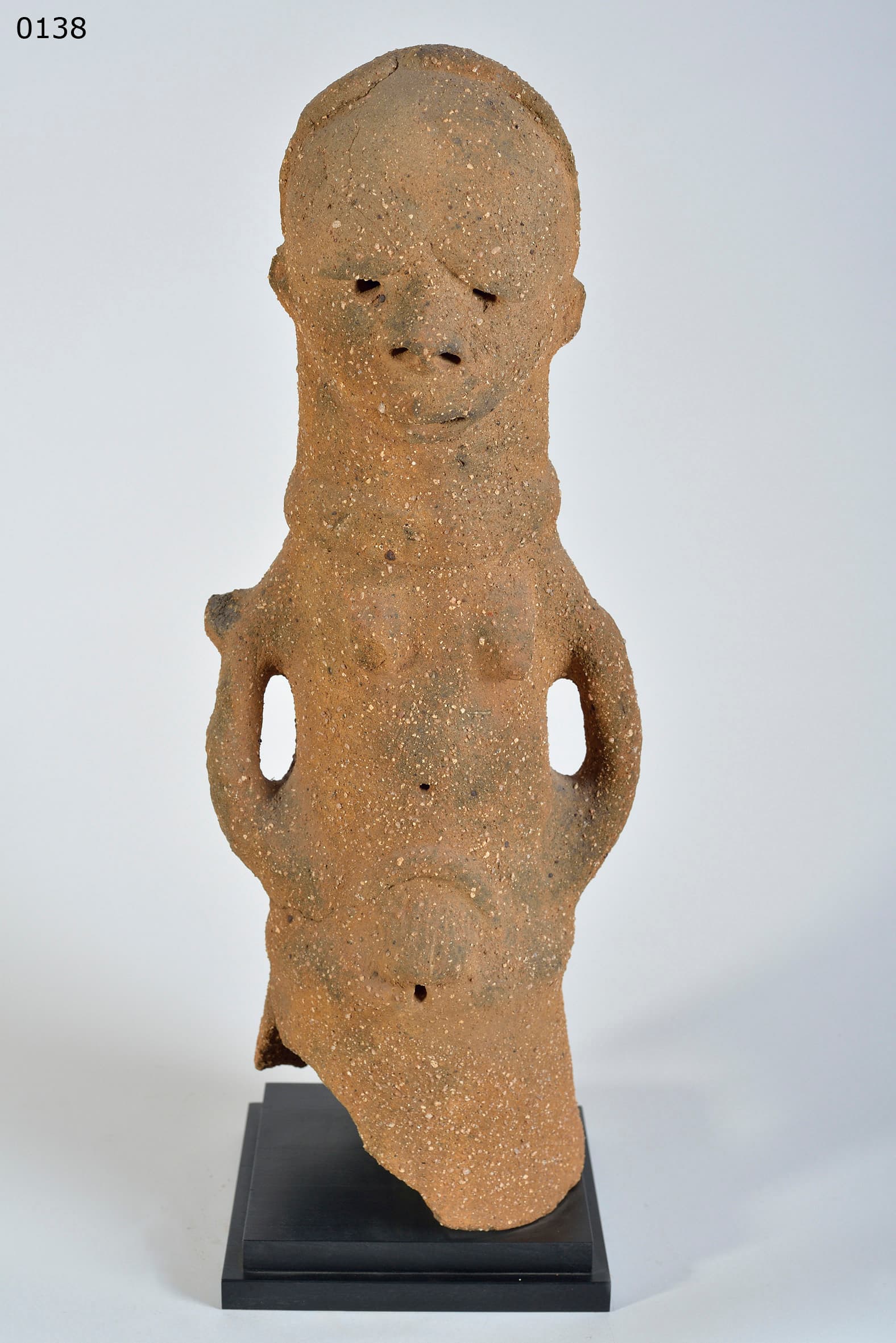
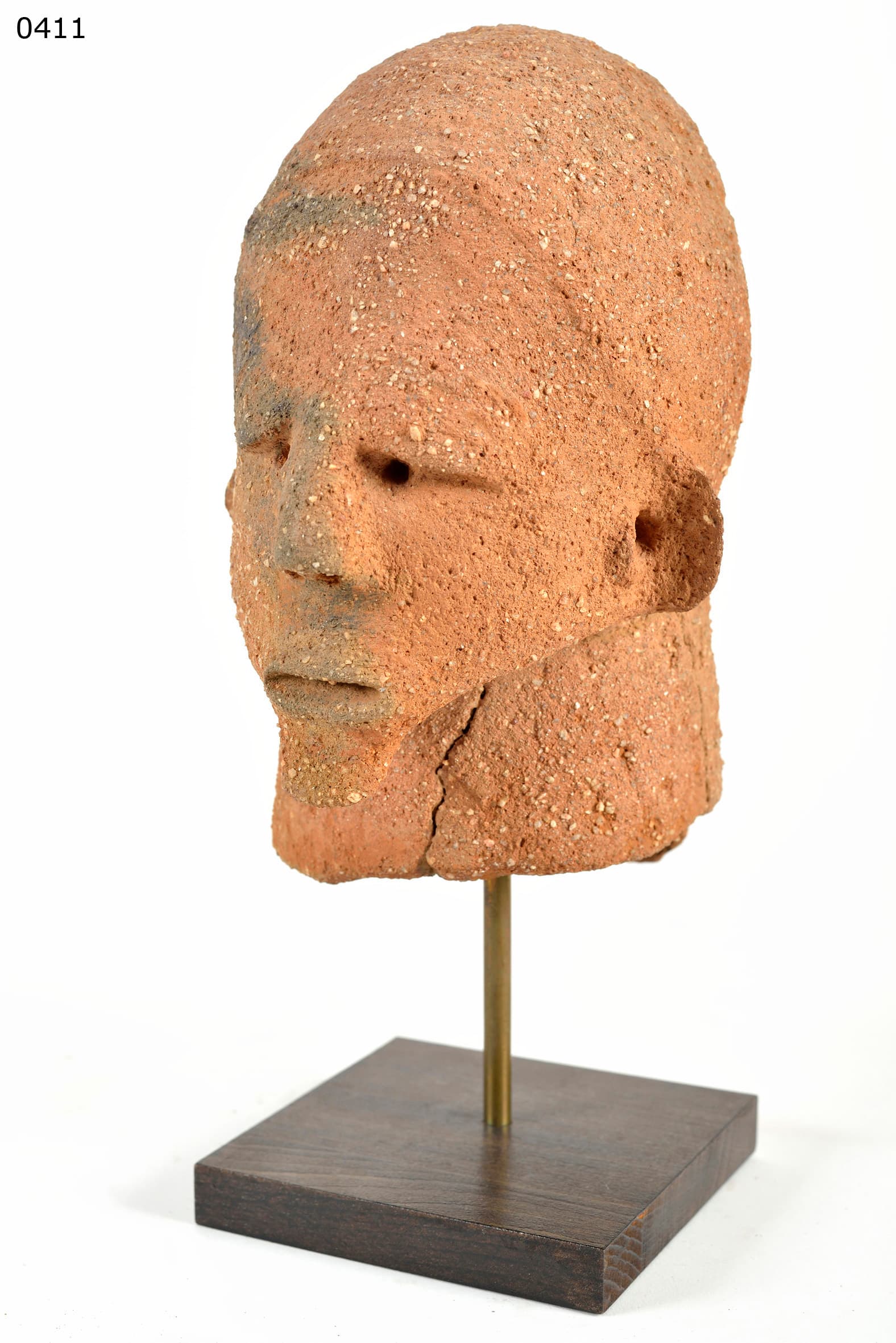
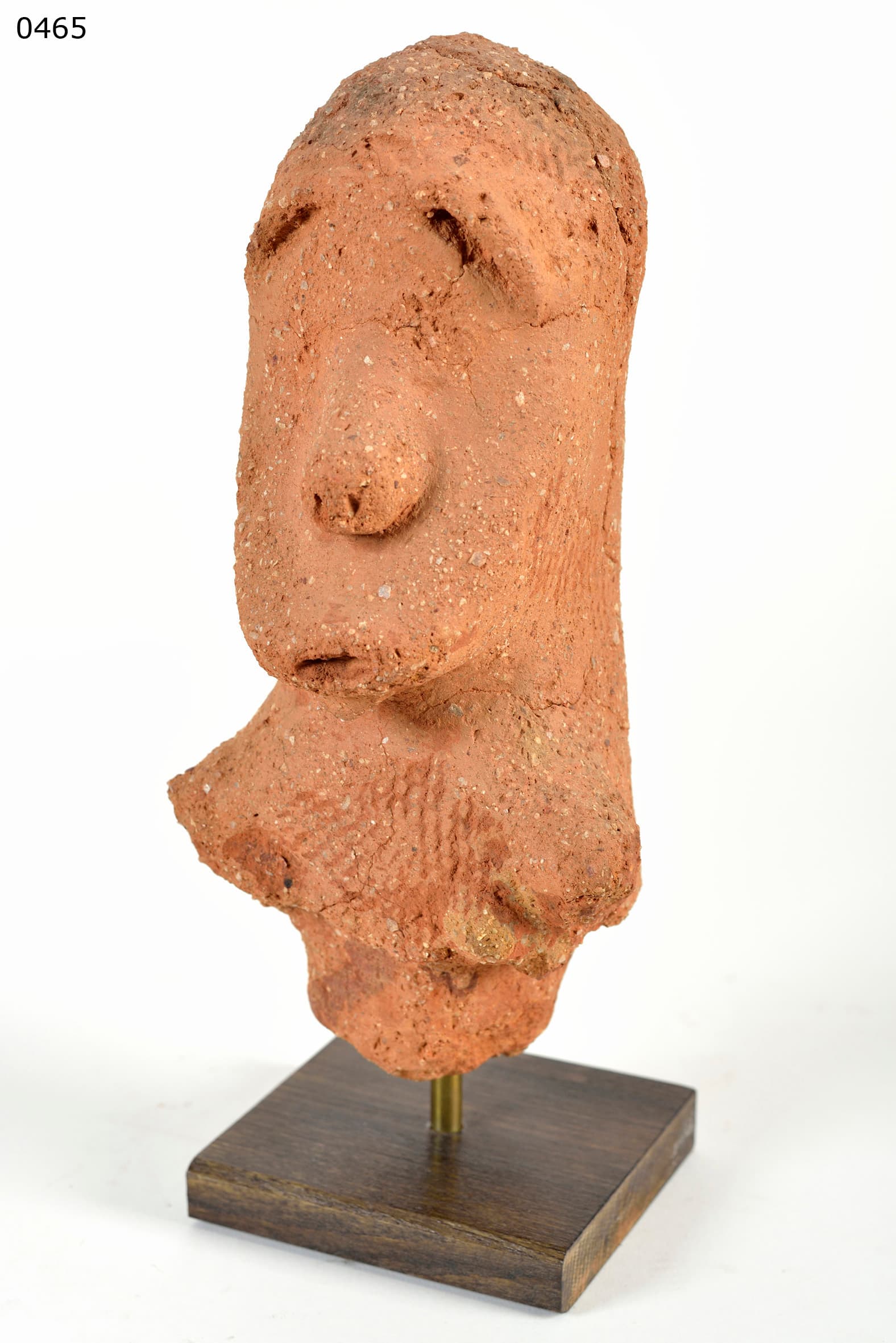
Eine ca. 2.000 Jahre alte Terrakottabüste (45 cm) aus dem nigerianischen Sokoto - eine schwere männliche Figur mit den charakteristischen überhängenden Brauen, durchbohrten runden Augen, einem dicken Hals und einem markanten Kiefer oder Bart.
1. Aristokratisches Gewicht
Diese Büste strahlt pure maskuline Autorität aus.
- Dicker Hals und Kiefer: Der betonte Bart und die kräftige Kieferlinie deuten auf einen älteren Status, den Rang eines Kriegers oder ein vergöttlichtes Königtum hin.
- Kein gewöhnliches Motiv: Die Sokoto-Skulptur privilegiert die Elite - diese Figur stellt wahrscheinlich eher einen Herrscher, Priester oder vergöttlichten Vorfahren dar als einen gewöhnlichen Mann.
2. Die Sokoto-Braue
Der diagnostische, überhängende Grat prägt die gesamte Lesart des Gesichts.
- Schattenblick: Die schwere Augenbraue wirft tiefe Schatten auf die durchbrochenen runden Augen und erzeugt eine grüblerische, autoritative Präsenz.
- Technische Funktion: Die durchstochenen Augen und Nasenlöcher ermöglichten auch das Entweichen von Brandgasen - die gleiche thermodynamische Lösung, die der zeitgenössische Nok entwickelt hatte.
3. Eisenzeitliche Beherrschung
Das Abfeuern einer hohlen 45-cm-Büste von dieser Dichte war eine technische Meisterleistung.
- Dicke Wände: Die Wände aus grob gebranntem Ton überstanden die Temperaturen eines offenen Feuers, ohne zu zerbrechen.
- Zwei Jahrtausende später: Die Tatsache, dass die Büste nach 2.000 Jahren in sahelischer Erde unversehrt geblieben ist, bestätigt sowohl die technische Exzellenz der Töpfer von Sokoto als auch den elitären Status der Person, an die sie erinnert.
Zusammenfassung
Diese Sokoto-Büste ist eine grüblerische patriarchalische Ikone. Ihre charakteristische Stirn und ihr massiver Kiefer vermitteln die Autorität eines Herrschers aus der Eisenzeit - ein beeindruckendes Terrakotta-Zeugnis einer Zivilisation, die vor 2.000 Jahren an der Seite der Nok lebte.
KI-unterstützt erstellt aus Sammlungsgutachten, Objektfotografie und eigener Recherche, redaktionell geprüft. Fehler sind möglich — Hinweise darauf sind uns willkommen. Zum Verfahren →