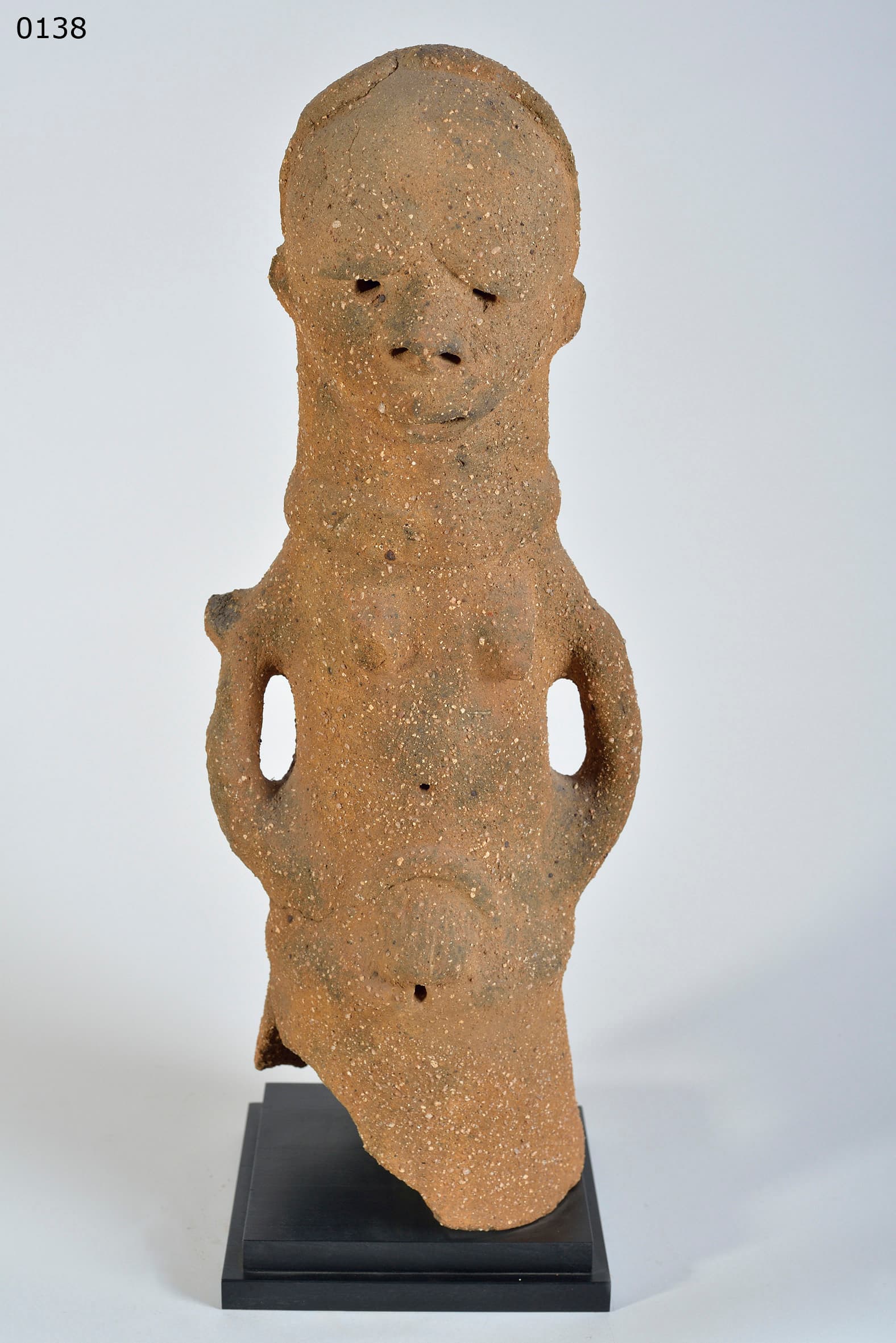
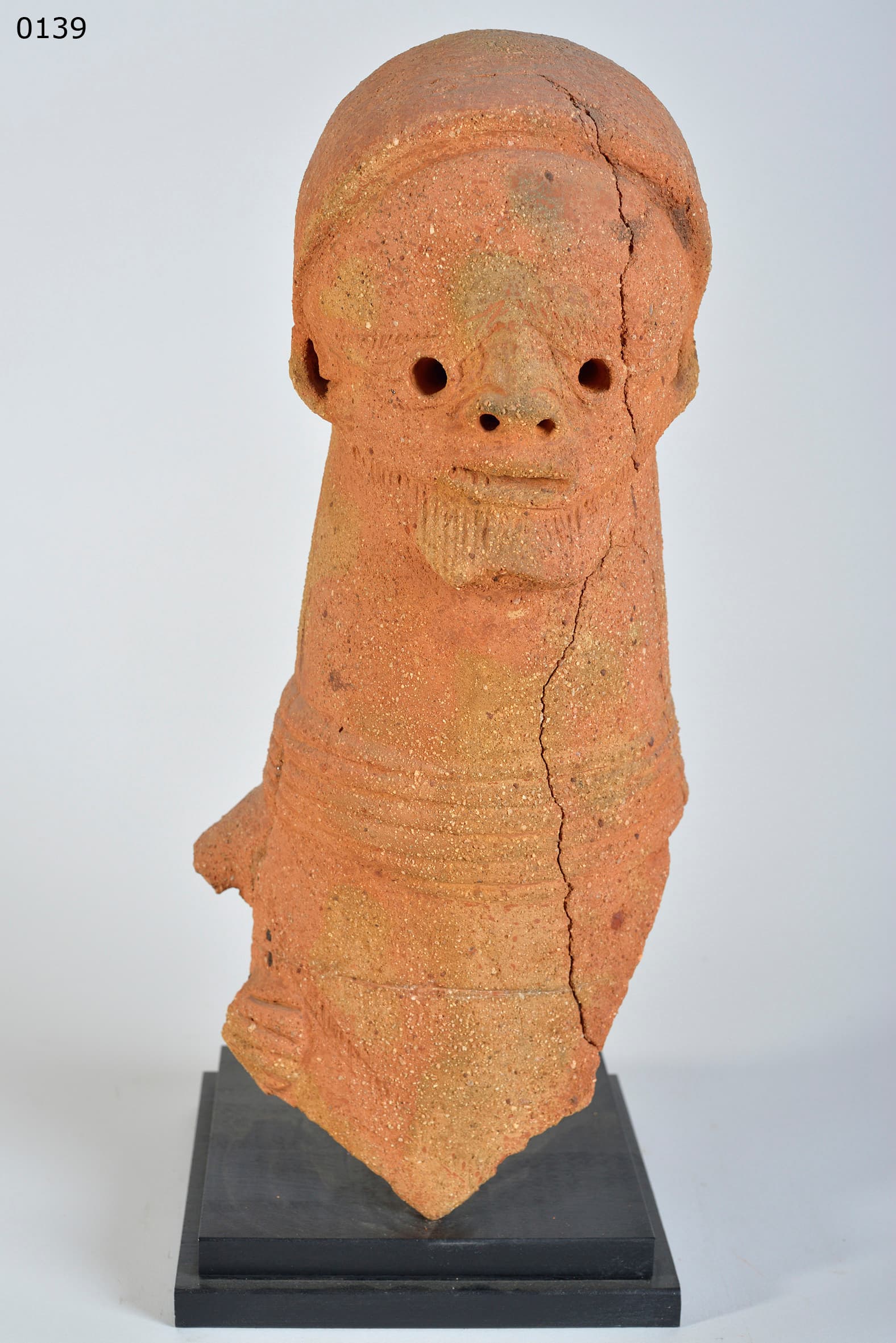
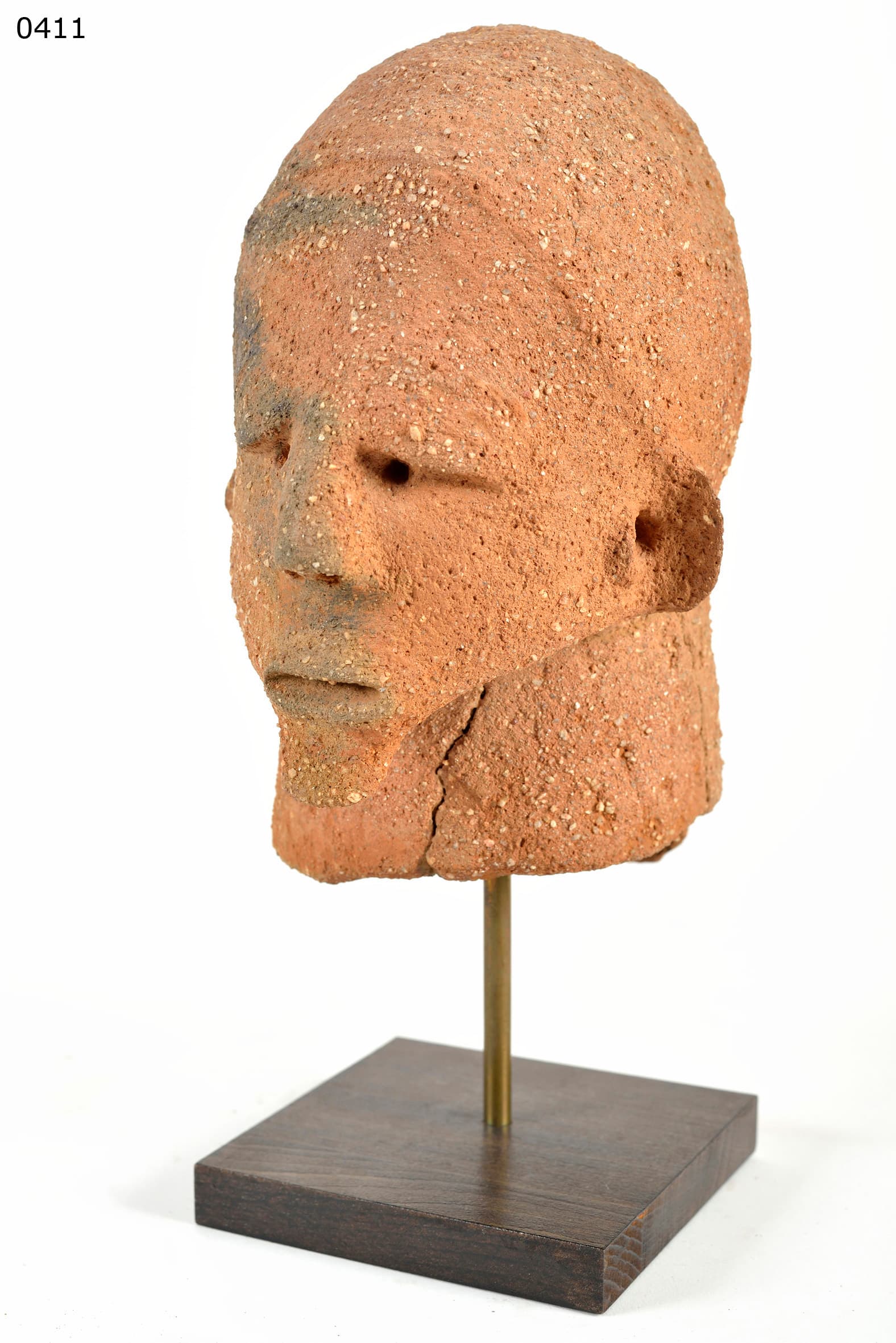
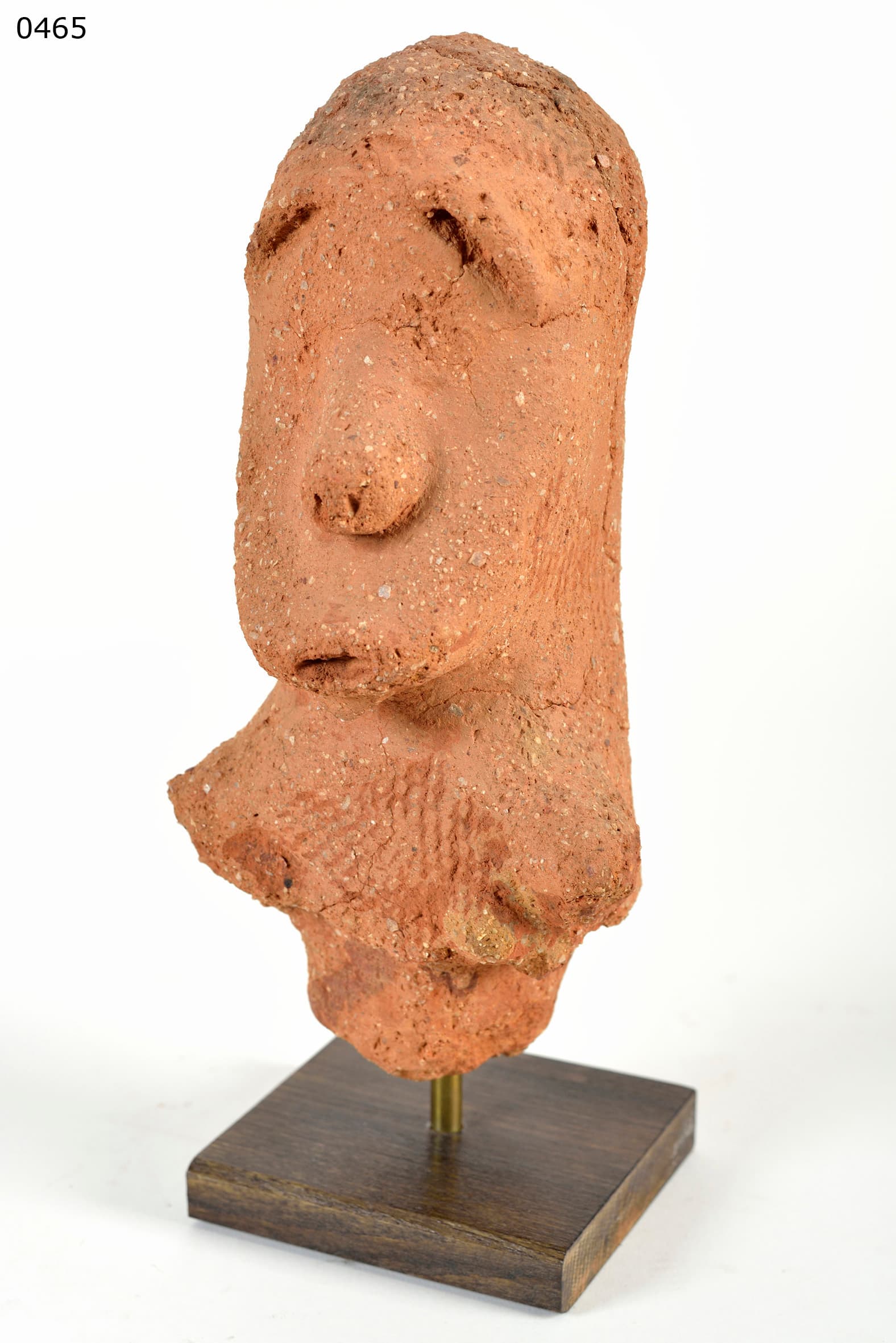
Eine imposante, auf ein Alter von ca. 2.000 Jahren geschätzte männliche Terrakottafigur (54 cm) aus dem nigerianischen Sokoto - schwerer, säulenartiger Torso und ein markanter, langgestreckter Kopf mit den klassischen überhängenden Brauen und tiefliegenden Augen der Region; der rötliche Ton zeigt eine stark erodierte, grobkörnige Textur, die auf eine jahrtausendelange geologische Einwirkung hindeutet.
1. Der stilistische Korpus von Sokoto
Die Sokoto-Terrakotta-Tradition, die auf die Zeit zwischen 500 v. Chr. und 200 n. Chr. datiert wird, wurde im Nordwesten Nigerias entdeckt und ist eng mit der Nok-Tradition verwandt, unterscheidet sich jedoch von dieser.
- Strenger Zylinder: Ein strenger zylindrischer Körper, der von einem massiven vereinfachten Kopf gekrönt wird - die charakteristische Silhouette von Sokoto.
- Vorspringende Brauen: Die ausgeprägten, vorspringenden Brauenkämme tauchen in tiefe, schattierte Augenhöhlen ein und erzeugen eine eindringliche psychologische Präsenz.
2. Grab- und Schrein-Kontexte der Eisenzeit
Der genaue Verwendungszweck der Sokoto-Terrakotten bleibt teilweise ungeklärt, aber ihre Größe und Präsenz legen elitäre Funktionen nahe.
- Grab oder Gemeinschaftsschrein: Sie könnten als elitäre Grabmäler oder als Kernstück von Gemeinschaftsschreinen gedient haben.
- Aufmerksamer Schutz: Die hervorstehenden Brauen und der intensive Blick deuten auf eine Schutzfunktion hin - die Verankerung der Ahnengeister aus der frühen Eisenzeit in der physischen Landschaft.
3. Archäologische Oberfläche aus zwei Jahrtausenden
Der physische Zustand ist mit dem geschätzten Alter vereinbar.
- Aufgelöster Schlicker: Der ursprüngliche glatte Schlicker aus gebranntem Ton erscheint durch Bodenbewegung, Monsunregen und chemische Verwitterung weitgehend aufgelöst.
- Granulares Inneres freigelegt: Übrig geblieben ist die grobkörnige innere Matrix, die stark entsteint und mit alten Bodenablagerungen verschmolzen ist - eine ausgeprägte Taphonomie, die einen antiken Ursprung nahelegt.
Zusammenfassung
Diese Terrakottafigur aus Sokoto, die eine eindringliche Präsenz ausstrahlt, ist ein bedeutendes Zeugnis aus Nigerias Eisenzeit. Ihre ausgeprägte Stirnpartie und die tiefgreifenden Spuren geologischer Erosion machen sie zu einem bemerkenswerten archäologischen Dokument dieser Epoche.
KI-unterstützt erstellt aus Sammlungsgutachten, Objektfotografie und eigener Recherche, redaktionell geprüft. Fehler sind möglich — Hinweise darauf sind uns willkommen. Zum Verfahren →