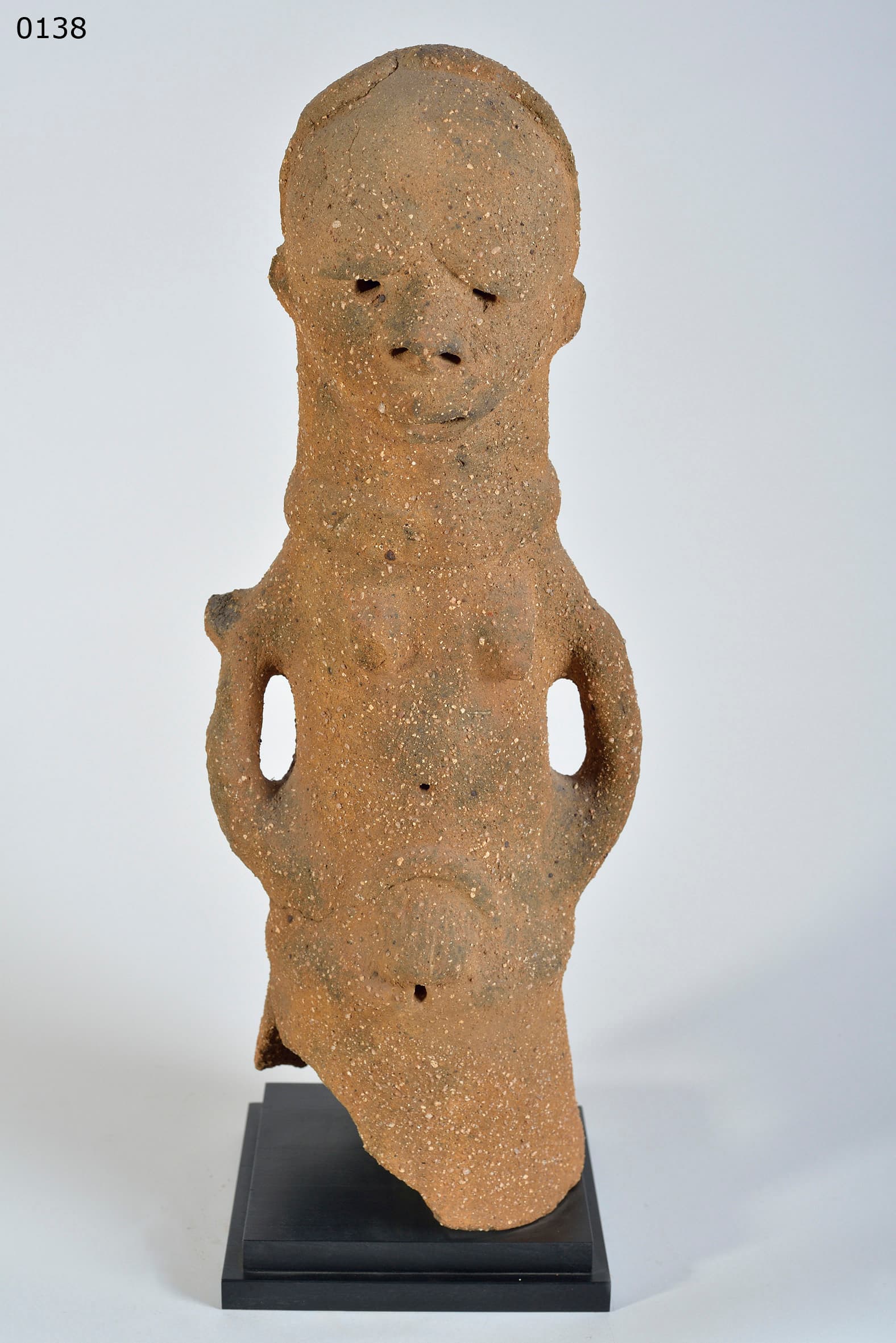
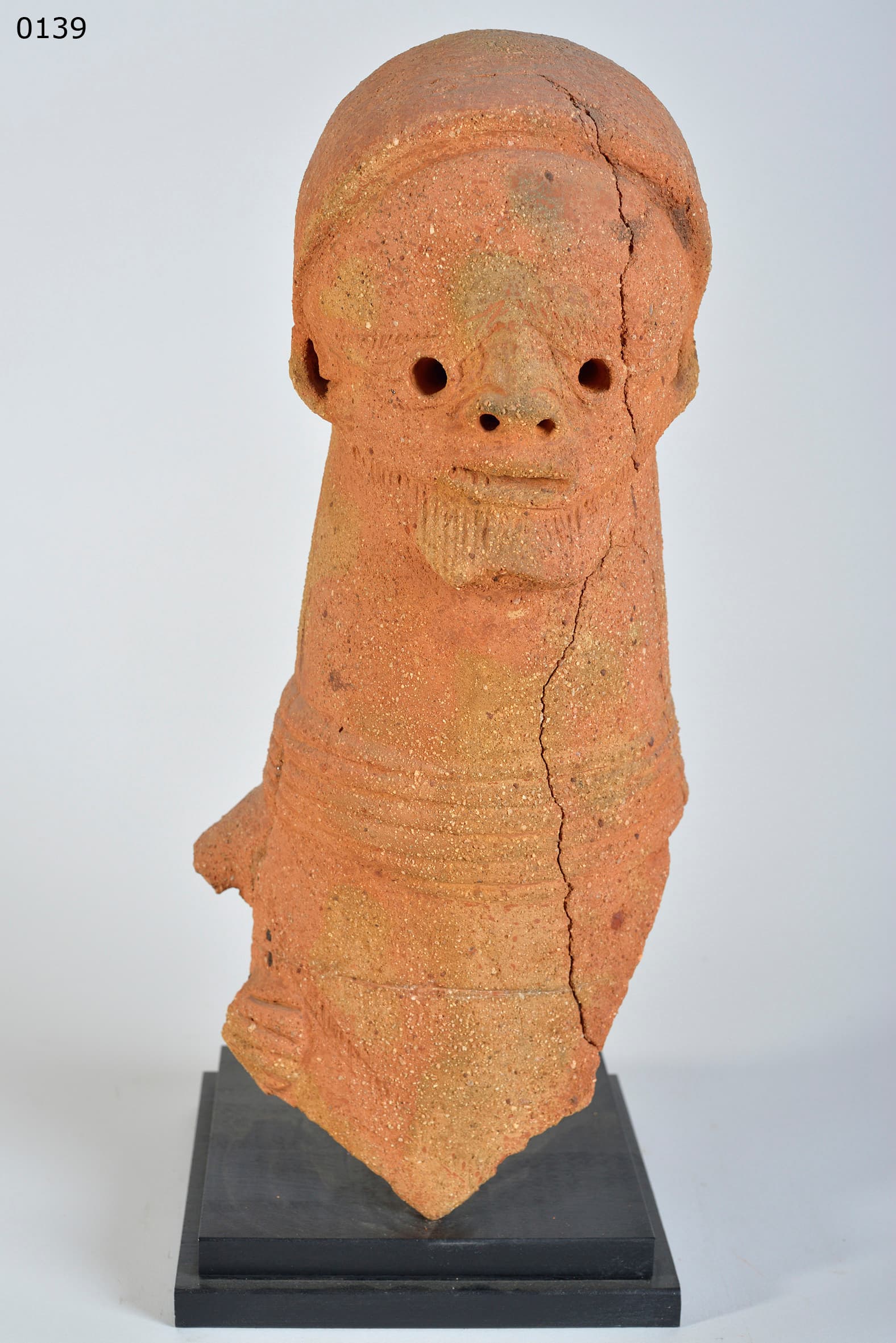
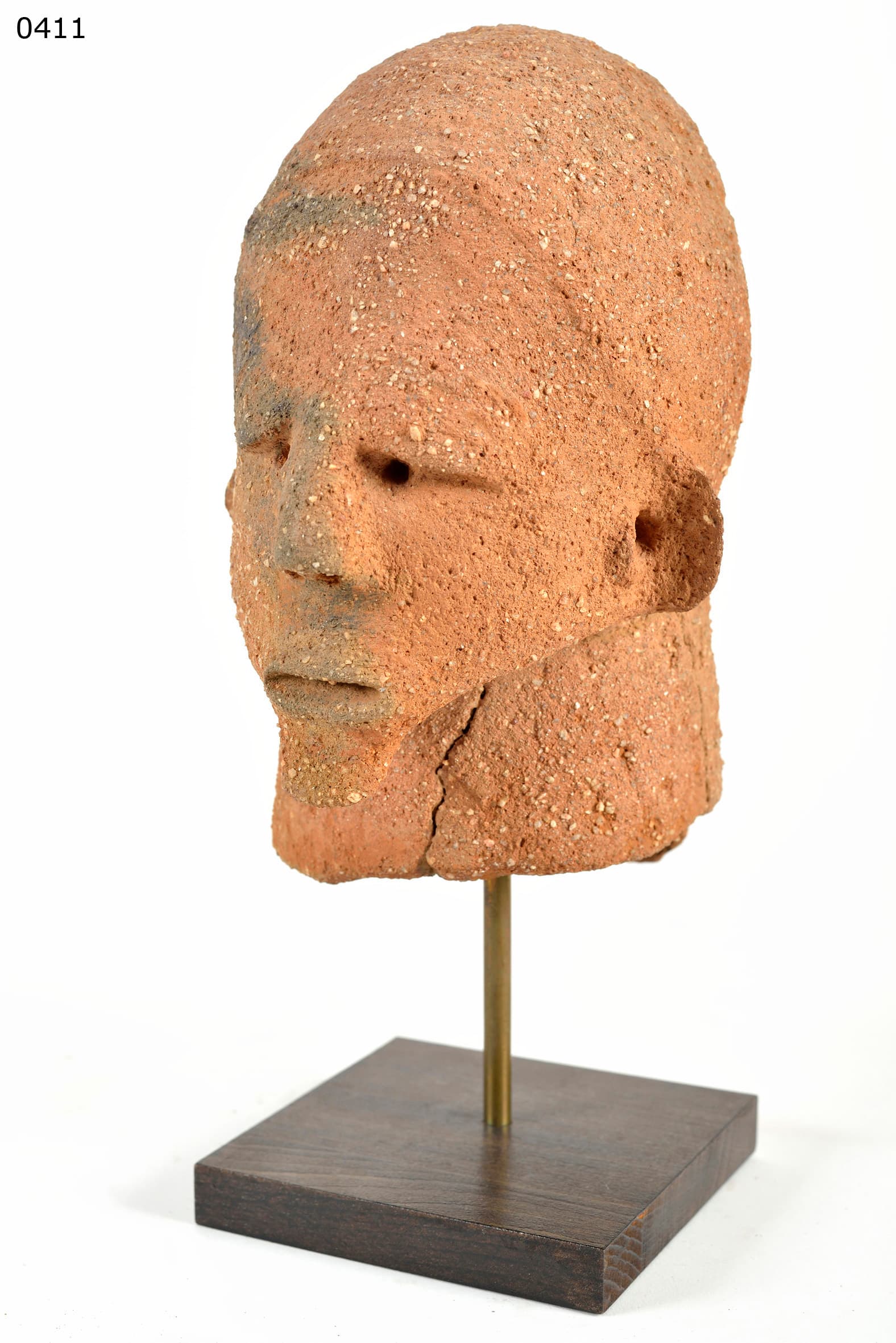
Ein massiver antiker Sokoto-Terrakottakopf (~2000 Jahre alt, 25 cm) aus Nigeria - ein hoch aufragender, zylindrischer Schädel, ein schwerer, überhängender Brauenkamm, der schmale, geschlitzte Augen überschattet, und ein hervorstehender, rüsselartiger Kiefer. Der Ton ist unglaublich grob, ohne Schlicker und stark verkrustet mit dicken weißen kristallinen Kalkablagerungen.
1. Eisenzeitlicher Brutalismus des Sokoto-Beckens
Die Sokoto-Terrakotta-Tradition im Nordwesten Nigerias, die parallel zur berühmten Nok-Kultur (ca. 500 v. Chr. - 200 n. Chr.) entstand, ist durch eine strenge, kompromisslos brutalistische Geometrie gekennzeichnet.
- Kopf als röhrenförmige Säule: Der Künstler hat den menschlichen Kopf vollständig zu einer schweren röhrenförmigen Säule abstrahiert.
- Dominante Brauen wie ein Regal: Das bestimmende Merkmal ist die massive, regalartige Braue, die die Gesichtsebene dominiert und tiefe Schatten auf die ungestochenen Augen wirft - sie projiziert eine rohe, unbewegliche Masse und eine intensive psychologische Schwerkraft, die den menschlichen Naturalismus vollständig zugunsten reiner architektonischer Kraft aufgibt.
2. Vergöttlichte Wächter des Mittleren Niger
Diese massiven Köpfe, die fast ausschließlich als isolierte Fragmente entdeckt wurden, krönten ursprünglich große, schwere, vollplastische Statuen.
- Platzierung in Freiluftheiligtümern: In den frühen Eisenverhüttungsgemeinschaften des Mittleren Nigers wurden diese hoch aufragenden Figuren in Freiluftheiligtümern, heiligen Hainen und landwirtschaftlichen Feldern aufgestellt.
- Wächter des Regens und der Ernte: Sie fungierten als Repräsentationen lokalisierter Erdgeister, mächtiger Gottheiten oder vergöttlichter Stammesgründer - sie wurden angefleht, Regen zu bringen, für reiche Ernten zu sorgen und übernatürlichen Schutz gegen die rauen Elemente der alten Sahelzone zu bieten.
3. Quarzgrog und unterirdische Verkalkung
Das hohe Alter von geschätzten 2.000 Jahren wird durch die physikalische Geologie gestützt.
- Grog-temperierter Grobkörper: Der extrem grobe Ton ist stark mit großen Brocken von Quarzgrog temperiert - die wesentliche Technik, die von alten afrikanischen Töpfern angewandt wurde, um zu verhindern, dass dicke, schwere Keramiken im offenen Feuer zerbrechen.
- Tiefe mineralische Verkalkung: Eine lange Lagerung in saurer nigerianischer Erde hat die Oberfläche abgetragen, so dass sie mit einer dichten Schicht harter weißer mineralischer Verkalkung bedeckt ist, die fest mit der porösen Terrakotta verbunden ist.
Zusammenfassung
Dieser Sokoto-Kopf ist ein ausdrucksstarkes Objekt aus der westafrikanischen Eisenzeit. Seine extreme geometrische Abstraktion und die charakteristische geologische Verkalkung machen ihn zu einem bedeutenden archäologischen Zeugnis.
KI-unterstützt erstellt aus Sammlungsgutachten, Objektfotografie und eigener Recherche, redaktionell geprüft. Fehler sind möglich — Hinweise darauf sind uns willkommen. Zum Verfahren →