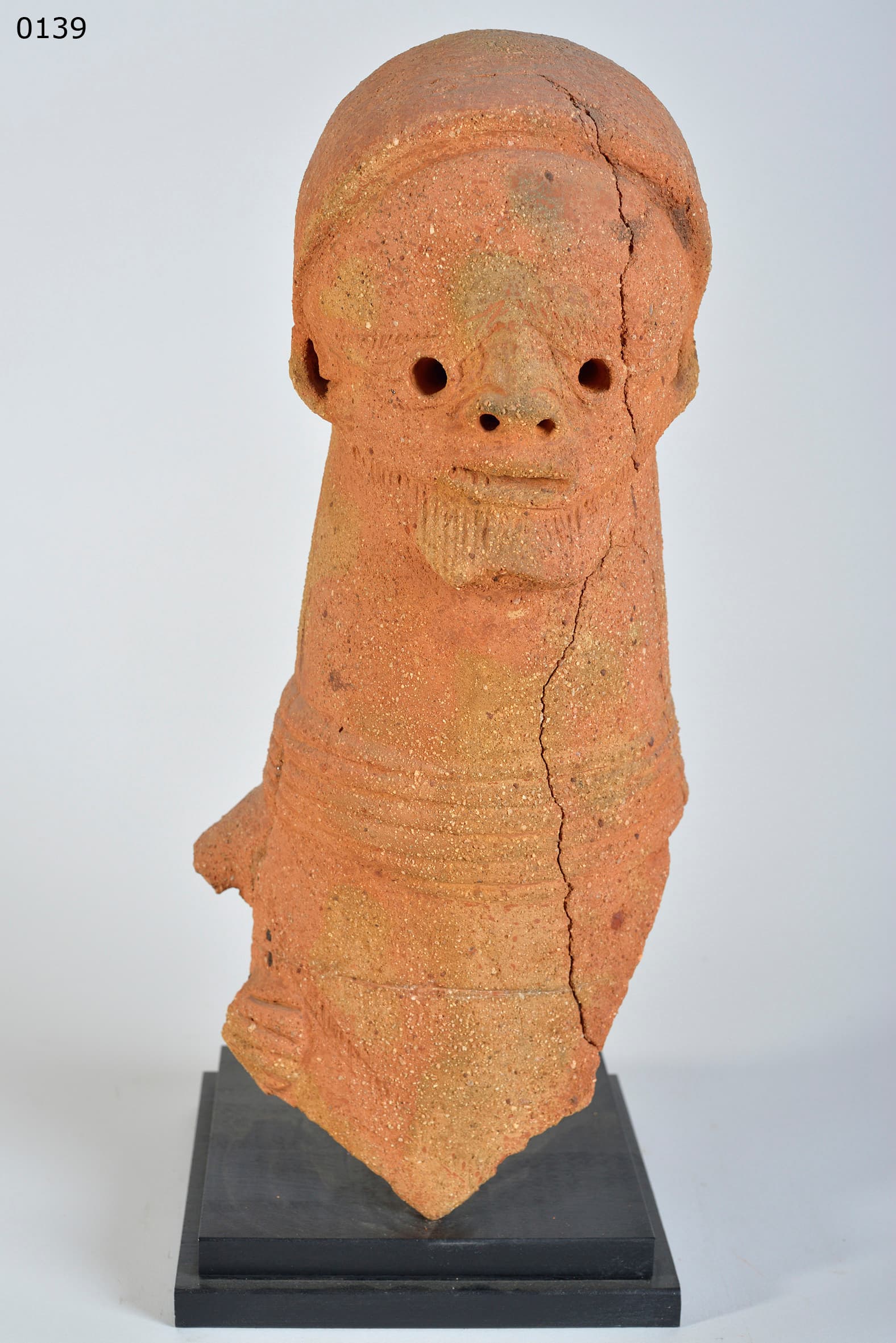
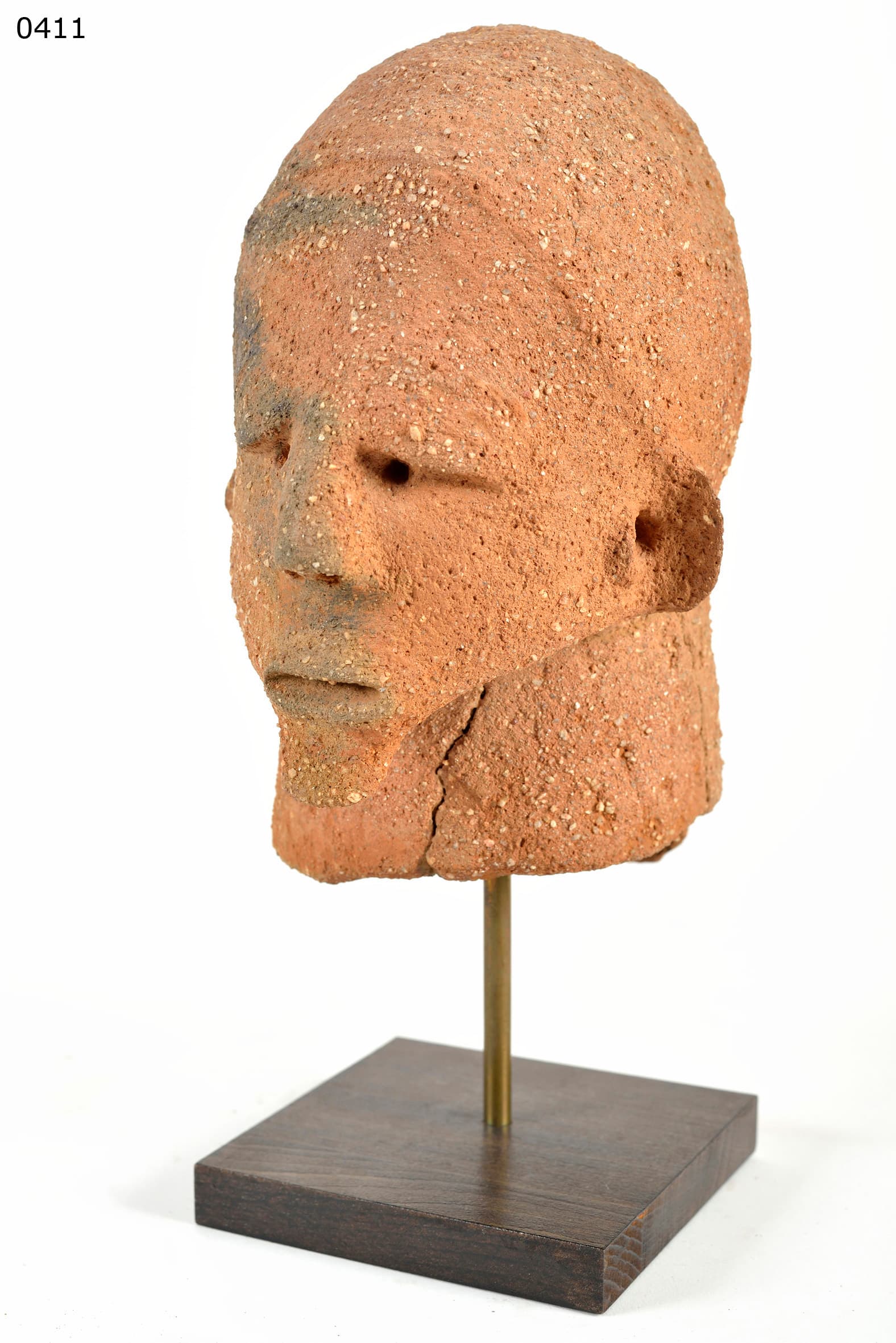
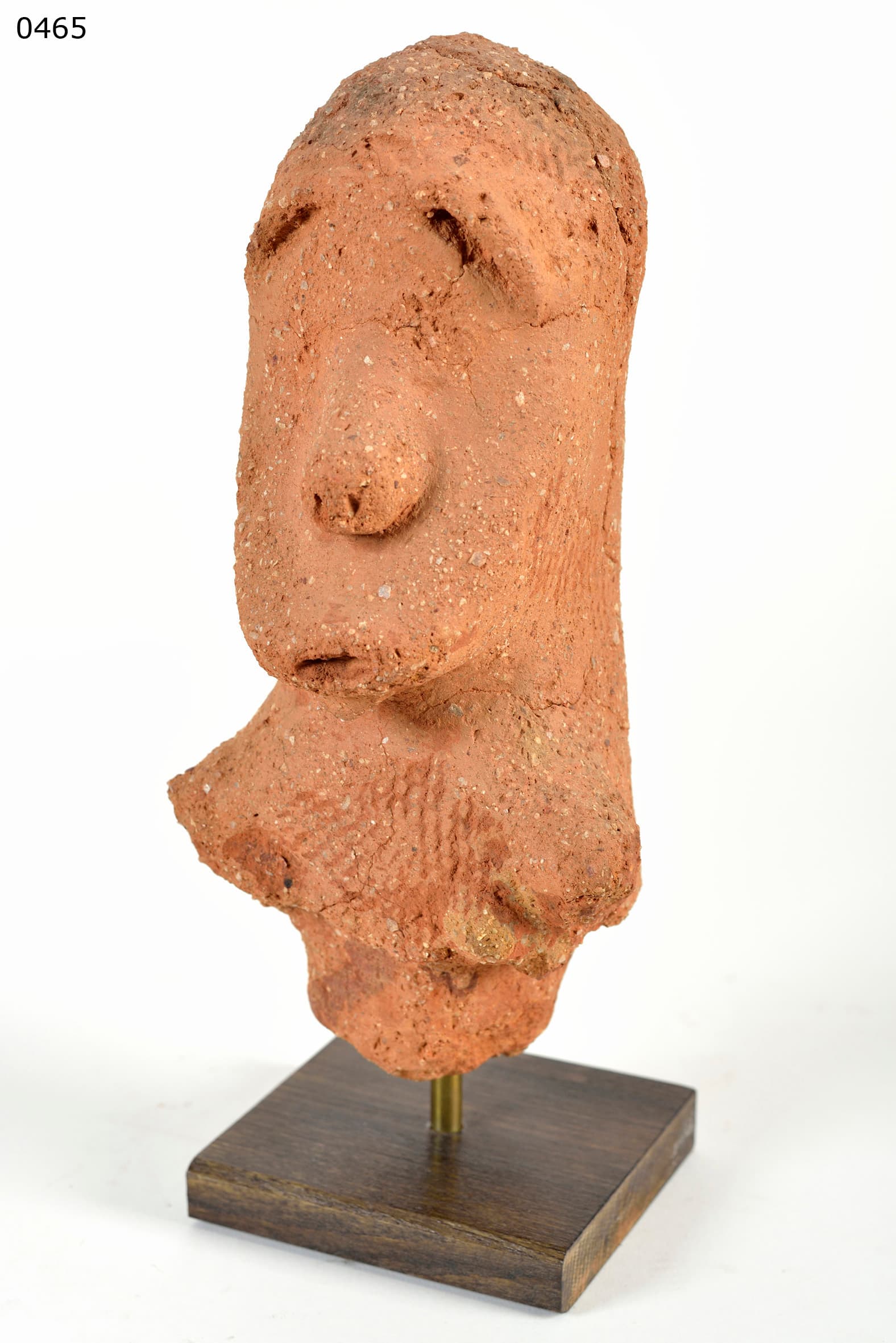
Eine ca. 2.000 Jahre alte Terrakottafigur (58 cm) aus dem nigerianischen Sokoto - ein weiblicher Körper mit stark überhängenden Stirnkämmen, durchbohrten runden Augen und einem abstrahierten Kind auf dem Rücken.
1. Das Sokoto-Rätsel
Die Sokoto-Kultur im Nordwesten Nigerias ist eng mit der berühmten Nok-Kultur (ca. 500 v. Chr. - 200 n. Chr.) verwandt und zeitgleich mit ihr.
- Verwandt, aber unverwechselbar: Die Sokoto-Terrakotten teilen Chronologie und Technik mit Nok, besitzen aber eine schwerere, strengere Ästhetik.
- Signaturbraue: Der massive, vorspringende, überhängende Brauenkamm wirft tiefe Schatten über die durchbrochenen kreisförmigen (statt dreieckigen) Augen - das diagnostische Merkmal der Sokoto-Idiomatik.
2. Die Gründermutter
Diese 58 cm große Figur stellt ein ikonisches matriarchalisches Motiv dar.
- Kind auf dem Rücken: Das abstrahierte Kind, das auf dem Rücken der Mutter getragen wird, legt nahe, dass die Verehrung der weiblichen Fruchtbarkeit und der matrilinearen Kontinuität in den nigerianischen Gesellschaften der Eisenzeit eine zentrale Rolle spielte.
- Gewicht als Status: Der beträchtliche Maßstab der Figur macht die Mutter-Kind-Szene eher zu einem monumentalen Kultbild als zu einem häuslichen Genrebild.
3. Archäologisches Überleben
Um hohle Terrakotten dieser Masse zu brennen, ohne zu explodieren, war außergewöhnliches Geschick erforderlich.
- Grog-gehärtete Wände: Dank der starken Härtung mit zerkleinerter Keramik konnten die dicken Wände das Brennen in offenen Gruben überstehen.
- Zwei Jahrtausende intakt: In einem Elitegrab oder einem Gemeinschaftsschrein begraben, hat die Figur 2.000 Jahre im Boden der Sahelzone überdauert - ein beeindruckendes altes Symbol der Mutterschaft.
Zusammenfassung
Diese Sokoto-Mutterschaftsfigur ist ein bedeutendes Werk des afrikanischen Altertums. Ihre grüblerische Stirn und ihr behütetes Kind stützen die Annahme, dass die Verehrung der Mutterschaft vor zweitausend Jahren im Zentrum einer hochentwickelten Zivilisation stand.
KI-unterstützt erstellt aus Sammlungsgutachten, Objektfotografie und eigener Recherche, redaktionell geprüft. Fehler sind möglich — Hinweise darauf sind uns willkommen. Zum Verfahren →