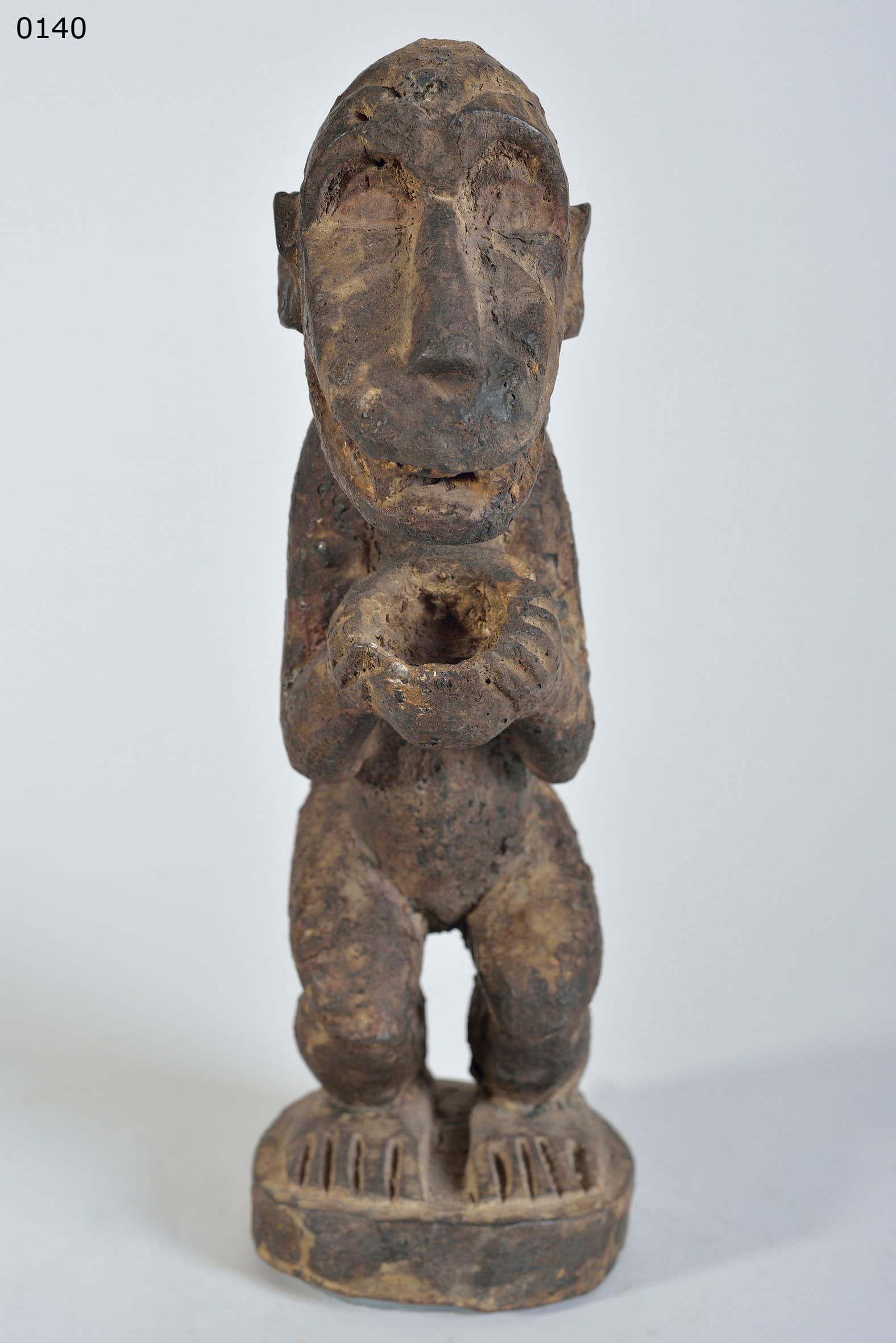
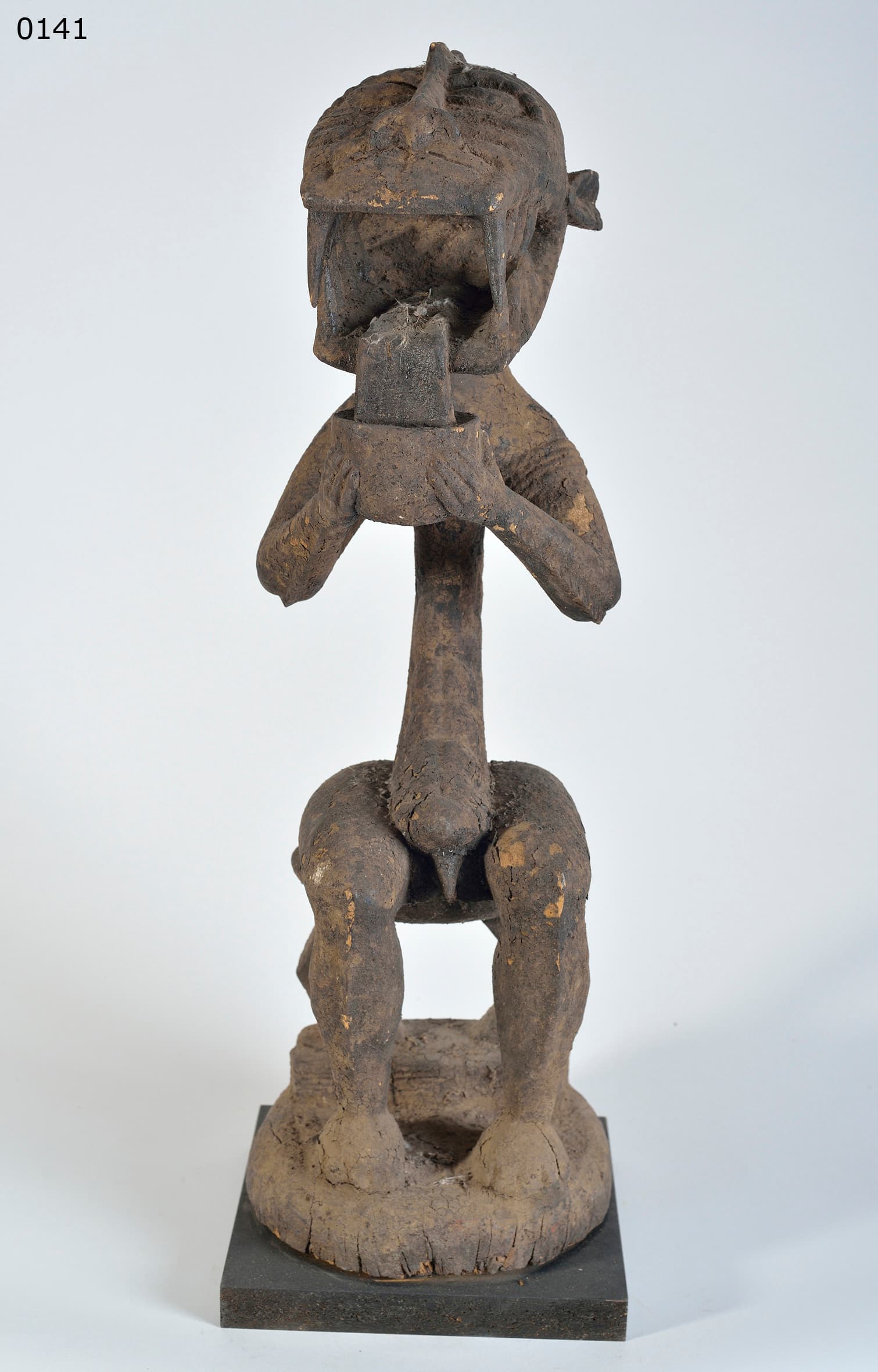
Eine sitzende männliche Holzfigur (1. Hälfte 20. Jh., 68 cm) von den Baule der Elfenbeinküste - ein sorgfältig gepflegter Bart, komplizierte Körperskarifikationen, eine sorgfältig gestylte Frisur, eine leuchtend grüne Perlenkette und eine prächtige, dunkel glänzende Griffpatina.
1. Das Baule-Ideal der zivilisierten Schönheit
Die Baule-Skulptur ist allgemein für ihr Streben nach idealisierter, zivilisierter Schönheit bekannt.
- Zeichen der sozialen Integration: Der heitere Ausdruck, die kunstvolle Frisur und die präzisen Skarifikationen sind keine Dekoration - sie stehen für moralische Güte, soziale Zugehörigkeit und die Zähmung der Natur.
- Einladung zum Anfassen: Die ausgewogene Symmetrie und die polierte Oberfläche laden zur taktilen Verehrung ein und spiegeln das Geschick des Künstlers und die kulturelle Wertschätzung der visuellen Harmonie wider.
2. Geistergattin der Anderswelt
Obwohl das Hauptbuch dieses Stück als Blolo Bla (Geistergattin) bezeichnet, ist die Figur eindeutig männlich, so dass es sich korrekt um einen Blolo Bian (Geistergatte) handelt.
- Der parallele Ehepartner: Die Baule-Kosmologie besagt, dass jeder Mensch einen Partner in der Geisterwelt hat. Wenn ein Wahrsager feststellt, dass dieser Geistergatte in der Menschenwelt Unheil anrichtet, wird eine Figur beauftragt, ihn zu besänftigen.
- Privates Schreinleben: Die Figur wird in einem privaten Schrein aufbewahrt, gefüttert, gekleidet und gepflegt, um das geistige Gleichgewicht zwischen den beiden Welten aufrechtzuerhalten.
3. Taktiles Polieren und Wahrsagen Kontext
Die tief glänzende Patina ist das direkte Ergebnis eines intimen rituellen Lebens.
- Gehandelt, nicht geopfert: Im Gegensatz zu öffentlichen Altarobjekten, auf denen sich dicke Opferkrusten ansammeln, werden die Blolo-Figuren häufig angefasst und mit Palmöl eingerieben, um sie auf Hochglanz zu polieren.
- Handhabungs-Patina-Signatur: Die spezifische vertiefte Farbe und die geglätteten hohen Punkte sprechen für eine häusliche Wahrsageverwendung in der ersten Hälfte des 20. Jahrhunderts.
Zusammenfassung
Diese Baule-Geistfigur strahlt ruhige Autorität und sorgfältige Handwerkskunst aus und verkörpert die Zivilisation und Raffinesse der Kunst der Elfenbeinküste. Ihre ausgeprägte Patina und ihre psychologische Funktion machen sie zu einem eindrucksvollen Zeugnis dieser Schnitzkunst.
KI-unterstützt erstellt aus Sammlungsgutachten, Objektfotografie und eigener Recherche, redaktionell geprüft. Fehler sind möglich — Hinweise darauf sind uns willkommen. Zum Verfahren →