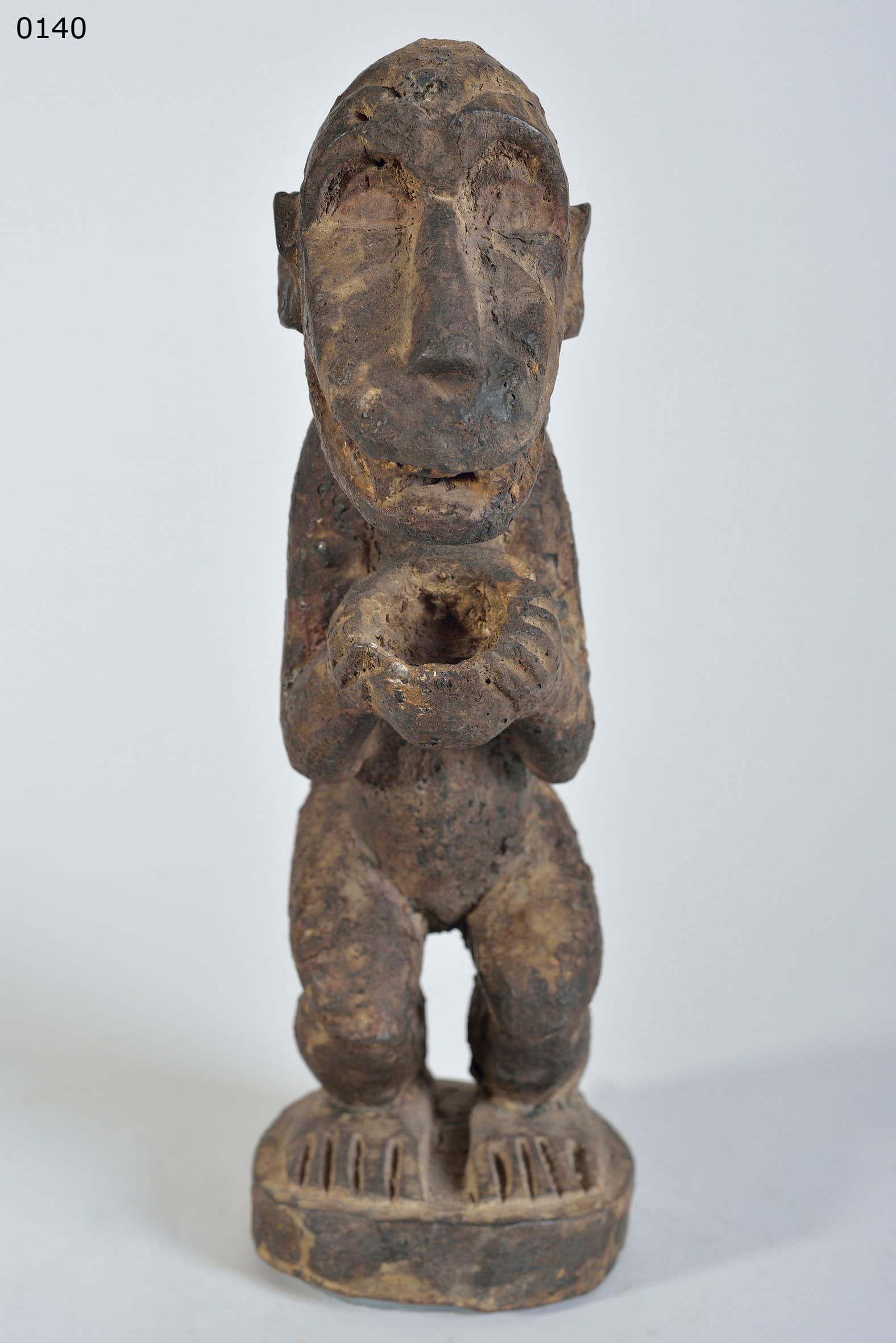
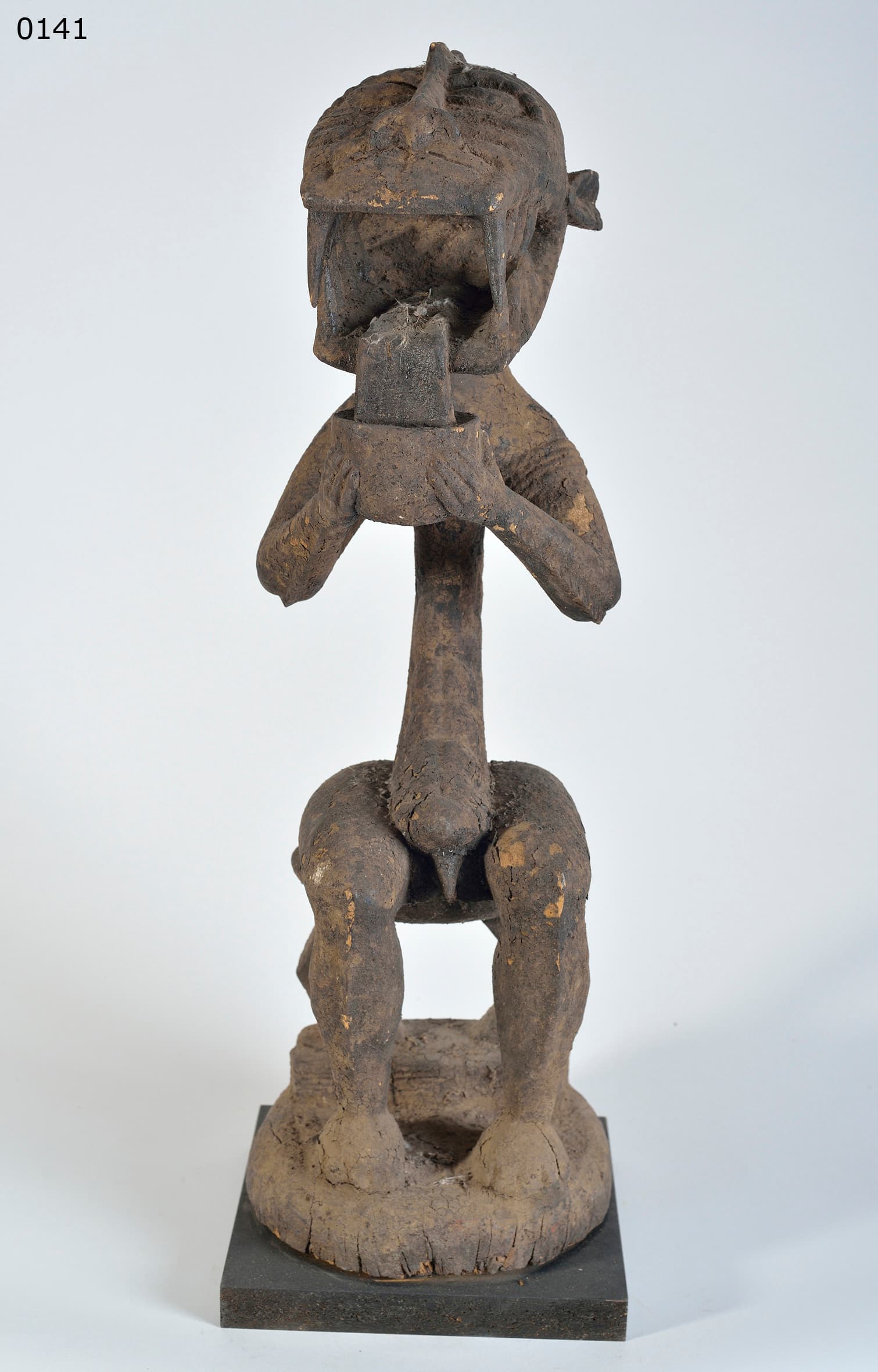
Eine seltene kompositorische Triade (1. Hälfte 20. Jh., 31 cm) aus dem Baule der Elfenbeinküste - eine erwachsene männliche und eine weibliche Figur, die nebeneinander stehen und sich an den Händen halten, über einem kleineren Kind in der Mitte, geschmückt mit originalen Perlenketten und applizierten textilen Lendenschürzen, das dunkle, ölige Holz zeigt eine reichhaltige, geschichtete Patina.
1. Das harmonische Familienideal
In der Baule-Schnitzerei ist die einzelne Figur in der Regel isoliert, so dass diese integrierte Familiendreiergruppe bemerkenswert selten und kompositorisch komplex ist.
- Architektonische Einheit: Die verbundenen Hände über dem Kind bilden eher einen einheitlichen architektonischen Block als drei separate Figuren.
- Zivilisierte Harmonie: Die Skulptur verkörpert das Baule-Ideal, dass geistiger und irdischer Erfolg im unzerstörbaren Band der Kernfamilie verwurzelt ist - eheliche Zusammenarbeit und Kontinuität der Abstammung in einem einzigen Objekt.
2. Asie Usu und göttliche Heiligtümer
Während einzelne Figuren oft Geistergatten darstellen, verkörpert eine Trias dieser Art wahrscheinlich asie usu - Naturgeister, die die Wildnis bewohnen, aber von Menschen Besitz ergreifen können.
- Eine Familie von Geistern: Wenn ein Wahrsager diagnostiziert, dass ein ganzer Haushalt von einer "Familie" von Naturgeistern heimgesucht wird, wird eine Triade beauftragt, sie zu beherbergen.
- Zähmung durch Schönheit: Wenn man den Geistern ein zivilisiertes, schönes Holzhaus zur Verfügung stellt, besänftigt man sie und verwandelt chaotische Energie in schützenden, lokalen Segen für die menschliche Familie.
3. Rituelle Tücher und taktile Kleidung
Die ursprünglichen Lendenschurze aus Fasern und Textilien zeugen von tiefem rituellem Respekt.
- Buchstäblich bekleidet: Die Figuren wurden gekleidet, um die Bescheidenheit und Zivilisation der Baule-Weltanschauung widerzuspiegeln.
- Zweifacher Oberflächenzustand: Das Holz unter den Textilien weist eine dichte, glänzende Bearbeitungspatina auf, während freiliegende Bereiche leichte Verkrustungen von Trankopfern tragen - eine dynamische Oberfläche, die für einen aktiven Gebrauch in einem privaten Familienschrein spricht.
Zusammenfassung
Diese Altarfigur der Baule ist eine seltene kompositorische Trias, die die kulturelle Bedeutung von Abstammung und sozialer Harmonie zum Ausdruck bringt. Ihre reichhaltige Patina und die originalen Textilbefestigungen sprechen für ihre Bedeutung als intimes Zeugnis afrikanischer Andacht.
KI-unterstützt erstellt aus Sammlungsgutachten, Objektfotografie und eigener Recherche, redaktionell geprüft. Fehler sind möglich — Hinweise darauf sind uns willkommen. Zum Verfahren →