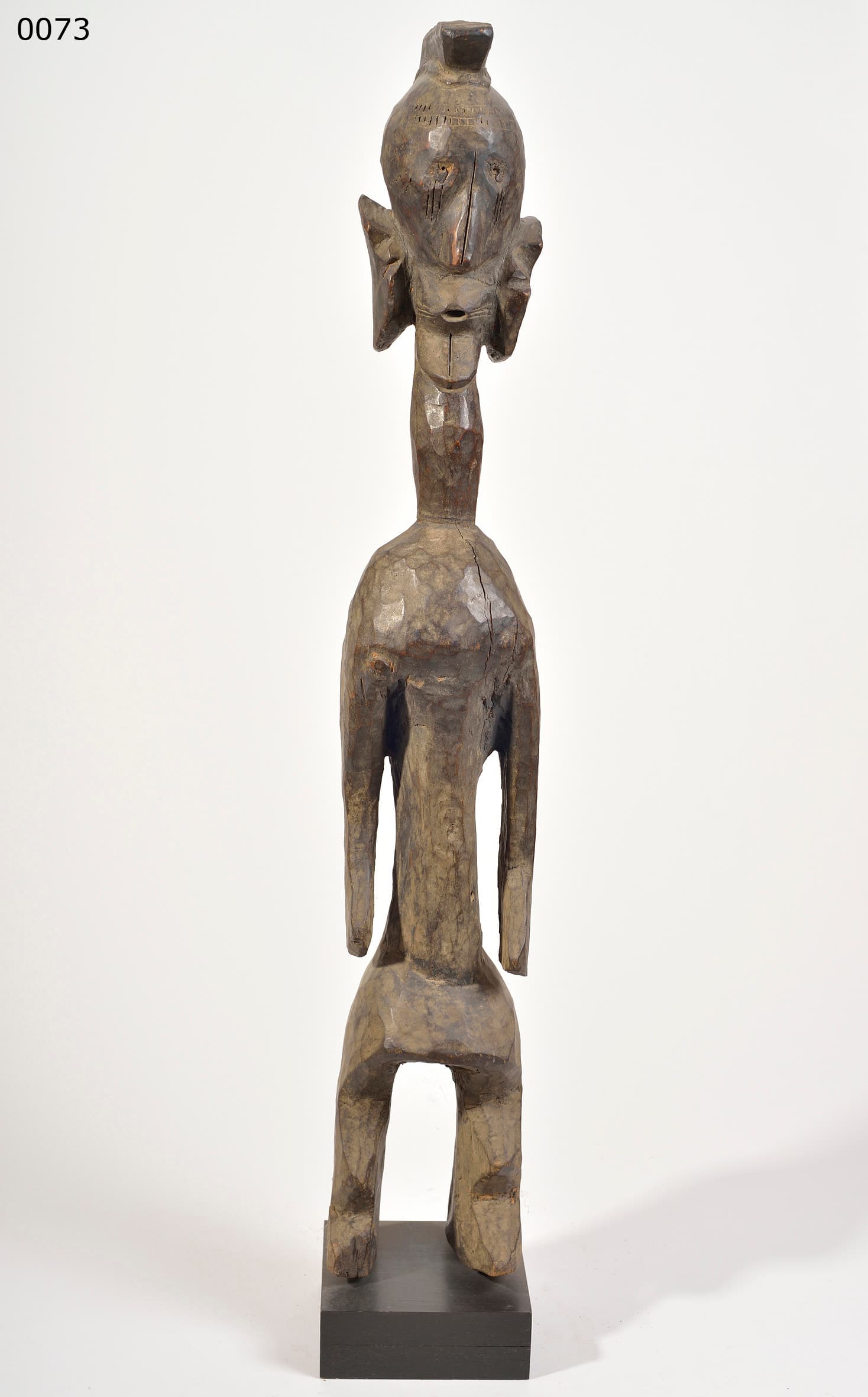
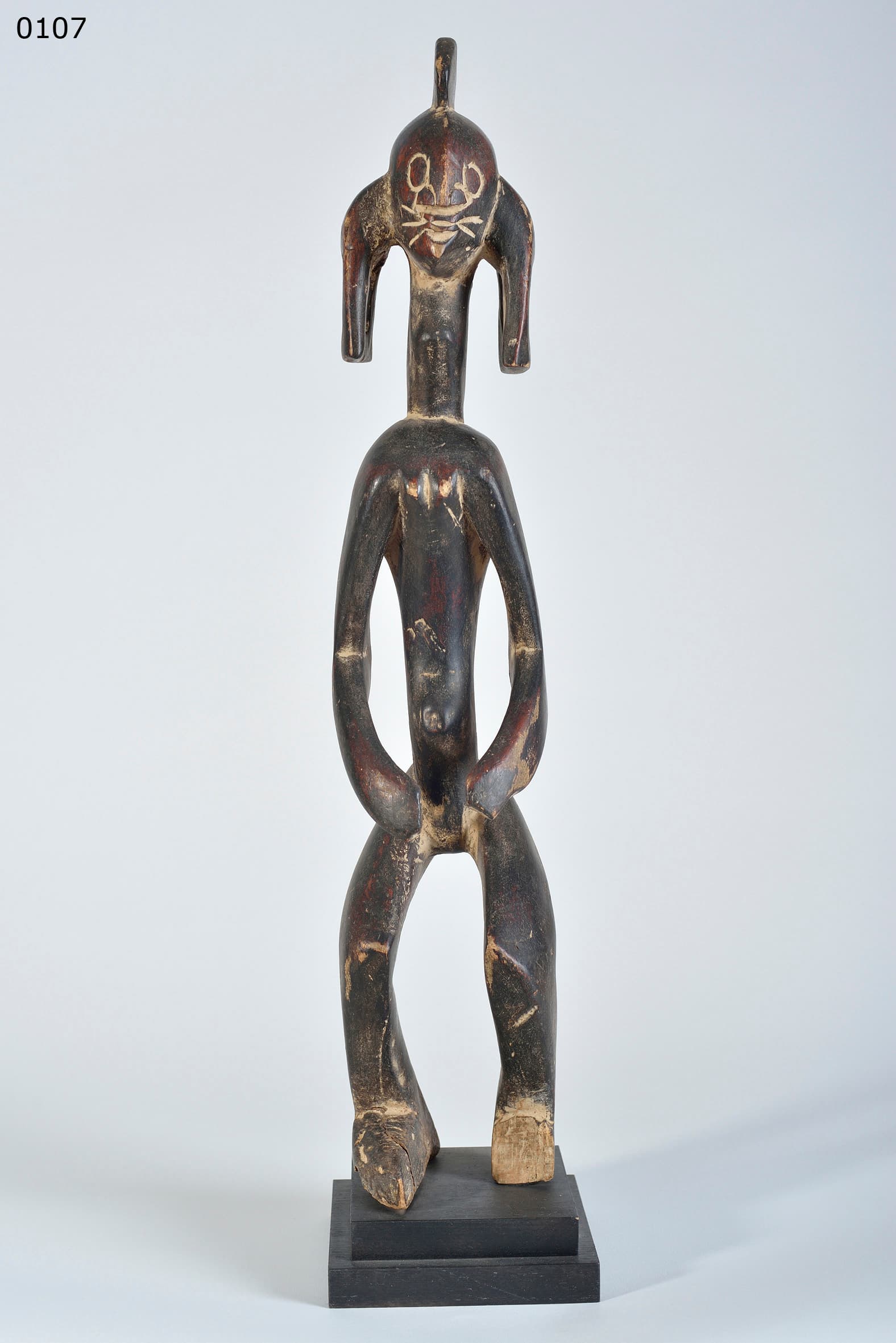
Eine hochdynamische Holzfigur (wohl 1. Hälfte 20. Jh., 31 cm) von den Mumuye aus Nigeria - abstrakter Kopf mit Scheitel, geschwungene, flügelartige Arme, die sich anmutig um einen schlanken, säulenartigen Torso wölben. Das dunkle Holz ist mit einer dichten, krustigen Patina überzogen, die tiefe strukturelle Oxidation und Abnutzung an den Extremitäten aufweist.
1. Die Beherrschung des Negativraums
Die Skulpturen von Mumuye werden von Kunsthistorikern allgemein für ihre revolutionäre Verwendung des negativen Raums und der proto-kubistischen Geometrie gefeiert.
- Bandartige Gliedmaßen: Der Künstler schnitzt das Holz zwischen dem Rumpf und den Armen weg und schafft so Gliedmaßen, die sich um die Leere zu winden scheinen.
- Die fließende kinetische Architektur verleiht der Figur ein Gefühl von latenter Bewegung und Schwerelosigkeit, das sich den Zwängen der traditionellen monolithischen afrikanischen Schnitzkunst widersetzt.
2. Regenmacherei, Wahrsagerei und die Vabo-Gesellschaft
Im Gegensatz zu Kulturen, in denen die Figuren bestimmte Vorfahren darstellen, sind die Mumuye-Statuen vielseitige Werkzeuge, die von Wahrsagern und Heilern verwendet werden.
- Im Tsafi aufbewahrt: Die Figuren werden in heiligen Hütten aufbewahrt und von den Ältesten der Vabo-Gesellschaft zu verschiedenen Zwecken gehandhabt - Kommunikation mit der Geisterwelt, Heilung, Identifizierung von Dieben.
- Regen herbeirufen: Die aerodynamischen, geschwungenen Formen werden oft mit Wind und Sturmwolken in Verbindung gebracht, und die wichtigste Funktion der Figur ist das Herbeirufen von Regen, um den landwirtschaftlichen Zyklus aufrechtzuerhalten.
3. Verwitterung und Verkrustung des Benue-Flusses
Die Oberfläche spiegelt ein aktives Leben im Tal des Benue-Flusses wider.
- Trankopfer: Die dicke, krustige Patina wird mit wiederholten Trankopfern von Hirsebier, Blut und gekauter Kolanuss in Verbindung gebracht, die während der Riten auf die Figur gespuckt wurden.
- Geschwächte Kanten: Natürliche Aufweichung der ursprünglich scharfen kubistischen Kanten und tiefe Oxidation der Maserung sprechen für eine rituelle Herkunft aus der ersten Hälfte des 20. Jahrhunderts.
Zusammenfassung
Diese Mumuye-Figur, die den dynamischen negativen Raum und die kubistische Abstraktion anschaulich verkörpert, gilt als ein kinetisch anmutendes Werk der nigerianischen Kunst. Ihre dichte, krustige Patina und ihre skulpturale Fluidität sprechen für die Bedeutung dieses ethnografischen Objekts.
KI-unterstützt erstellt aus Sammlungsgutachten, Objektfotografie und eigener Recherche, redaktionell geprüft. Fehler sind möglich — Hinweise darauf sind uns willkommen. Zum Verfahren →