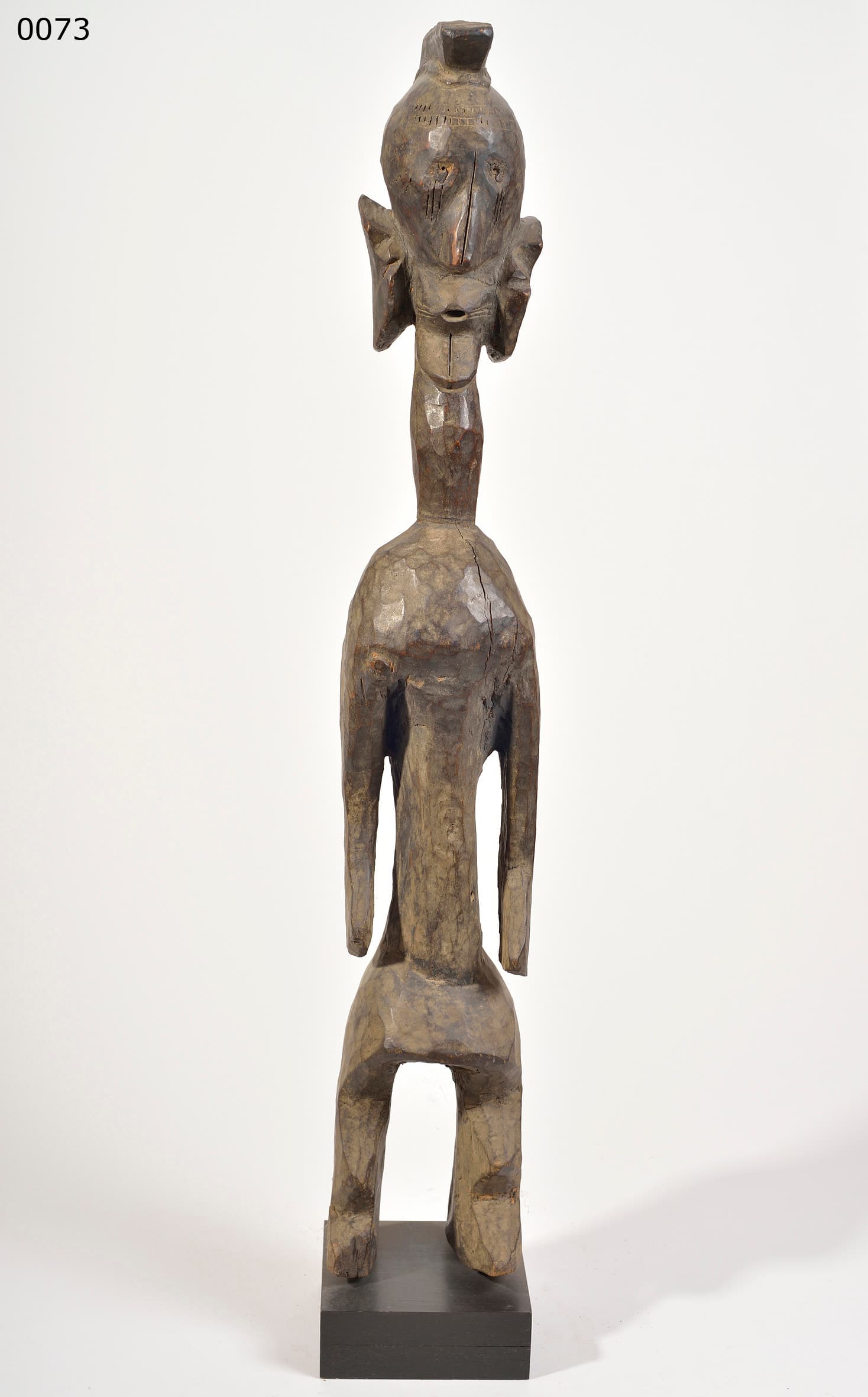
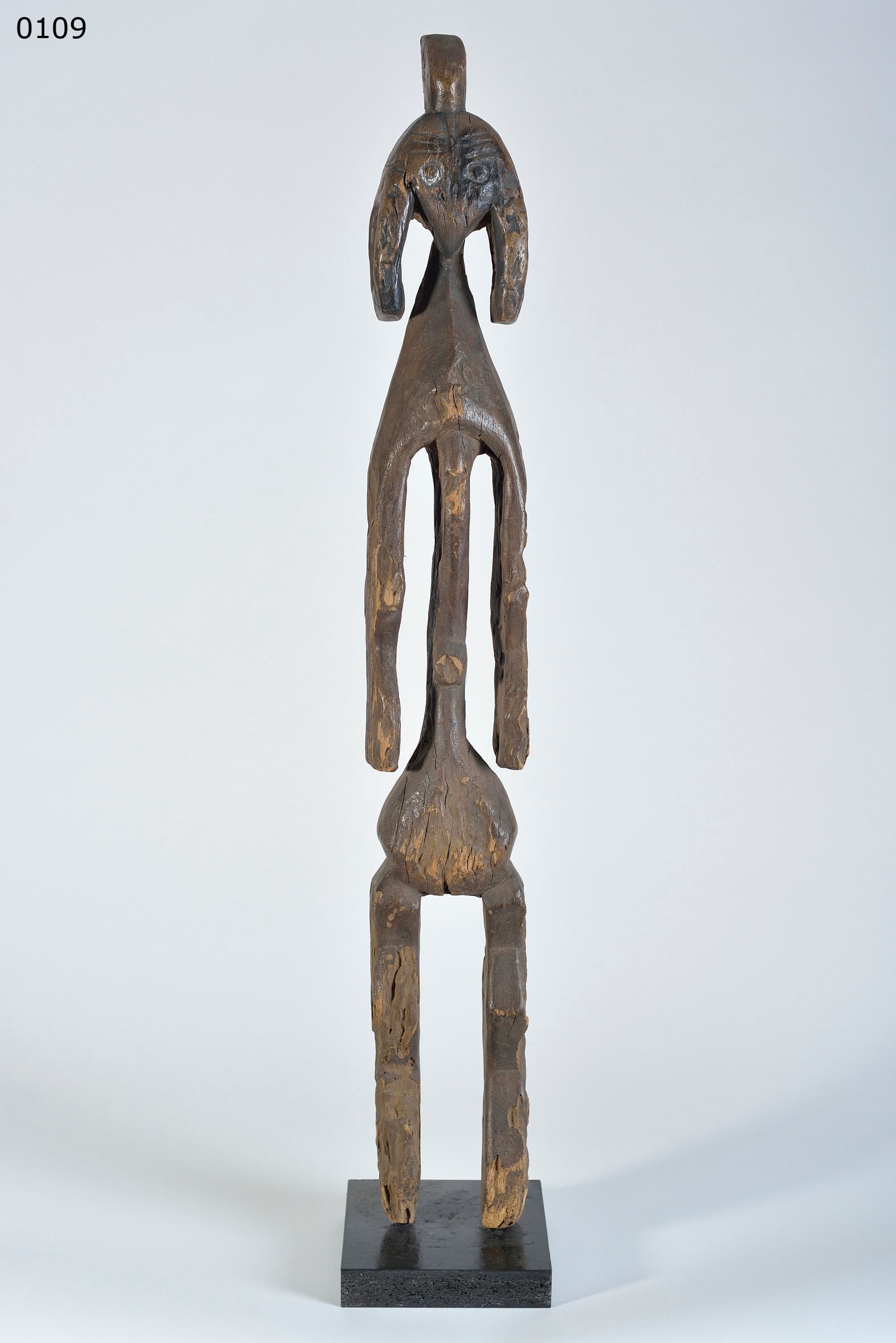
Eine kinetisch wirkende Holzfigur (zugeschrieben der 1. Hälfte des 20. Jh., 58 cm) von den Mumuye aus Nigeria - langgestreckter, röhrenförmiger Torso, Scheitelkopf mit markanten, ausgestellten Ohren und bandartige Arme, die sich vom Körper wegbewegen, um dramatische Negativräume zu öffnen.
1. Der Höhepunkt des afrikanischen Kubismus
Die Mumuye aus dem Tal des Benue-Flusses schnitzen das, was viele Kunsthistoriker für eine der dynamischsten abstrakten Skulpturenformen Afrikas halten.
- Negativer Raum als Design: Die Arme lösen sich vom Körper und schwingen wie architektonische Strebepfeiler nach unten.
- Schweres Holz wird luftig: Die daraus resultierende Silhouette vermittelt visuelle Kinesis - dichtes Hartholz, das sich in fließende Bänder aufzulösen scheint.
2. Zweideutigkeit und Dehnung
Mumuye-Figuren werden oft als sexuell zweideutig interpretiert.
- Androgyne Form: Der röhrenförmige Torso vermeidet eine explizite Anatomie und konzentriert den Betrachter eher auf Rhythmus und Haltung als auf das Geschlecht.
- Prestige Ornamente: Der markante Sagittalkamm und die ausgestellten Ohren stellen elitäre Frisuren und Ohrstöpsel dar und betonen die übernatürliche Fähigkeit der Figur, die Bitten der Lebenden zu "hören".
3. Das Werkzeug des Wahrsagers
Obwohl sie als "Ahnenstatue" bezeichnet werden, gelten sie in der ethnographischen Literatur als aktive Instrumente.
- Persönliches Eigentum: Im Besitz von Ältesten, Wahrsagern und Regenmachern - keine passiven Grabzeichen.
- In Krisenzeiten konsultiert: Sie wurden gehalten, angesprochen und mit Opfergaben gefüttert, um die Führung der Ahnen während Krieg, Krankheit oder Dürre zu kanalisieren.
Zusammenfassung
Diese Mumuye-Figur gilt als ein bemerkenswertes Beispiel für ein proto-modernistisch anmutendes Design. Sie verzichtet auf anatomischen Realismus zugunsten einer fließenden, kinetischen Abstraktion, die eine feine spirituelle Dynamik vermittelt und als aktives physisches Instrument eines Wahrsagers aus dem Benue-Tal gedient haben dürfte.
KI-unterstützt erstellt aus Sammlungsgutachten, Objektfotografie und eigener Recherche, redaktionell geprüft. Fehler sind möglich — Hinweise darauf sind uns willkommen. Zum Verfahren →