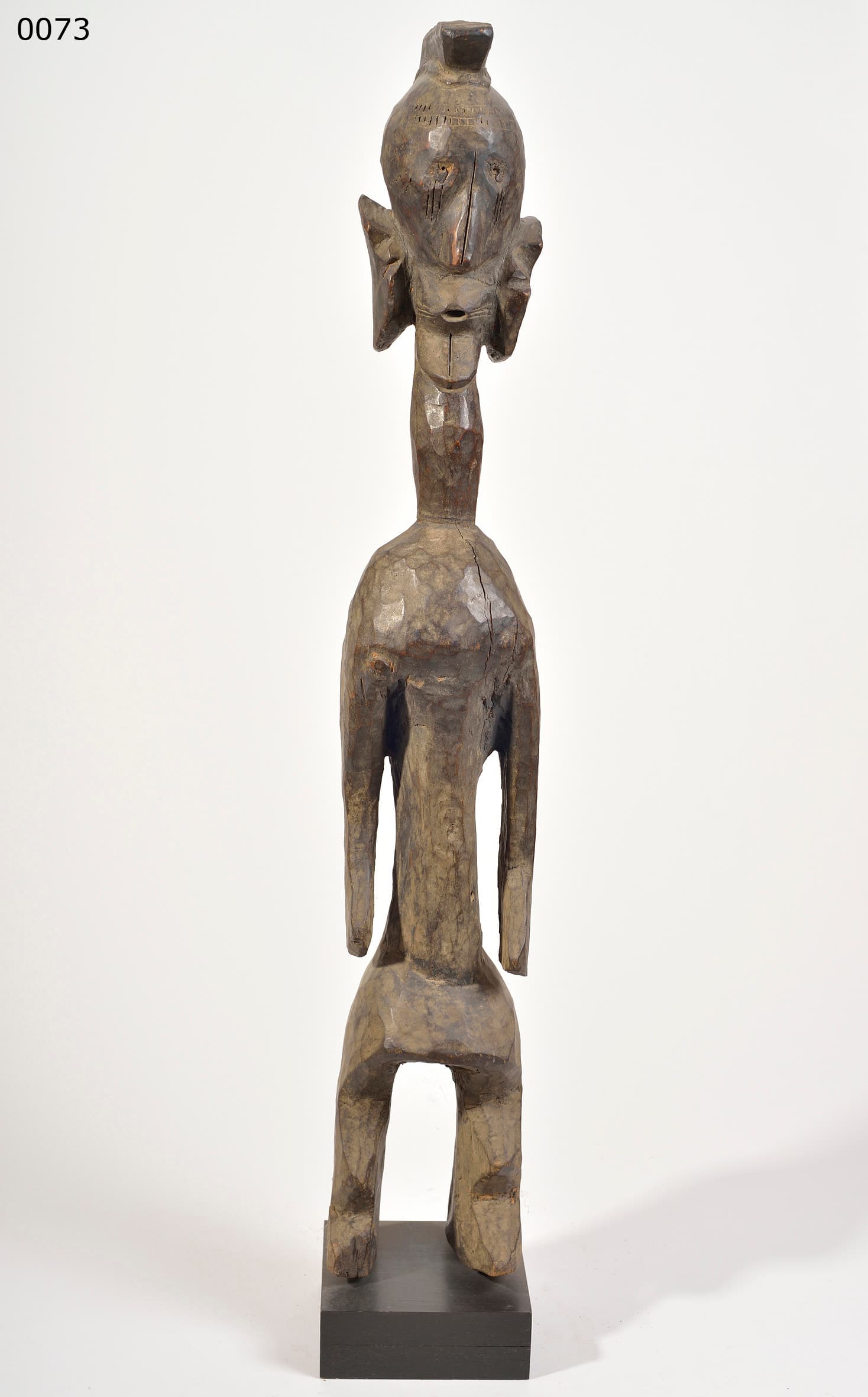
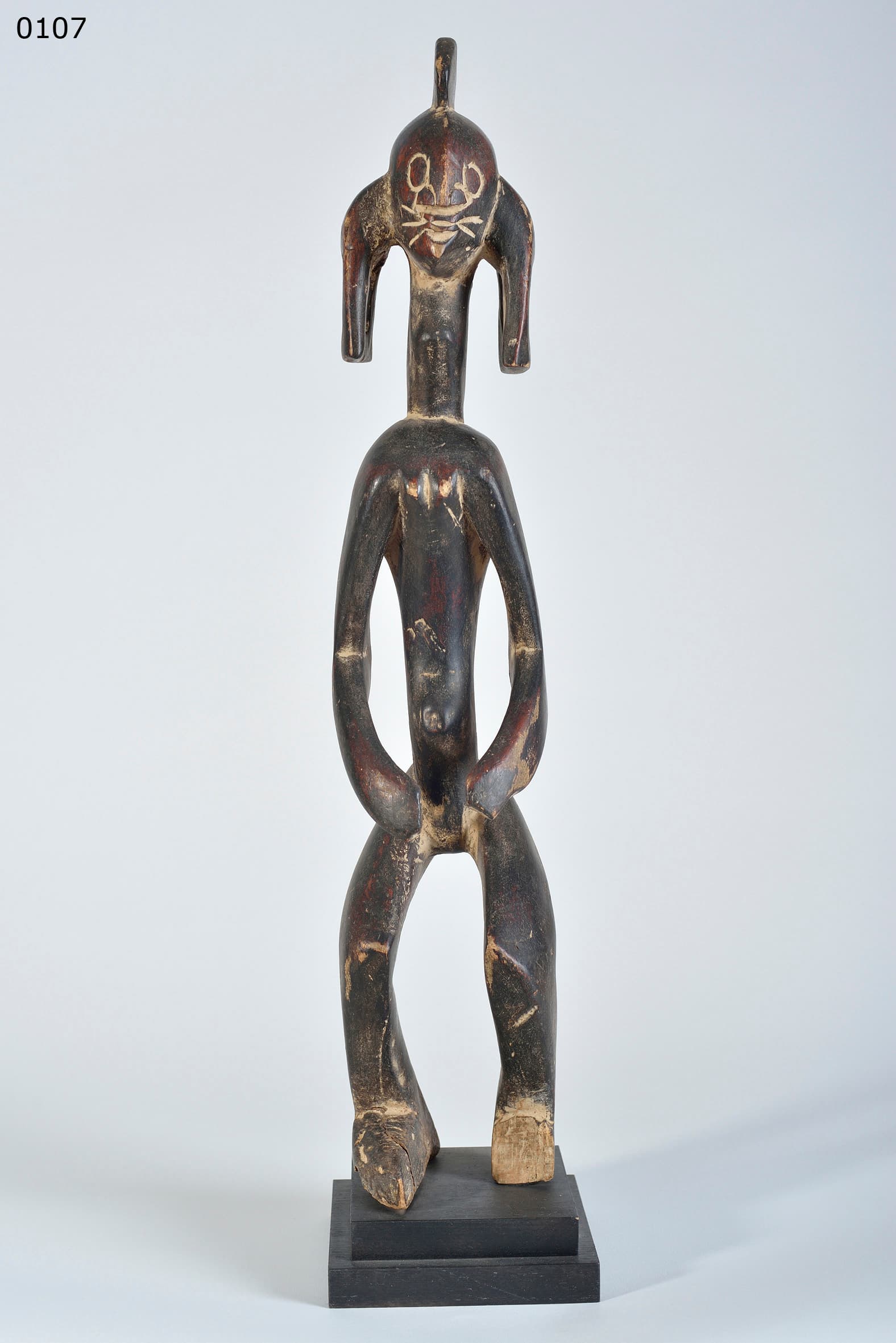
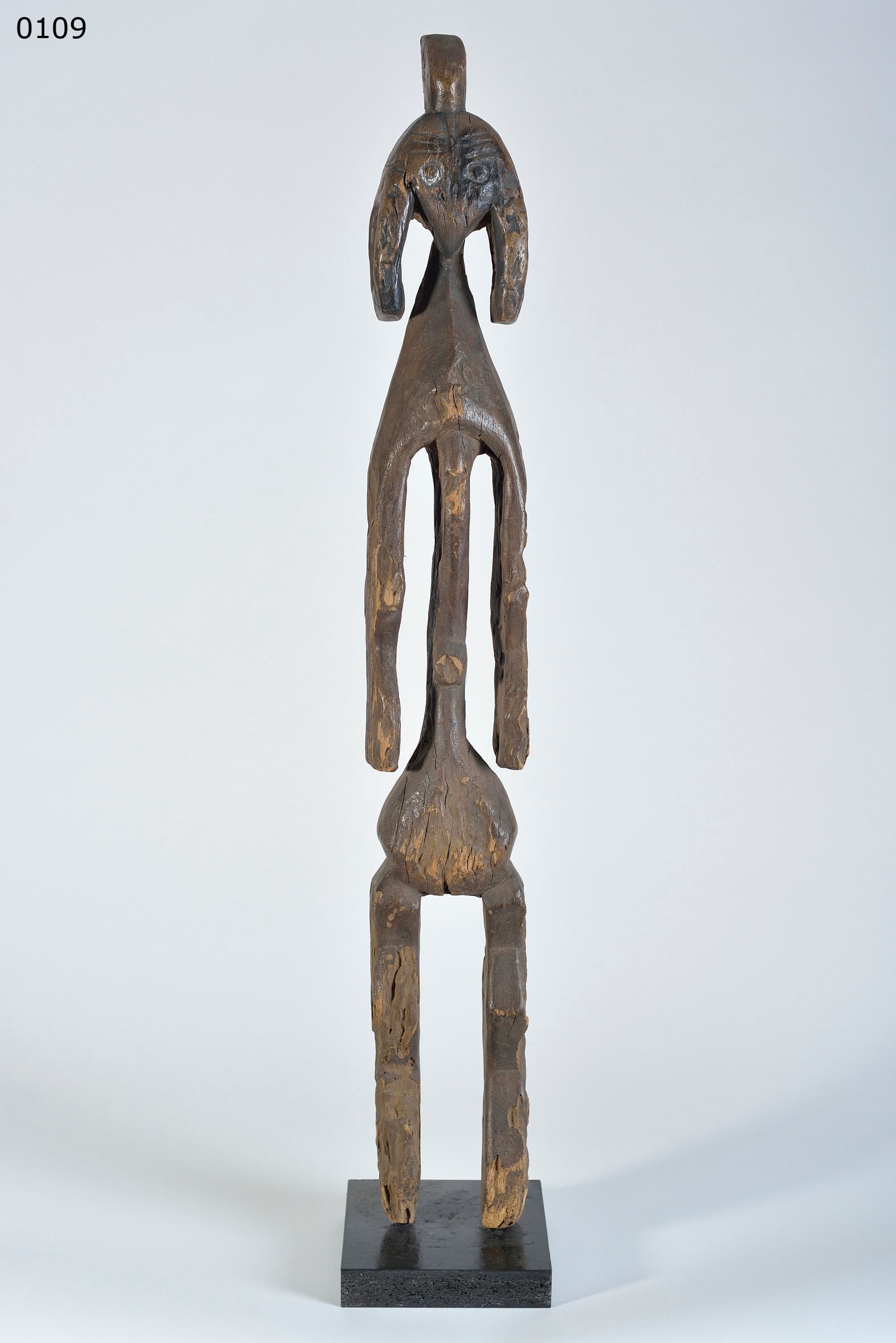
Eine große, radikal abstrakte Holzfigur (wohl 1. Hälfte 20. Jh., 113 cm) von den Mumuye aus Nigeria - länglicher, röhrenförmiger Torso, kammartiger Kopf und bandartige Arme, die sich nach unten schwingen, um den negativen Raum zu betonen.
1. Ein bedeutendes Beispiel afrikanischer Abstraktion
Die Mumuye aus dem Tal des Benue-Flusses schufen Skulpturen, die in der Kunstgeschichte oft zu den dynamischsten Beispielen abstrakter Kunst in Afrika gezählt werden.
- Negativer Raum als Struktur: Anstatt einen massiven Holzblock zu schnitzen, arbeitet der Mumuye-Bildhauer in das Holz hinein, um die Arme freizulegen, die wie architektonische Strebepfeiler hängen. Die Luft zwischen Armen und Rumpf ist für die visuelle Wirkung ebenso wichtig wie das Holz selbst.
- Eine weibliche Identität: Während viele Mumuye-Figuren (Iagalagana) bis zur Androgynität stilisiert sind, ist dieses Stück als weiblich anzusprechen. Der markante Scheitel stellt eine traditionelle Frisur dar, die einst sowohl von Männern als auch von Frauen mit hohem Status getragen wurde.
2. Aktive Weissagung, nicht passives Gedenken
Obwohl diese Objekte in der Literatur oft als "Ahnenstatuen" bezeichnet werden, dienten sie traditionell nicht nur dem passiven Gedenken.
- Das Werkzeug des Regenmachers: Sie galten als das persönliche Eigentum von Ältesten, Wahrsagern und Regenmachern. Berichten zufolge hielt ein Wahrsager die Statue in der Hand, sprach mit ihr und suchte in Zeiten des Krieges, der Krankheit oder der Dürre die Führung der Ahnen.
Zusammenfassung
Diese weibliche Mumuye-Figur gilt als ein eindrucksvolles Beispiel proto-kubistischer Gestaltung. Sie verzichtet auf anatomischen Realismus zugunsten einer fließenden, kinetischen Abstraktion, die ihr eine besondere rituelle Präsenz verleiht – ein Zeugnis der traditionellen Wahrsagepraxis aus dem Benue-Tal.
KI-unterstützt erstellt aus Sammlungsgutachten, Objektfotografie und eigener Recherche, redaktionell geprüft. Fehler sind möglich — Hinweise darauf sind uns willkommen. Zum Verfahren →