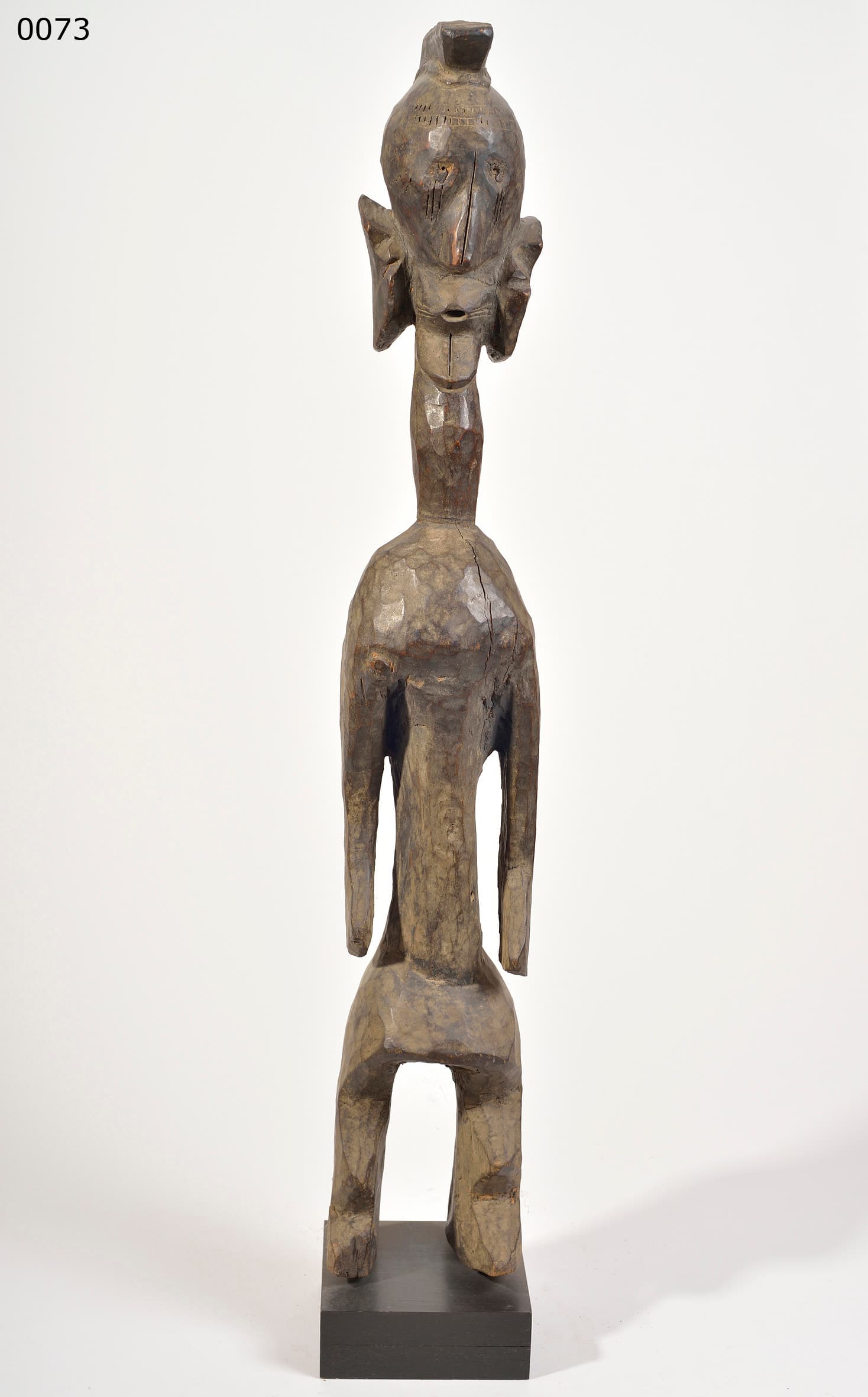
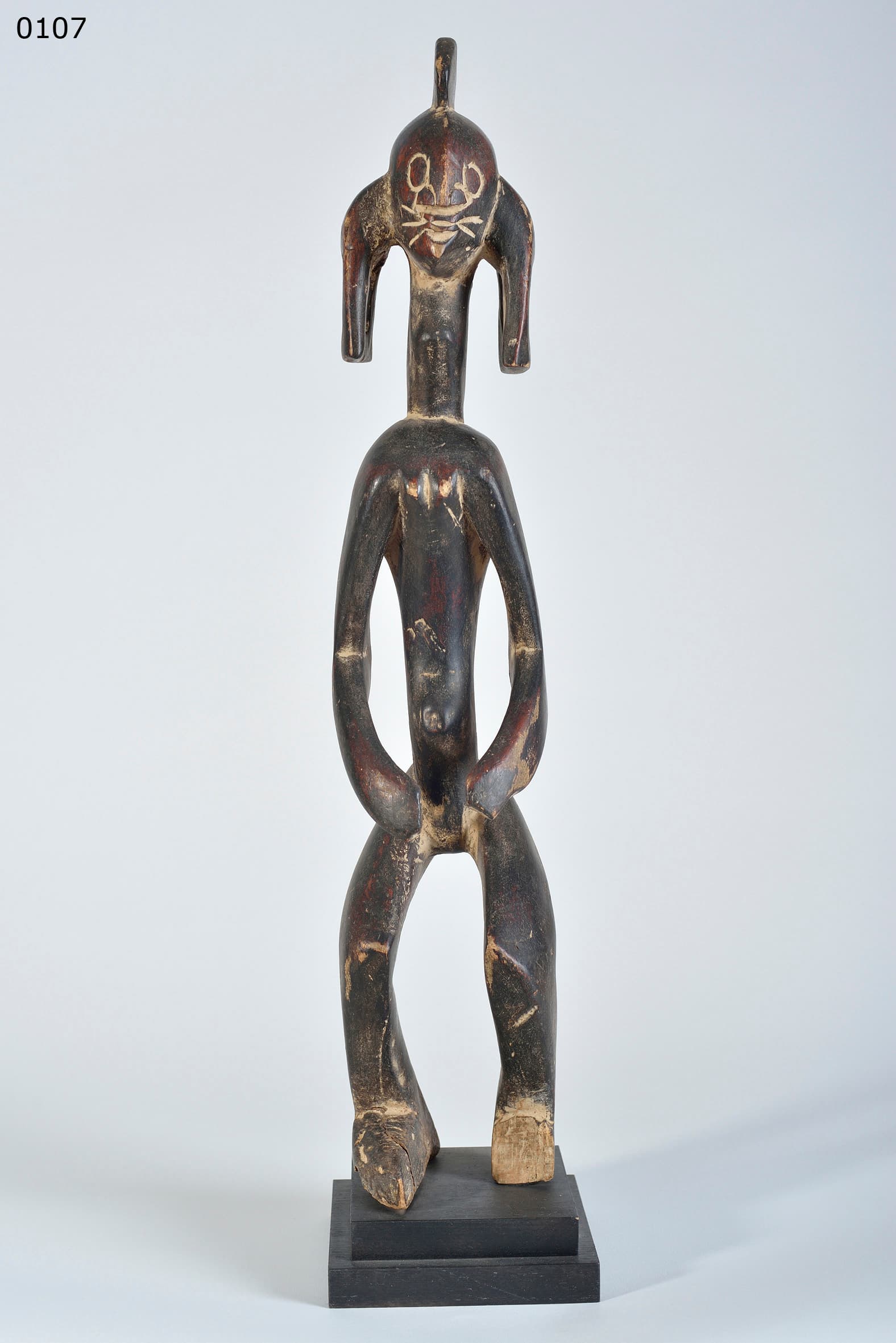
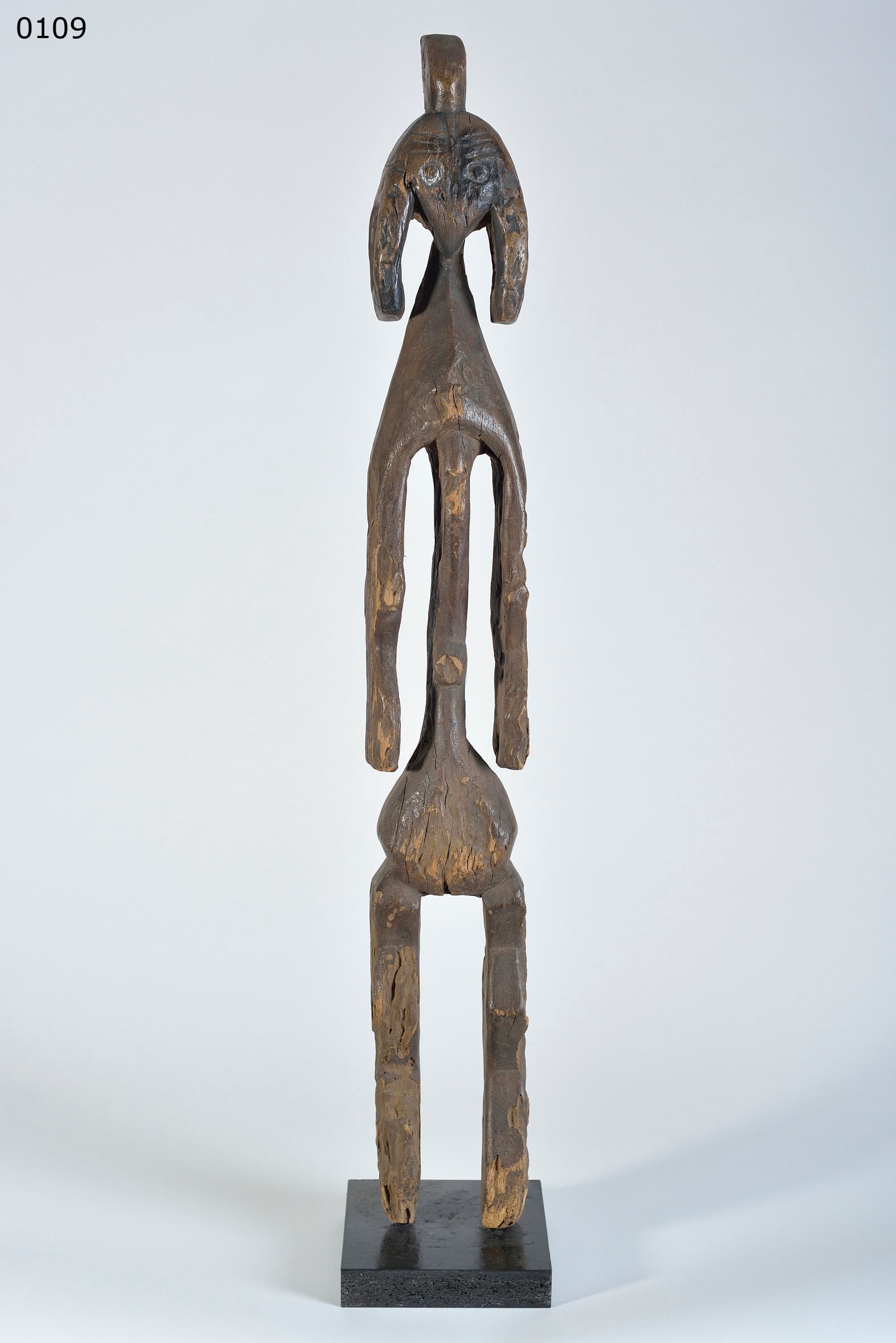
Eine hoch aufragende, radikal abstrakte Holzfigur (1. Hälfte 20. Jh., 134 cm) der Mumuye aus Nigeria - langer säulenartiger Torso, helmartiger Kopf mit ausgestellten Ohren und geschwungene, bandartige Arme, die den negativen Raum durchschneiden. Ausgestellt in der französischen Botschaft in Wien.
1. Afrikanischer Kubismus und extreme Abstraktion
Die Mumuye, die entlang des Benue-Flusses leben, blieben bis in die späten 1960er Jahre weitgehend isoliert. Als ihre Kunst "entdeckt" wurde, schockierte sie die Kunstwelt mit ihrer modernen, fast kubistischen Abstraktion.
- Negativer Raum: Die Brillanz der Mumuye-Schnitzerei liegt in dem, was fehlt. Die Arme lösen sich vom Körper und sinken nach unten, wodurch große Hohlräume entstehen, die das schwere Holz luftig und kinetisch erscheinen lassen.
2. Wahrsagerei und aktive Nützlichkeit
Trotz der Bezeichnung "Ahnen" waren diese Figuren (Iagalagana) keine passiven Grabzeichen.
- Regenmacher und Heiler: Sie gehörten mächtigen Ältesten, Wahrsagern und Regenmachern. Die Figuren wurden aktiv gehalten, angesprochen und manchmal sogar körperlich "bestraft", wenn sie keinen Regen brachten oder Kranke heilten.
- Prestige Provenienz: Mit 134 cm ist dies ein massives, klassisches Beispiel des Stils - bestätigt durch seine Ausstellung in der französischen Botschaft in Wien.
Zusammenfassung
Diese Mumuye-Figur ist ein Triumph der skulpturalen Abstraktion. Ihr dynamisches Zusammenspiel von massivem Holz und negativem Raum stellt den Höhepunkt der Ästhetik des Benue River Valley dar, die weltweit für ihre proto-modernistische Brillanz anerkannt ist.
KI-unterstützt erstellt aus Sammlungsgutachten, Objektfotografie und eigener Recherche, redaktionell geprüft. Fehler sind möglich — Hinweise darauf sind uns willkommen. Zum Verfahren →