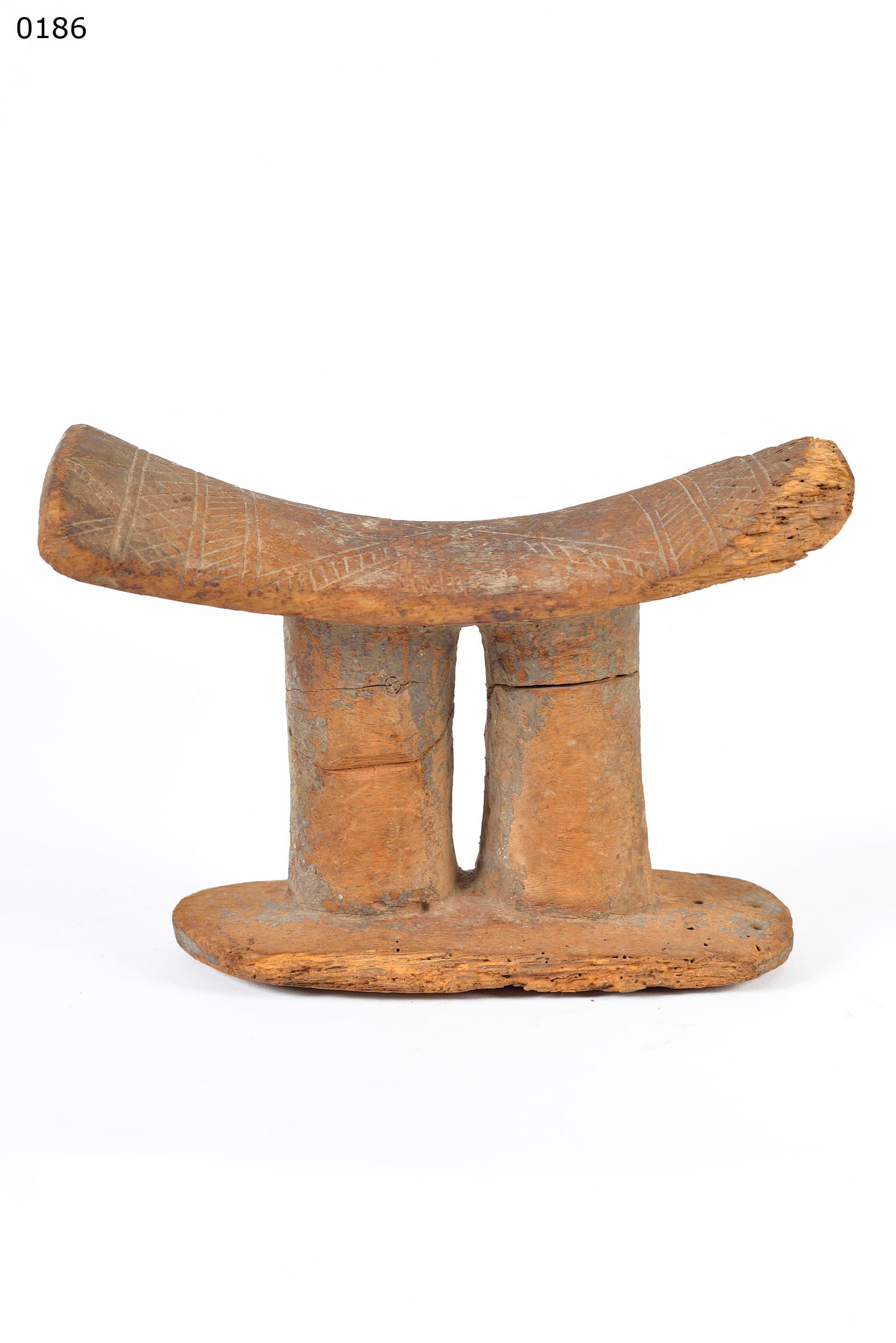
Eine hölzerne Nackenstütze (dem 10.-15. Jh. zugeschrieben, 18 cm) aus dem Tellem von Mali - eine einfache T-förmige Form mit einer sanft geschwungenen oberen Stütze, die auf einer zentralen Säule ruht. Das Holz ist stark ausgetrocknet, blass und durch die jahrhundertelange Bestattung am Rande der Klippen erodiert. **Veröffentlicht in Leloup, "Dogon" (S. 24)
1. Funktionaler Minimalismus in der Antike
Die Tellem-Nackenstützen gelten als ein charakteristischer Ausdruck des strukturellen Minimalismus.
- Reine utilitaristische Architektur: Von dekorativen Schnitzereien befreit, ist das Objekt auf eine gekrümmte Fläche reduziert, die den Nacken stützt, und eine Säule, die ihn anhebt.
- **Die strenge Geometrie unterstreicht die Form und korrespondiert mit der überlebensorientierten Ästhetik, die dem mittelalterlichen Tellem-Volk zugeschrieben wird.
2. Grabbeigaben aus den Bandiagara-Höhlen
Zwischen dem 10. und 15. Jahrhundert hievten die Tellem ihre Toten in die trockenen, unzugänglichen Höhlen des Bandiagara Escarpment.
- Schutz zu Lebzeiten: Halskrausen waren intime persönliche Gegenstände, die zu Lebzeiten verwendet wurden, um die komplexen, mit Schlamm gefüllten Frisuren während des Schlafs zu schützen.
- Würde im Tod: Nach dem Tod wurde die Nackenstütze unter den Hals des Verstorbenen gelegt, um den Kopf beim Übergang der Seele ins Jenseits anzuheben und zu würdigen.
3. Kanonische Provenienz und Austrocknung
Das physische Überleben dieses hölzernen Objekts aus dem Mittelalter wird auf das extrem trockene, an Guano reiche Mikroklima in den Höhlen von Tellem zurückgeführt.
- Mumifiziertes Holz: Sehr leicht, zellulär abgebaut und zu einem blassen, knochenähnlichen Farbton oxidiert.
- Kanonisch veröffentlicht: Sein Erscheinen in Hélène Leloups Text Dogon (S. 24) dokumentiert seine Provenienz und stützt die Zuschreibung innerhalb der afrikanischen Altertumsforschung.
Zusammenfassung
Als historisches Überbleibsel aus der mittelalterlichen Sahelzone vereint diese Tellem-Halsstütze strukturellen Minimalismus mit bedeutendem historischen Kontext. Die ausgeprägte Austrocknung und die Publikationsgeschichte machen sie zu einem bemerkenswerten Objekt für archäologische Sammlungen.
KI-unterstützt erstellt aus Sammlungsgutachten, Objektfotografie und eigener Recherche, redaktionell geprüft. Fehler sind möglich — Hinweise darauf sind uns willkommen. Zum Verfahren →