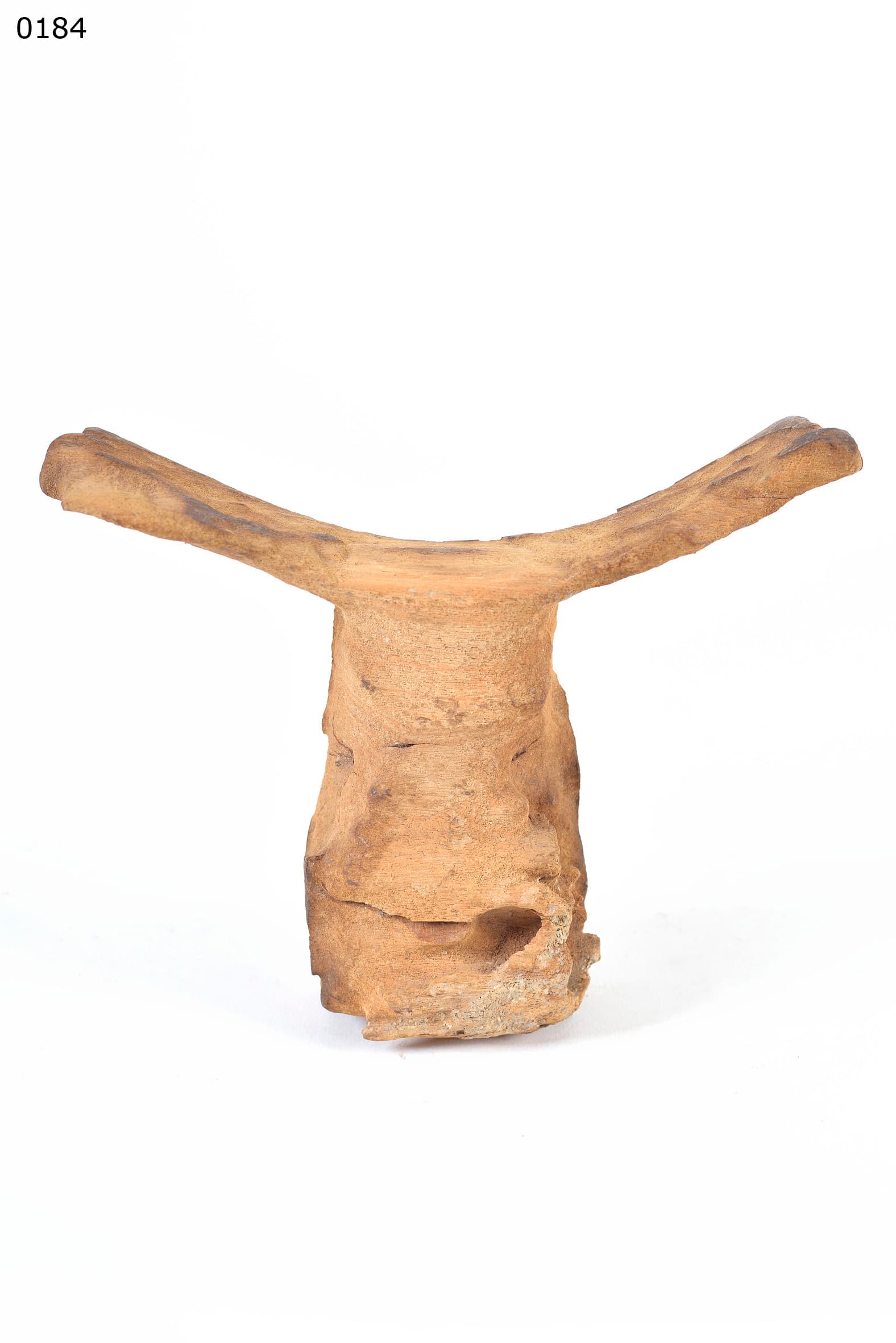
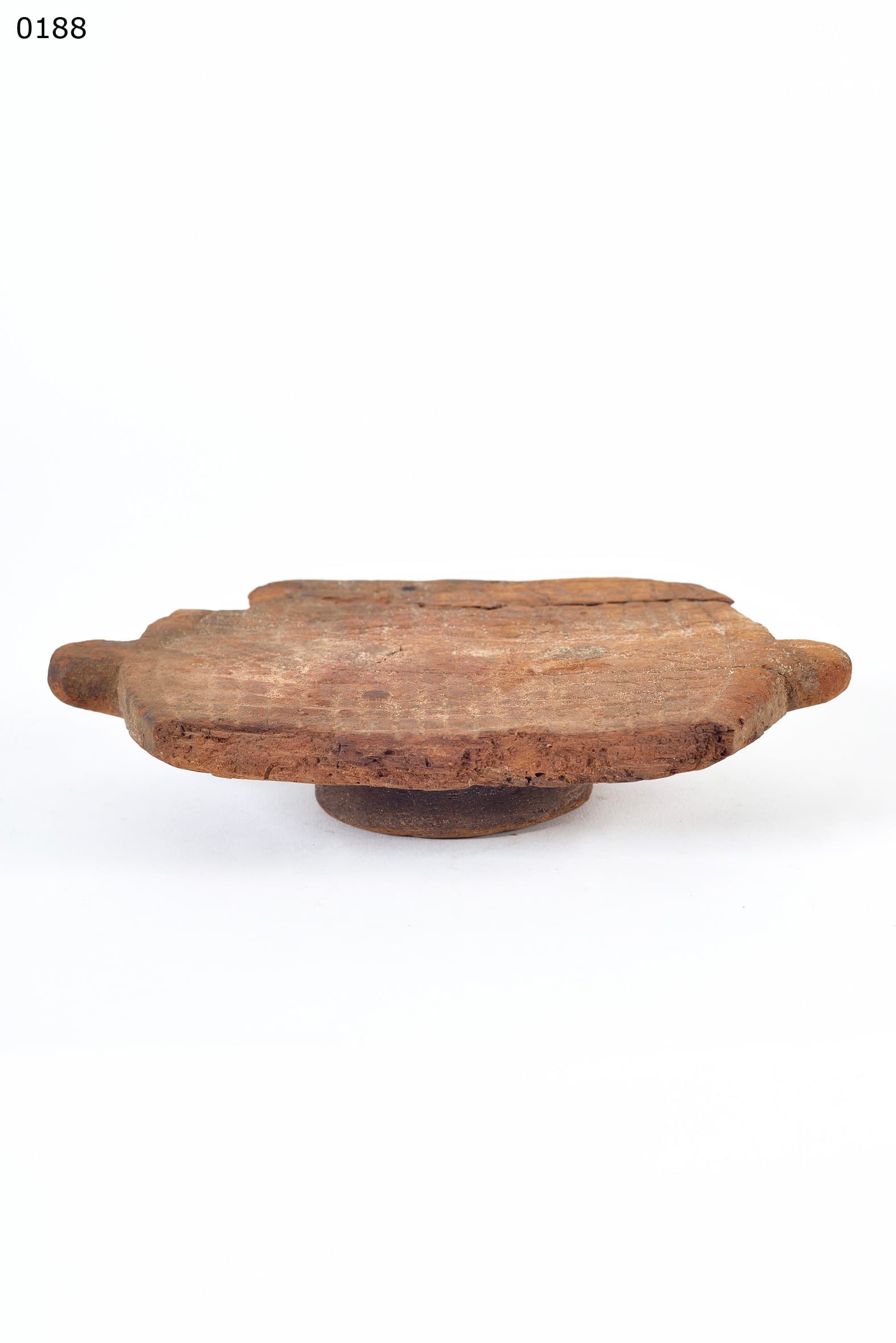
Eine männliche Nackenstütze aus Tellem (10.-15. Jh., 23 cm) aus Mali - eine breite, geschwungene obere Plattform, die von zwei verschiedenen, grob behauenen vertikalen Säulen auf einer flachen Basis getragen wird. Das sehr trockene Holz ist durch tiefe Längsrisse und eine blasse, oxidierte Oberfläche gekennzeichnet, die auf ein hohes Alter schließen lässt. Veröffentlicht in Leloup, "Dogon" (S. 24)
1. Die Zwei-Säulen-Typologie
Dieses Objekt ist ein Beispiel für die klassische Zwei-Säulen-Typologie der antiken Kopfstützen von Tellem.
- Stabilität durch Design: Zwei Säulen statt einer sorgen für mehr Stabilität und schaffen gleichzeitig einen visuell ansprechenden negativen Raum zwischen den Stützen.
- Adze Marks as Signature: Raw unpoliert Adze Marks noch schwach sichtbar auf den Säulen demonstrieren die direkte unprätentiös Carving-Techniken der mittelalterlichen Sahel - strukturelle Integrität und strenge Geometrie über Finish priorisiert.
2. Erhebung im Reich der Toten
Als grundlegender Bestandteil der Grabbeigaben von Tellem wurde diese Nackenstütze in den hohen Felsenhöhlen des Bandiagara Escarpment aufgestellt.
- Thron für den Kopf: Nicht nur eine funktionelle Stütze, sondern ein symbolischer Thron für den heiligsten Teil des Körpers.
- Würde in der Ewigkeit: Die Verstorbenen behielten ihre Würde und Haltung bei, als sie in das ewige Reich der Ahnen eintraten, dauerhaft gestützt auf diese strenge kleine Architektur.
3. Taphonomie und Veröffentlichung
Die Erhaltung des Objekts ist auf die trockene Höhlenumgebung zurückzuführen.
- Spröde Struktur: Starke Austrocknung hat tiefe organische Risse und einen weitgehenden Verlust des ursprünglichen Gewichts zur Folge - das Holz ist nun äußerst spröde.
- Dokumentation: Die Veröffentlichung in Leloups Dogon (S. 24) zusammen mit anderen mittelalterlichen Nackenstützen dokumentiert die Einordnung dieses Stücks in den kunsthistorischen Kontext.
Zusammenfassung
Diese zweisäulige Tellem-Nackenstütze ist ein bemerkenswertes Beispiel der antiken Funktionsgeometrie und ein Zeugnis einer frühen Kultur dieser Region. Ihr ausgeprägter Austrocknungszustand und die Erwähnung in der Fachliteratur unterstreichen ihre Bedeutung für Sammlungen afrikanischer Kunst.
KI-unterstützt erstellt aus Sammlungsgutachten, Objektfotografie und eigener Recherche, redaktionell geprüft. Fehler sind möglich — Hinweise darauf sind uns willkommen. Zum Verfahren →