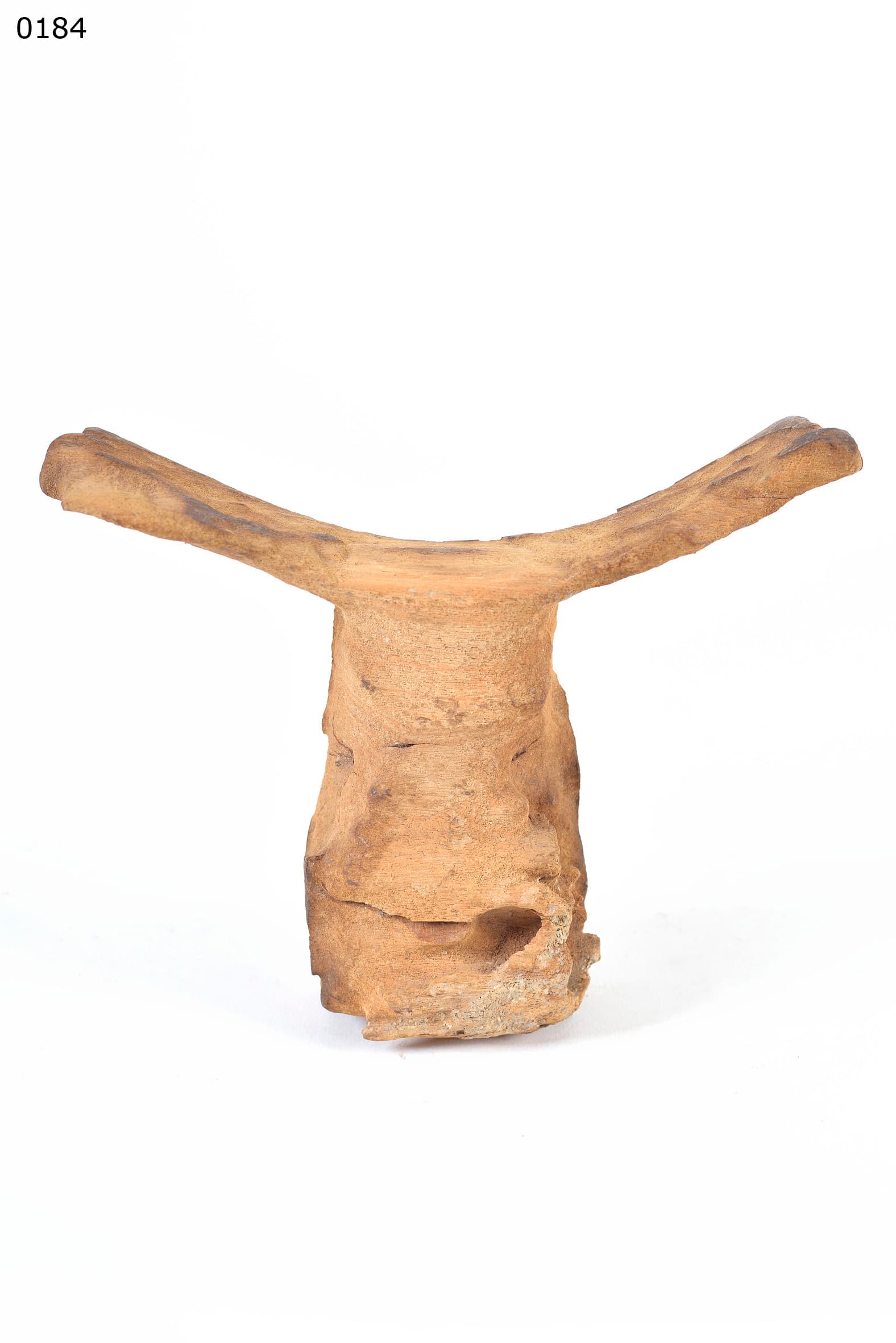
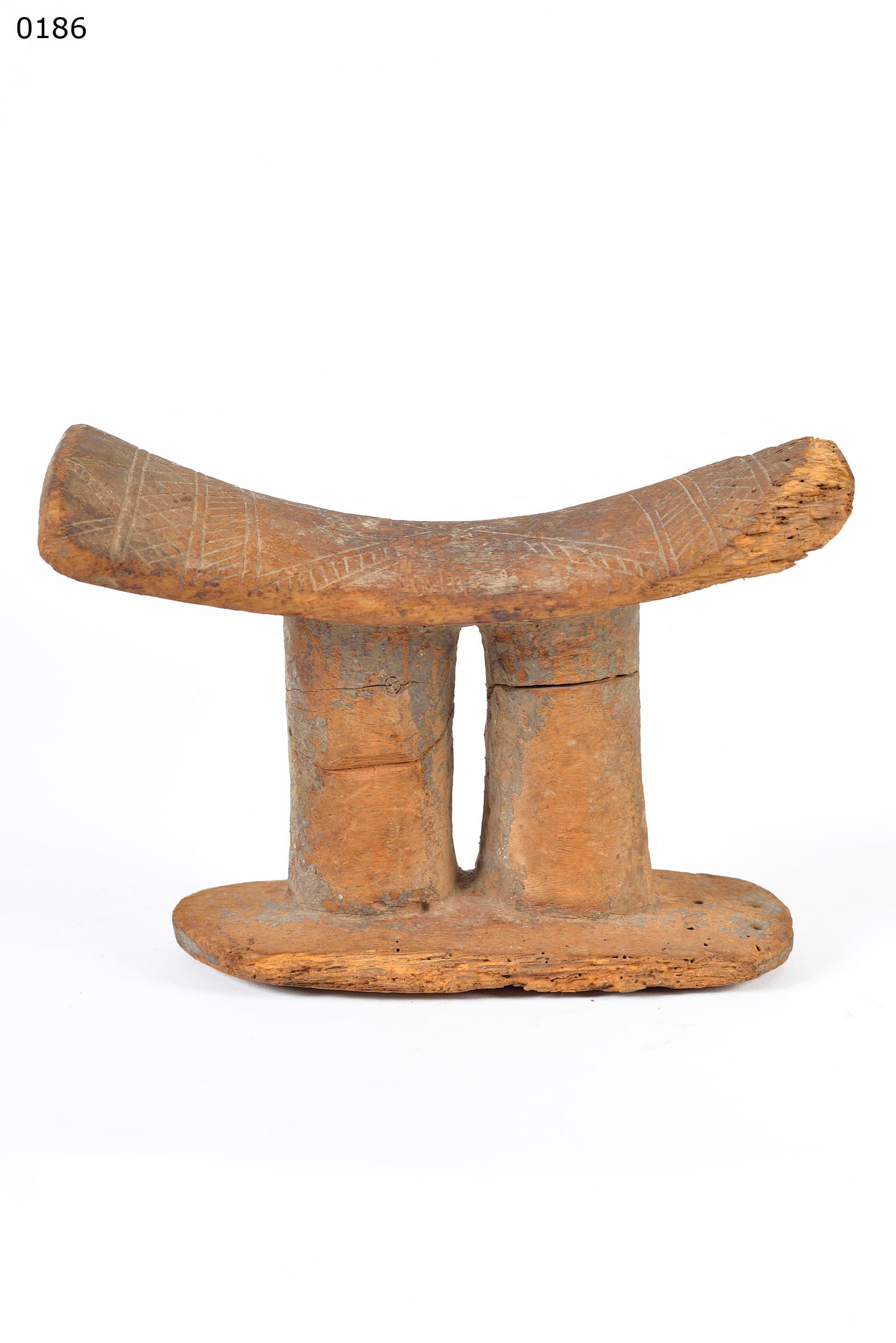
Eine weibliche Tellem-Nackenstütze (10.-15. Jh., 20 cm) aus Mali - eine niedrige, abgeflachte, leicht ovale Plattform, die auf einem minimalen stumpfartigen Sockel ruht, stark erodiert, vollständig von der äußeren Rinde befreit, die Oberfläche tief strukturiert, porös und blass oxidiert, was auf ein hohes Alter verweist. Veröffentlicht in Leloup, "Dogon" (S. 24)
1. Geschlechtsspezifische Typologien in der mittelalterlichen Schnitzerei
Tellem-Halsstützen weisen spezifische morphologische Variationen auf, die von der Forschung mit dem Geschlecht des Besitzers in Verbindung gebracht werden.
- Niedrig versus hoch: Im Gegensatz zu den höheren männlichen Nackenstützen mit Säulen wird diese niedrige, breite und abgeflachte Form als weibliche Nackenstütze klassifiziert.
- Anpassung an die Frisur: Das niedrige Profil passte zu den spezifischen, aufwendigen Flecht- oder Schlammfrisuren der Tellem-Frauen, bei denen eine breite, stützende Ebene Vorrang vor einer vertikalen Erhebung hatte.
2. Intime Gefährten im Jenseits
Diese Nackenstützen, die ausschließlich in den hoch gelegenen Trockenhöhlen der Bandiagara-Felswand gefunden wurden, waren sehr persönliche Gegenstände.
- Geladen mit Nyama: Durch den ständigen Kontakt mit dem Kopf der Frau während ihres Lebens wurde das Objekt mit ihrer Nyama durchtränkt - einer spirituellen Essenz, die sie über die Jahre des nächtlichen Gebrauchs aufgenommen hatten.
- Ständiger Begleiter bei der Bestattung: Durch die Platzierung der Nackenstütze in der Grabhöhle wurde sichergestellt, dass ihr Geist beim Übergang in das Reich der Ahnen würdevoll, bequem und energetisch intakt blieb.
3. Taphonomische Versteinerung und Elite-Herkunft
Der physische Zustand des Holzes ist ein Beispiel für ausgeprägte archäologische Taphonomie.
- Zellularer Zerfall: Die jahrhundertelange Lagerung in einer trockenen, alkalischen Höhlenumgebung hat die Zellstruktur zu einer spröden, schwammartigen Textur reduziert, was für ein hohes Alter spricht.
- Neben dem männlichen Paar veröffentlicht: Das Erscheinen in Leloups Dogon (S. 24) neben den männlichen Exemplaren stützt die Zuschreibung des Stücks und ist vereinbar mit einer mittelalterlichen Datierung.
Zusammenfassung
Diese Nackenstütze aus Tellem repräsentiert die spezifische weibliche Typologie der frühen sahelischen Kopfstützen und gilt als ein intimes archäologisches Artefakt. Ihr ausgeprägter Zellabbau und ihre Publikationsgeschichte machen sie zu einem bedeutenden Zeugnis dieser Kunsttradition.
KI-unterstützt erstellt aus Sammlungsgutachten, Objektfotografie und eigener Recherche, redaktionell geprüft. Fehler sind möglich — Hinweise darauf sind uns willkommen. Zum Verfahren →