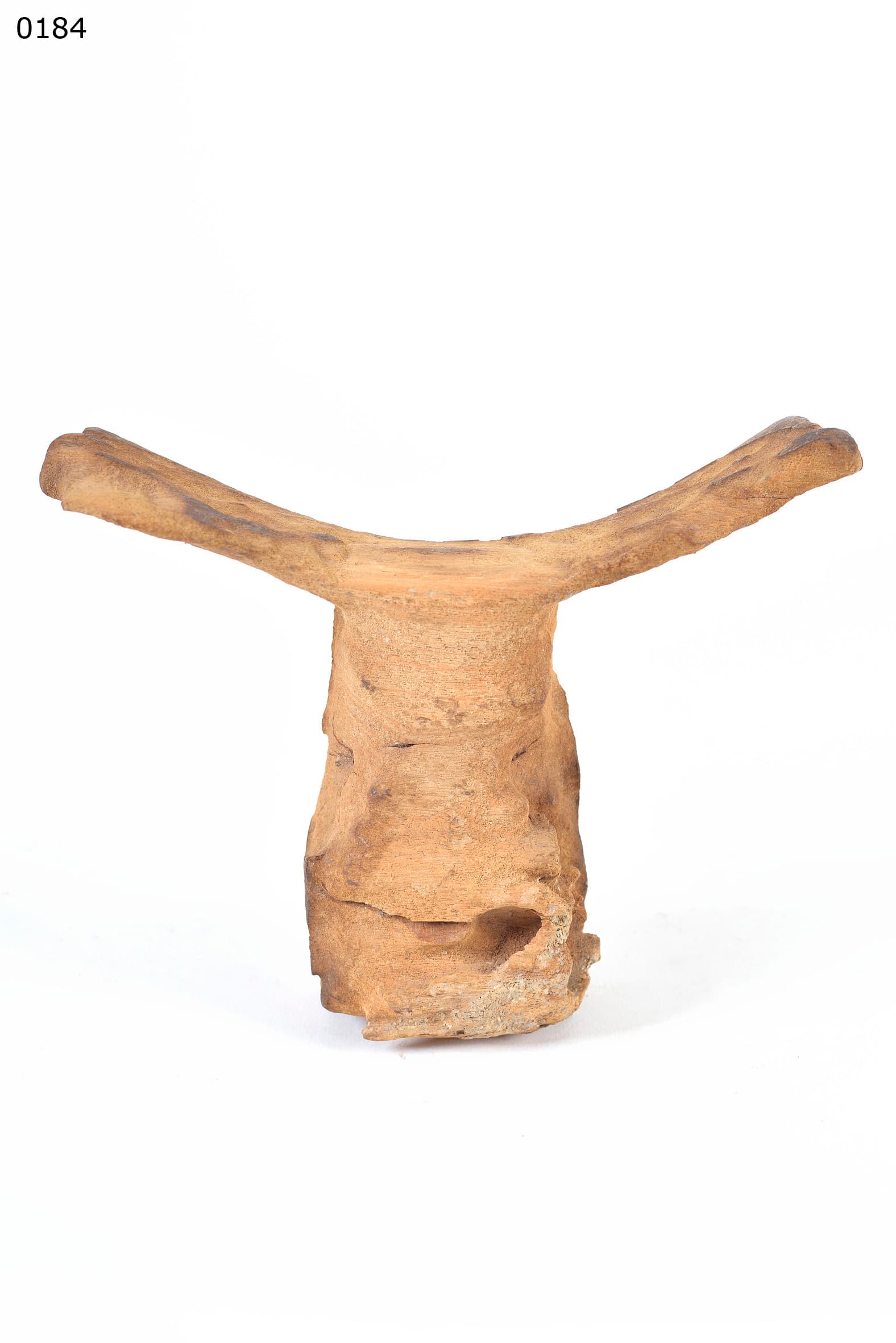
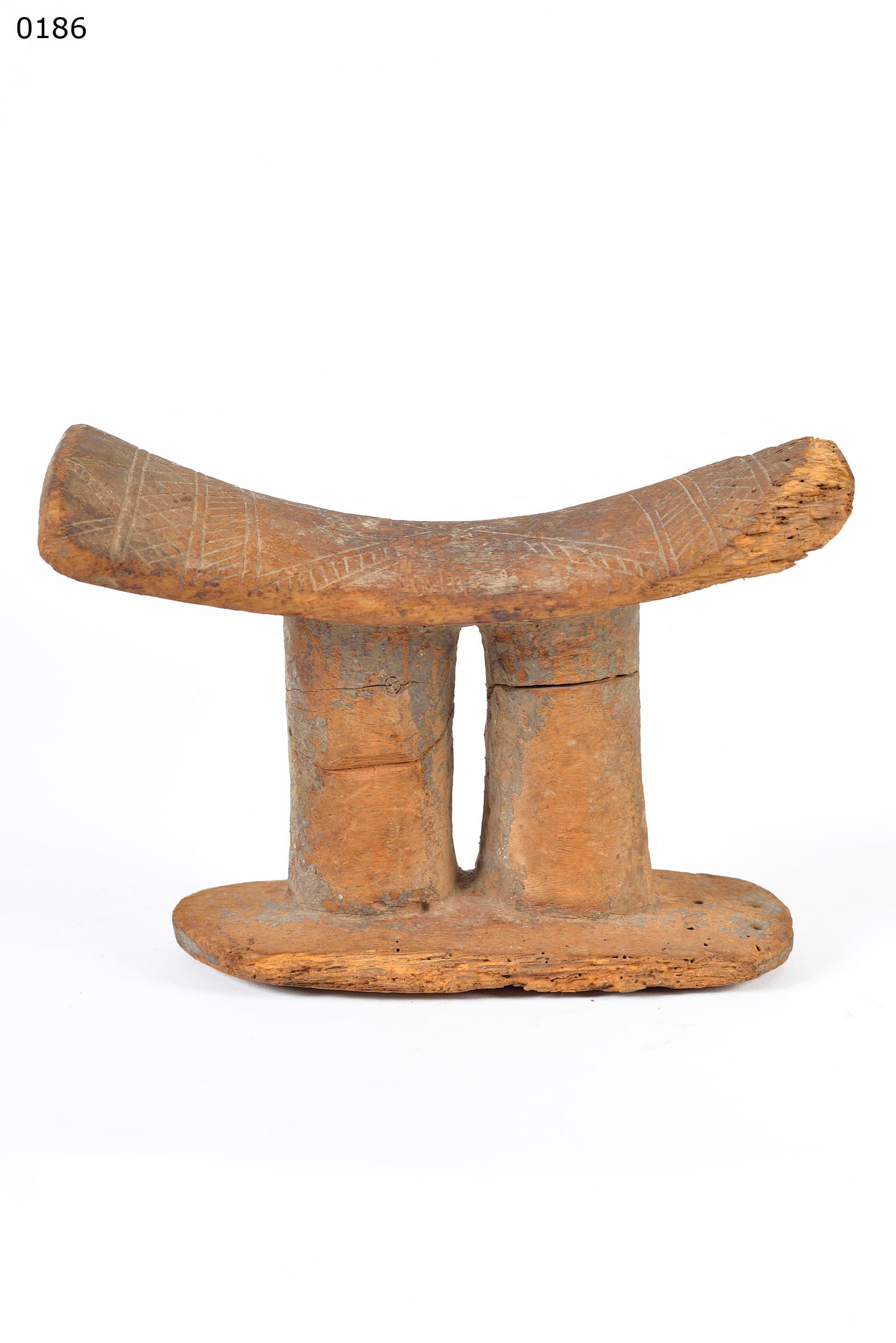
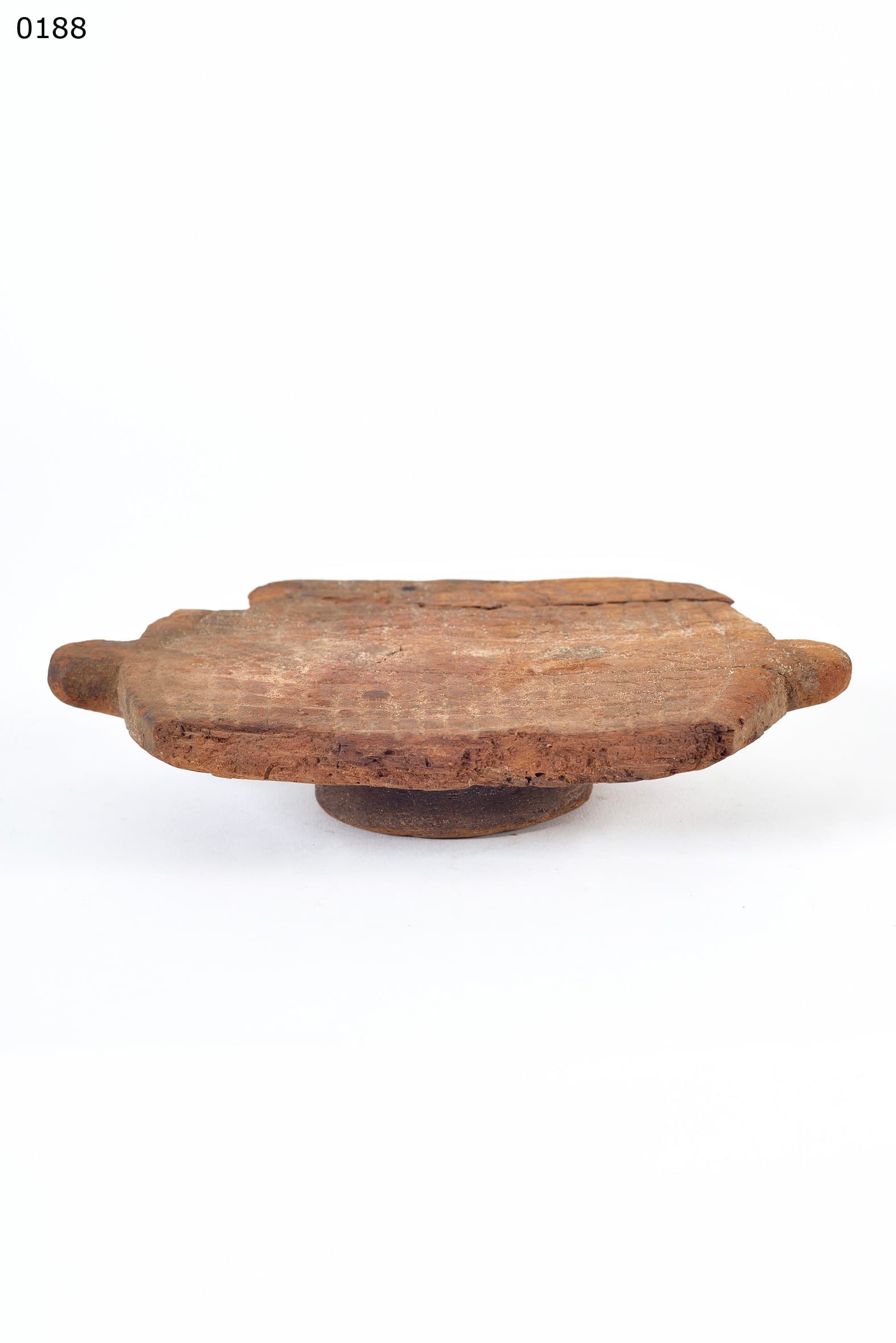
Diese beiden miniaturisierten, sehr archaischen Holzfiguren sind extrem minimalistisch geschnitzt, mit charakterlosen, blockartigen Köpfen und rudimentären Körpern ohne gelenkige Arme. Das stark versteinerte, knochentrockene Holz hat eine gespenstische, krustige Oberfläche, die auf ein hohes Alter und die Lagerung in Höhlen hinweist.
1. Ästhetischer Stil und regionale Merkmale
Diese seltenen Figuren werden der Tellem-Kultur zugeschrieben, den Vorgängern der Dogon, die das Bandiagara Escarpment bewohnten. Die Kunst der Tellem ist älter als der ausgeprägte Kubismus der Dogon-Schnitzerei und setzt stattdessen auf einen fließenden, fast amöbenhaften Minimalismus. Der Schnitzer hat die menschliche Anatomie vollständig umgangen und die Figuren auf reine, phallische Silhouetten reduziert. Diese strenge, unnachgiebige Geometrie entfernt die individuelle Identität und verwandelt das Holz in ein universelles, grafisches Ideogramm des Lebens, der Generation und der dauerhaften menschlichen Präsenz.
2. Rituelle Funktion und Geheimbund-Kontext
Aufgrund ihrer geringen Größe und ihrer stark verallgemeinerten Formen handelte es sich eher um persönliche, tragbare Amulette als um gemeinschaftliche Schreinaltäre. Wahrscheinlich wurden sie von Menschen getragen, die Fruchtbarkeit, Schutz auf gefährlichen Reisen oder Linderung bei Krankheiten suchten. Ihre ursprüngliche Platzierung wird in den hoch gelegenen, unzugänglichen Grabhöhlen vermutet, die in die steilen Felswände des Bandiagara-Gebirges gehauen waren. Es wird angenommen, dass sie den Toten zur Seite gestellt wurden, um die Seelen zu begleiten und das Vermächtnis der Verstorbenen in den Bergen zu verankern.
3. Physische Patina und Altersnachweis
Die Datierung in das 10. bis 15. Jahrhundert ist mit der weitgehenden Versteinerung des Holzes vereinbar. Nachdem das Holz vermutlich über lange Zeit in dem trockenen, geschützten Mikroklima der hochgelegenen Felshöhlen geruht hat, hat es Feuchtigkeit und Gewicht verloren und eine harte, steinähnliche Textur angenommen. Die Oberflächen zeigen keine Anzeichen moderner Bearbeitung und sind stattdessen mit einer brüchigen, grau-weißen Kruste aus Staub, Höhlenerde und Fledermausguano überzogen – eine Patina, die für ein hohes Alter spricht.
Zusammenfassung
Diese Tellem-Figuren sind bedeutende Zeugnisse der mittelalterlichen Epoche Westafrikas. Ihr geometrischer Minimalismus und ihre versteinerten, höhlengealterten Oberflächen machen sie zu historisch wertvollen Relikten der Bandiagara-Felsen.
KI-unterstützt erstellt aus Sammlungsgutachten, Objektfotografie und eigener Recherche, redaktionell geprüft. Fehler sind möglich — Hinweise darauf sind uns willkommen. Zum Verfahren →