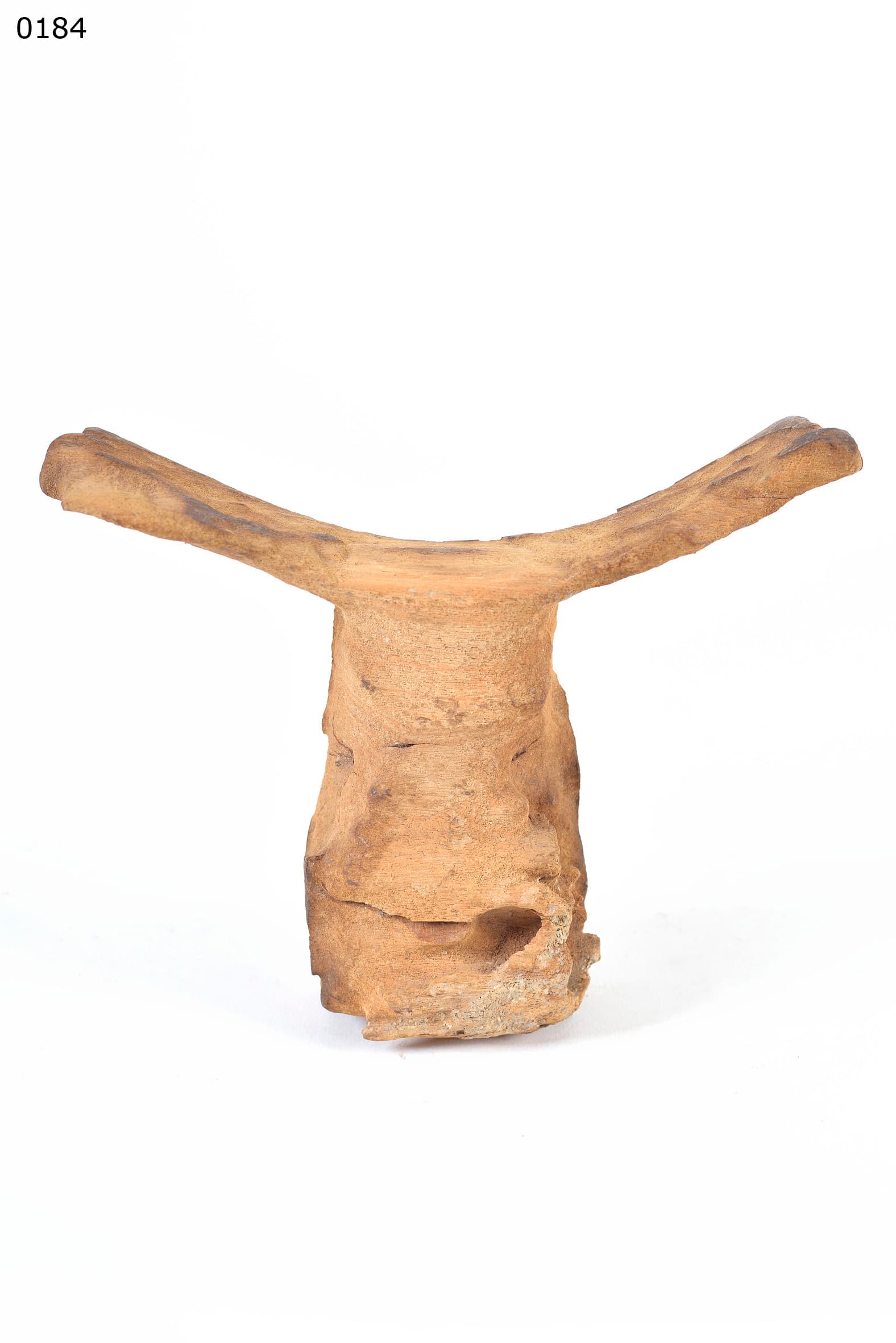
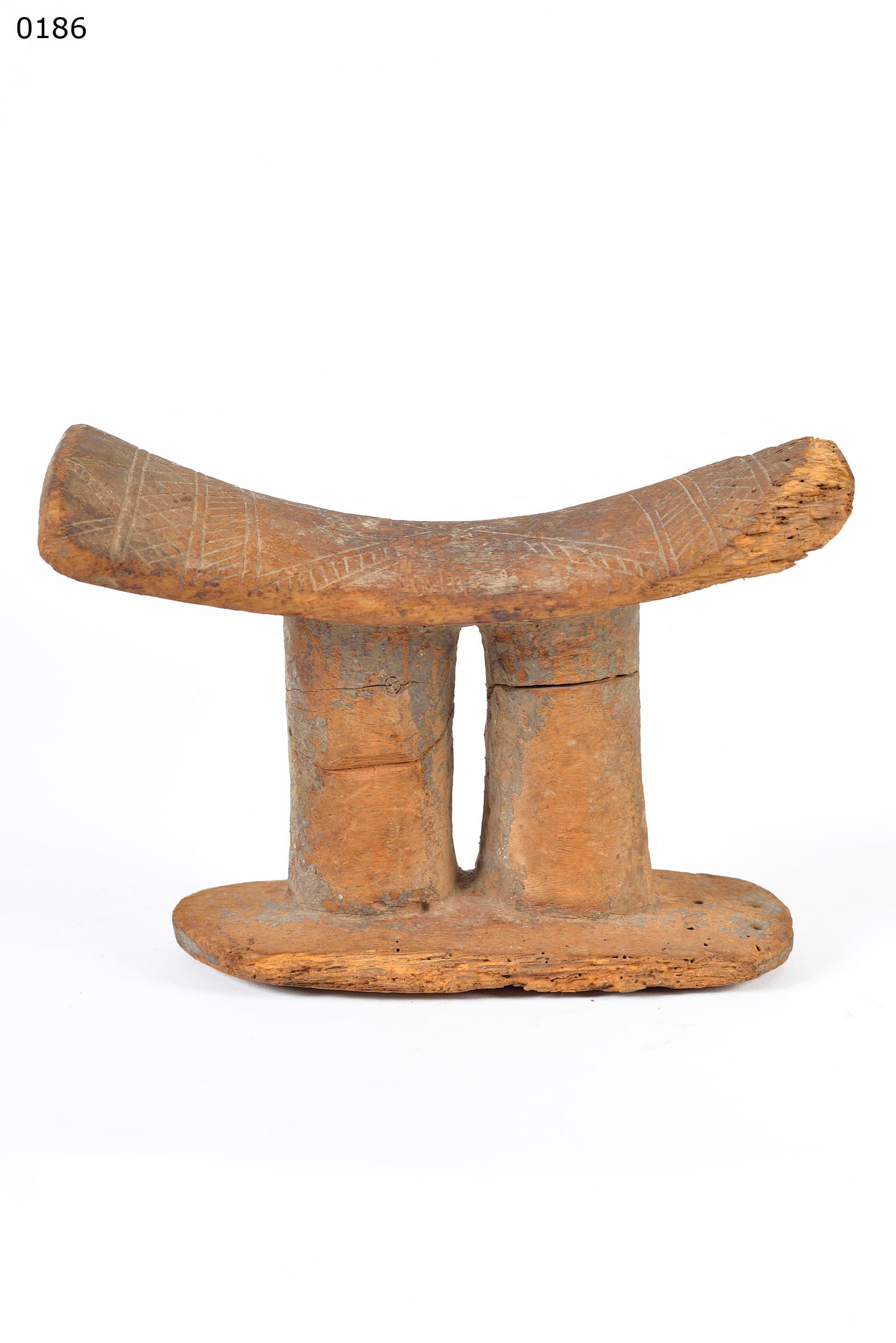
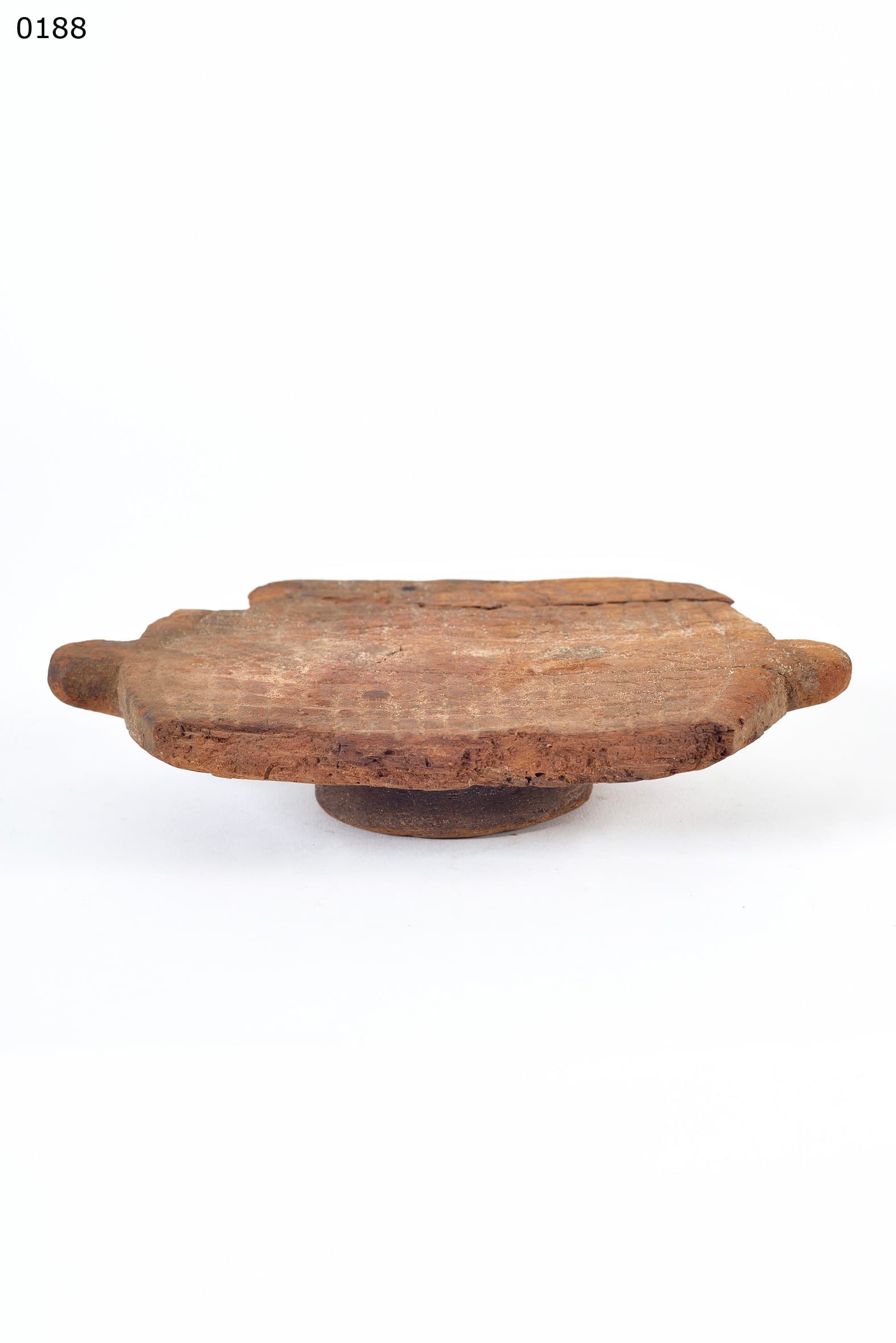
Eine stark erodierte antike Holzfigur (10.-15. Jh., 120 cm) aus dem Tellem von Mali, die mit senkrecht über den Kopf erhobenen Armen steht und mit einer dicken, krustigen Opferpatina überzogen ist. Veröffentlicht in der Monographie DOGON, Seite 26.
1. Tiefes Altertum: Das Prä-Dogon-Mysterium
Dies ist eine archäologische Rarität auf Museumsniveau. Die Tellem waren ein geheimnisvolles Volk, das zwischen dem 10. und 15. Jahrhundert im Bandiagara Escarpment von Mali lebte - lange bevor die Dogon kamen und sie verdrängten.
- Höhlenerhaltung: Die Holzschnitzereien der Tellem haben nur überlebt, weil sie in hohen, trockenen, unzugänglichen, in die Felswände geschnittenen Grabhöhlen versteckt waren - sicher vor Termiten und Feuchtigkeit.
2. Das Plädoyer für Regen
Das charakteristische Merkmal der Tellem-Statuen ist ihre Haltung: beide Arme sind gerade nach oben gestreckt.
- Die Geste: Im brutalen, trockenen Klima der Sahelzone wird diese Haltung der erhobenen Arme allgemein als ein dringendes, verzweifeltes Flehen zum Himmel um Regen verstanden. Es ist ein in Holz geschnitztes Gebet.
- Opferpatina: Die unglaublich dicke, verkrustete Oberfläche ist das Ergebnis von Hunderten von Jahren, in denen Blut, Hirsebrei und Affenbrotbaumöl über die Figur gegossen wurden, um die Geister zu "füttern".
3. Akademische Validierung
Genau dieses Stück wird in der Monografie DOGON auf Seite 26 veröffentlicht, was seine Authentizität und seinen Wert untermauert und es als bekanntes, dokumentiertes Überbleibsel des afrikanischen Mittelalters einstuft.
Zusammenfassung
Diese Tellem-Figur ist ein heiliges Relikt aus einer untergegangenen Zivilisation. Sie ist über 500 Jahre alt und bietet mit ihrer verzweifelt nach oben gestreckten Haltung und der dicken Kruste alter Opfergaben einen eindringlichen Einblick in die Überlebensrituale des mittelalterlichen Westafrika.
KI-unterstützt erstellt aus Sammlungsgutachten, Objektfotografie und eigener Recherche, redaktionell geprüft. Fehler sind möglich — Hinweise darauf sind uns willkommen. Zum Verfahren →