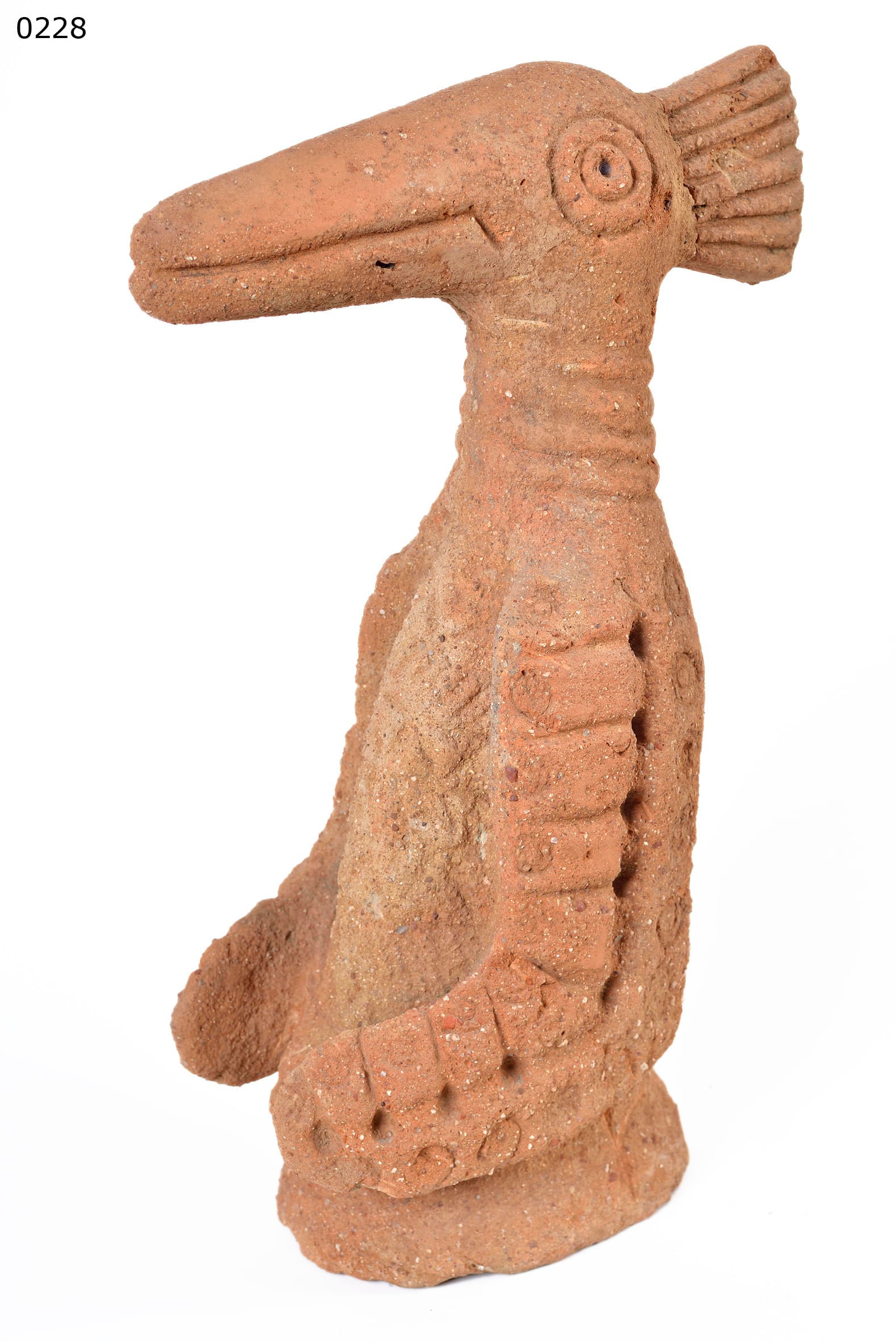
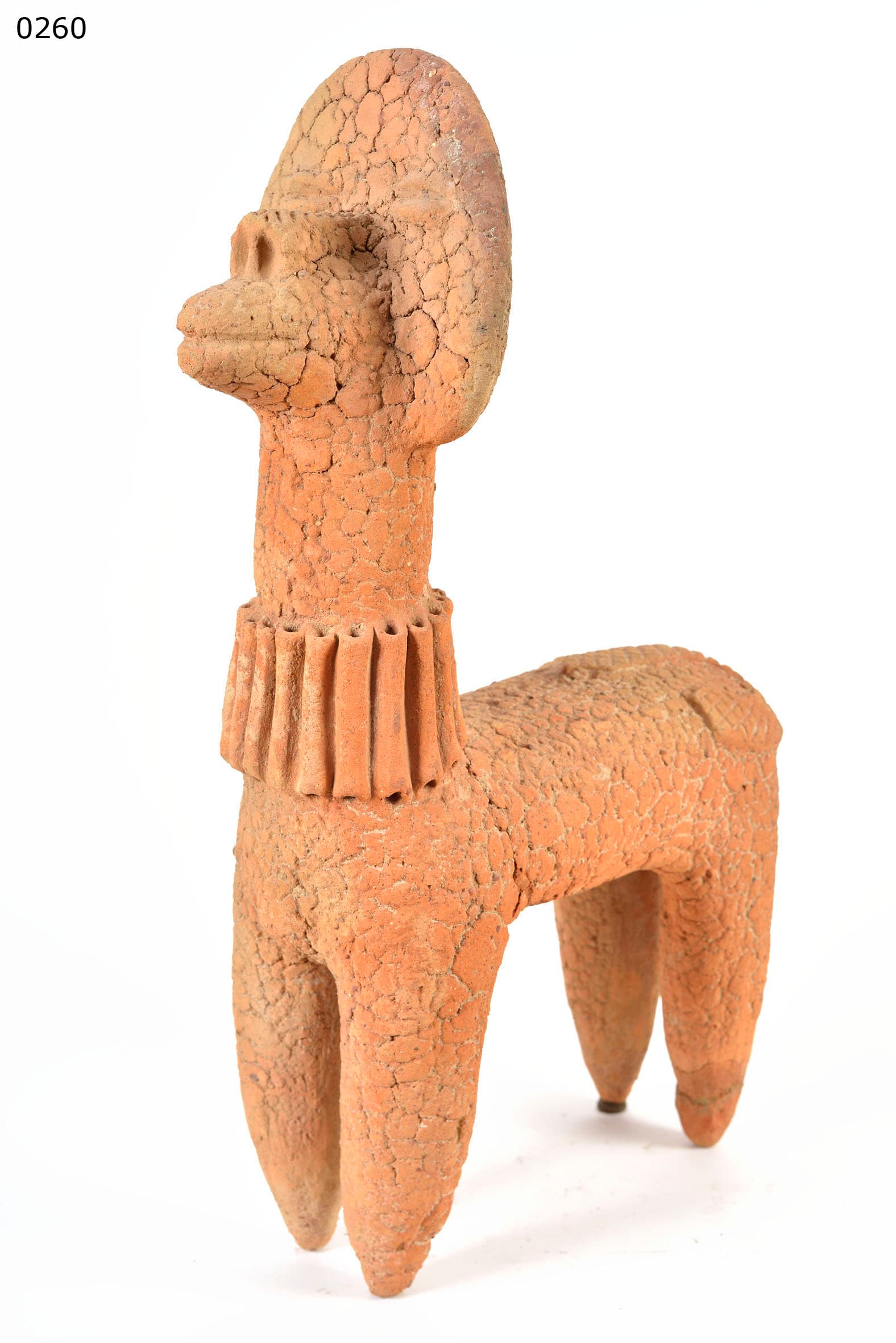
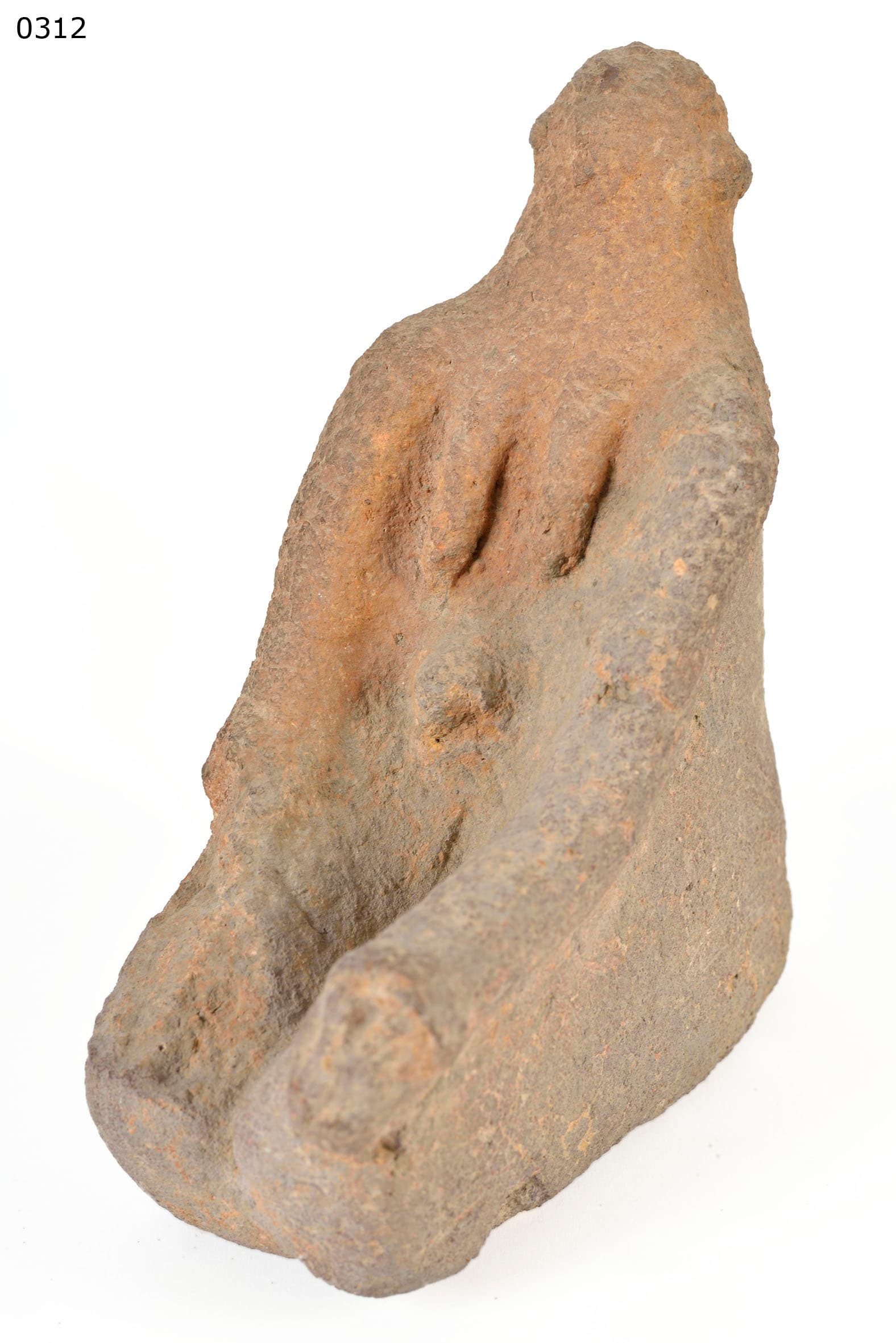
Eine zweite archäologische kniende weibliche Terrakotta-Figur (12.-16. Jh., 30 cm) aus der Djenne-Djeno-Kultur in Mali - passend zu ihrer 31 cm großen Schwester mit länglichem, stilisiertem Kopf, starken Körperskarifikationen und einer kalkhaltigen, stark entsteinten Oberfläche mit antiken Erdverkrustungen.
1. Die gepaarte Djenne-Tradition
Paare und passende Gruppierungen kommen im gesamten Terrakotta-Korpus von Djenne vor.
- Werkstatt-Zwilling: Geringfügige proportionale Unterschiede zwischen diesem Stück und seinem 31 cm großen Geschwisterchen deuten darauf hin, dass beide in einer einzigen Werkstatt oder von einem einzigen Töpfer in enger Abfolge hergestellt wurden.
- Paar als Verstärkung: In der rituellen Ökonomie von Djenne verdoppelte die Verdopplung eines Objekts seine Wirkung - ein Paar kniender Bittsteller hatte bei der Gottheit mehr Gewicht als eine einzelne Figur.
2. Der Körper als rituelles Dokument
Die dichten Skarifikationsmuster auf dem Körper sind mehr als nur Ornament.
- Aufzeichnung der Initiation: Jede erhabene Falte markiert eine bestimmte Stufe der Initiation oder des rituellen Standes in der mittelalterlichen Gemeinschaft.
- Tragen der Bitte: Wenn die Figur in ihrer Bittstellerhaltung begraben wurde, trug der skulptierte Körper das ganze Gewicht der sozialen Identität des Auftraggebers ins Jenseits - eine dauerhafte, in Ton kodierte Bitte.
3. Chemie der Bestattung
Die Oberfläche dieses Stücks ist chemisch identisch mit der seines Geschwisters.
- Eingeschmolzene Mineralien: Die Schluffe der Niger-Auen wurden durch jahrhundertelange Verdichtung und chemische Wechselwirkungen in die mikroskopisch kleinen Poren des gebrannten Tons gepresst.
- Unwiederholbare Signatur: Die spezifische Kombination aus Verkalkung, Lochfraß und Rückständen ist ein Prozess, der lange zurückliegt - jeder Fälscher bräuchte ein Jahrtausend und eine Aue, um ihn zu reproduzieren.
Zusammenfassung
Diese Terrakottafigur ist die kleinere des Paares aus Djenne und besitzt das gleiche archäologische und stilistische Gewicht wie ihr Geschwisterchen. Beide zusammen bieten einen seltenen Einblick in die rituelle Wirtschaft des mittelalterlichen Mali-Reiches.
KI-unterstützt erstellt aus Sammlungsgutachten, Objektfotografie und eigener Recherche, redaktionell geprüft. Fehler sind möglich — Hinweise darauf sind uns willkommen. Zum Verfahren →