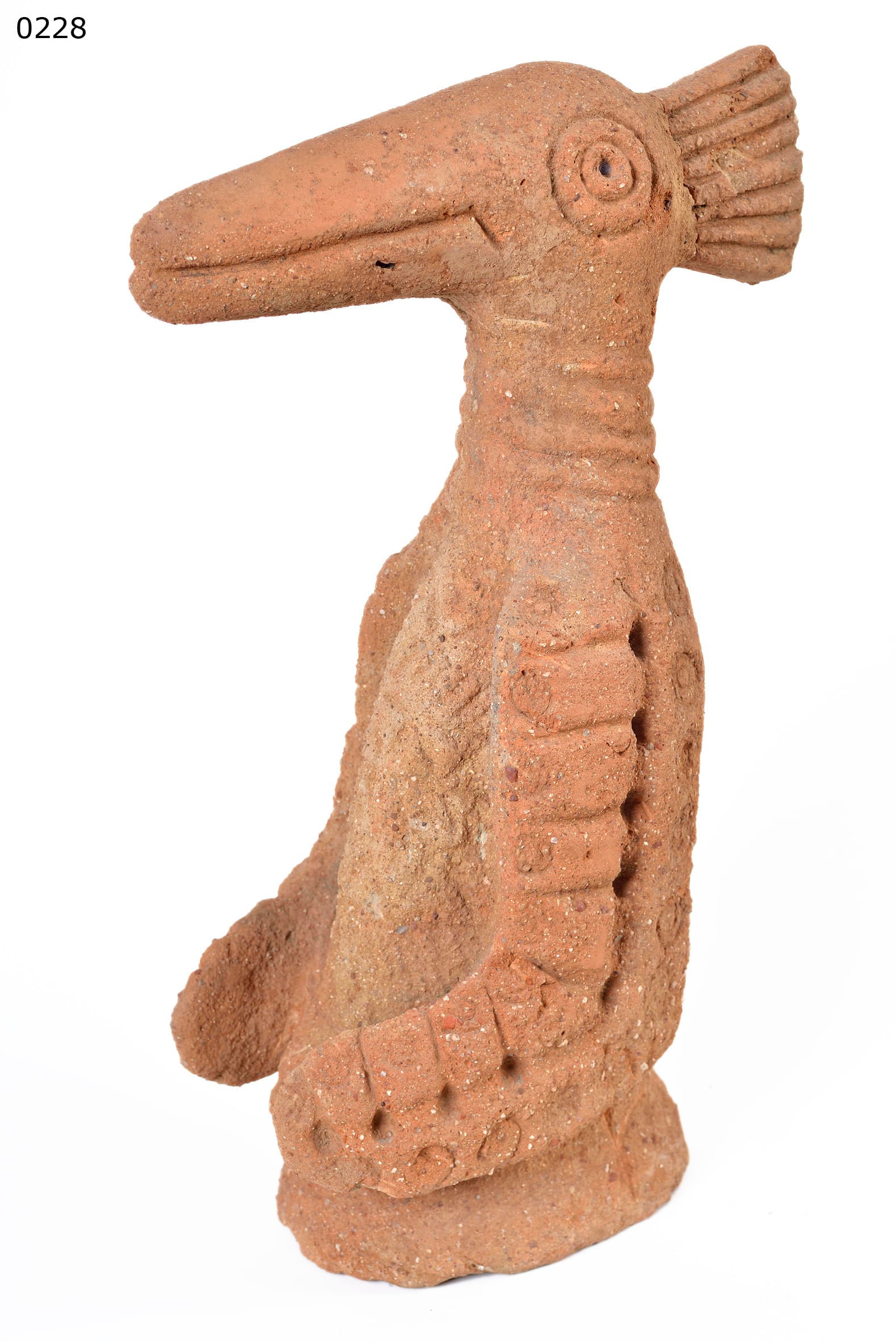
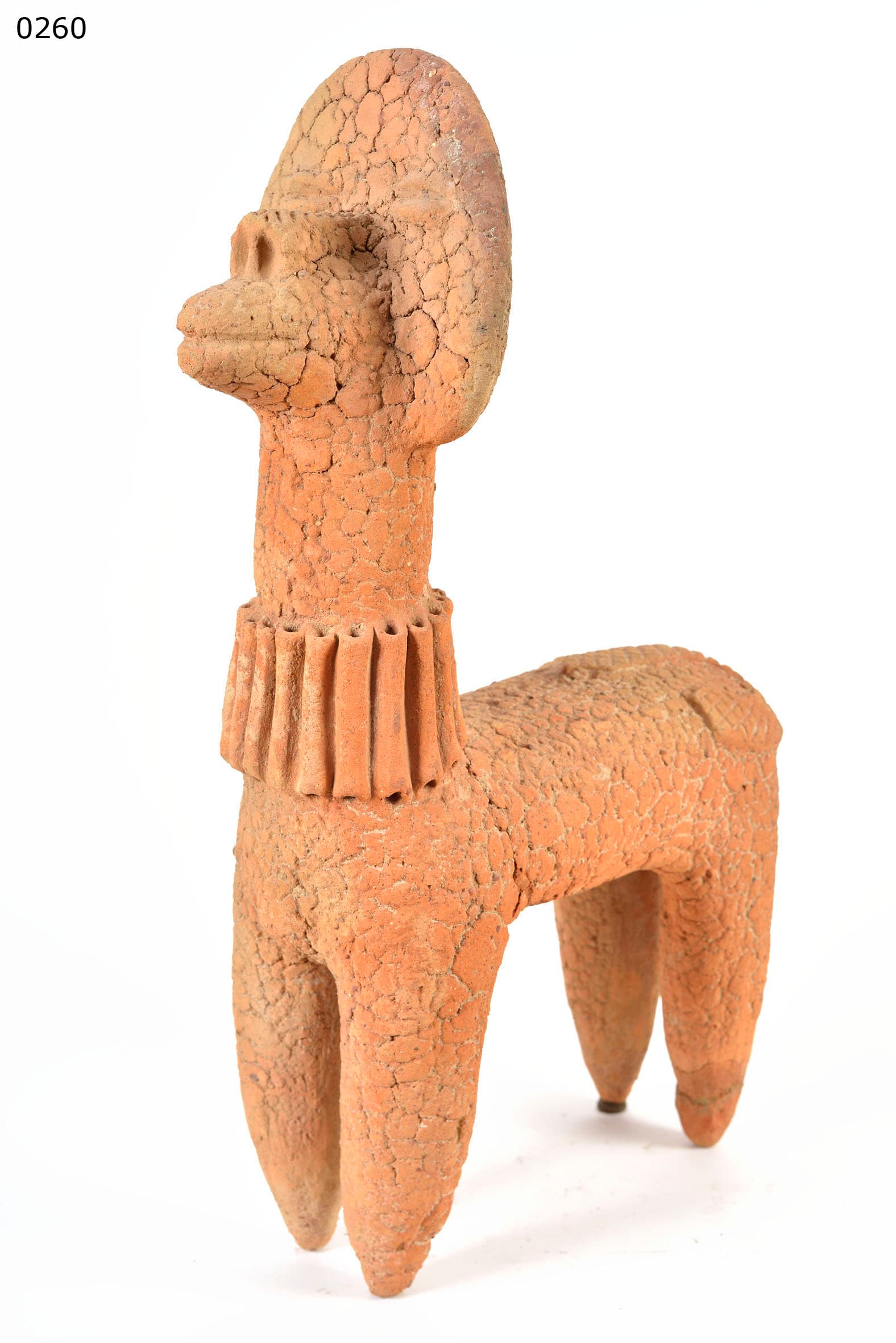
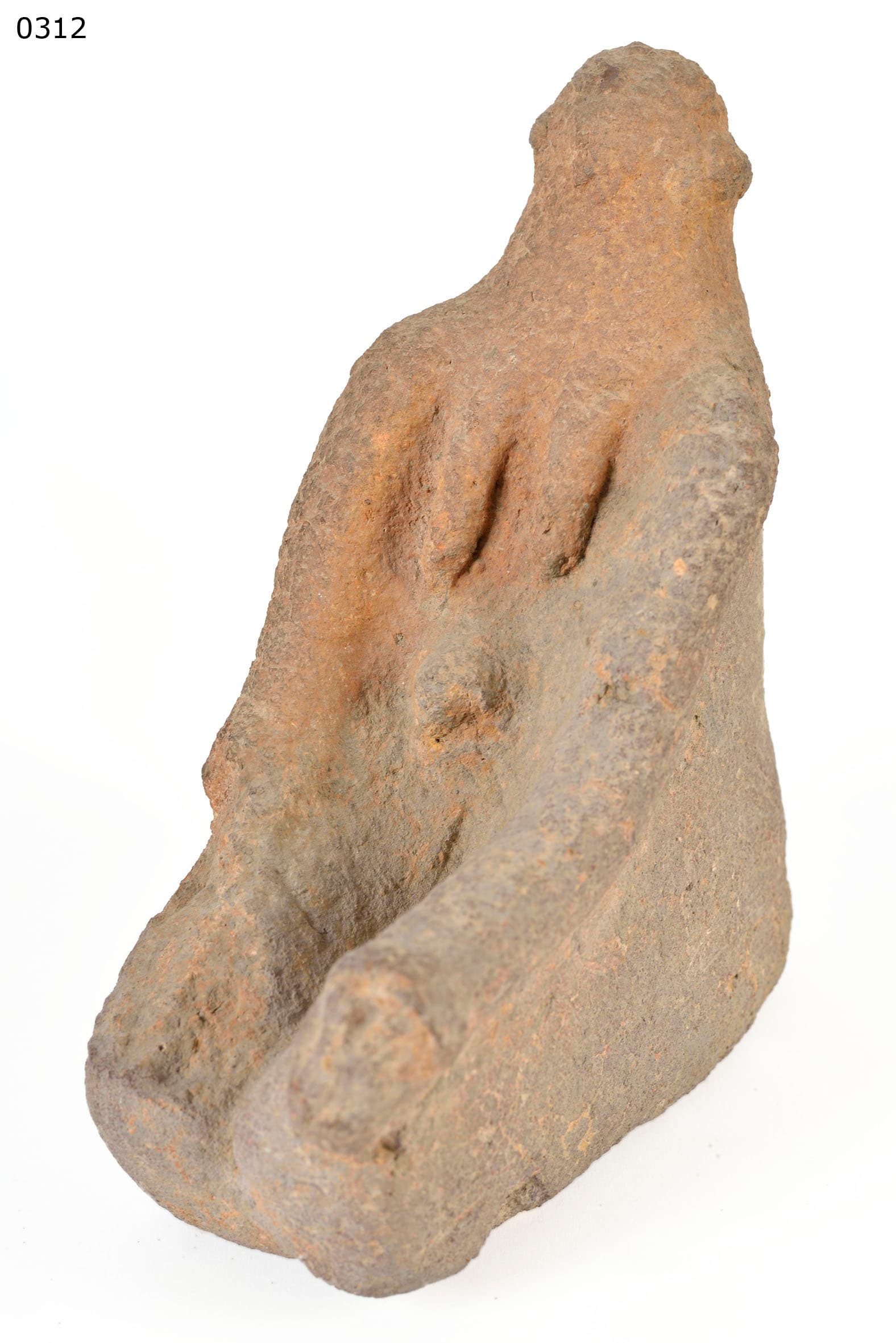
Archäologische Terrakotta-Figur einer knienden Frau (12.-16. Jh., 31 cm) aus der Djenne-Djeno-Kultur in Mali - länglicher, stilisierter Kopf, vorspringende Lippen, komplizierte Körperskarifikationen, die stark entsteinte Kalkoberfläche trägt deutliche Erdkrusten, die für eine jahrhundertelange Lagerung im Boden sprechen.
1. Bildwerke aus dem Inland des Nigerdeltas
Diese seltenen Terrakottafiguren werden der historischen Region des Inland-Niger-Deltas in Mali zugeordnet, die sich um die archäologische Stätte Djenne-Djeno herum befindet.
- Mittelalterliche Zivilisation: Diese Kultur blühte zwischen dem 12. und 16. Jahrhundert und brachte hochgradig komplexe Keramiken hervor.
- Klassische Djenne-Signaturen: Röhrenförmige, längliche Köpfe, wulstige Augen und stark verzierte Körper - eine charakteristische Bildsprache, die mit der rituellen Elite des historischen Mali-Reiches assoziiert wird.
2. Die Haltung der Ehrfurcht und der Krankheit
Die kniende Haltung ist eine universelle westafrikanische Geste mit einer spezifischen Ausprägung in Djenne.
- Fürbitte und Gebet: Das Knien gilt in der Forschung als eine traditionelle Haltung der Andacht und Trauer in der historischen Sahelzone.
- Mögliche heilende Funktion: Viele Djenne-Figuren weisen erhabene Striemen, geschwollene Gliedmaßen oder verzerrte Gesichtsausdrücke auf, die als Darstellungen von Krankheiten (Lepra, Kiefer) interpretiert werden. Möglicherweise wurden sie für Heilungsschreine geschaffen - als Surrogate, um einem menschlichen Patienten die Krankheit auszutreiben oder um Erdgottheiten zu besänftigen, die für Epidemien verantwortlich sind.
3. Archäologische Stratigraphie und Taphonomie
Die Beschaffenheit der Oberfläche spricht für ein hohes Alter.
- Kalzifiziertes Gewebe: Eine langanhaltende Lagerung in den Überschwemmungsgebieten des Niger kann zu einer Kalzifizierung und Entsteinung des gebrannten Tons führen.
- TL-Test-Signatur: Die dicken kalkhaltigen Bodenverkrustungen, die in die mikroskopisch kleinen Poren eingedrungen sind, benötigen in der Regel einen langen Zeitraum für eine natürliche Entwicklung – Merkmale, die mit den taphonomischen Kriterien der Thermolumineszenz-Analyse übereinstimmen.
Zusammenfassung
Diese Terrakotta aus Djenne ist ein bemerkenswertes Zeugnis einer der bedeutenden historischen Zivilisationen Westafrikas. Ihre tief verkrustete Oberfläche und ihre charakteristischen stilistischen Merkmale ordnen sie in die bekannten künstlerischen Traditionen der Sahelzone ein.
KI-unterstützt erstellt aus Sammlungsgutachten, Objektfotografie und eigener Recherche, redaktionell geprüft. Fehler sind möglich — Hinweise darauf sind uns willkommen. Zum Verfahren →