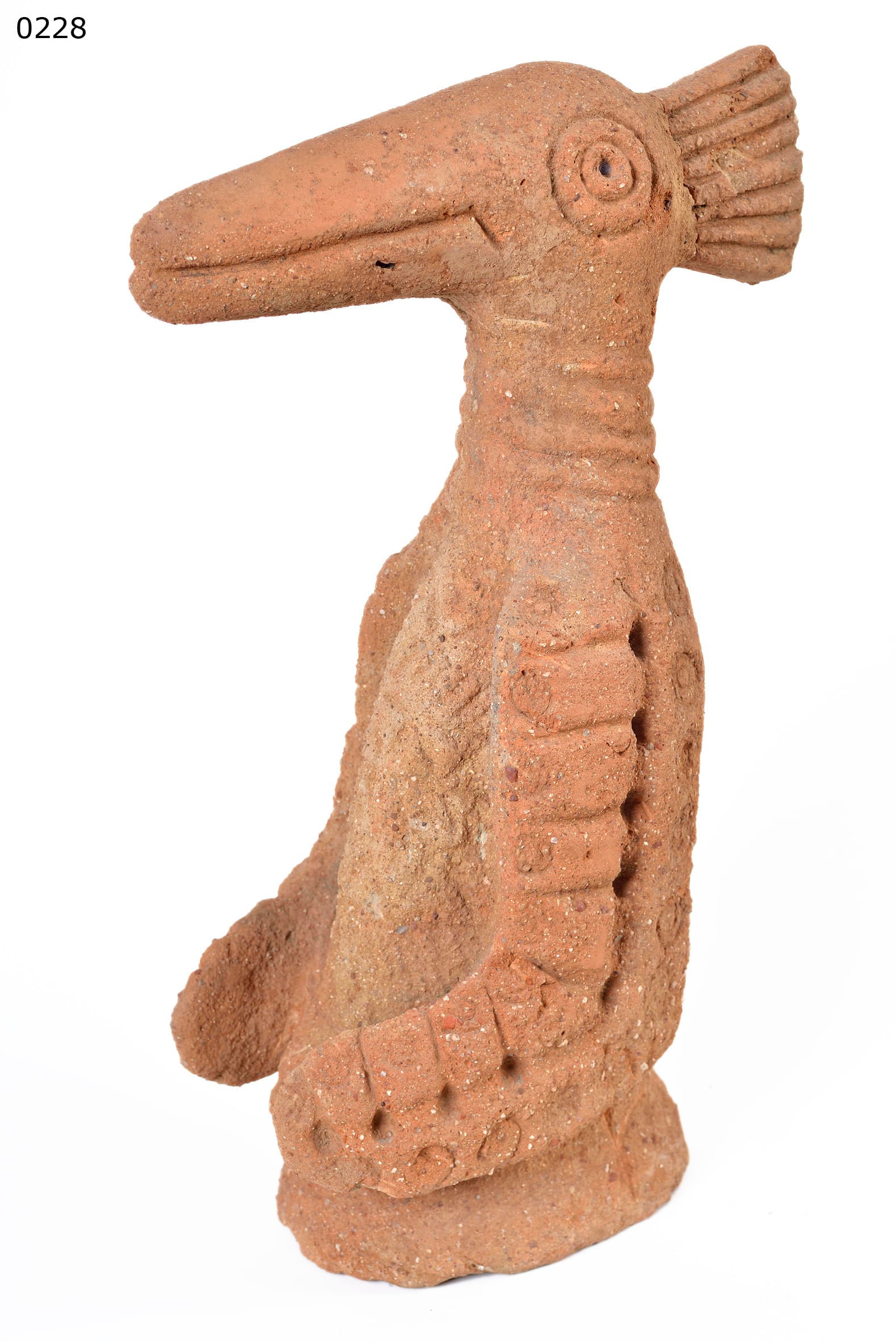
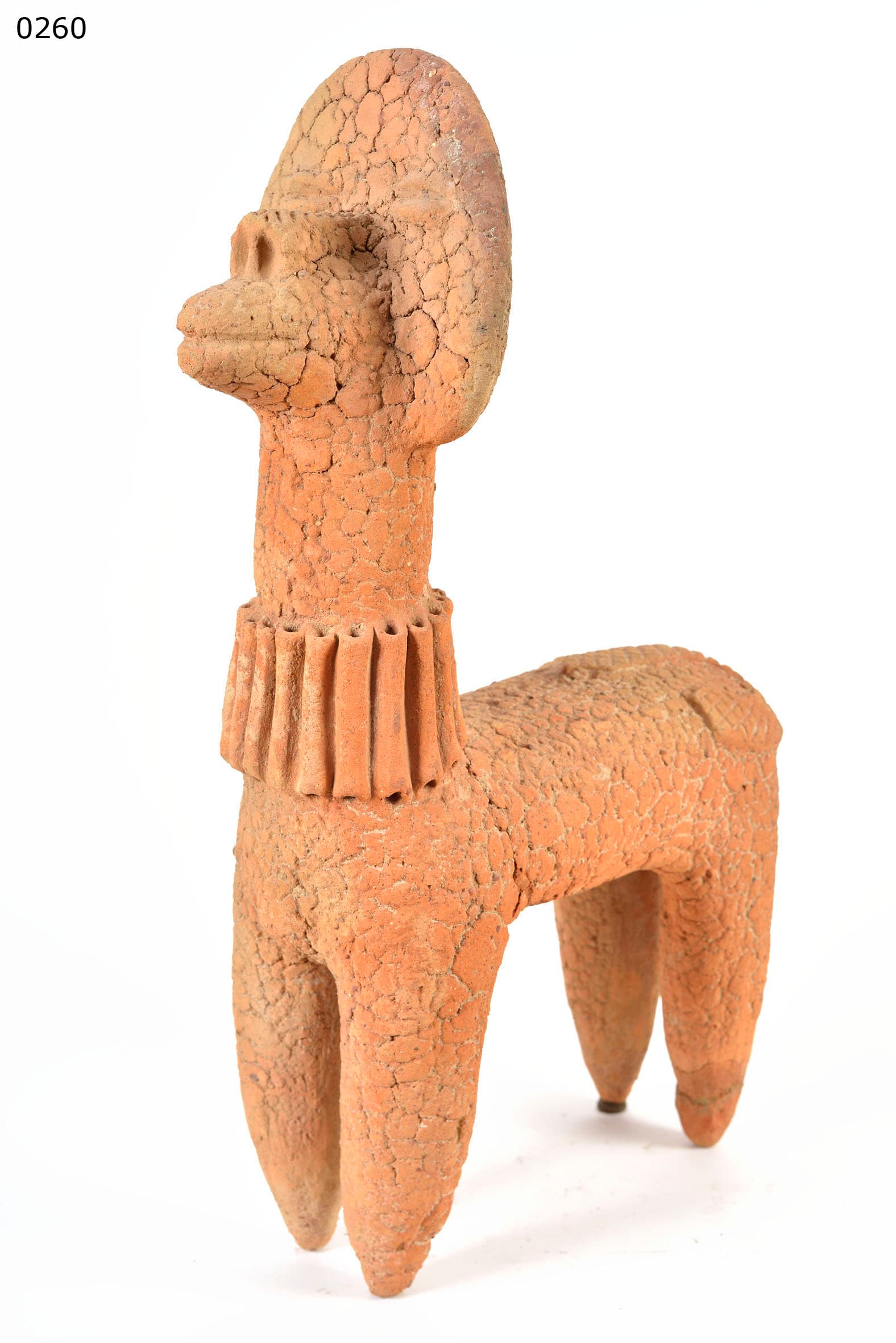
Eine hochemotionale Terrakotta aus dem Inland des Nigerdeltas (9.-16. Jh., 21 cm) aus Mali - verzerrter Körper, hervortretende Augen, geschmückter Torso und dramatische kniende oder sitzende Haltung. Die Patina reicht von warmem, geglättetem Terra-Sigillata-Schlicker bis hin zu verkalkten Zonen, die für das anaerobe Niger-Flutgebiet charakteristisch sind. Veröffentlicht in Arts d'Afrique Noire Nr. 28 (1978, S. 11).
1. Die Ästhetische Typologie von Djenne-Jeno
Diese Figur verkörpert die charakteristische Ästhetik des Nigerdeltas.
- Reptilienartige Verlängerung: Die längliche, fast reptilienartige Kopfform und die tief eingeschnittenen, parallelen Augen sind typisch für die alten Werkstätten von Djenne-Jeno und Tenenkou.
- Trancezustand-Muskulatur: Das nach oben gerichtete Kinn und die straffe Muskulatur vermitteln tiefe spirituelle Hingabe, Gebet oder Trauer.
2. Pathologische Repräsentation und Ahnenverehrung
Ein faszinierendes Merkmal dieses Korpus ist die Darstellung von Krankheit.
- Spirituelle Auserwähltheit: In der alten malischen Kosmologie bedeuteten körperliche Gebrechen oft spirituelle Auserwähltheit, göttliche Prüfung oder schamanische Initiation.
- Votivbitte: Figuren wie diese dienten als Votivobjekte in Schreinen oder Wandnischen - sie wurden von den Lebenden mit einer Petition versehen, um Krankheiten von der Gemeinschaft fernzuhalten oder Ahnen zu ehren, die großes Leid überlebt hatten.
3. Dokumentierte Provenienz und anschwemmende Alterung
Dieses Stück hat eine dokumentierte Provenienz.
- Arts d'Afrique Noire Publikation: Veröffentlicht in der Zeitschrift Arts d'Afrique Noire Nr. 28 (1978, S. 11) - was die Zuschreibung stützt und ihren dokumentierten Status untermauert.
- Alluviale Taphonomie: Die zyklischen Überschwemmungen und das Ausbacken des Nigerschlamms führten zu einer dicken Kalkkruste und zum Abbau von Schlick an der Oberfläche - eine charakteristische Taphonomie, die für ein hohes Alter spricht.
Zusammenfassung
Diese Figur, die eine eindringliche psychologische Intensität mit einer feinen keramischen Ausführung und einer veröffentlichten Provenienz, die bis ins Jahr 1978 zurückreicht, kombiniert, ist ein bedeutendes Beispiel der mittelalterlichen malischen Kunst. Ihre dokumentierte Ausstellungsgeschichte und ihre charakteristische Anschwemmung machen sie zu einem wertvollen archäologischen Zeugnis.
KI-unterstützt erstellt aus Sammlungsgutachten, Objektfotografie und eigener Recherche, redaktionell geprüft. Fehler sind möglich — Hinweise darauf sind uns willkommen. Zum Verfahren →