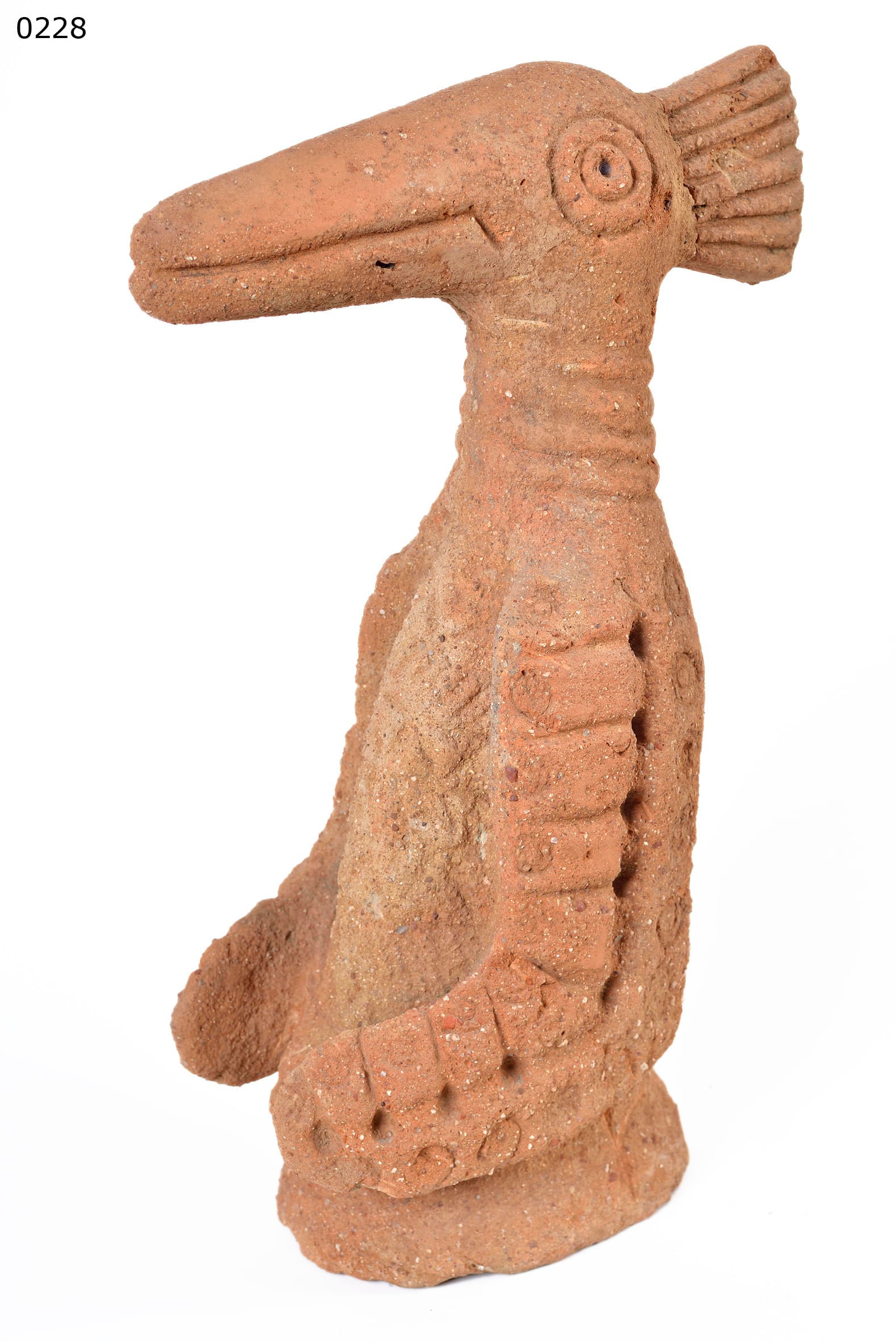
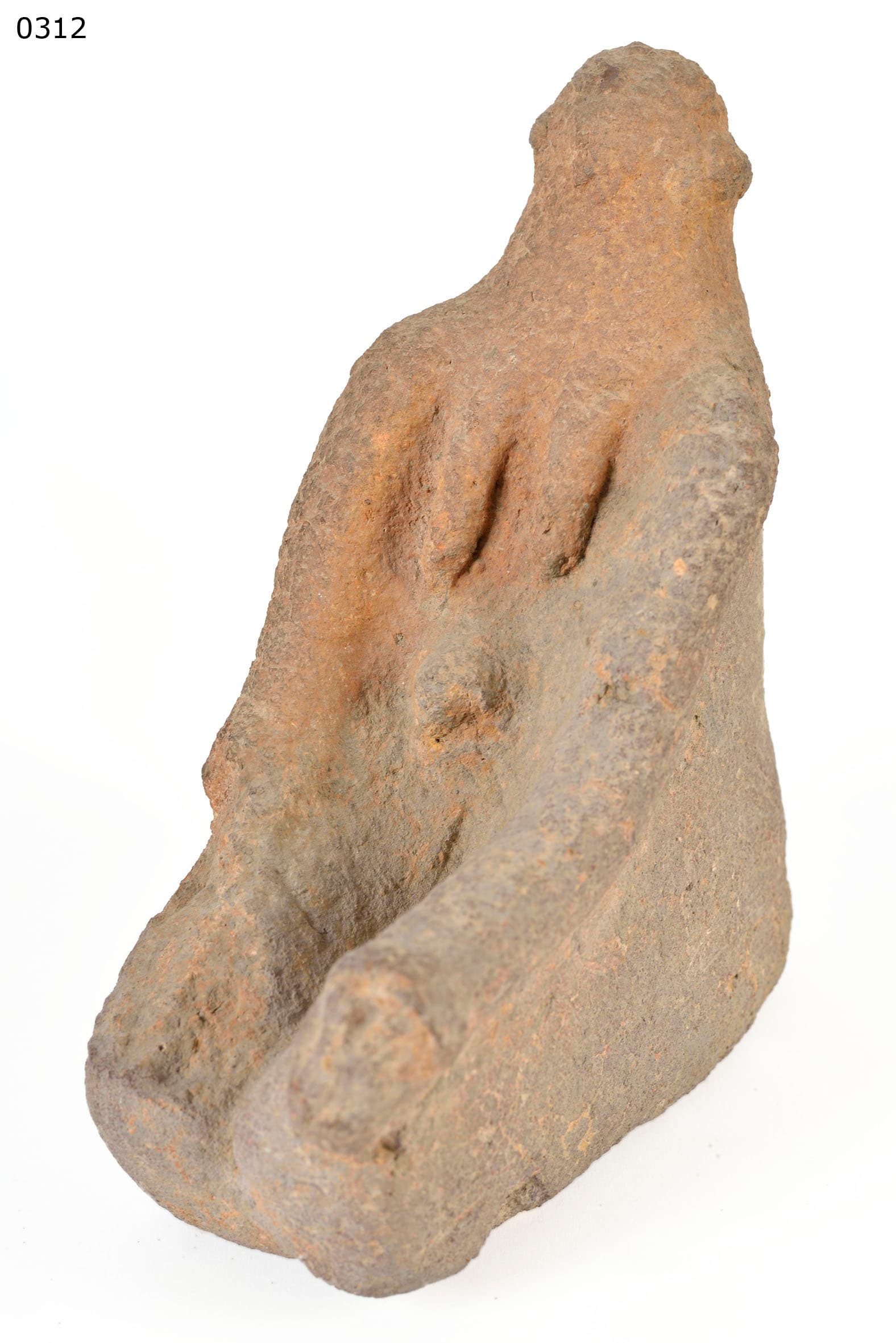
Eine außergewöhnlich große Djenne-Terrakotta (12.-16. Jh., 63 cm) aus Mali - ein stehender Vierbeiner (wahrscheinlich ein Widder oder ein Pferd) mit stilisiertem, stumpfem Kopf, der einen dicken, vertikal segmentierten Kragen um den Hals trägt. Der grobe, blass-orangefarbene Ton ist stark rissig, entsteint und mit einer alten Erdkruste bedeckt.
1. Zoomorphe Surrogate im Inland des Nigerdeltas
Während im Terrakotta-Korpus von Djenne menschliche Figuren dominieren, sind zoomorphe Stücke wie dieser Widder oder dieses Pferd außergewöhnlich selten.
- Opferersatz: In alten malischen Glaubenssystemen dienten Tiere oft als Opfersurrogate oder als Repräsentanten göttlicher Macht.
- Rituell geschmückt: Der dicke, segmentierte Kragen weist darauf hin, dass das Tier domestiziert oder rituell geschmückt ist - was seinen Status als heilige Opfergabe oder als Reittier einer hochrangigen Gottheit erhöht.
2. Grundlegende Heiligtümer und Schutz
Angesichts der gewaltigen Größe von 63 cm war diese Figur kein unbedeutendes Grabbeigaben, sondern ein zentrales Objekt in einem Gründungsschrein oder architektonischen Schrein im alten Djenne-Djeno.
- Blitz und Regen: Widder werden in der westafrikanischen Kosmologie stark mit Blitz, Regen und schützender Männlichkeit in Verbindung gebracht.
- Bodenvergrabener Wächter: Unter dem Boden eines Hauses oder in einem öffentlichen Altar platziert, sicherte die Figur den Wohlstand und die Verteidigung der alten Gemeinschaft.
3. Unterirdische Taphonomie und Brennspannungen
Der physische Zustand ist ein deutliches Zeugnis des Altertums.
- Antike Brennrisse: Tiefe dunkle Risse quer über den Körper deuten auf ursprüngliche Brennspannungen hin – ein Hinweis auf die erheblichen technischen Schwierigkeiten beim Brennen einer massiven Tonfigur dieser Größe in einer offenen Grube.
- Einschmelzende Erde im Kragen: Jahrhunderte der Bestattung haben die Oberfläche stark verkalkt und malische Erde dauerhaft in den tiefen Spalten des segmentierten Kragens und der porösen Keramikmatrix eingeschmolzen.
Zusammenfassung
Diese monumentale und seltene zoomorphe Darstellung aus Djenne stellt ein bedeutendes Beispiel der alten malischen Kunst dar. Ihr immenses Ausmaß in Verbindung mit den Spuren der archäologischen Verwitterung verleiht ihr einen hohen historischen und dokumentarischen Wert.
KI-unterstützt erstellt aus Sammlungsgutachten, Objektfotografie und eigener Recherche, redaktionell geprüft. Fehler sind möglich — Hinweise darauf sind uns willkommen. Zum Verfahren →