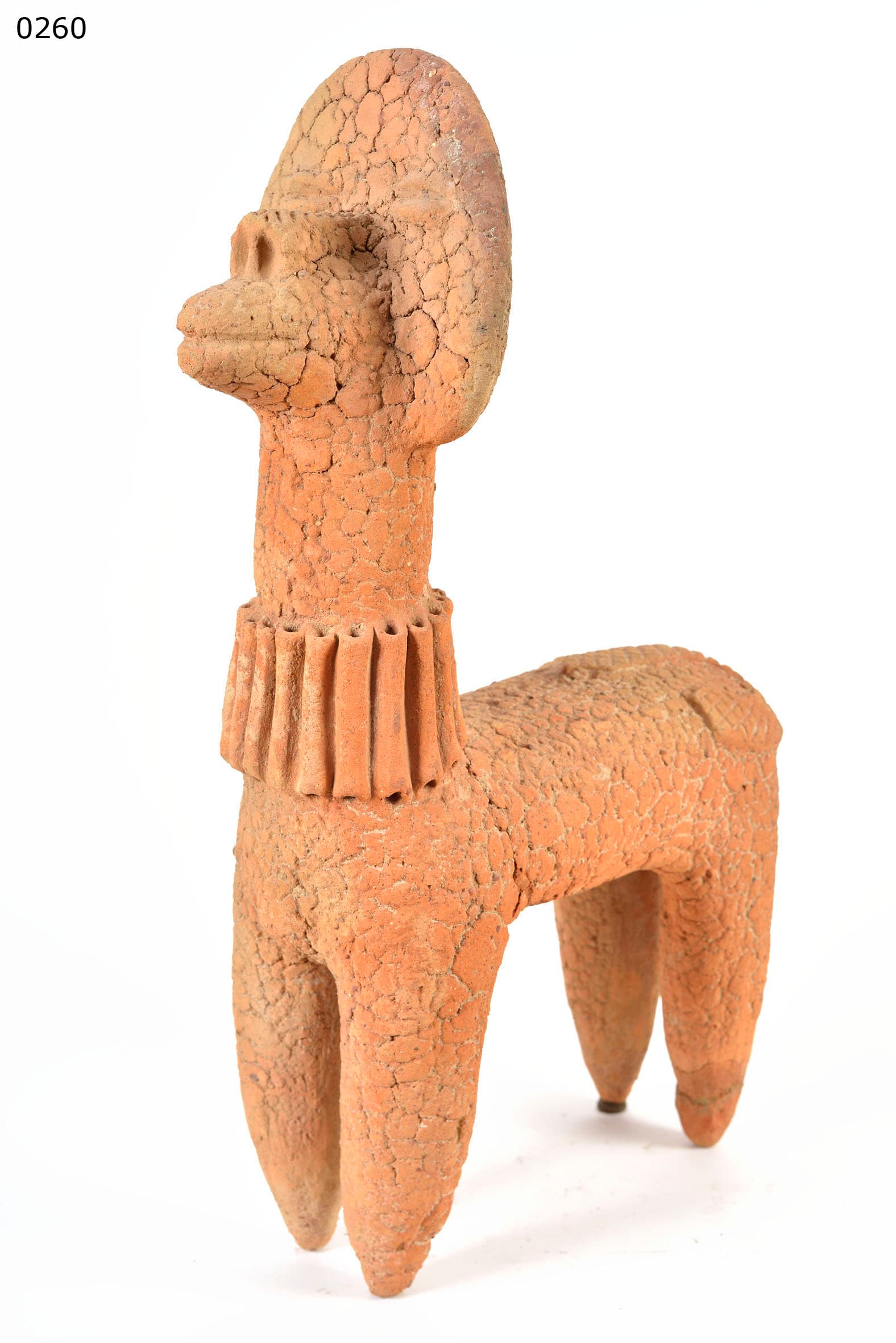
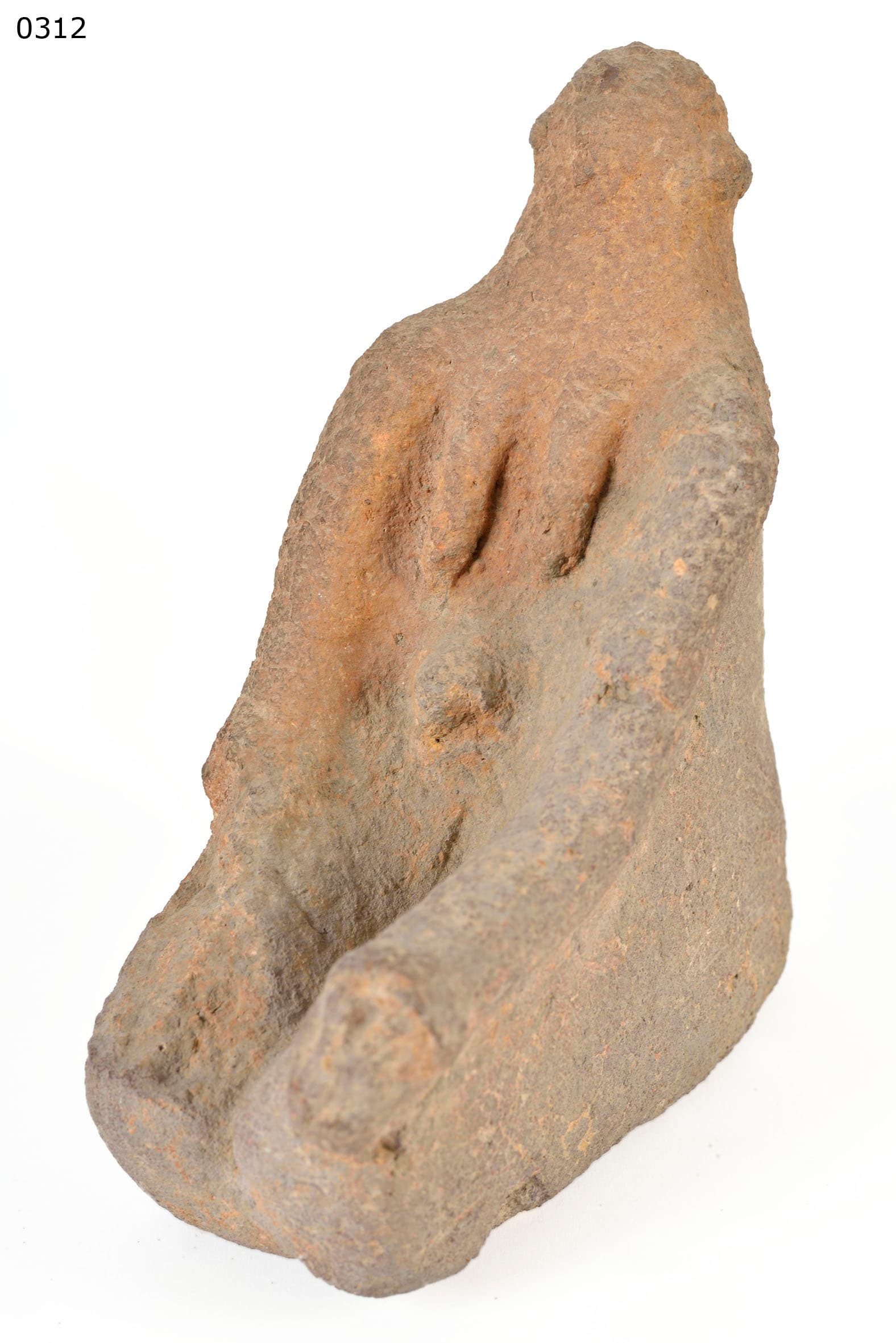
Ein ungewöhnlicher archäologischer Terrakotta-Vogel (stilistisch dem 12.–16. Jh. zugeordnet, 49 cm) aus der Djenne-Djeno-Kultur von Mali – aufrechte abstrakte Vogelform mit markantem Kamm, langem stilisiertem Schnabel und strukturierten flügelartigen Seitenvorsprüngen. Der gebrannte Ton ist stark verkalkt, entsteint und mit einer charakteristischen, eingebrannten Erdkruste überzogen.
1. Vogel-Ikonographie in der Antike
Die überwiegende Mehrheit der antiken Terrakotten aus Djenne stellt menschliche Figuren dar, so dass dieses rein zoomorphe Vogelstück als selten gilt.
- Unterschwellige Kreaturen: In vielen westafrikanischen Glaubenssystemen gelten Vögel als liminale Wesen – sie durchqueren die physische Erde und den spirituellen Himmel.
- Hornvogel oder Raubvogel: Der lange Schnabel und der markante Kamm verweisen wahrscheinlich auf eine bestimmte mächtige Spezies, vielleicht einen Hornvogel oder einen Raubvogel, der die weitreichenden Visionen von Wahrsagern und den raschen Abstieg spiritueller Macht symbolisiert.
2. Boten des Geisterreichs
Aufgrund ihres grenzüberschreitenden Charakters fungierten Vogelfiguren in alten malischen Kontexten wahrscheinlich als spirituelle Boten.
- Gebetsüberbringer: Auf Altären in Djenne-Djeno oder in den umliegenden Gründungsschreinen platziert, überbrachte die Figur vermutlich die Gebete der Lebenden in das Reich der Ahnen.
- Wachsamer Wächter: Sie könnte auch eine apotropäische Funktion gehabt haben – als wachsamer Beschützer eines bestimmten Haushalts oder einer rituellen Stätte, auf der Hut vor übernatürlichen Eindringlingen.
3. Tausendjährige Taphonomie
Die Erhaltung ist vereinbar mit einer Datierung in das 12. bis 16. Jahrhundert.
- Auenchemie: Jahrhunderte des Vergrabens in den saisonal überfluteten Böden des Nigerdeltas haben die Terrakotta verändert.
- Kalzifizierte Oberfläche: Tiefe natürliche Löcher und eine stark kalzifizierte Oberfläche, bei der sich Erdminerale dauerhaft mit der Keramikmatrix verbunden haben – eine irreversible Taphonomie, wie sie für Altertümer aus Djenne charakteristisch ist.
Zusammenfassung
Diese Djenne-Vogelfigur zeigt eine seltene Abweichung von den typischen anthropomorphen Formen und bietet eine interessante Studie über die antike Vogelsymbolik. Ihre ausgeprägte archäologische Verkrustung macht sie zu einem bedeutenden Zeugnis der Kunstgeschichte der Sahelzone.
KI-unterstützt erstellt aus Sammlungsgutachten, Objektfotografie und eigener Recherche, redaktionell geprüft. Fehler sind möglich — Hinweise darauf sind uns willkommen. Zum Verfahren →