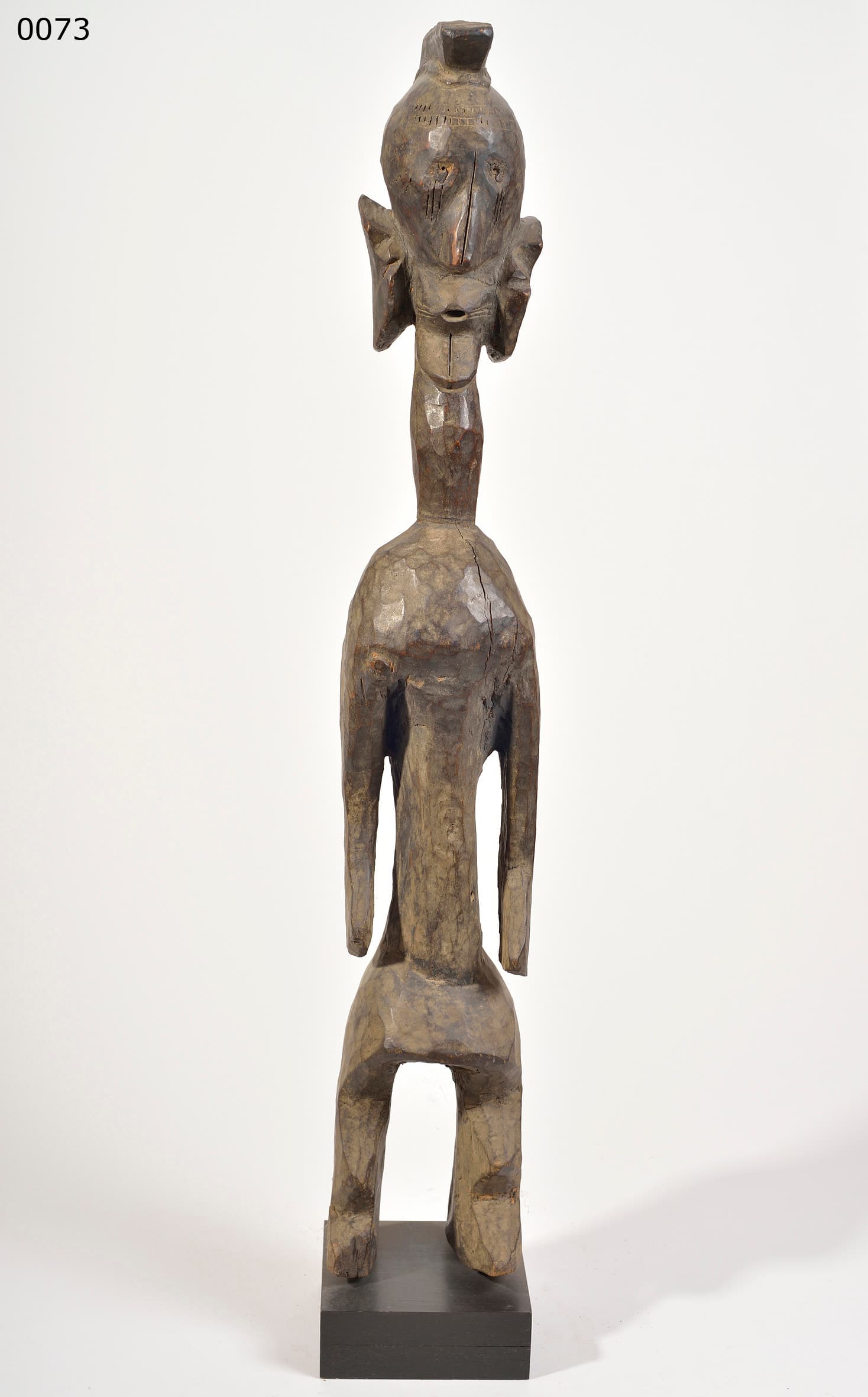
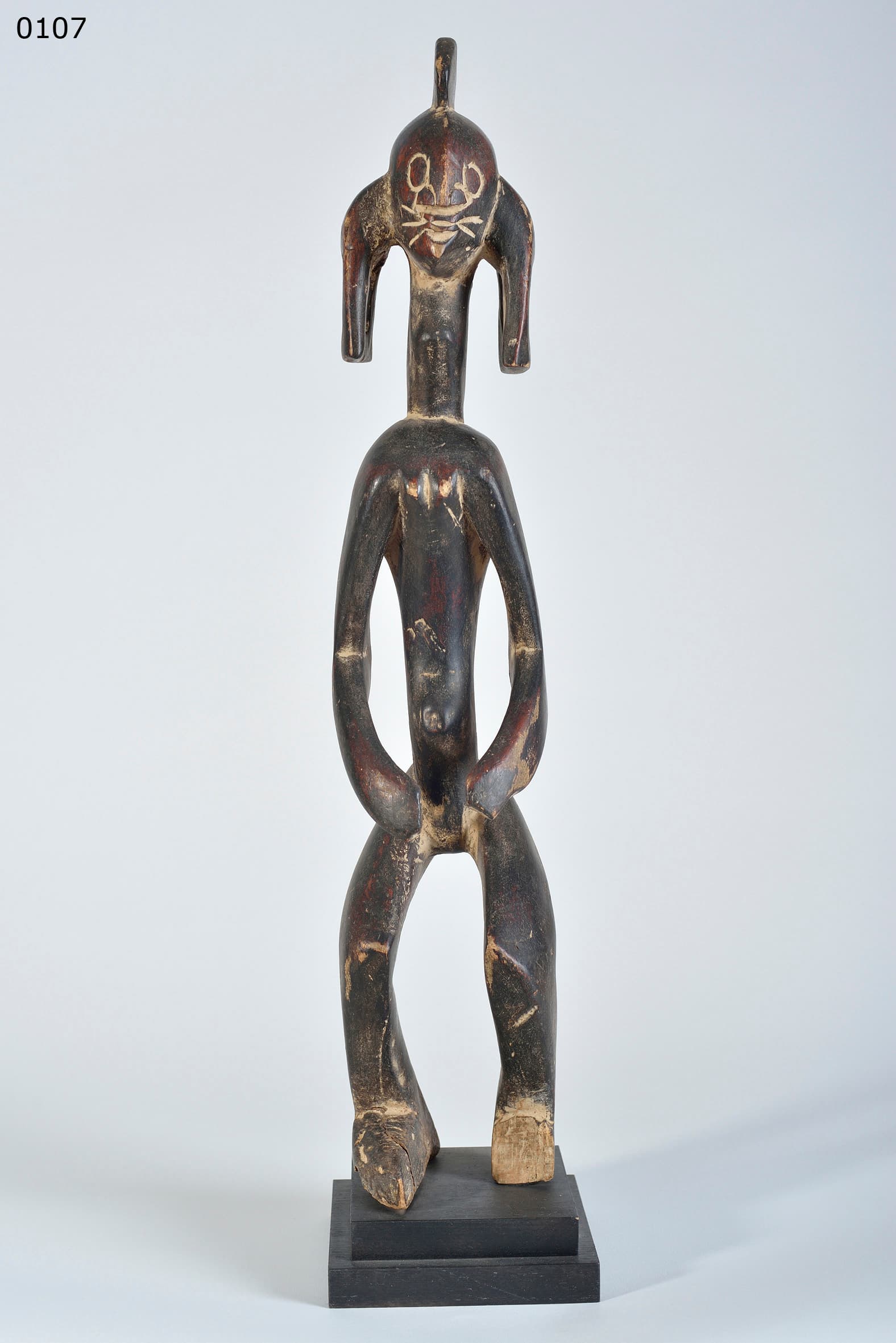
Eine hölzerne Mumuye-Ahnenfigur (1. Hälfte 20. Jh., 68 cm) aus Nigeria - säulenartiger Torso, geschwungene Bandarme, die den negativen Raum einrahmen, abstrakter Scheitelkopf mit stilisierten Ohren, dunkles Holz mit stark oxidierter Schreinpatina.
1. Der kompakte Anker
Mit 68 cm ist dies die kleinste der vier Mumuye-Figuren in diesem Set - der visuelle Anker am unteren Ende der Gruppe.
- Intimer Maßstab: Kleinere Figuren waren bei den körperlich aufwändigen Wahrsageritualen leichter zu handhaben.
- Ausgewogenes Ensemble: Mumuye-Schreine enthielten typischerweise Figuren unterschiedlicher Größe gleichzeitig - die Bandbreite erweiterte das rituelle Spektrum, das die Vabo-Gesellschaft ansprechen konnte.
2. Das alltägliche Werkzeug des Wahrsagers
Während die größeren Figuren die großen Zeremonien begleiteten, dienten kleinere Figuren wie diese als Alltagsinstrumente der Vabo-Gesellschaft.
- Portable Konsultation: Einfacher aus dem tsafi für schnelle individuelle Konsultationen zu holen, ohne dass ein vollständiger zeremonieller Rahmen erforderlich ist.
- Häufig benutzt: Die kompakte Größe korreliert in der Regel mit einer häufigeren Handhabung - diese Figur sah wahrscheinlich mehr direkte rituelle Interaktionen als ihre größeren Geschwister.
3. Rituelle Abnutzung an einer Arbeitsfigur
Die Oberflächenbeschaffenheit spiegelt diese häufigere Verwendung wider.
- Geglättete Berührungspunkte: Die schärferen kubistischen Kanten sind weicher geworden als bei den größeren Figuren und dokumentieren den gleichmäßigeren Rhythmus der Beratungen.
- Geschichtete Opfergaben: Die dicke Kruste aus Hirsebier, Kolanuss und Blutresten ist im Verhältnis zur Oberfläche der Figur proportional dichter - die komprimierte Aufzeichnung eines geschäftigen Arbeitsaltars.
Zusammenfassung
Die kleinste Mumuye-Figur im Set spielt die Rolle eines alltäglichen Wahrsagerwerkzeugs. Ihre kompakte Größe und stark bearbeitete Oberfläche machen sie zum pragmatischen Gegenstück zu ihren größeren zeremoniellen Geschwistern.
KI-unterstützt erstellt aus Sammlungsgutachten, Objektfotografie und eigener Recherche, redaktionell geprüft. Fehler sind möglich — Hinweise darauf sind uns willkommen. Zum Verfahren →