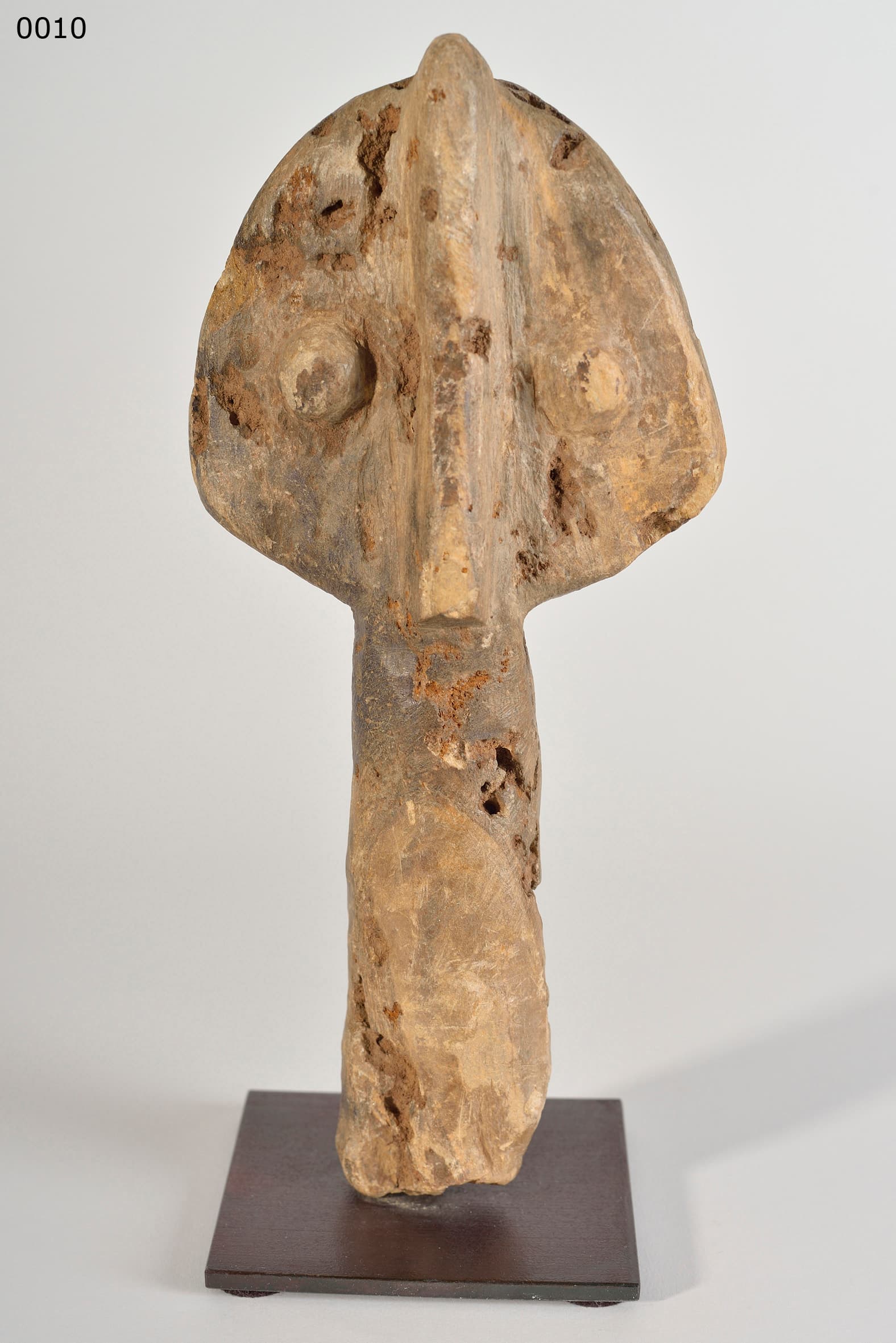
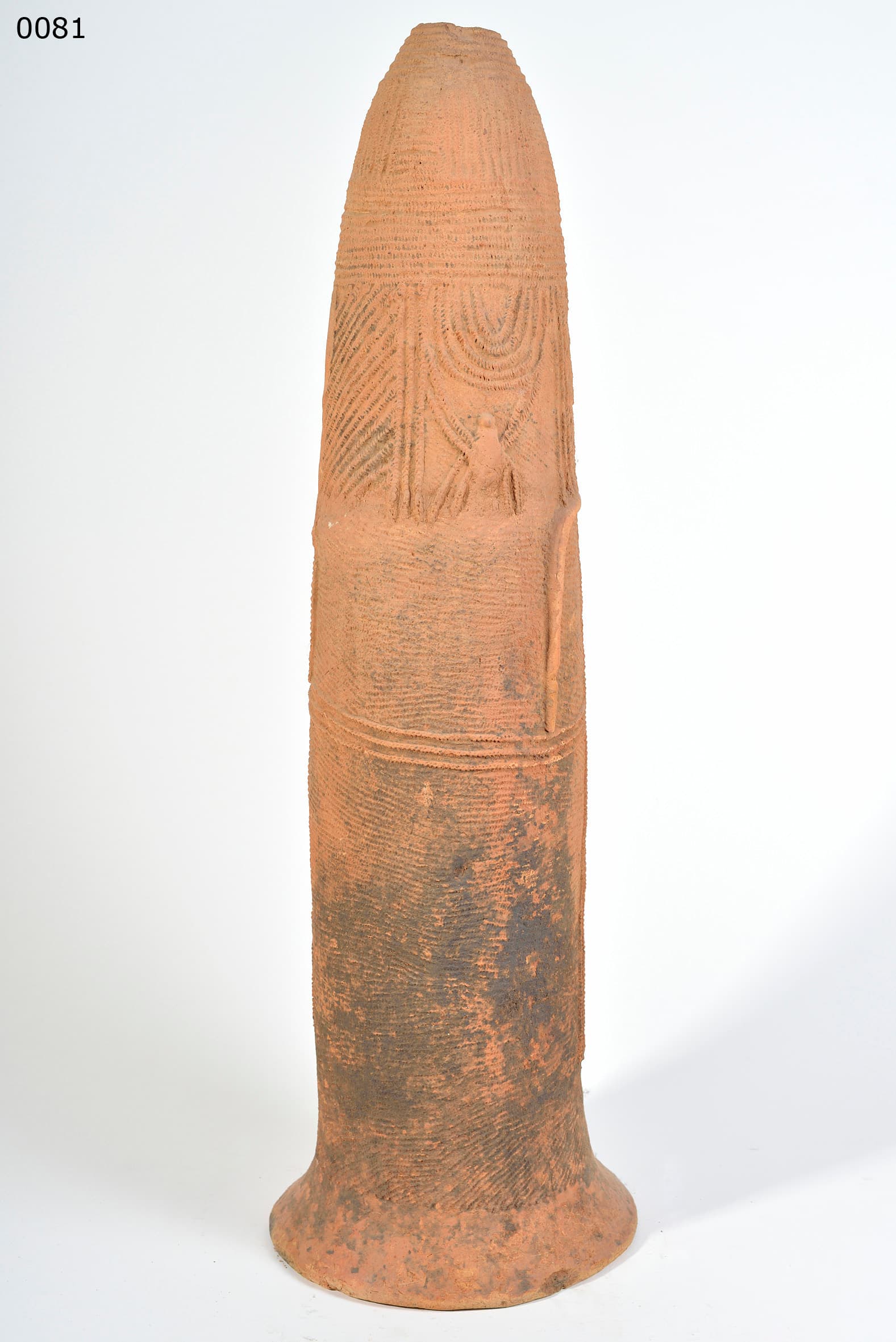
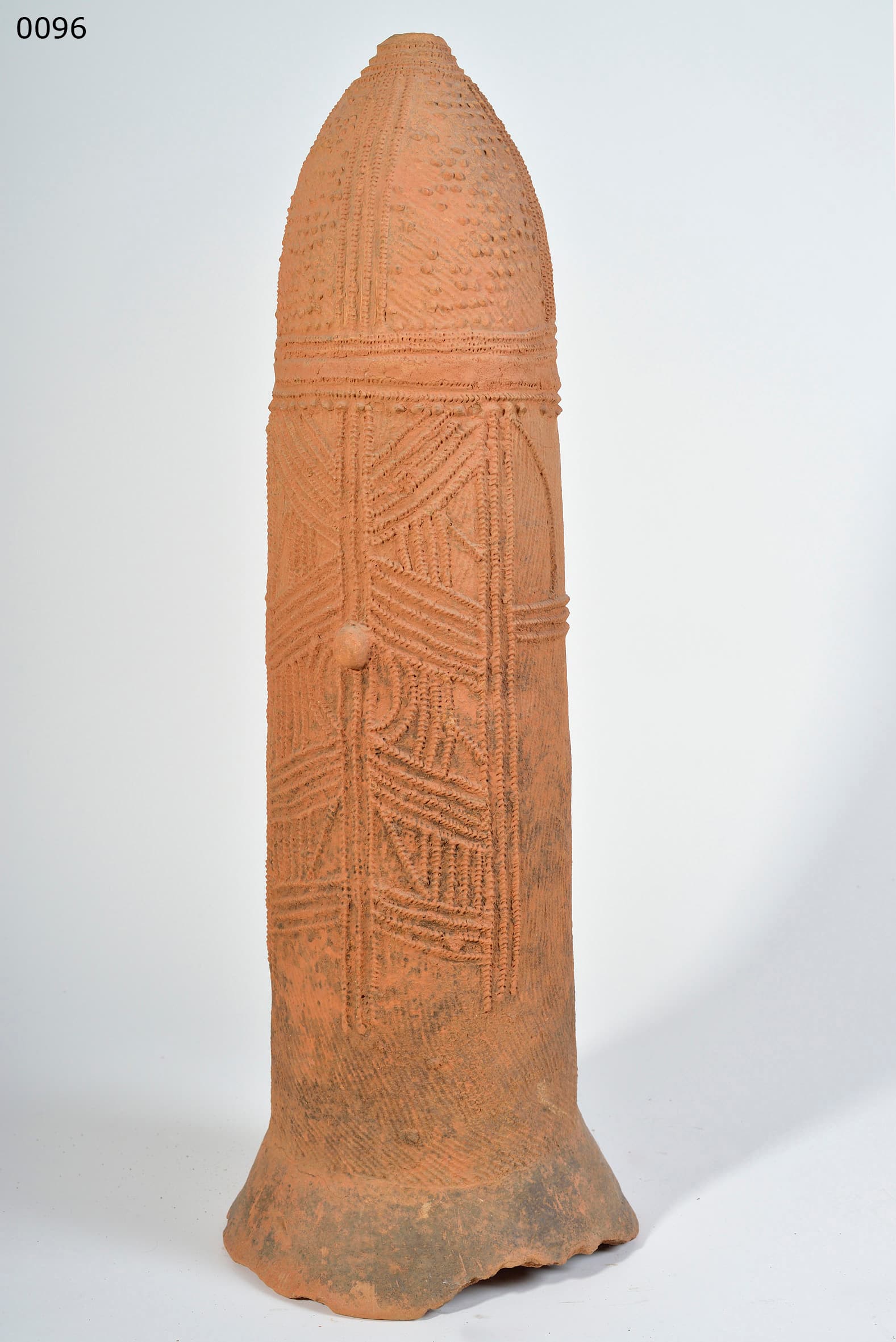
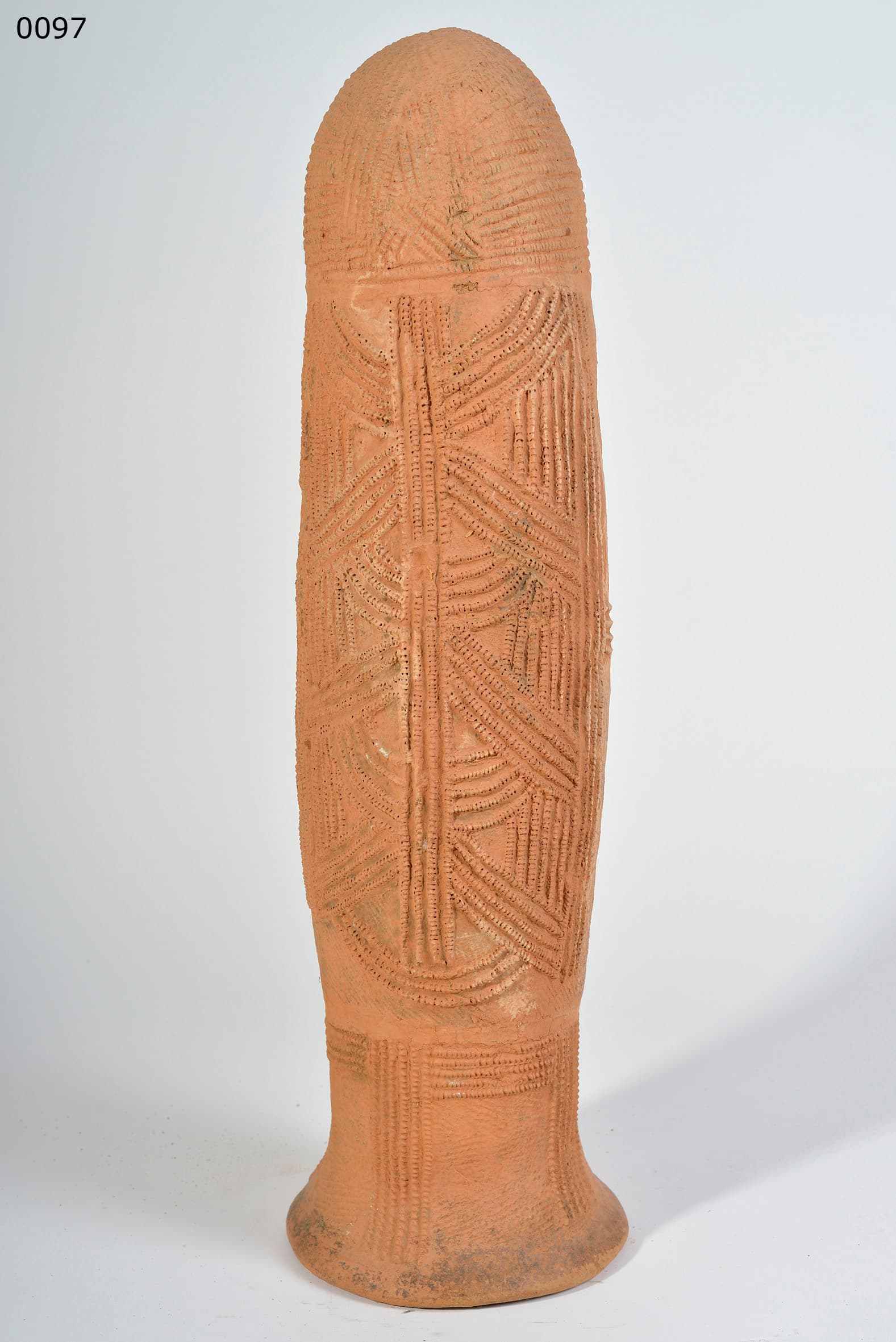
Ein hohes, phallusförmiges Grabgefäß aus Terrakotta (3.-11. Jh., 55 cm) aus der Bura-Asinda-Kultur von Niger/Burkina Faso - ein stark vereinfachtes, abstraktes Gesicht ragt in der Nähe des oberen Endes des glatten, sich verjüngenden Zylinders hervor, dessen blasse, kalkhaltige Oberfläche vollständig von einer dicken, eingebrannten Kruste aus kalzifizierter Erde und Sand umgeben ist.
1. Die Tradition der Nekropole von Bura-Asinda
Das in den 1970er Jahren im unteren Niger-Tal entdeckte Bura-Asinda-System (3.-11. Jahrhundert n. Chr.) ist berühmt für seine ausgedehnten Nekropolen.
- Klassisches röhrenförmiges Denkmal: Der Schnitzer reduziert die menschliche Form auf ihre grundlegende architektonische Essenz.
- Ein stilisiertes Gesicht in der Nähe des oberen Endes verwandelt das Gefäß von einem abstrakten Behälter in einen permanenten, wachenden Avatar des Verstorbenen.
2. Phallische Symbolik und Abstammung
Die unverwechselbare phallische Silhouette ist ein bewusstes und starkes Symbol.
- Fertilität und Regeneration: Die Form beschwört die Kontinuität des Stammbaums und nicht nur die Sterblichkeit.
- Über dem Grab gepflanzt: Umgekehrt über einem Grab platziert oder über dem Grab in den Boden gerammt, markierten diese Figuren die Grenze zwischen den Lebenden und den Toten und stellten sicher, dass die Fortpflanzungsenergie des Vorfahren die überlebende Gemeinschaft weiterhin segnete.
3. Verkalkung in der Wüste
Die Oberfläche ist ein Zeugnis der jahrtausendelangen Beerdigung in den Sanden der Sahelzone.
- Fahler, knochenähnlicher Farbton: Die Verkalkung durch die Auslaugung von Mineralien aus der umgebenden Erde hat den Ton in eine kalkige Blässe verwandelt.
- Zementähnliche Kruste: Die dicke, authentische Kruste ist das absolute Kennzeichen eines ungestörten archäologischen Fundes aus Bura - unmöglich zu reproduzieren ohne eine Jahrtausende alte Bestattungschemie.
Zusammenfassung
Diese Grabfigur aus Bura ist ein monumentaler Ausdruck antiker Bestattungsarchitektur und verbindet auf eindrucksvolle Weise phallische Fruchtbarkeitssymbolik mit abstrakter Porträtkunst. Die extreme Verkalkung und die blasse, von der Wüste verwitterte Oberfläche machen sie zu einem höchst bedeutenden Relikt des westafrikanischen Altertums.
KI-unterstützt erstellt aus Sammlungsgutachten, Objektfotografie und eigener Recherche, redaktionell geprüft. Fehler sind möglich — Hinweise darauf sind uns willkommen. Zum Verfahren →