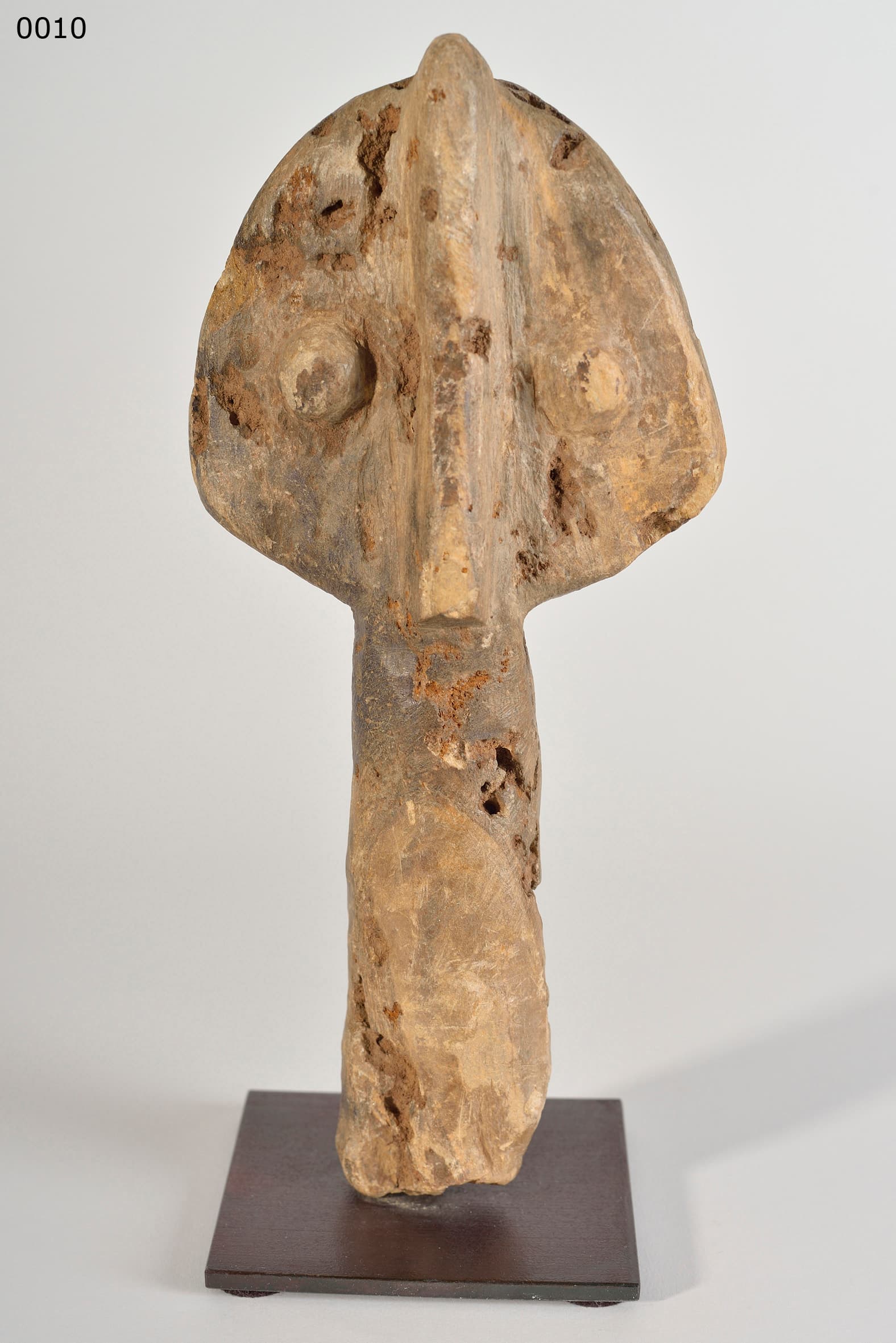
Ein geschnitzter lithischer Monolith (3.-11. Jh., 41 cm) aus der Bura-Kultur von Niger/Burkina Faso - eine spitz zulaufende Phallusform mit abstrakten, erodierten Gesichtszügen in Flachrelief. Der dichte Stein ist durch geologische Erosion tief zerklüftet, zerkratzt und texturiert.
1. Gepaarter Monolith
Mit seinen 41 cm ist dieses Stück ein enger Verwandter des 40 cm großen Steinwächters in der Sammlung.
- Gleiche Silhouette: Beide Steine haben das gleiche phallische Ahnenformat und die gleiche Methode des abstrakten Gesichtsreliefs in der Nähe des Scheitelpunkts.
- Gemeinsamer Friedhof: Die enge Größenordnung und die morphologische Ähnlichkeit legen nahe, dass beide Steine aus demselben Nekropolenfeld stammen und wahrscheinlich benachbarte Gräber markieren.
2. Wächter des Gräberfeldes
Zusammen mit seinem Geschwisterpaar hätte dieser Stein senkrecht am Kopf eines Elitegrabes gestanden.
- Verwurzelt in der Erde: Die Säule wurde oberhalb des Grabes in den Boden gerammt, um den Geist des Verstorbenen an den jeweiligen Ort zu binden.
- Unsterblich, wo Lehm versagt: Im Gegensatz zu Terrakotta widersteht Stein dem Zerbrechen - ein dauerhafter Anker für die geistige Präsenz des Vorfahren über Jahrhunderte hinweg.
3. Sandsturm-Chemie
Das geologische Degradationsmuster ist eine kontinuierliche Aufzeichnung der Verwitterung in der Sahelzone.
- Parallele Erosion: Ähnliche Zyklen von Wind, Monsun und chemischer Verwitterung dürften auf beide Steine eingewirkt und die vergleichbaren Kraterstrukturen geprägt haben.
- Spuren der Zeit: Die über Jahrhunderte im sahelischen Klima entstandene Taphonomie stützt das hohe Alter und spricht für die Authentizität des Stücks.
Zusammenfassung
Dieser 41 cm große Monolith ist das Gegenstück zum 40 cm großen Bura-Steinwächter und vervollständigt das Grabmal-Paar. Zusammen erweitern die beiden die Tradition der Bura-Steinmetzkunst zu einem sichtbaren Duett - strenge Geometrie unter tausend Jahren Wind und Regen.
KI-unterstützt erstellt aus Sammlungsgutachten, Objektfotografie und eigener Recherche, redaktionell geprüft. Fehler sind möglich — Hinweise darauf sind uns willkommen. Zum Verfahren →