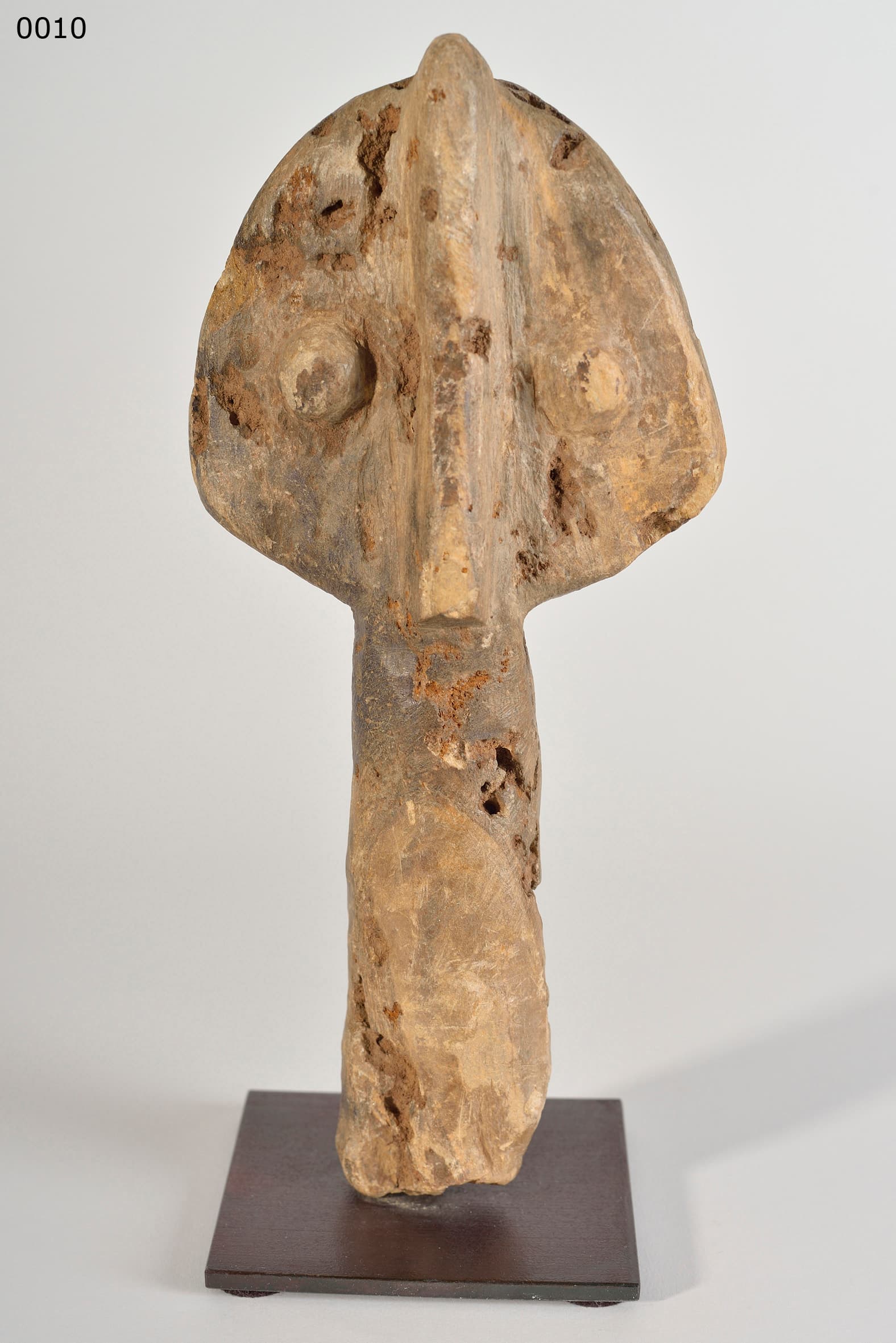
Ein seltener antiker Steinmonolith (3.-11. Jh., 34 cm) aus der Bura von Niger/Burkina Faso - eine stark abstrahierte, stark stilisierte weibliche Figur mit wiedergegebenen Brüsten, der extrem dichte, blasse Stein ist stark entsteint, verkrustet und geologisch degradiert.
1. Explizit geschlechtsspezifische Rarität
Während die Nekropolen von Bura-Asinda viele Monolithen hervorgebracht haben, ist das explizit weibliche Exemplar bemerkenswert selten.
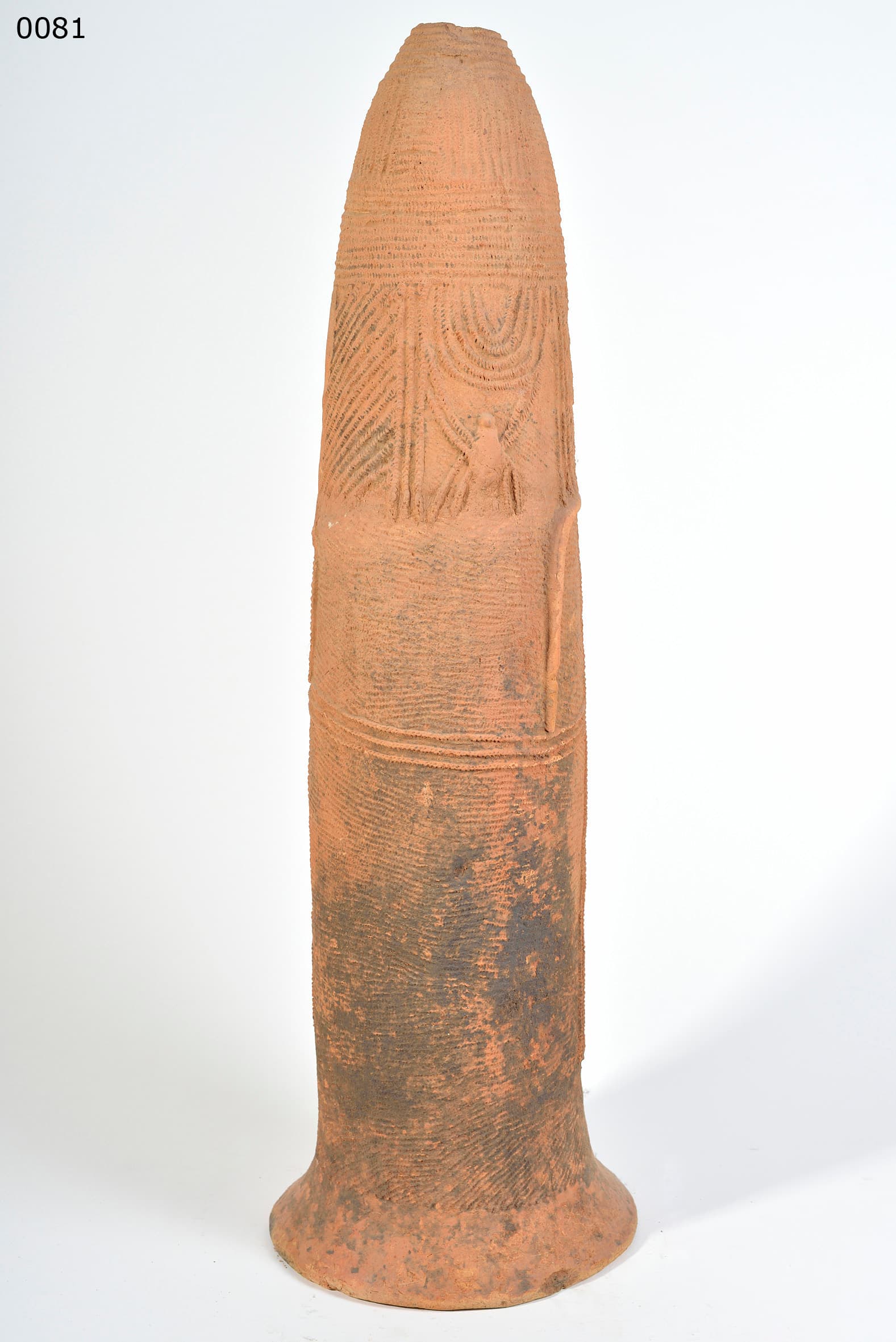
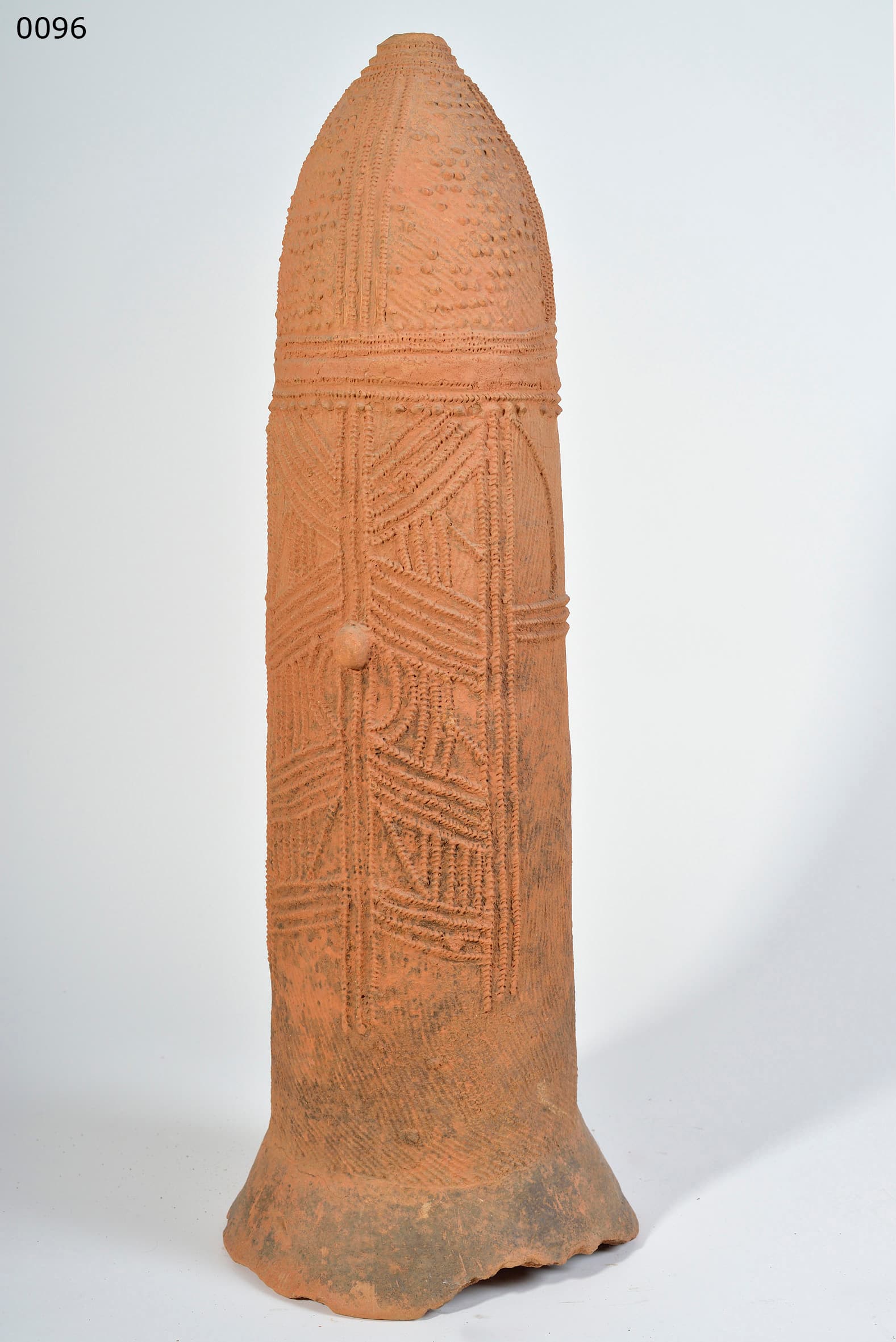
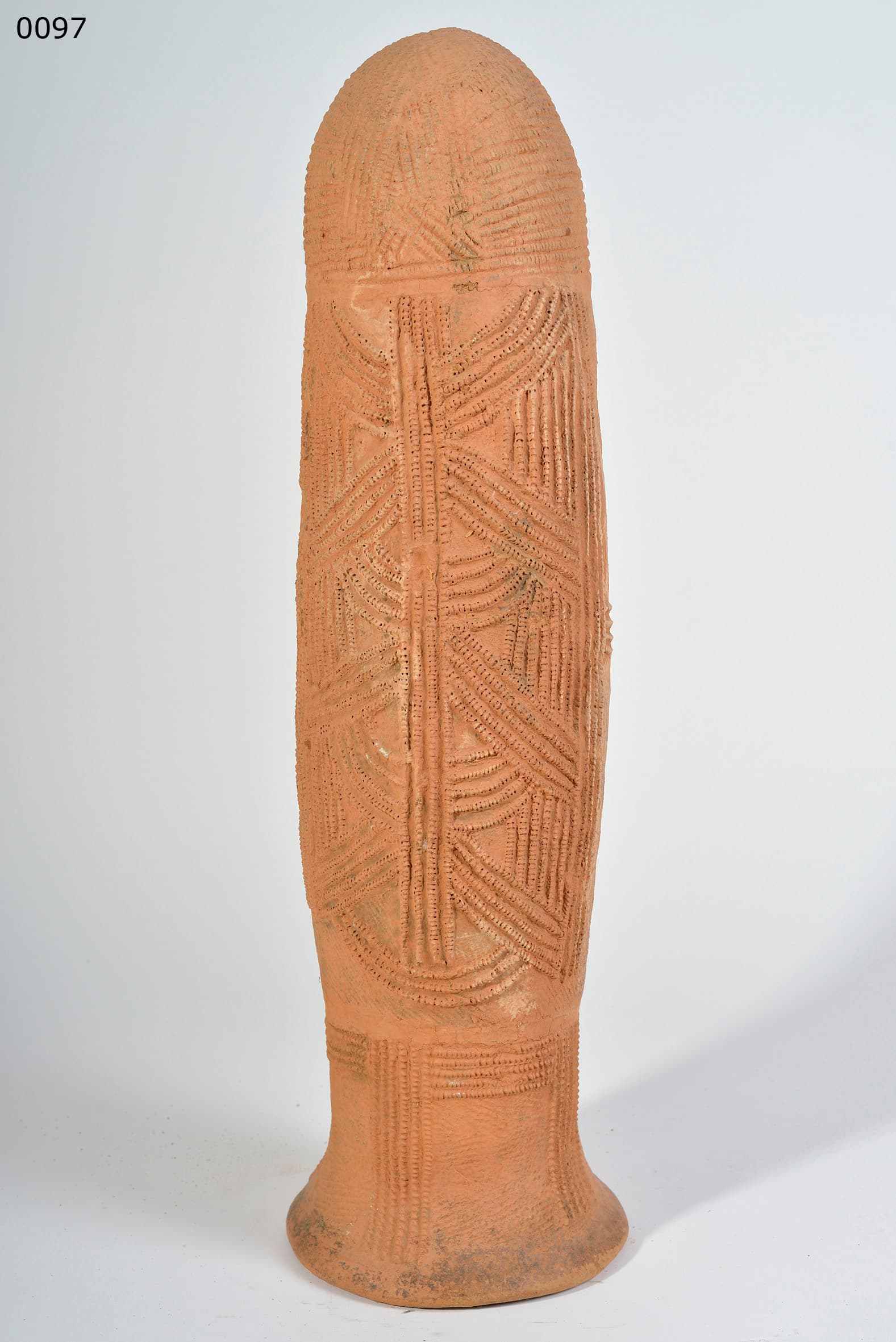
- Mehrheitlich geschlechtsloses Corpus: Die meisten Bura-Steinmonolithen beruhen auf rein phallischen, geschlechtslosen zylindrischen Formen, um abstrakte generative Kraft zu vermitteln.
- Brüste als Identitätsmarker: Die eingemeißelten Brüste verankern diesen Stein in einer bestimmten Geschlechtsidentität - einer Gründungsmatriarchin oder einer bestimmten, namentlich genannten weiblichen Vorfahrin und nicht einem allgemeinen Geist.
2. Matriarchalischer Anker der Nekropole
Diese vertikal in die Gräberfelder des unteren Niger-Tals eingepflanzte Figur spielte eine besondere Rolle.
- Geschlechtsspezifische Fürbitte: Wo männliche Vorfahren für politische oder landwirtschaftliche Angelegenheiten angerufen werden, wird eine weibliche Gründerin für Fruchtbarkeit, Geburt und Kontinuität der Abstammung angerufen.
- Dauerhafter Avatar: Der Stein wurde zum Mittelpunkt für Trankopfer und Gebete, die sich speziell auf die matrilinearen Anliegen der Gemeinschaft bezogen.
3. Extreme sahelische Taphonomie
Die Oberfläche ist ein tiefes Zeugnis der tausendjährigen Antike.
- Windsandgestrahlt: Tausend Jahre abrasiver sahelischer Winde haben die weicheren Mineraleinschlüsse vollständig entfernt.
- Schwammige Textur: Was bleibt, ist eine kraterartige, schwammartige Oberfläche, die keinerlei ursprüngliche Werkzeugspuren aufweist – was einen antiken Ursprung nahelegt.
Zusammenfassung
Dieser seltene Monolith, der die ikonische Bura-Ästhetik in explizit weibliches Gestein übersetzt, ist ein kraftvoller Wächter des westafrikanischen Altertums. Seine geschlechtsspezifische Abstraktion und die extreme geologische Erosion erheben ihn zu einem herausragenden archäologischen Objekt.
KI-unterstützt erstellt aus Sammlungsgutachten, Objektfotografie und eigener Recherche, redaktionell geprüft. Fehler sind möglich — Hinweise darauf sind uns willkommen. Zum Verfahren →