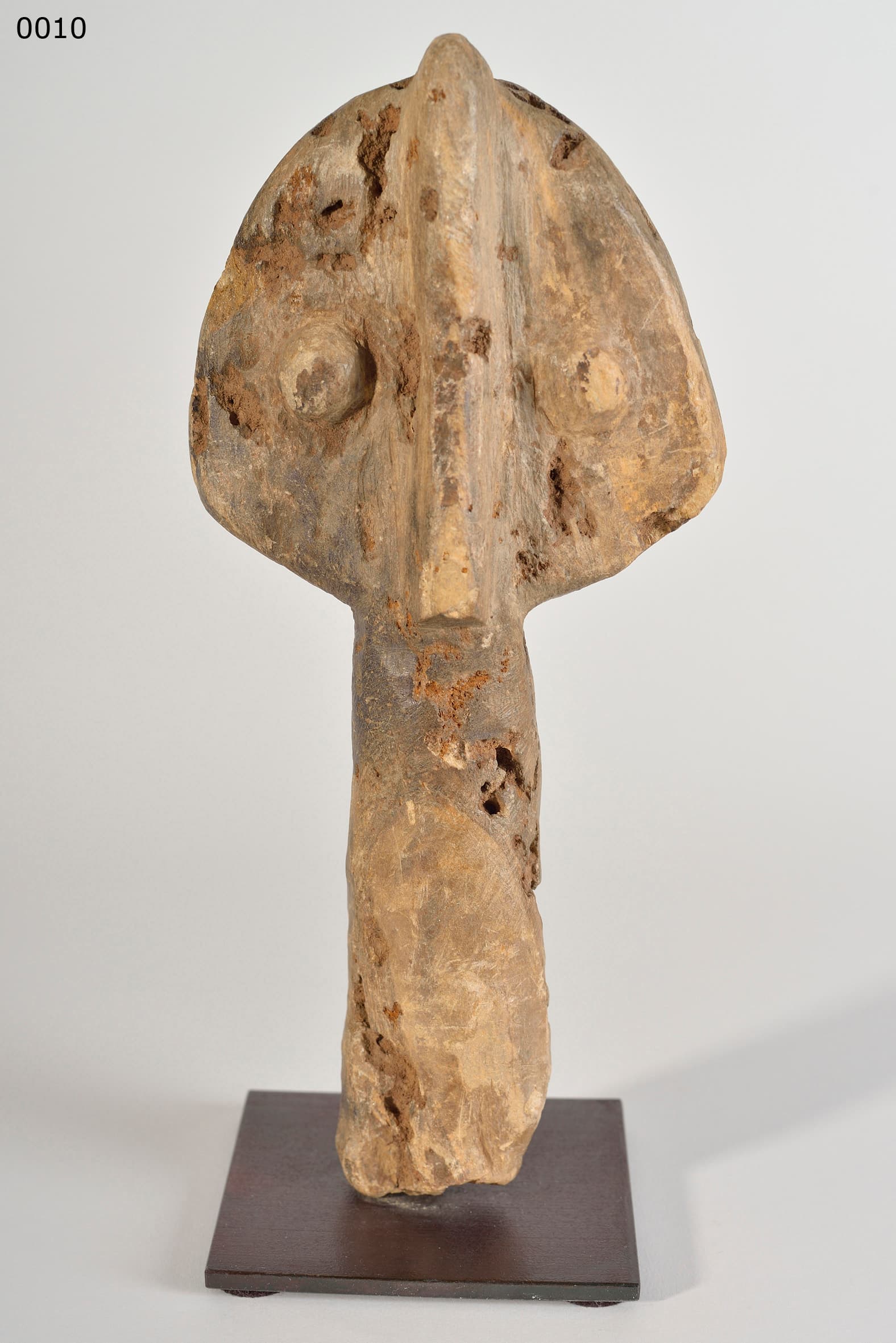
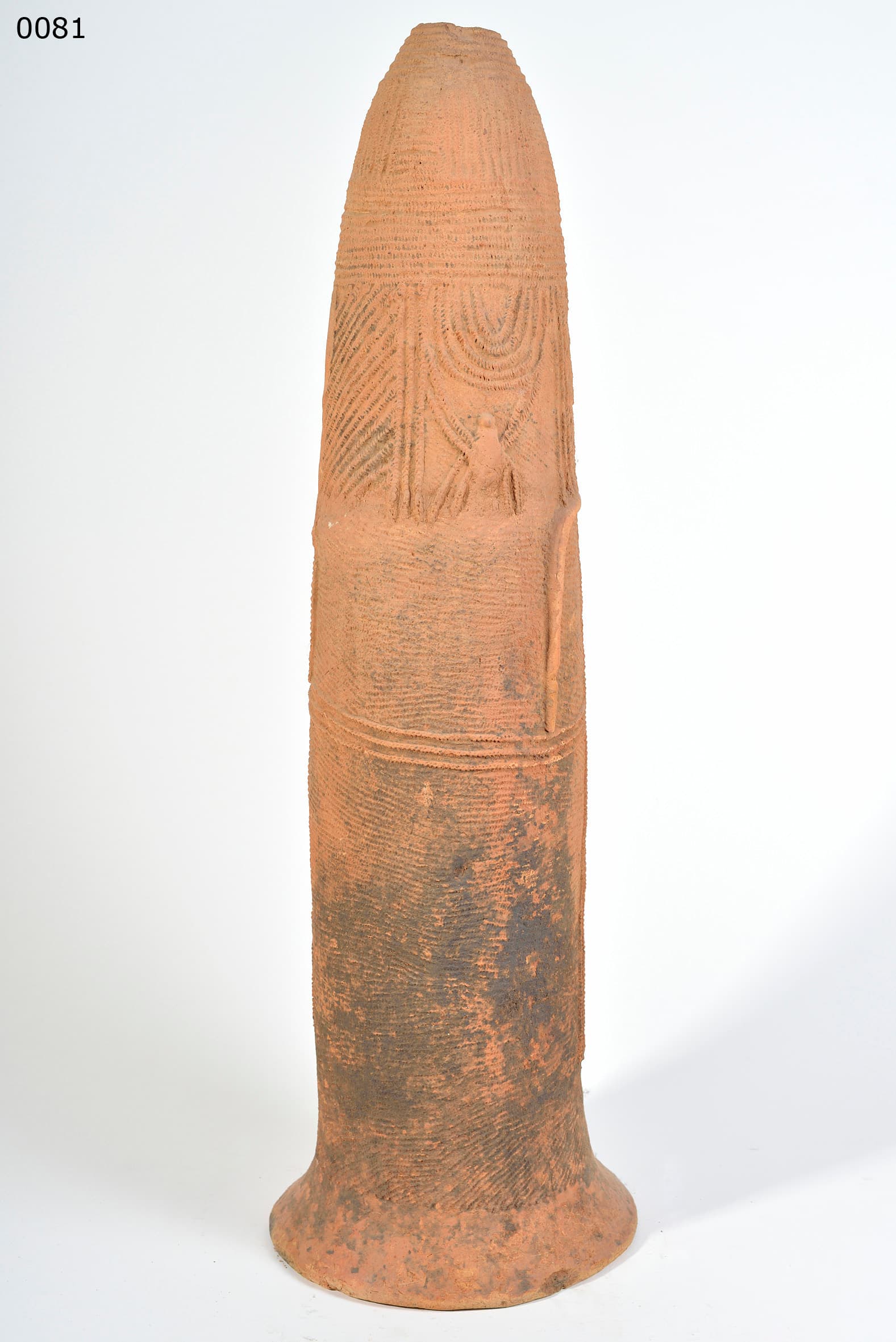
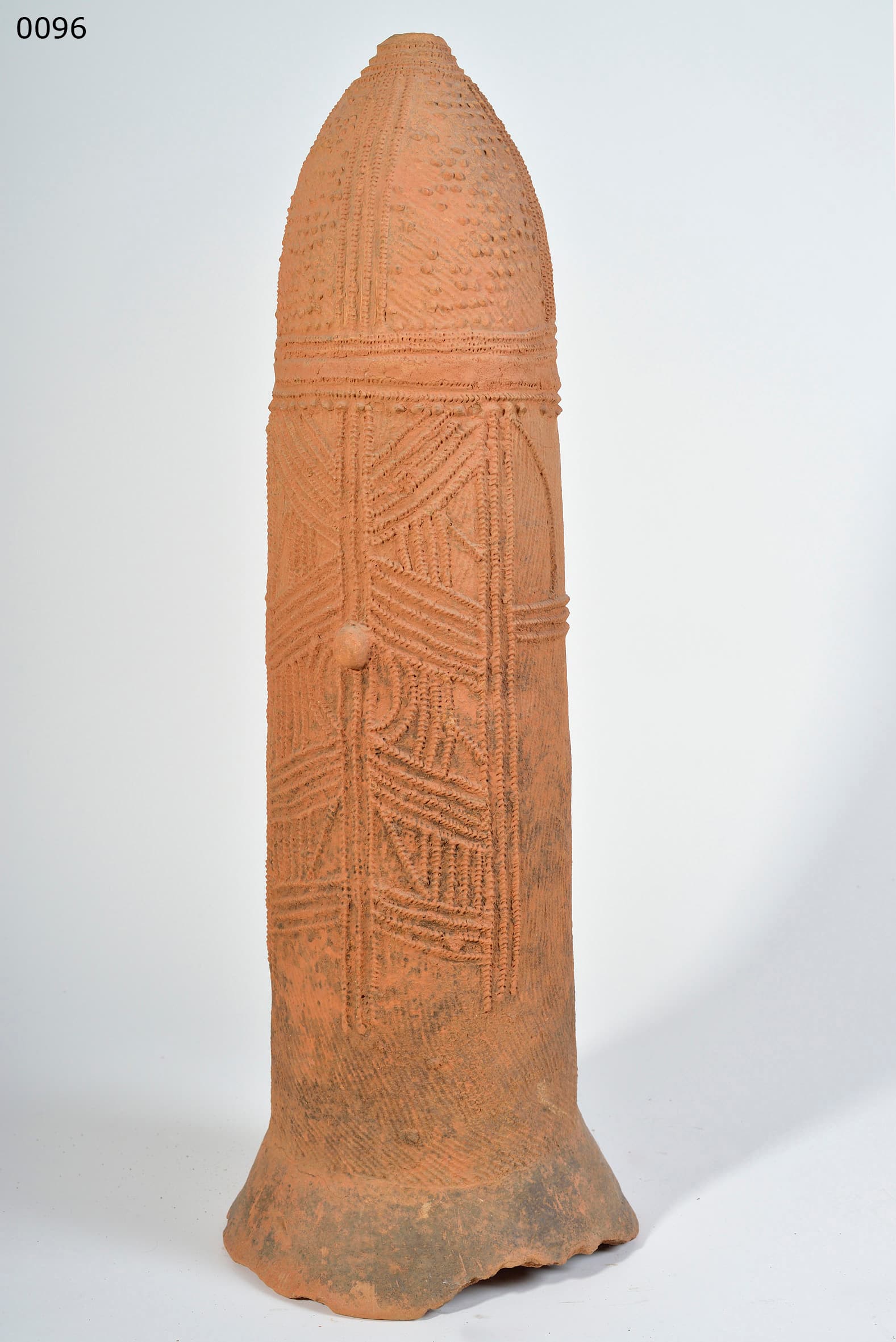
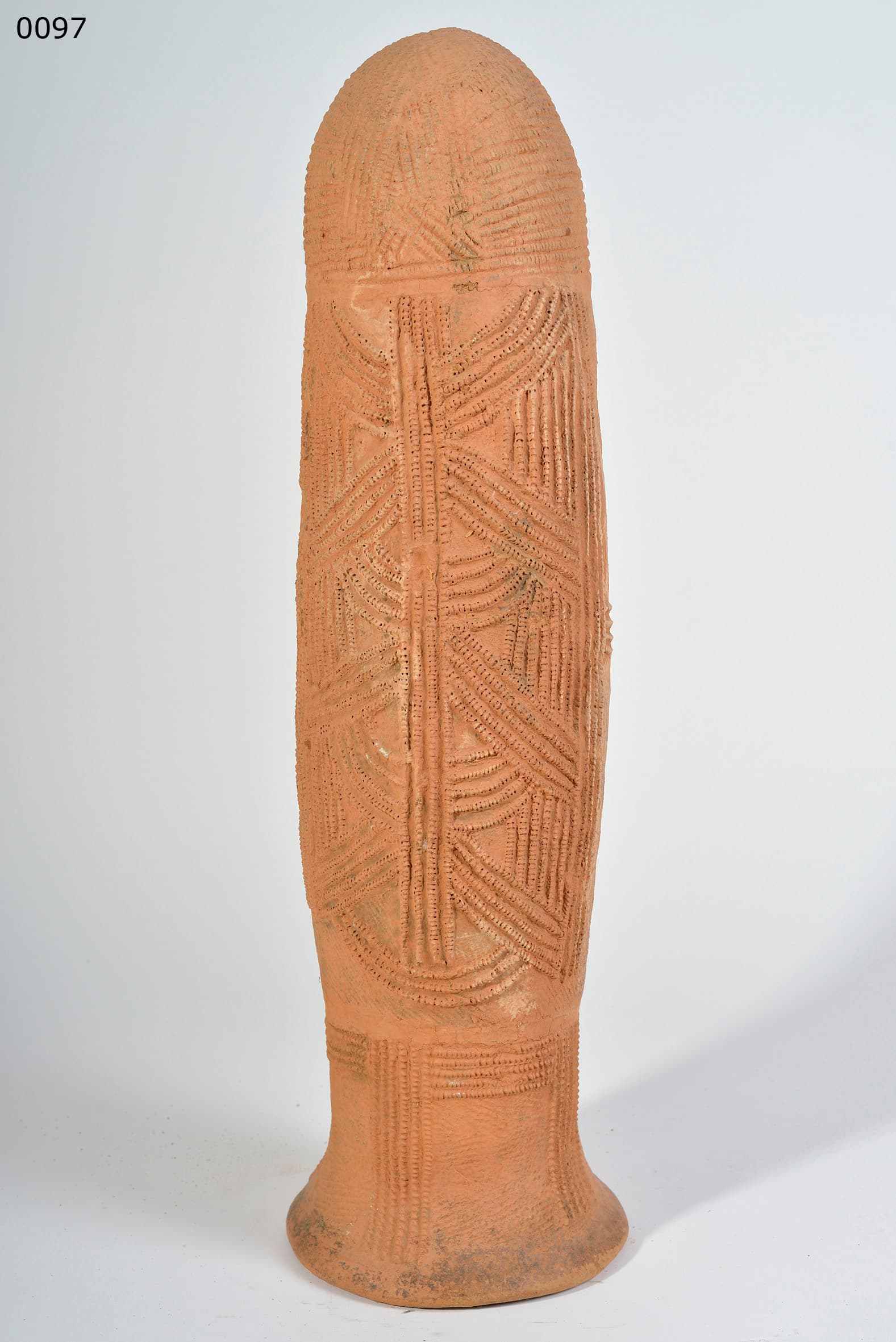
Ein antikes Bura-Terrakotta-Grabgefäß (3.-11. Jh., 30 cm) aus Niger/Burkina Faso - ein einfacher Zylinder mit einem tiefen vertikalen Spannungsriss, die stark verkalkte, blasse Oberfläche ist mit gehärteter Wüstenerde verkrustet.
1. Der Nekropolenkomplex von Bura-Asinda
Die 1978 entdeckte Bura-Asinda-Kultur (3.-11. Jahrhundert n. Chr.) hat das Verständnis des alten Westafrika grundlegend verändert.
- Duale Typologie: Der Bura-Keramikkorpus schwankt zwischen rein phallischen, röhrenförmigen Urnen und eher schoßartigen, bauchigen Gefäßen.
- Reine Zylindervariante: Dieses 30 cm lange Stück stellt die abstrakteste phallische Form dar - ohne alle Reliefdetails ist der Zylinder ein reines regeneratives Symbol.
2. Leichenablage und Ahnenfokus
Diese Objekte waren nicht für die Lebenden, sondern für die Verstorbenen bestimmt.
- Umgekehrt über die Überreste: Sie wurden in der Regel umgedreht über dem Verstorbenen bestattet oder mit persönlichen Gegenständen, Kleidung oder menschlichen Knochen gefüllt.
- Libationsleitung: Röhrenförmige Formen tauchten oft knapp über der Erdlinie auf und dienten als physische Kanäle, durch die die Lebenden bei Gedenkzeremonien Wasser oder Hirsebier gossen - die Flüssigkeit erreichte die Ahnen durch das Gefäß selbst.
3. Tausendjährige Verkalkung und Feuerbrüche
Die Oberfläche zeugt sowohl von alter Technologie als auch von einer tausendjährigen Bestattung.
- Der tiefe vertikale Riss ist ein natürliches Ergebnis von Niedrigtemperatur-Brandspannungen im Tagebau, die durch das Gewicht der sich über ein Jahrtausend verschiebenden Erde noch verstärkt wurden.
- Mineralverschmolzene Kruste: Die dicke zementartige Verkrustung aus kalzifizierter sahelischer Erde ist das eindeutige Kennzeichen eines authentischen ausgegrabenen Bura-Artefakts.
Zusammenfassung
Dieses 30 cm lange Gefäß ist das rein zylindrische Mitglied des Bura-Grabpaares und konzentriert die Essenz der phallischen Regenerationsikonographie dieser Tradition. Der Brennbruch und die mineralisch gebundene Oberfläche weisen auf eine echte rituelle Ablagerung aus dem ersten Jahrtausend vor Christus hin.
KI-unterstützt erstellt aus Sammlungsgutachten, Objektfotografie und eigener Recherche, redaktionell geprüft. Fehler sind möglich — Hinweise darauf sind uns willkommen. Zum Verfahren →