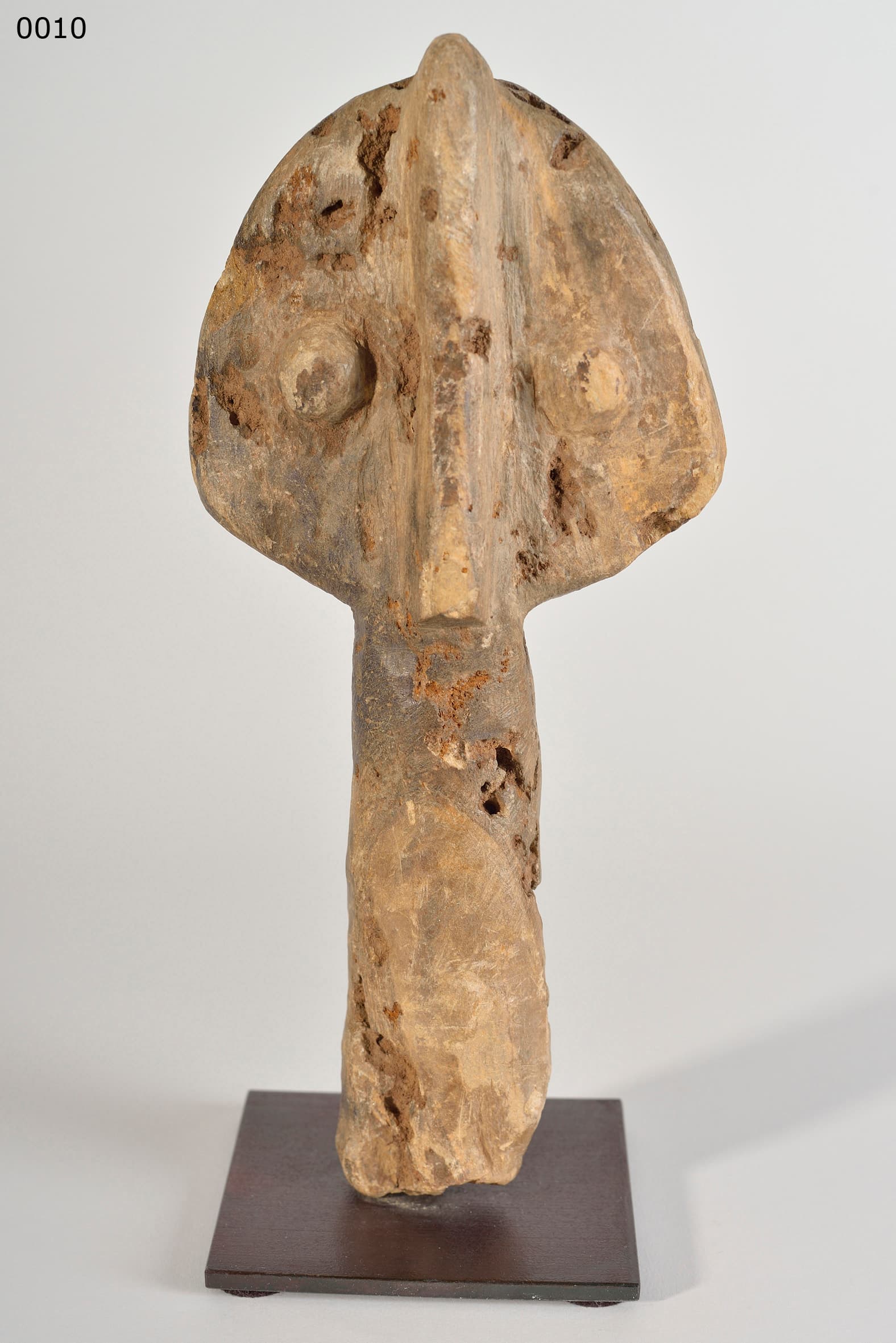
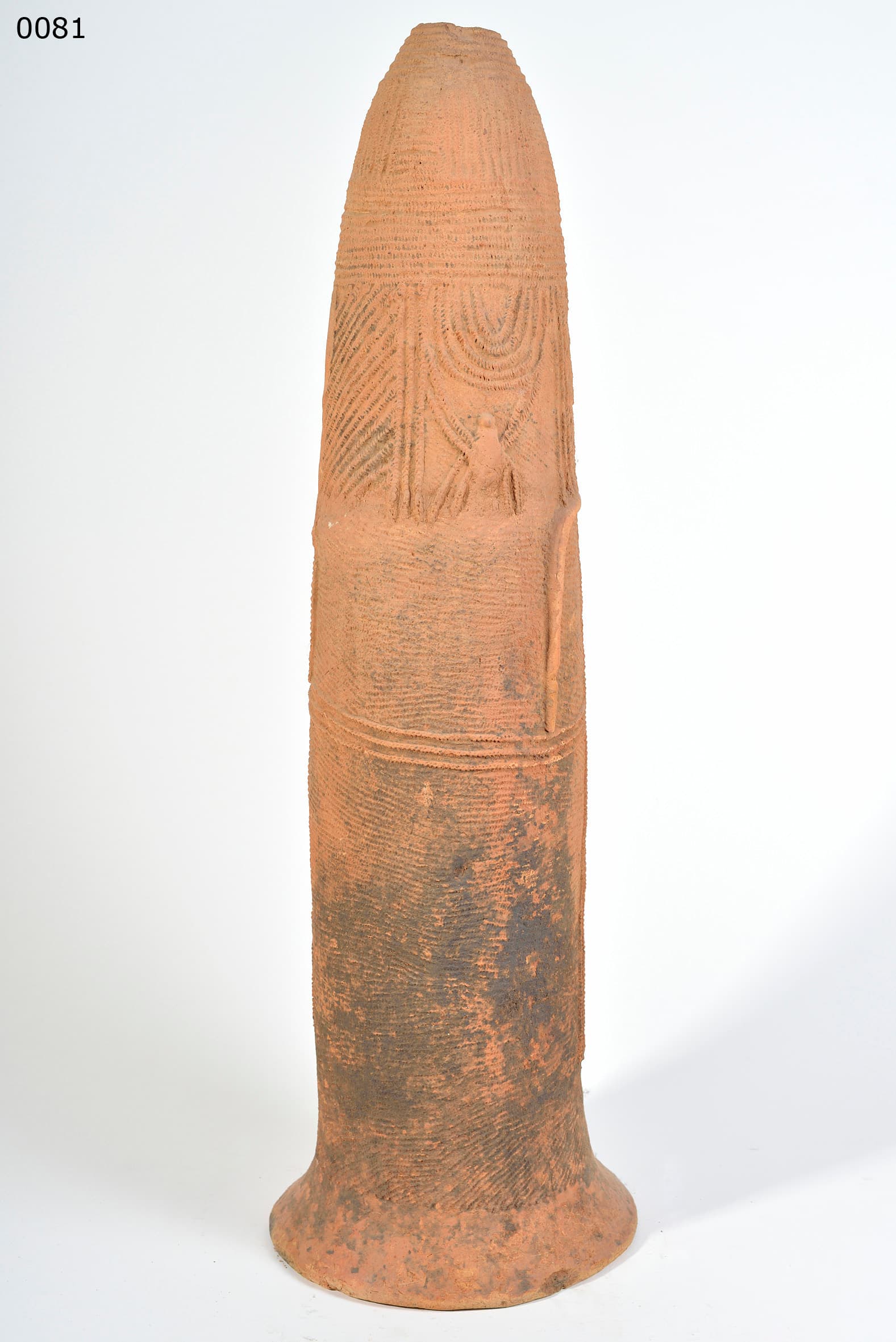
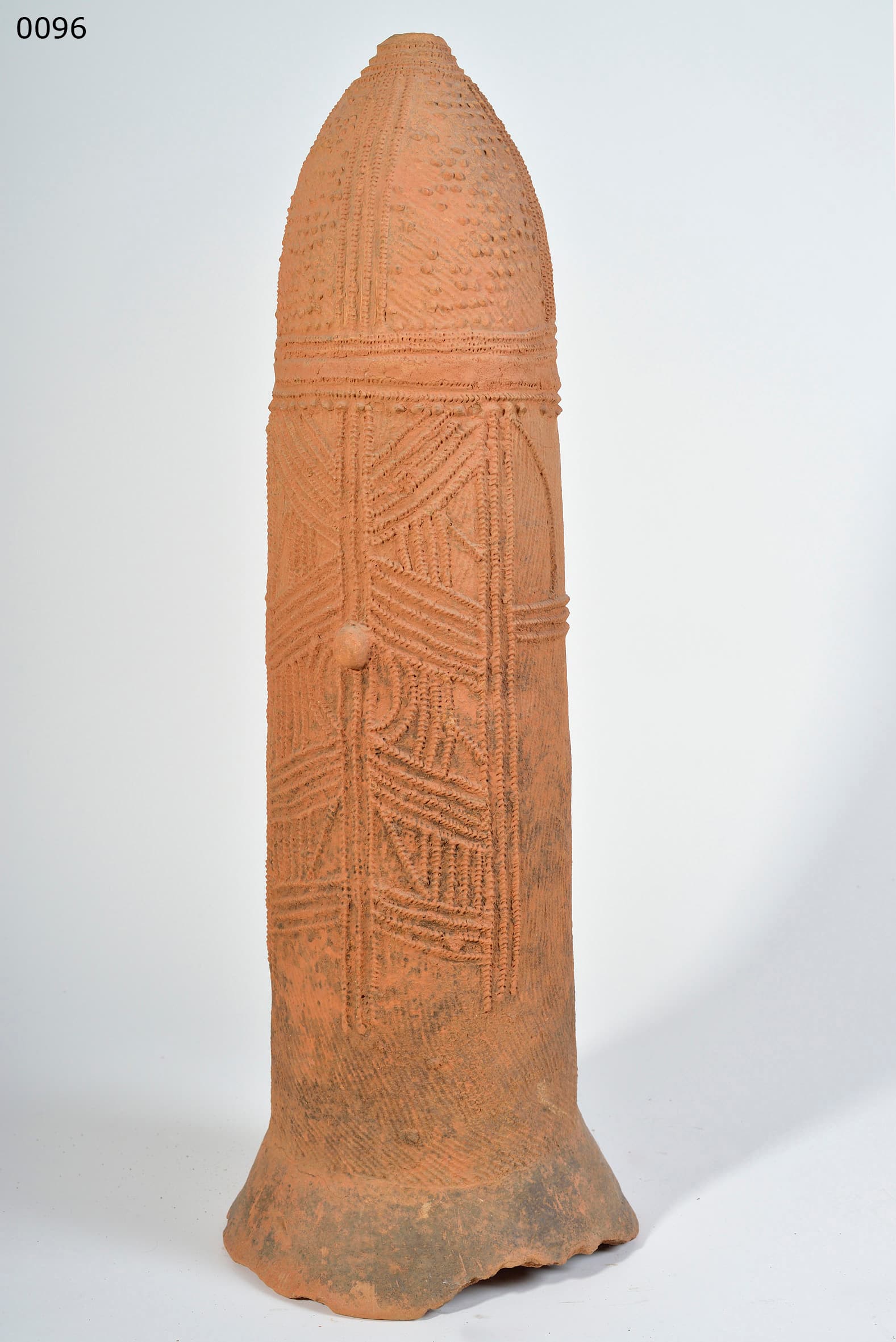
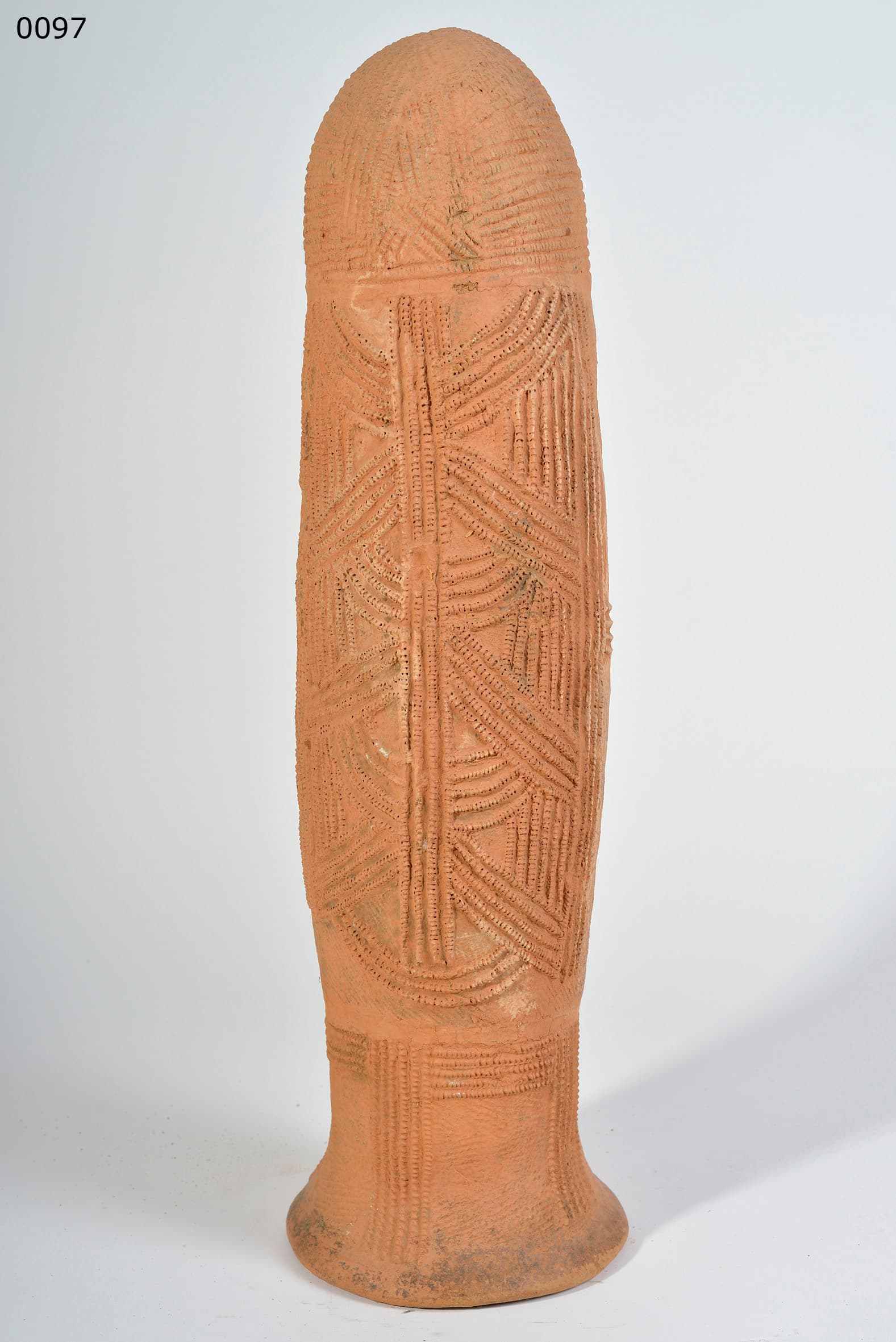
Ein seltenes Paar von Bura-Steinmonolithen (3.-11. Jh., 39/45 cm) aus Niger/Burkina Faso - ein klassisches phallisches/röhrenförmiges Paar, bei dem die größere Figur ein abstraktes Gesicht trägt und die kleinere sowohl Gesichtszüge als auch geschnitzte Brüste zeigt, die auf eine Mutterschaft hindeuten. Die schweren, blassen Steine sind durch starke Verwitterung stark zerkratzt.
1. Die beiden generativen Prinzipien
Die Bura-Asinda-Kultur ist zwar für ihre abstrakten Steindenkmäler bekannt, aber ein männlich/weiblich gedeutetes Paar zu finden - insbesondere eines, das auf eine Mutterschaft verweist - gilt als Seltenheit.
- Vollständige Kosmologie: Die männliche Phallusform gepaart mit der weiblichen mütterlichen Form wird oft als Symbol für den Zyklus der menschlichen Fruchtbarkeit interpretiert.
- Ungebrochene Abstammungslinie: Zusammen verweisen die Steine in dieser Deutung auf die Kontinuität der Abstammungslinie und erinnern nicht an eine einzelne Person.
2. Wächter der Nekropole
Gemeinsam am Kopfende eines Grabes platziert, dürfte dieses Steinpaar traditionell als Wächter gedient haben.
- Seele anheften: Dem Glauben nach hielten die Steine die wandernde Seele an der Grabstätte fest und projizierten schützende Energien in die Gemeinschaft hinaus.
- Verankerte Fruchtbarkeit: Das beständige Medium sollte dazu beitragen, dass die Fruchtbarkeit der Vorfahren dauerhaft in der Landschaft verankert wurde, damit künftige Generationen sie verehren konnten.
3. Tausendjährige Erosion durch Wind und Regen
Die Taphonomie dieser beiden Steine spricht für ein hohes Alter.
- Sandsturm-geschliffen: Lang anhaltende Sandstürme und Monsunregen in der Sahelzone haben die weicheren Mineralien abgetragen.
- Schwammartige Haut: Die daraus resultierende tief entsteinte, strukturierte Oberfläche zeigt Spuren einer geologischen Alterung, die mit einer zeitlichen Einordnung in das 3. bis 11. Jahrhundert vereinbar ist.
Zusammenfassung
Als seltene Darstellung der gepaarten generativen Kräfte stellt dieses Bura-Steinpaar ein bedeutendes archäologisches Zeugnis dar. Ihre mütterliche Ikonographie und die tiefgreifende geologische Erosion machen sie zu historisch wertvollen Objekten.
KI-unterstützt erstellt aus Sammlungsgutachten, Objektfotografie und eigener Recherche, redaktionell geprüft. Fehler sind möglich — Hinweise darauf sind uns willkommen. Zum Verfahren →