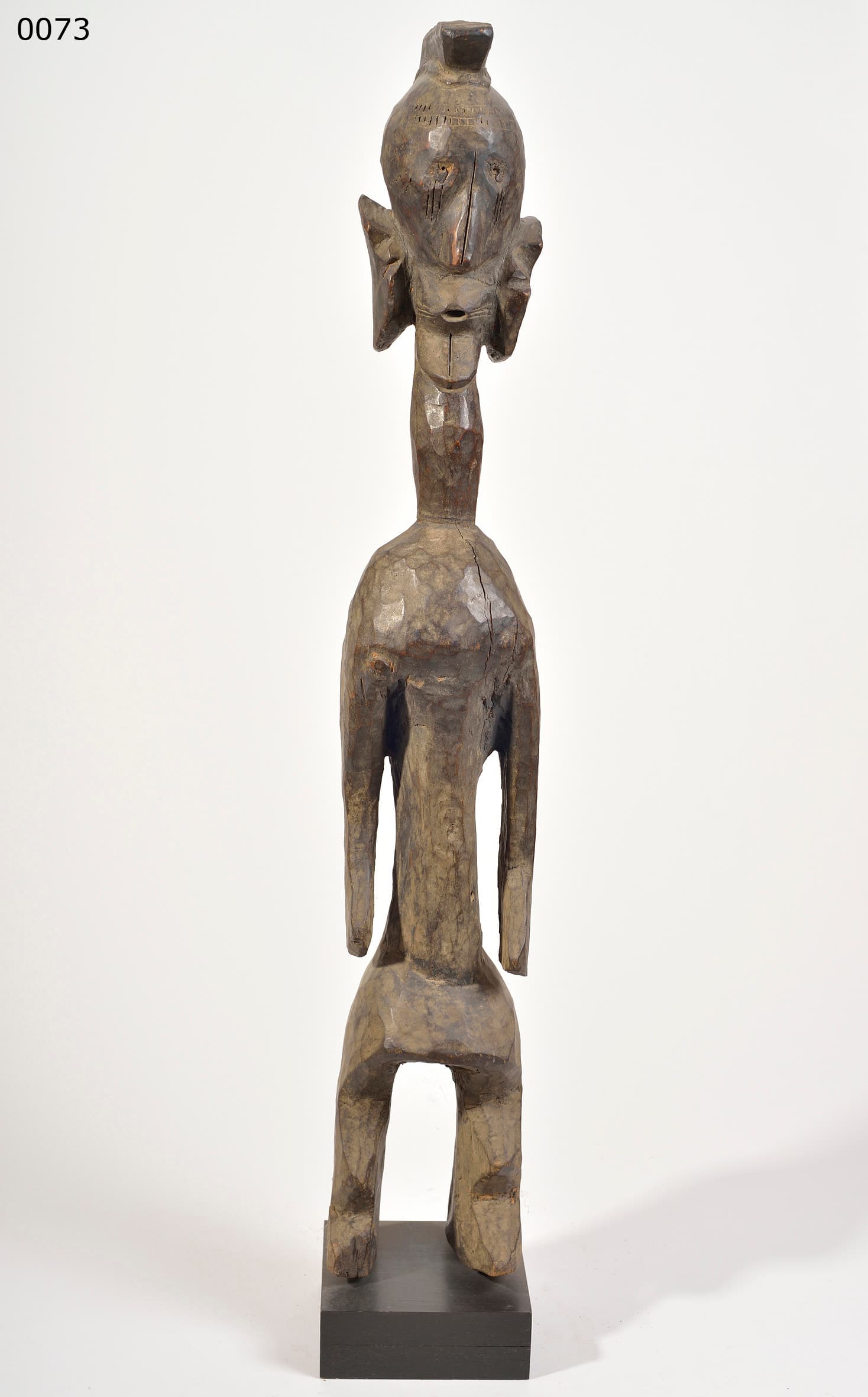
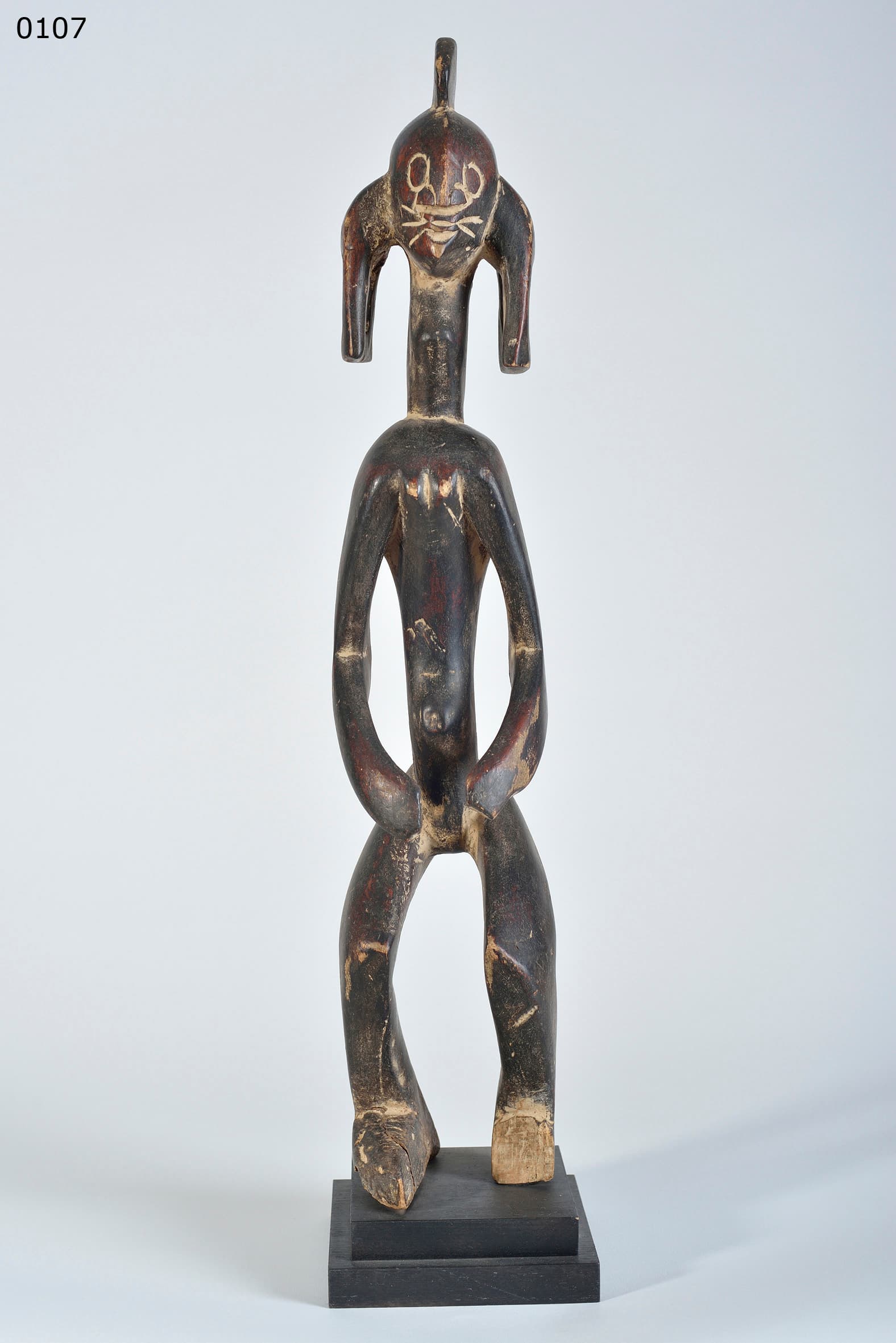
Ein komplizierter geschmiedeter Eisenstab (Mitte 20. Jh., 50 cm) von den Mumuye aus Nigeria - eine stark stilisierte menschliche Figur an der Spitze mit geschwungenen Armen, die über einem Bündel von eng gewundenen Eisenvoluten positioniert sind. Die gesamte Oberfläche ist mit einem dicken, stark strukturierten orange-braunen Rost überzogen.
1. Metallurgische Übersetzung des Kubismus
Die Schmiede von Mumuye sind dafür bekannt, dass sie die berühmte proto-kubistische Negativ-Raum-Dynamik ihrer Holzstatuen in das unnachgiebige Medium Eisen übertragen haben.
- Metallurgische Fließfähigkeit: Die geschwungenen, bandartigen Arme der Figur und die dynamischen, gewundenen Eisenscheiben darunter zeigen eine bemerkenswerte metallurgische Fließfähigkeit.
- Kinetische Geometrie: Der Schmied setzt auf kinetische Energie und durchbrochene Geometrie und schafft so ein Werk, das sich sowohl schwerelos als auch spirituell aufgeladen anfühlt.
2. Die Vabo-Gesellschaft und die Wetterkontrolle
Eisenstäbe dieser Komplexität werden von den Ältesten des Vabo-Geheimbundes streng kontrolliert.
- Bei den Tsafi gepflanzt: In heilige Schreine getrieben, wirkt der Stab wie ein mächtiger spiritueller Blitzableiter.
- Regenerzeugung im Benue: Im trockenen Tal des Benue-Flusses verlässt man sich auf diese Stäbe zur Regenerzeugung - das Eisen zieht auf magische Weise Gewitterwolken und lebenswichtigen Niederschlag auf die Erde, während die eingerollten Scheiben rollenden Donner oder konzentrierte nyama (Energie) darstellen können.
3. Freibewitterung und tiefer Rost
Der physische Zustand ist vereinbar mit einem Alter aus der Mitte des 20. Jahrhunderts und legt eine aktive rituelle Nutzung nahe.
- Flaking Orange Oxidation: Der Stab ist in einer dicken aktiven Schicht von abblätterndem orange-braunem Rost umhüllt.
- Echt ausgesetzt: Diese tiefe Oxidation spricht für eine Verwendung im Freien in schamanischen Kontexten, bei der das Objekt Witterungseinflüssen ausgesetzt war – frei von moderner Konservierung.
Zusammenfassung
Dieser eiserne Kraftstab, der die kinetische Dynamik der Mumuye-Holzschnitzerei in geschmiedetes Metall überträgt, ist ein ausdrucksstarkes schamanisches Instrument. Seine tiefgreifende Oxidation und seine fließende Geometrie machen ihn zu einem charakteristischen ethnografischen Artefakt.
KI-unterstützt erstellt aus Sammlungsgutachten, Objektfotografie und eigener Recherche, redaktionell geprüft. Fehler sind möglich — Hinweise darauf sind uns willkommen. Zum Verfahren →