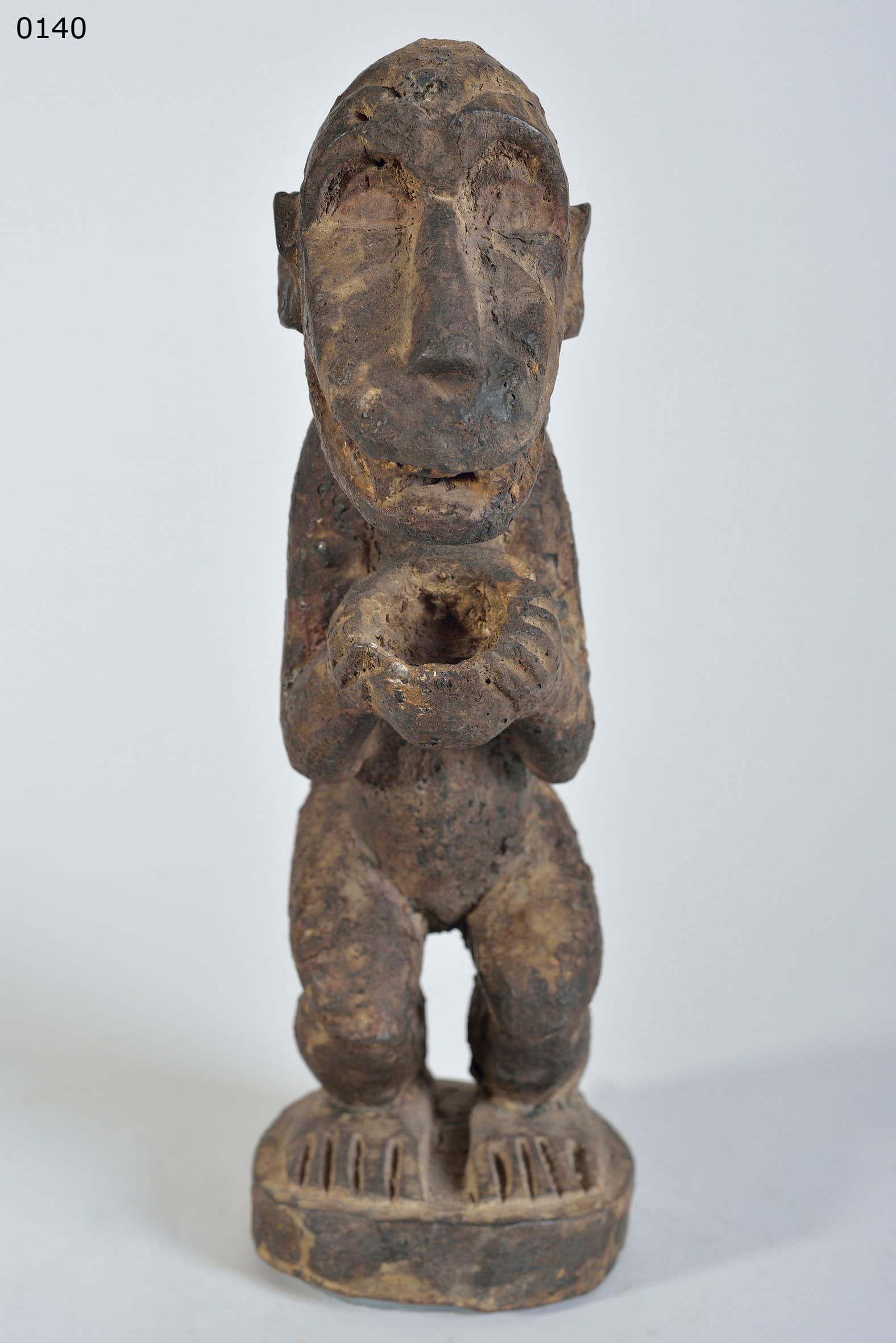
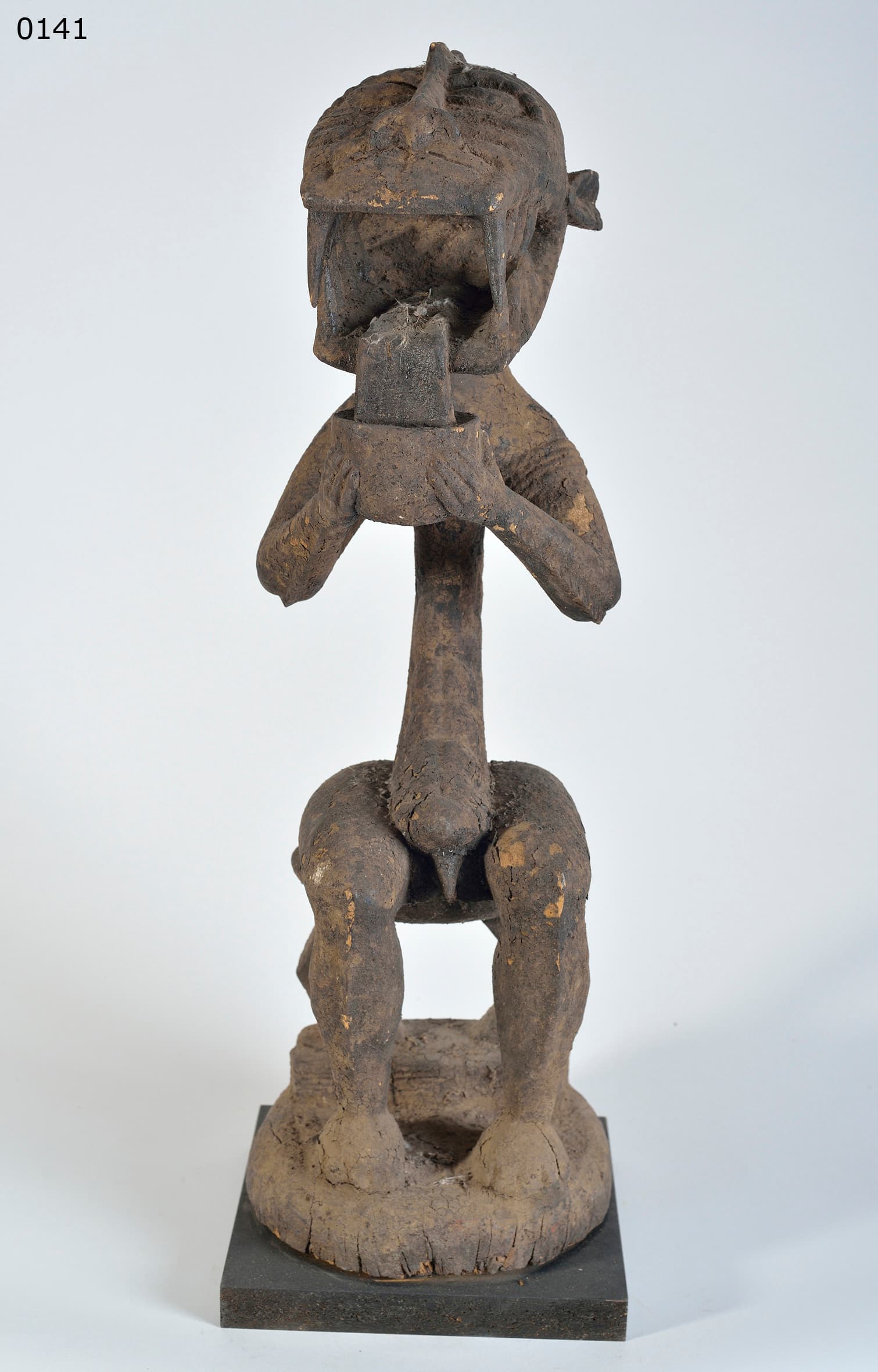
Eine imposante Baule Goli-Maske (Mitte 20. Jh., 49 cm) von der Elfenbeinküste - ein großes menschenähnliches Gesicht, überragt von einem hoch aufragenden Kamm und umgeben von einer scharf geschnitzten Umrandung mit vorspringenden hornähnlichen Elementen, stark verziert mit Messingnägeln über der Stirn und mit Fragmenten von getrocknetem Raphia, das dunkle Holz trägt eine vielfarbige, verkrustete Patina.
1. Der Goli-Maskeradenkomplex
Diese beeindruckende Maske gehört zur komplexen Goli-Maskentradition, die die Baule Anfang des 20. Jahrhunderts von ihren wanischen Nachbarn übernahmen.
- jahrhundert übernommen haben. Über das Mblo-Porträt hinaus: Während die Baule für ihre zarten Porträtmasken (Mblo) bekannt sind, sind die Goli-Masken größer, robuster und stark stilisiert.
- Kpan, die ältere Frau: Mit ihrem kunstvollen Wappen und den Messingverzierungen stellt diese Maske wahrscheinlich Kpan dar - die ältere weibliche Maske, die in der Goli-Sequenz zuletzt getanzt wird und den Höhepunkt von Weisheit, Schönheit und sozialer Stabilität repräsentiert.
2. Gefahr abwenden und das Leben zelebrieren
Die Goli-Maskerade ist ein unglaublich lebendiges gemeinschaftsweites Ereignis.
- Beerdigungen und Unterhaltung: Bei Beerdigungen von wichtigen Persönlichkeiten, in Zeiten großer Gefahr oder zur Unterhaltung des Dorfes tanzt der Kpan mit eleganten, gemessenen Schritten, begleitet von einem Frauenchor.
- Messing und Elitestatus: Das Tragen von Messingnägeln (clous de laiton) ist ein direkter visueller Indikator für Elitestatus und dörflichen Reichtum - es gebietet tiefen Respekt und bringt schützende freudige Energie in die Gemeinschaft.
3. Patinierung und Originalbeilagen
Der Zustand der Oberfläche ist bemerkenswert.
- Verdigris Ringe: Das dunkle Holz ist stark oxidiert, mit den Messing-Nägel Schaffung lokalisierten verdunkelten Ringe von Grünspan.
- Original Raffia erhalten: Die Erhaltung der brüchigen Raffia-Befestigungen entlang des Umfangs gilt als selten und spricht dafür, dass die Maske nicht stark restauriert oder für den westlichen Markt verändert wurde. Das Innere trägt tiefe Reibung Verschleiß und Schweiß Flecken von Jahrzehnten der aktiven Leistung.
Zusammenfassung
Diese Kpan-Maske stellt eine monumentale und komplexe Manifestation der Baule Goli-Tradition dar. Die Messingnägel, die Bastreste und die deutlichen Gebrauchsspuren stützen eine Datierung in die Mitte des Jahrhunderts.
KI-unterstützt erstellt aus Sammlungsgutachten, Objektfotografie und eigener Recherche, redaktionell geprüft. Fehler sind möglich — Hinweise darauf sind uns willkommen. Zum Verfahren →