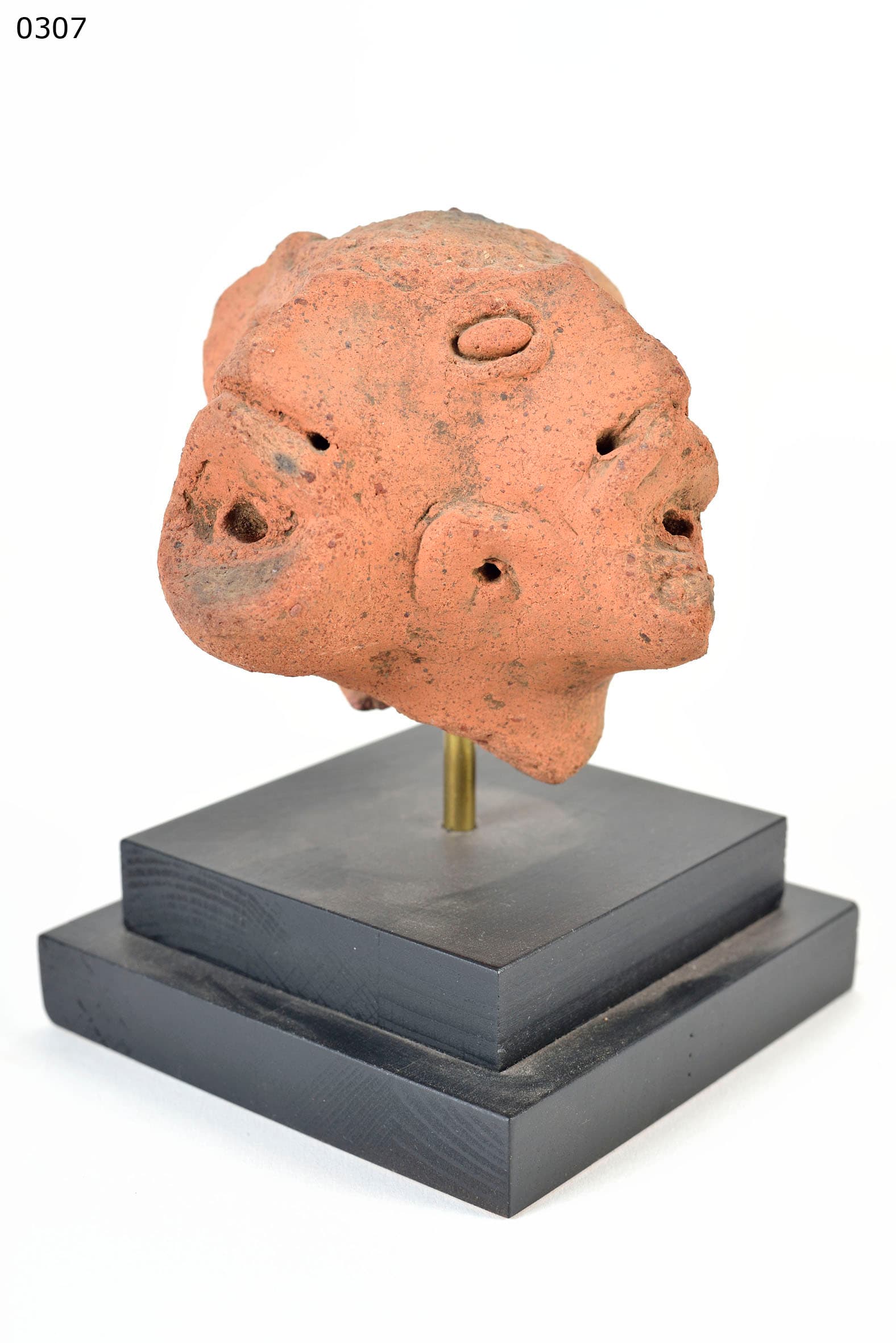
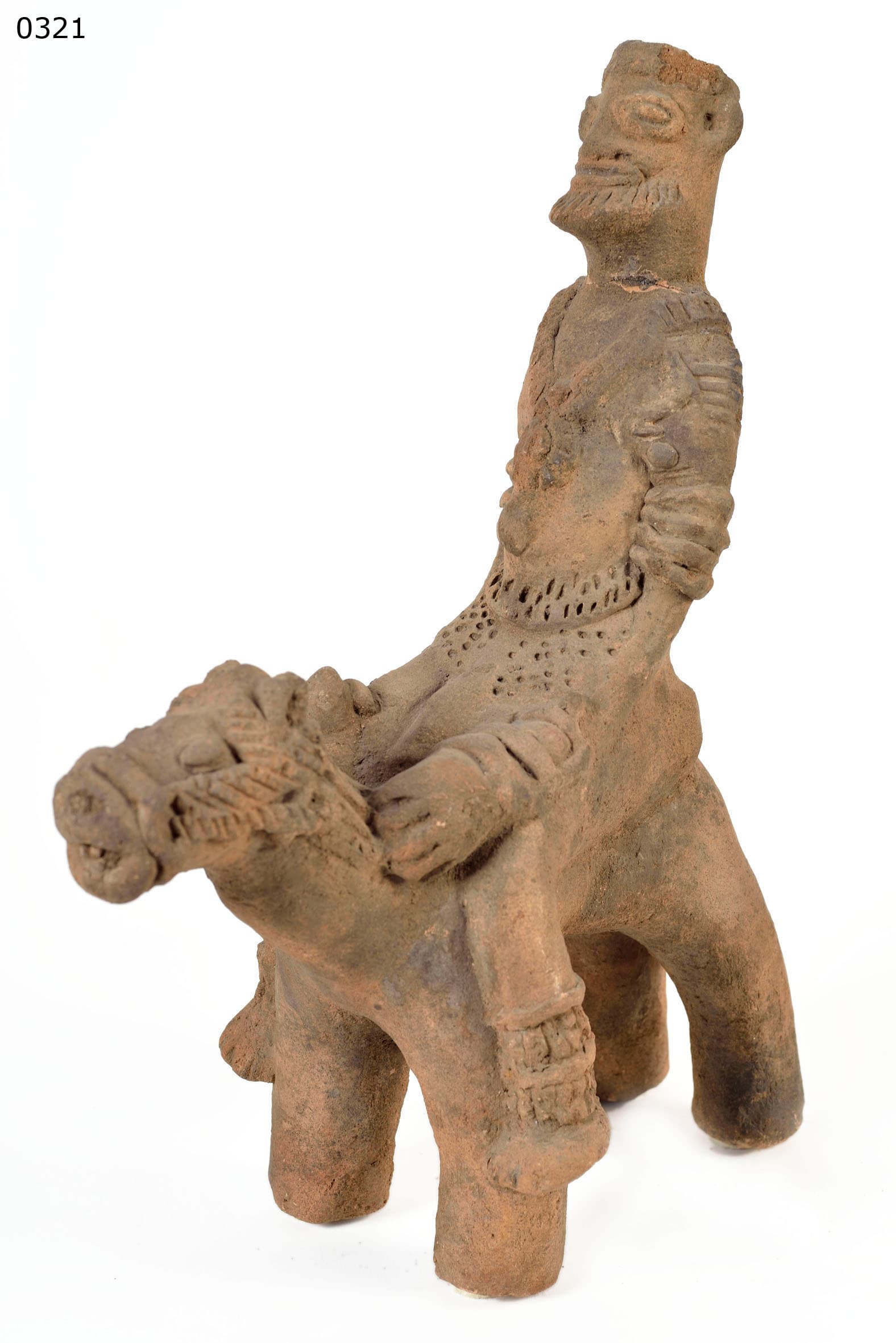
Eine Koma-Terrakottabüste (12.-18. Jh., 21 cm) aus Ghana - ein stark abstrahierter Torso und Kopf mit einem höhlenartigen, klaffenden Mund, hervorstehenden zylindrischen Augen und einem über der Brust gefalteten rituellen Werkzeug. Die Oberfläche ist außergewöhnlich grob, stark degradiert und mit gebrannter Erde und antiken Trankopferresten verkrustet.
1. Ausdrucksstarke Groteske in der Koma-Kunst
Diese Figur lehnt sich stark an die expressive, fast groteske Stilisierung an, die die Koma-Kunst von anderen westafrikanischen Terrakotta-Traditionen unterscheidet.
- Überirdisches Antlitz: Der übertrieben klaffende Mund und die röhrenförmigen, hervorstehenden Augen schaffen ein intensives, überirdisches Antlitz, das direkt mit der spirituellen Ebene kommunizieren - oder sie einschüchtern - soll.
- Trance und Atem: Die aggressive Modellierung suggeriert einen Geist, der sich in einem Zustand der Trance befindet, singt oder spirituellen Atem ausstößt.
2. Trankopfergefäße und Heilungsschreine
Koma-Büsten dieser spezifischen Typologie wurden häufig für Heilungsrituale oder Schreinopfer verwendet.
- Funktionale Hohlräume: Die klaffenden Münder und tiefen Schädelhöhlen dienten oft als tatsächliche Gefäße für flüssige Trankopfer (Hirsebier, Tierblut) oder magische Medizin.
- Fütterung des Ahnen: Indem die Lebenden Opfergaben direkt in den Mund des Ahnen gossen, glaubten sie, den Geist zu füttern - der wiederum Schutz gewähren oder körperliche Beschwerden heilen würde.
3. Stratigraphische Verkrustung und Verwitterung
Die extreme Verwitterung erzählt die Geschichte des rituellen und archäologischen Lebens.
- Verschmolzene Opferschichten: Dicke Schichten von Opferpatina sind mit jahrhundertealter unterirdischer Erde verschmolzen, wobei die groben Aggregate des Tons freigelegt wurden.
- Niedrig gebrannte Brüchigkeit: Die bröckelnde, hochgradig brüchige Beschaffenheit der Terrakottaränder stimmt mit antiker niedrig gebrannter Keramik überein, die aus nordghanaischen Hügelgräbern geborgen wurde.
Zusammenfassung
Diese Büste ist ein tiefgründiger, fast brutalistischer Ausdruck der Koma-Theologie und fängt die rohe psychologische Intensität des alten ghanaischen Schrein-Kults ein. Die intensive Patina und die aggressive Stilisierung machen sie zu einem ethnografischen Schatz der Superlative.
KI-unterstützt erstellt aus Sammlungsgutachten, Objektfotografie und eigener Recherche, redaktionell geprüft. Fehler sind möglich — Hinweise darauf sind uns willkommen. Zum Verfahren →