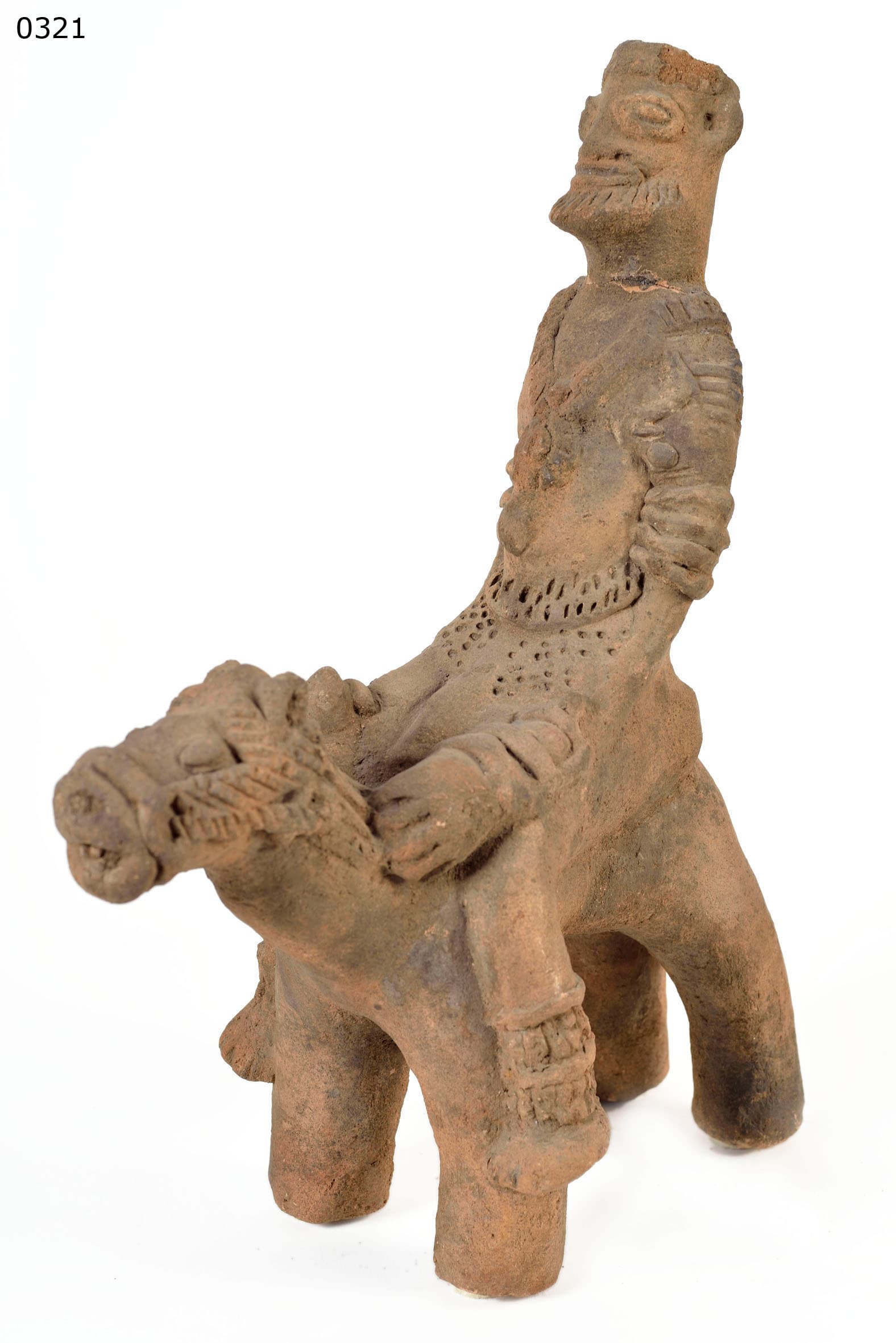
Ein seltener polyzephaler Koma-Terrakottakopf (12.-18. Jh., 11 cm) aus Ghana - eine viergesichtige Konfiguration, die aus einem zentralen Knötchen herausragt, mit tief durchlöcherten Vertiefungen für Augen, Ohren und Münder. Der Ton trägt einen groben rötlich-braunen Schlicker mit starken Erdverkrustungen und Anzeichen antiker Grabbeigaben.
1. Das archäologische Rätsel von Koma-Bulsa
Die Terrakotta-Hügel von Koma-Bulsa im Norden Ghanas sind eine der rätselhaftesten archäologischen Entdeckungen des 20. Jahrhunderts.
- Intensive Stilisierung: Die Koma-Kunst ist dafür bekannt, dass sie sich auf kugelförmige Formen und tiefe punktuelle Einschnitte stützt, die den Figuren eine ausdrucksstarke, fast surreale Präsenz verleihen.
- Schattenspiel: Tiefe kreisförmige Einschnitte, die die Gesichtszüge definieren, sind ein Markenzeichen der Ästhetik - sie erzeugen ein dramatisches Wechselspiel von Schatten und Licht, das den Ton zum Leben erweckt.
2. Allwissenheit und multidirektionale Wachsamkeit
Die polyzephale viergesichtige Struktur gilt als seltene Variante.
- Allsehende Autorität: In westafrikanischen animistischen Kosmologien repräsentieren mehrgesichtige Gottheiten oder Ahnen allsehende geistige Macht, allseitige Wachsamkeit und Autorität.
- Kardinalwächter: Diese in einem Hügel oder Schrein platzierte Figur wachte über alle vier Himmelsrichtungen, schützte die Gemeinschaft vor bösartigen Kräften und beobachtete die Handlungen der Lebenden aus jedem Winkel.
3. Unterirdische Patinierung und Chronologie
Die körnige, hochporöse Oberfläche dieser niedrig gebrannten Tonfigur ist mit verhärteten Erdablagerungen und verkalkten Wurzelspuren bedeckt.
- Primärer Koma-Kontext: Die Verkrustungen in den durchstochenen Augen- und Mundhöhlen sprechen für eine Herkunft aus einem primären Koma-Kontext.
- Jahrhundertelange Mineralabsorption: Durch die tiefe Vergrabung hat der Ton Mineralstoffe des Bodens aufgenommen – ein Befund, der für eine lange Lagerung im Boden spricht und ein hohes Alter stützt.
Zusammenfassung
Als ungewöhnliche polyzephale Variante einer bereits rätselhaften Kultur geht dieses Stück über typische Koma-Terrakotten hinaus. Es ist ein bedeutendes Artefakt, das die Theologie der allumfassenden Überwachung der Vorfahren visuell darstellt.
KI-unterstützt erstellt aus Sammlungsgutachten, Objektfotografie und eigener Recherche, redaktionell geprüft. Fehler sind möglich — Hinweise darauf sind uns willkommen. Zum Verfahren →