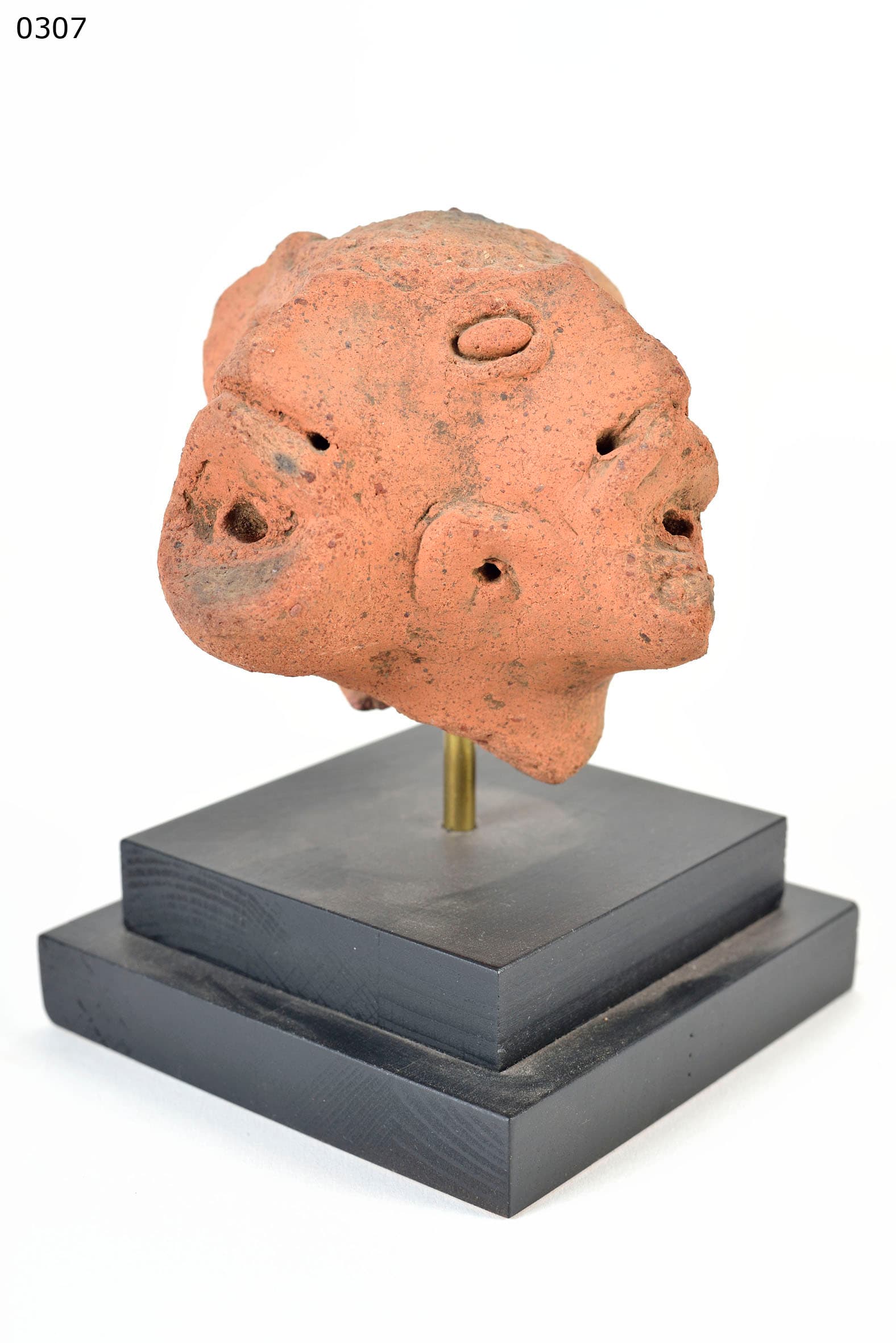
Eine imposante Koma-Reiter-Terrakotta (12.-18. Jh., 34 cm) aus Ghana - ein stark stilisierter Reiter auf einem vereinfachten Reittier, mit klassischer Koma-Gesichtsgeometrie aus wulstigen, scheibenförmigen Augen, einem markanten, gezackten Bart und einer flachen, kappenartigen Frisur, alles bedeckt von einer dicken, kiesigen, erdverkrusteten Patina.
1. Die Koma-Bulsa-Reitertypologie
In der rätselhaften Koma-Bulsa-Terrakotta-Tradition im Norden Ghanas nehmen die Reiterfiguren einen Platz von hohem Ansehen ein.
- Formökonomie: Während die Koma-Kunst allgemein für ihre surreale, fast fremdartige Stilisierung bekannt ist, wird bei den Reiterfiguren eine Formökonomie angewandt, um die Dominanz des Reiters zu betonen - das Pferd wird miniaturisiert und auf eine röhrenförmige Abstraktion reduziert, während der Oberkörper, der Kopf und der kunstvolle Bart des Reiters übertrieben dargestellt werden.
- Patriarchalischer Bart: Die ausgeprägte konzentrische Rille am Kinn des Reiters stellt einen sehr gepflegten Bart dar - ein Symbol für hohes Alter, Weisheit und patriarchalische Autorität.
2. Kavallerie, Prestige und das Reich der Geister
Im rauen Terrain der Sahelzone galt das Pferd als ein bedeutendes Symbol für militärische Macht, Reichtum und Mobilität der Elite.
- Aufstieg in die höchste Schicht: Die Darstellung eines Vorfahren auf dem Pferd erhob ihn in die höchstmögliche soziale Schicht.
- Spirituelles Reittier: In den Grabhügeln platziert, statteten diese Figuren den Verstorbenen mit einem spirituellen Reittier aus, das die Ankunft im Reich der Ahnen mit der Würde und der kriegerischen Kraft eines Königs, Kriegsherrn oder überragenden Häuptlings sicherte.
3. Unterirdische Verwitterung und Lehmzusammensetzung
Die Oberfläche zeigt Merkmale, die für eine archäologische Patinierung der Koma charakteristisch sind.
- Absorption von eisenhaltigem Boden: Der bei niedrigen Temperaturen gebrannte, grobsandige Lehm hat sich stark zersetzt und den eisenhaltigen Boden Nordghanas absorbiert.
- Charakteristische Verkrustung: Dicke ungleichmäßige Verkrustungen aus gebranntem Schlamm und verkalkten Wurzelranken, die die tiefen Einschnitte der Augen und des Bartes füllen, gelten als schwer imitierbar und stützen die zeitliche Einordnung ab dem 12. Jahrhundert.
Zusammenfassung
Dieses Stück gilt als ein repräsentatives Beispiel für die Darstellung der Koma-Reiterform. Die strenge geometrische Kraft des Reiters, kombiniert mit einer charakteristischen Ausgrabungspatina, spricht für seine Einordnung in die traditionelle ghanaische Führungsikonographie.
KI-unterstützt erstellt aus Sammlungsgutachten, Objektfotografie und eigener Recherche, redaktionell geprüft. Fehler sind möglich — Hinweise darauf sind uns willkommen. Zum Verfahren →