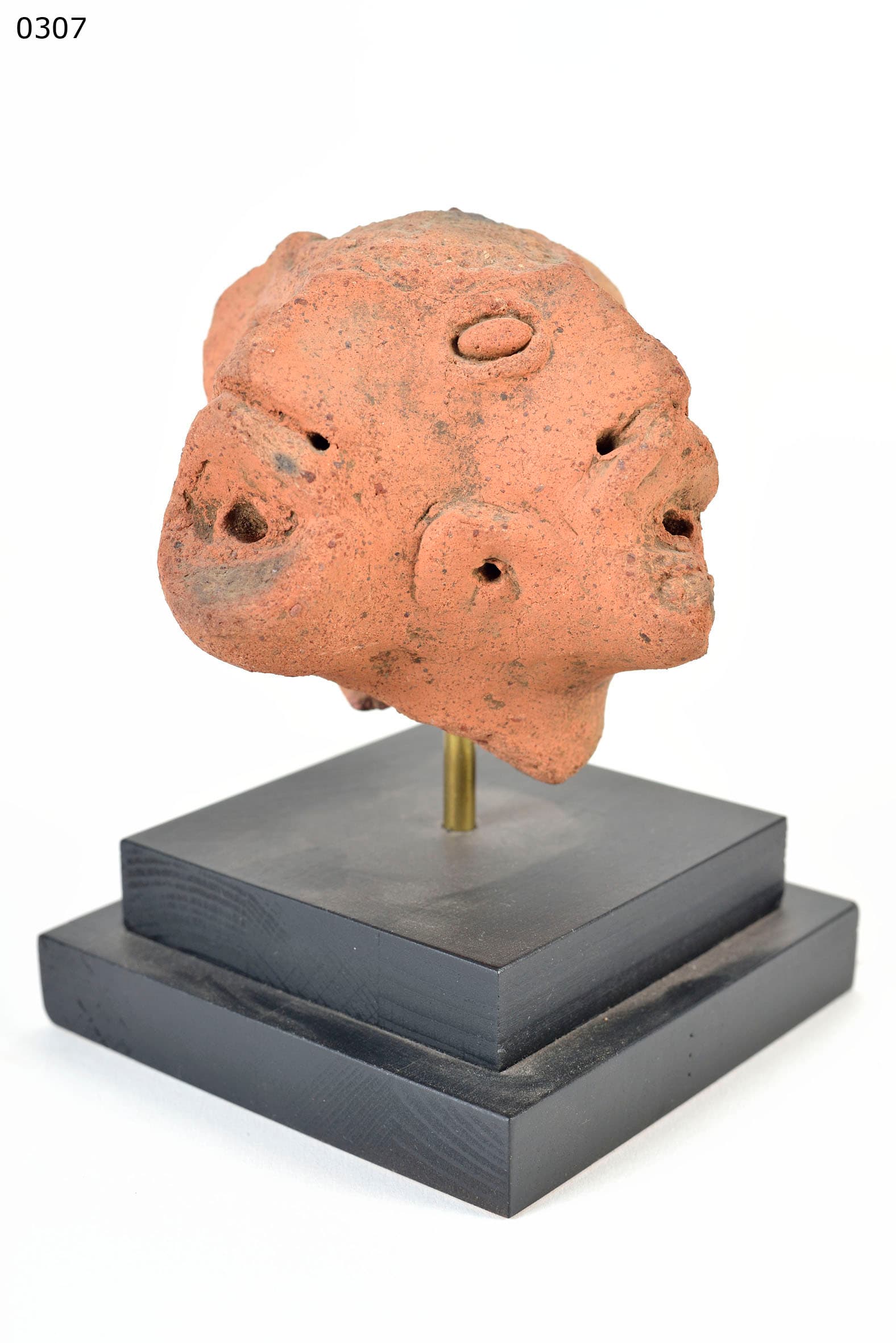
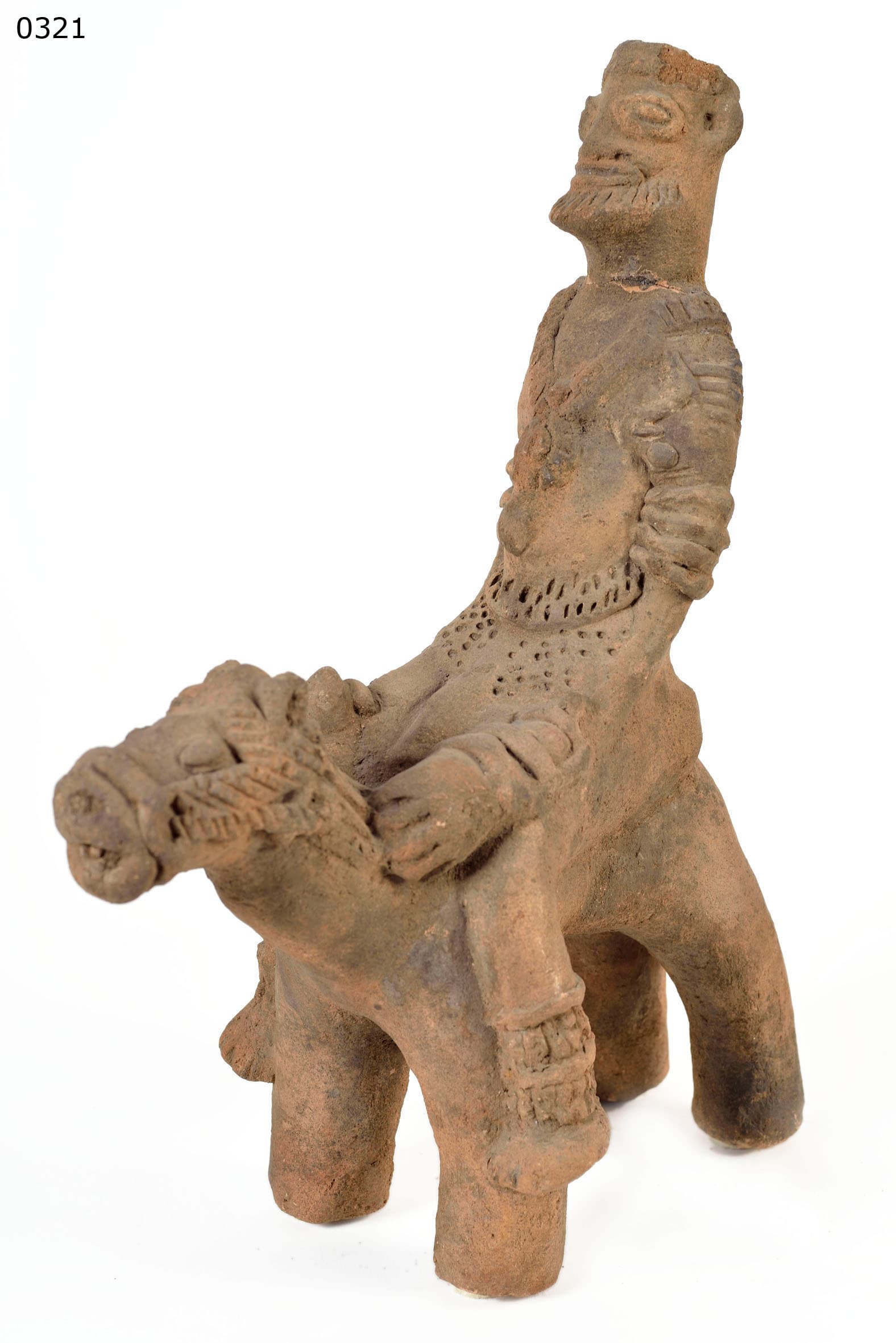
Eine ungewöhnliche Koma-Terrakotta-Janus-Grabfigur (dem 12.-18. Jh. zugeschrieben, 41 cm) aus Nordghana - säulenartiger, phallusförmiger Körper mit ausladenden Armen, bekrönt von einem doppelgesichtigen Kopf, der erdige, orange-braune Ton tief entsteint und stark mit eingebrannten Erdablagerungen verkrustet.
1. Das Koma-Bulsa-Rätsel
Die Koma- (oder Komaland-) Terrakotten im Norden Ghanas sind eine relativ neue und rätselhafte archäologische Entdeckung.
- Bauchige, ausdrucksstarke Idiome: Die dem 13. bis 18. Jahrhundert zugeschriebene Kultur brachte ausdrucksstarke, oft bauchige oder röhrenförmige Figuren hervor, die sich von der Ästhetik der Nachbarregionen abheben.
- Janus Rarität: Dieses Stück ist aufgrund seiner zweiköpfigen Konfiguration selten. Die beiden Gesichter sind mit den für Koma charakteristischen, hervorstehenden, scheibenförmigen Augen und weit geöffneten Mündern versehen, die der Figur einen wachen, singenden Ausdruck verleihen.
2. Allwissenheit und Hügelgräber
Koma-Figuren werden in der Literatur mit organisierten Grabhügeln - rituellen Fundorten, Heilschreinen oder Gräbern - verbunden.
- Zwei-Richtungs-Sicht: Das Janus-Motiv gilt als Symbol der Allwissenheit - die Fähigkeit, in die Vergangenheit und in die Zukunft zu sehen, um sich vor bösartigen Kräften zu schützen, die sich aus jeder Richtung nähern.
- Oberster Grabwächter: Als Grabfigur fungierte dieses zweigesichtige Wesen der Überlieferung nach als spiritueller Wächter, der Hexerei und böse Geister vom Hügel fernhalten sollte.
3. Schamanische Ablagerung und Taphonomie
Der Zustand ist vereinbar mit einer längeren Bestattung in den Savannenböden von Nordghana.
- Schwer getempertes Gewebe: Die poröse, grobe Terrakotta spiegelt die Verwendung von schwerem Tempera in der ursprünglichen Tonmischung wider.
- Erdverschmolzene Vertiefungen: Tief gehärtete Erdverkrustungen, die in den Gesichtsvertiefungen eingeschlossen sind, in Verbindung mit dem allgemeinen Abrieb, sprechen für eine unterirdische archäologische Geschichte.
Zusammenfassung
Diese symbolisch als allwissend interpretierte Koma-Janus-Figur ist ein seltenes Zeugnis der Grabhügel-Kulturen aus Nordghana. Ihre doppelgesichtige Ikonographie und die tiefgreifende Erdverkrustung machen sie zu einem bedeutenden archäologischen Dokument.
KI-unterstützt erstellt aus Sammlungsgutachten, Objektfotografie und eigener Recherche, redaktionell geprüft. Fehler sind möglich — Hinweise darauf sind uns willkommen. Zum Verfahren →