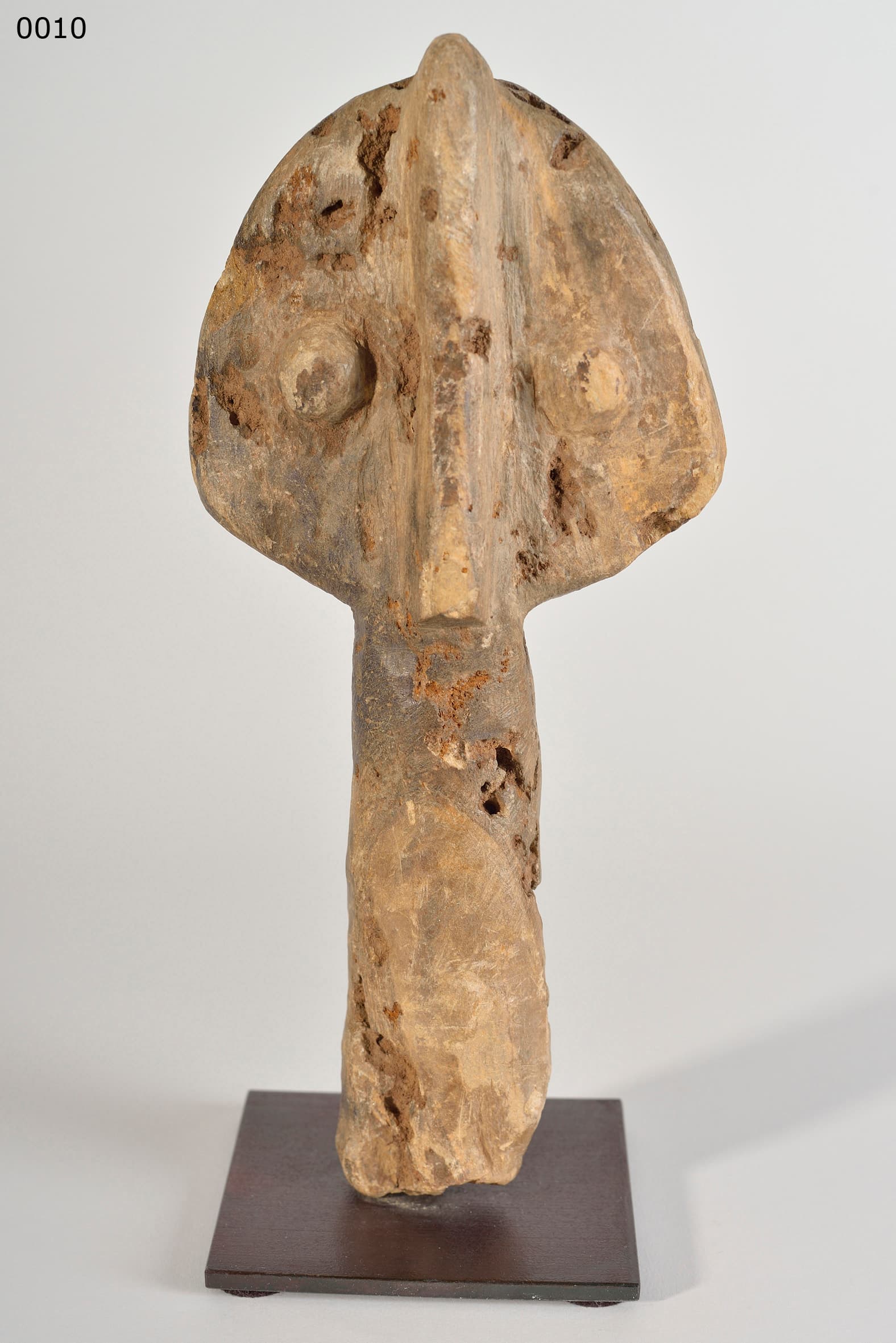
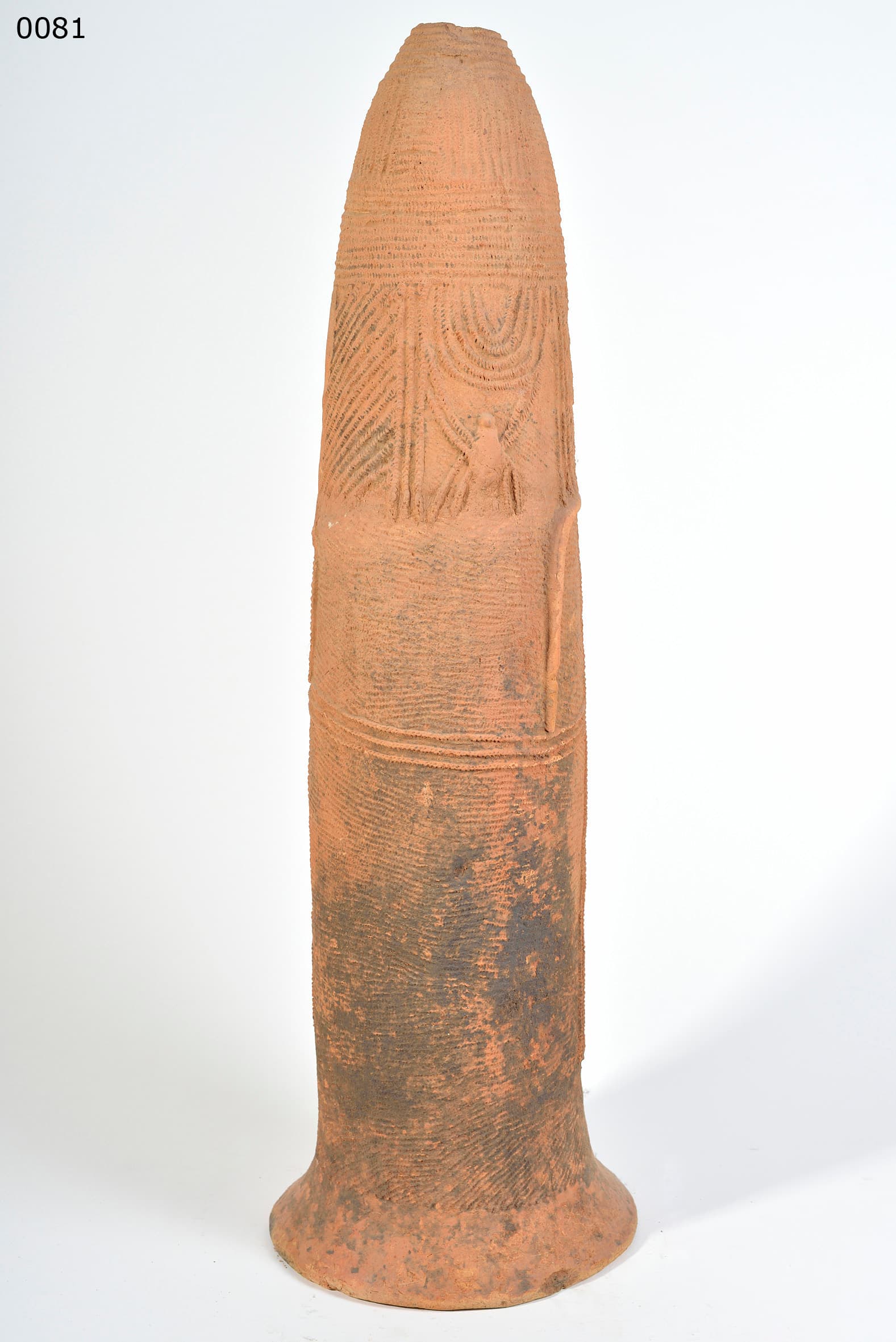
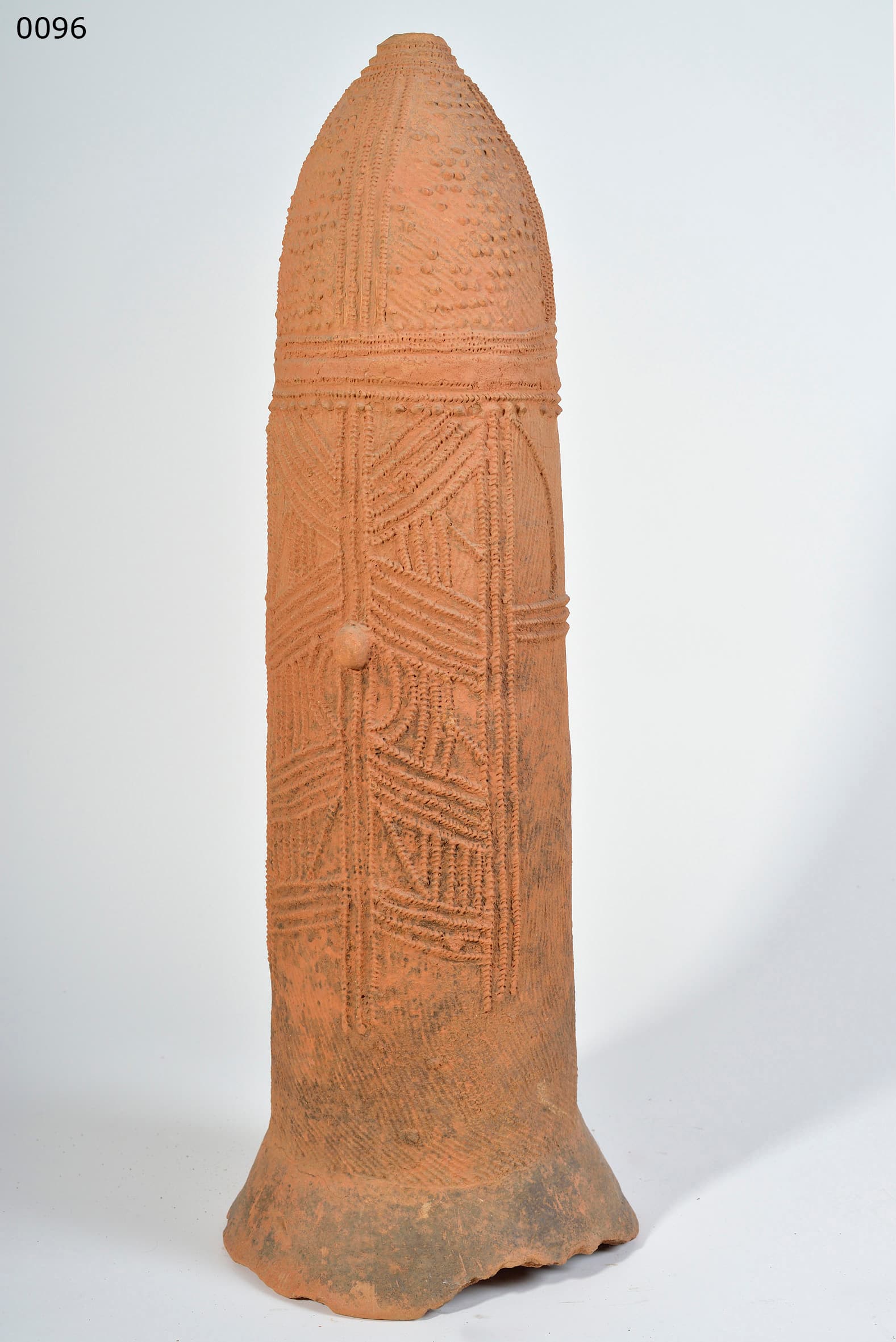
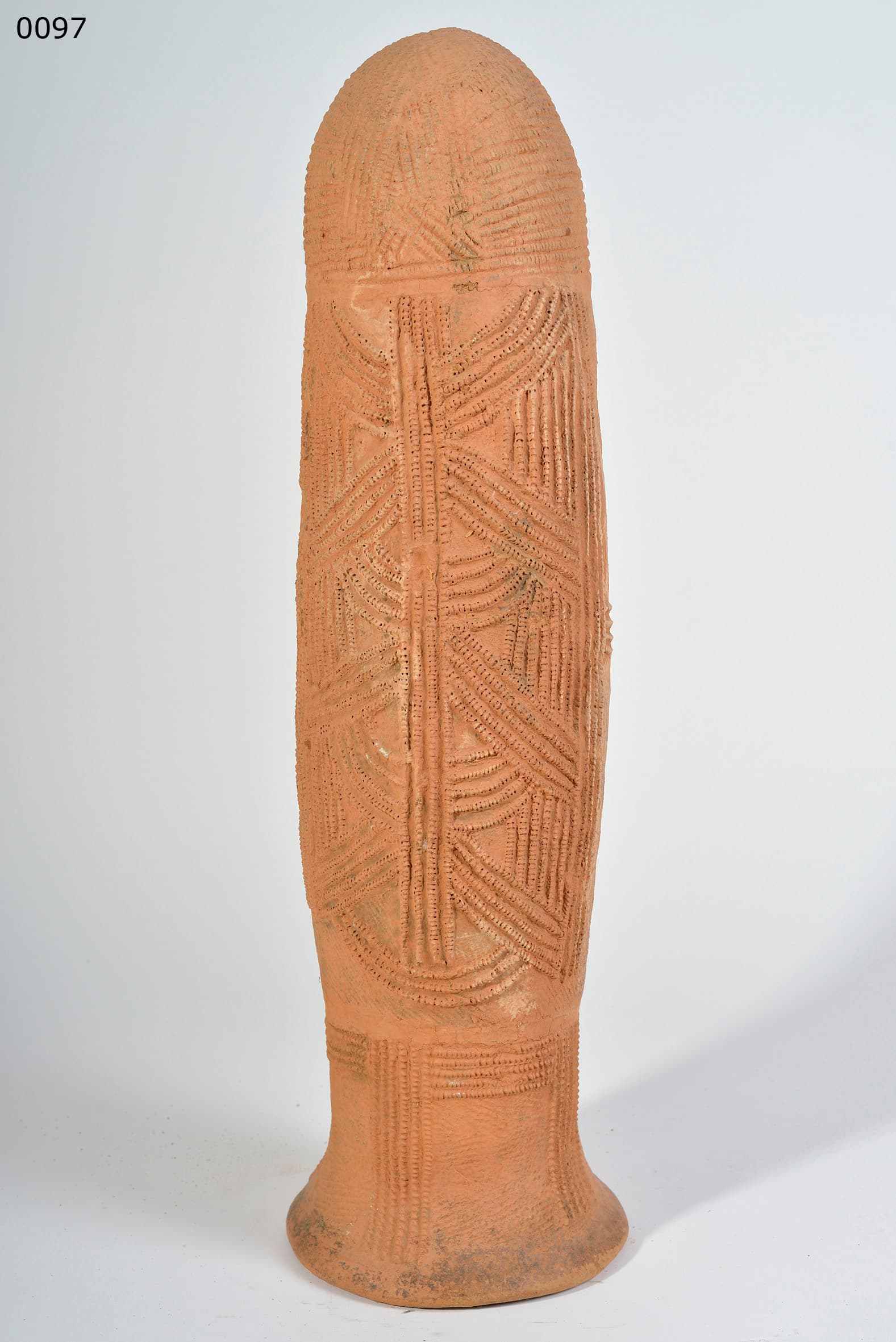
Eine auffällige Bura-Terrakotta (3.-11. Jh., 22 cm) aus Niger / Burkina Faso - deutlich phallische Röhrenform mit abgeflachter Schädelfläche und stark vereinfachten, gekniffenen Gesichtszügen, der dichte rötliche Ton trägt eine trockene Krustenpatina mit deutlichen atmosphärischen und unterirdischen Verwitterungen.
1. Das Asinda-Sikka-Ästhetische System
Die 1975 in der Region Bura-Asinda-Sikka im Südwesten des Niger entdeckte Bura-Keramik stellt ein wichtiges archäologisches Bindeglied zwischen der Sahelzone und der westafrikanischen Eisenzeit im Allgemeinen dar.
- Geometrisch statt naturalistisch: Das ästhetische Vokabular ist entschieden geometrisch und abstrakt - zylindrische, phallische und halbkugelförmige Formen werden gegenüber anatomischem Realismus stark bevorzugt.
- Masse statt Porträt: Die abgeflachte Oberseite und die minimal eingeschnittene Kante, die Nase und Stirn definiert, sind klassische Kennzeichen - sie geben der monumentalen Masse und der konzeptionellen Symbolik den Vorzug vor dem Porträt.
2. Die Nekropole und die Urnen der Vorfahren
Dieser Kopf diente ursprünglich als oberster Abschluss eines großen röhrenförmigen Grabgefäßes (einer Urne oder eines Beinhauses).
- Bestattung mit dem Hals nach unten: In der Nekropole von Bura wurden diese Gefäße mit dem Hals nach unten in der Erde vergraben - manchmal enthielten sie die körperlichen Überreste des Verstorbenen oder Grabbeigaben wie Perlen und eiserne Pfeilspitzen.
- Gedenkkontaktpunkt: Der anthropomorphe Kopf blieb über der Erde als Gedenkmarkierung und spezifischer architektonischer Kontaktpunkt, an dem die Lebenden mit dem in der Erde darunter wohnenden Geist kommunizieren und ihm Trankopfer darbringen konnten.
3. Wüstenverwitterung und Chronologie
Die Terrakotten von Bura sind aufgrund ihrer Umgebung in der sahelischen Buschlandschaft einer einzigartigen Verwitterung ausgesetzt.
- Schlupflose Oberfläche: Die saisonalen Zyklen intensiver Sahara-Hitze und spärlicher Regenfälle haben den Ton von seinem ursprünglichen Schlupf befreit und ein hochporöses körniges Aggregat hinterlassen.
- Unvergessliche mineralische Signaturen: Eingebetteter feiner Sand und hart gelagerte Tonkalkablagerungen in den Spalten sind geologische Signaturen einer Jahrtausende alten Ausgrabung.
Zusammenfassung
Dieser Urnenkopf aus Bura, der die strenge monolithische Abstraktion der alten nigerianischen Kunst verkörpert, ist ein außergewöhnliches Artefakt subsaharischer Bestattungspraktiken. Seine beeindruckende Präsenz und seine archäologische Patina machen ihn zu einem Eckpfeiler für jede institutionelle Antikensammlung.
KI-unterstützt erstellt aus Sammlungsgutachten, Objektfotografie und eigener Recherche, redaktionell geprüft. Fehler sind möglich — Hinweise darauf sind uns willkommen. Zum Verfahren →