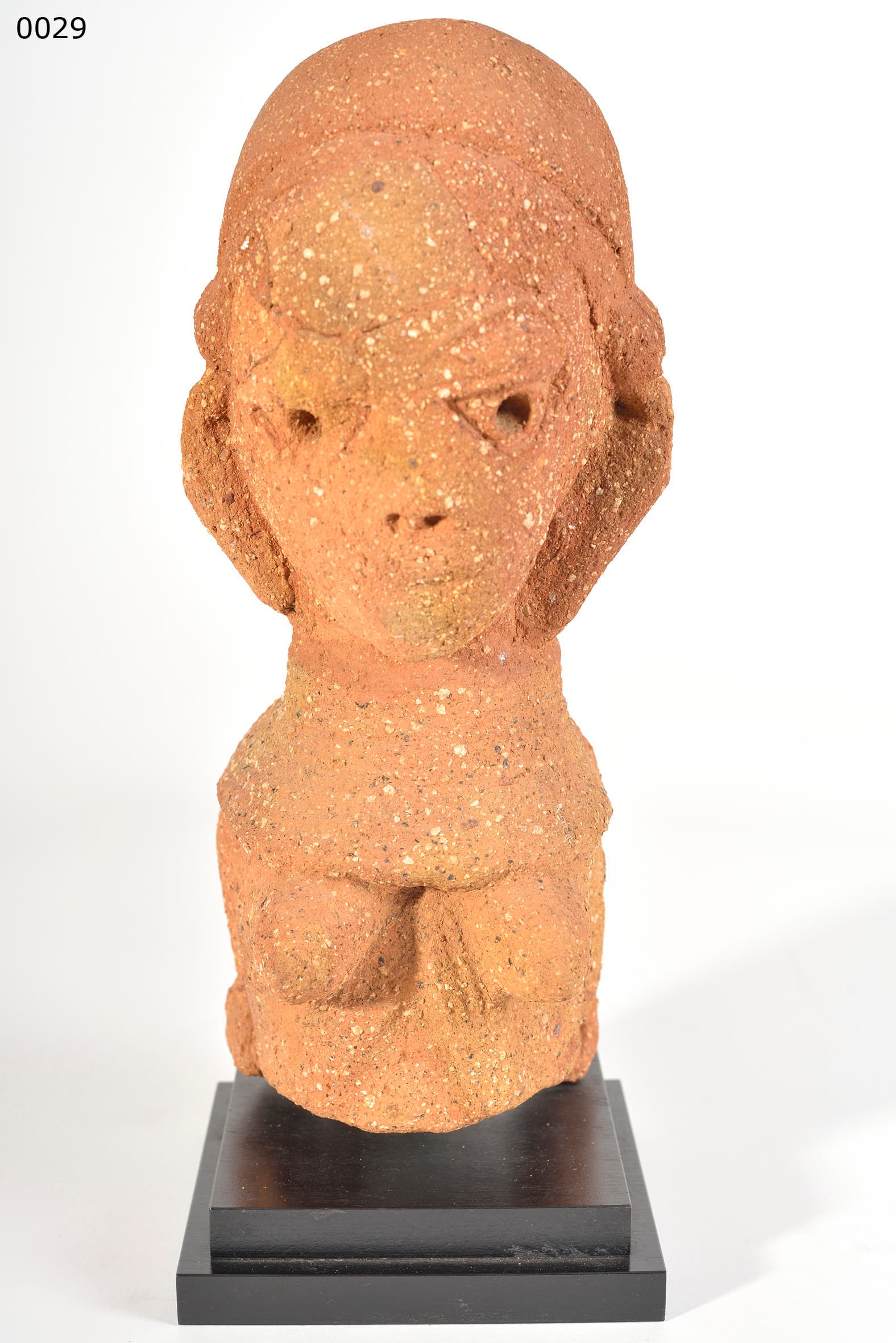
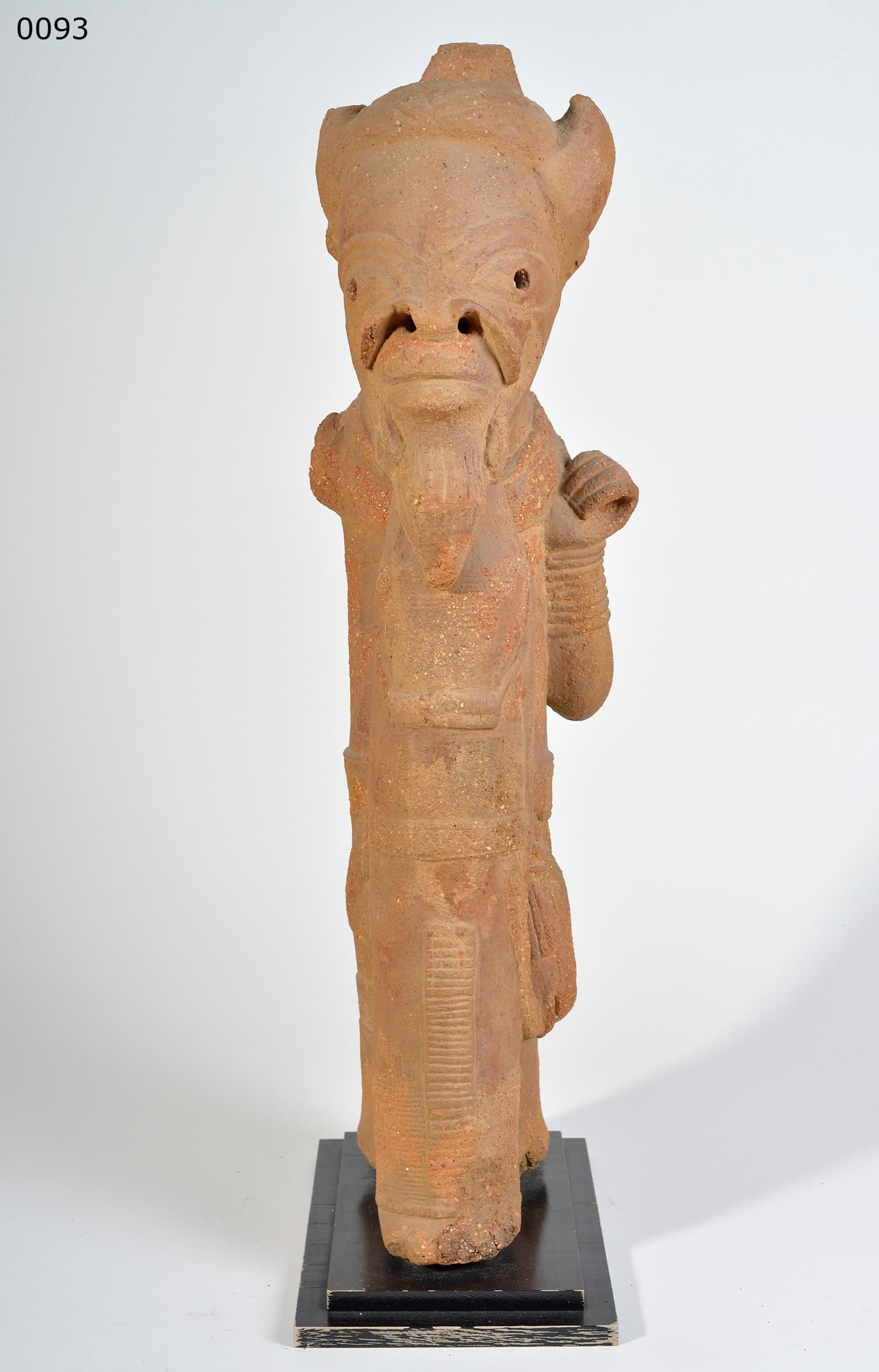
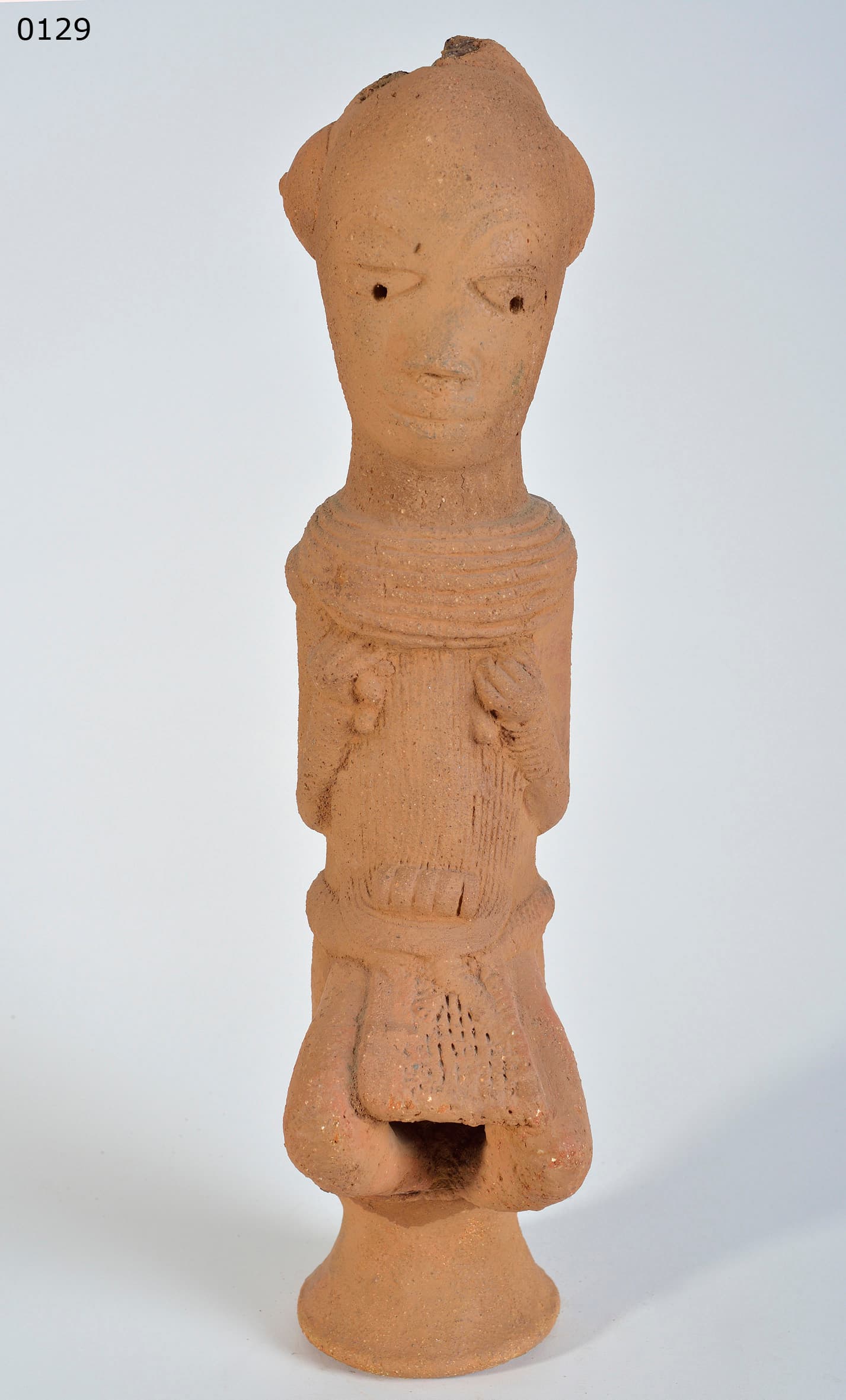
Eine klassische Nok-Terrakotta (~2000 Jahre alt, 24 cm) aus Nigeria - ein stilisierter Kopf mit tief durchbohrten Augen und Händen, der auf einem glockenförmigen Torso ruht. Der grobe Ton aus der Eisenzeit trägt eine dicke sandige, kalkhaltige Patina. Gepaart mit 0316.
1. Die Breite der Ästhetik der Nok-Eisenzeit
Die Nok-Kultur (1500 v. Chr. - 500 n. Chr.) ist zwar vor allem für ihre lebensgroßen, sehr naturalistischen menschlichen Köpfe bekannt, doch ihr ästhetisches Vokabular erstreckte sich auch auf figürliche Miniaturarbeiten.
- Klassische Technik im Miniaturformat: Diese Figur demonstriert die klassische Nok-Technik im Miniaturformat - tiefe subtraktive Löcher für die Augen, um einen thermischen Schock beim Brennen zu verhindern.
- Glockenförmiger Torso: Der glockenförmige Torso mit nach vorne gestreckten Händen ist eine wiederkehrende kompositorische Vorlage von Nok, die der volumetrischen Masse Vorrang vor der anatomischen Artikulation einräumt.
2. Landwirtschaftliche Verehrung und das Ritualfragment
Die kontextuelle Funktion der Nok-Figuren war eng mit den frühen agrarischen Gemeinschaften verbunden, die zur Eisentechnologie übergingen.
- Votivgaben: Kleine Figuren wie diese wurden wahrscheinlich als Votivgaben in Schreinen platziert, um die Fruchtbarkeit der Ernte oder den persönlichen Schutz zu gewährleisten.
- Intakt-Fund Rarität: Da Nok-Figuren oft rituell zerbrochen oder in aktiven landwirtschaftlichen Zonen vergraben wurden, ist der Fund einer relativ intakten, zusammenhängenden Form eine bemerkenswerte archäologische Anomalie.
3. Quarz-Grog und 2000 Jahre alte Verkalkung
Die Materialzusammensetzung und Verwitterung sprechen für ein hohes Alter des Objekts.
- Grobes Quarzgranulat: Die Töpfer der Nok haben ihren Ton mit grobem Quarzgranulat angelassen, das auf den erodierten Oberflächen gut sichtbar ist.
- Jos Plateau Boden Interaktion: Die dicken weißen kalzifizierten Krusten und Wurzelspuren sind das Ergebnis von Jahrhunderten der sauren Boden Interaktion auf dem Jos-Plateau - ein langsam wirkender chemischer Prozess, der einen antiken Ursprung nahelegt.
Zusammenfassung
Diese Figur ist ein miniaturisierter, klassischer Ausdruck des skulpturalen Programms der Nok und veranschaulicht neben ihrem abstrakten Geschwisterchen 0316 die typologische Bandbreite der Kultur. Ihr roher, stark gerillter Ton und die antiken Bodenkalkungen unterstreichen ihr hohes Alter und ihre archäologische Bedeutung.
KI-unterstützt erstellt aus Sammlungsgutachten, Objektfotografie und eigener Recherche, redaktionell geprüft. Fehler sind möglich — Hinweise darauf sind uns willkommen. Zum Verfahren →