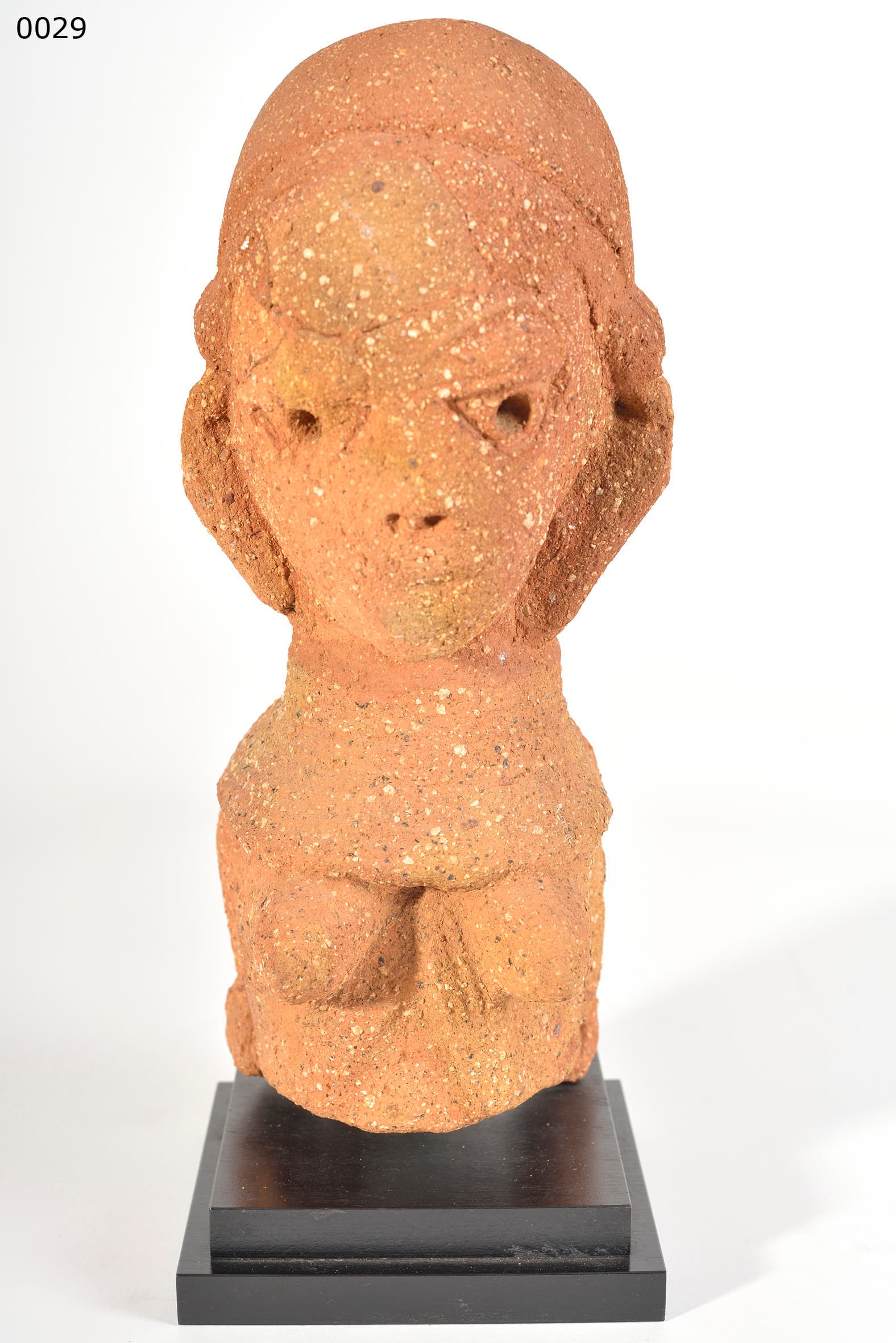
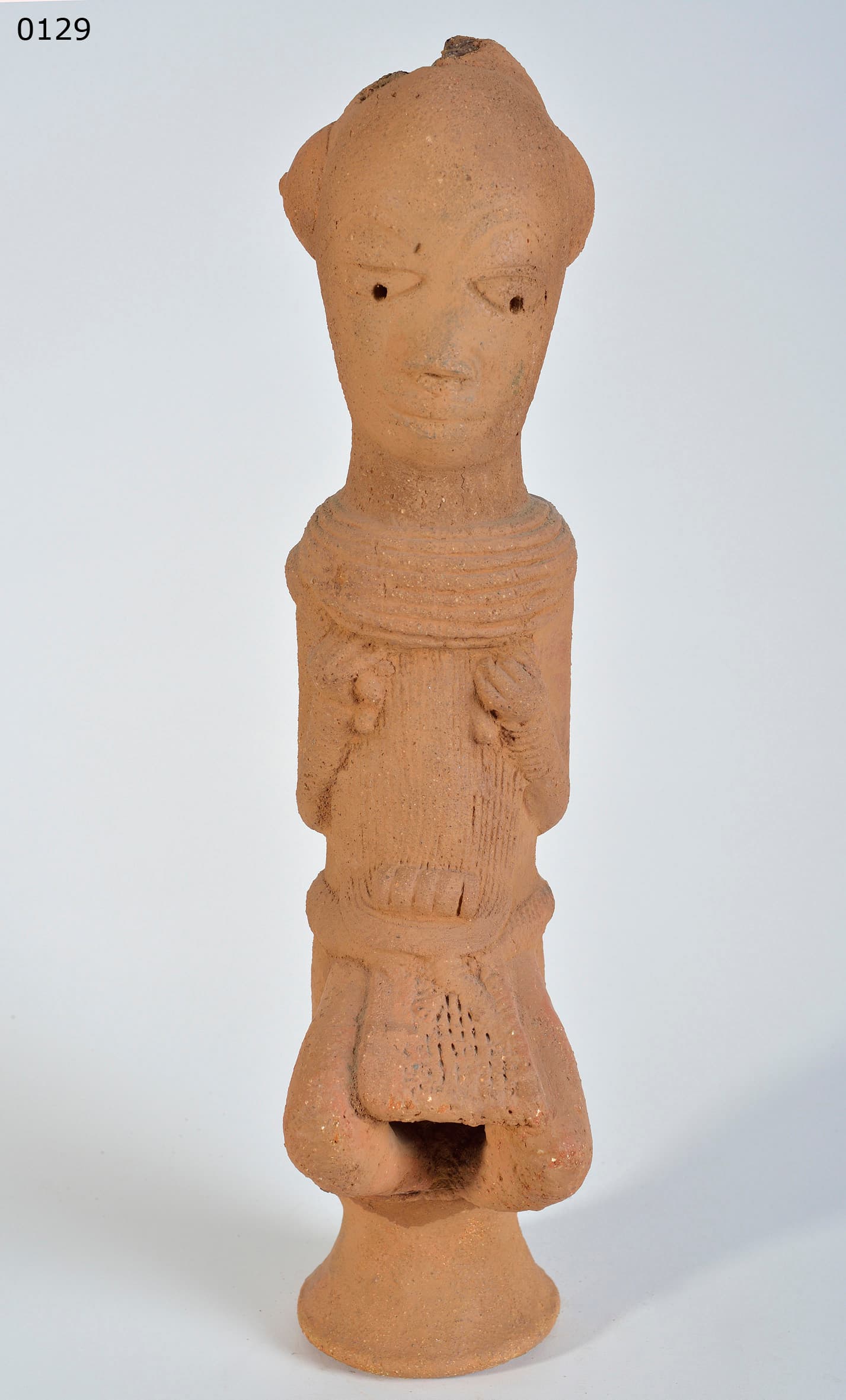
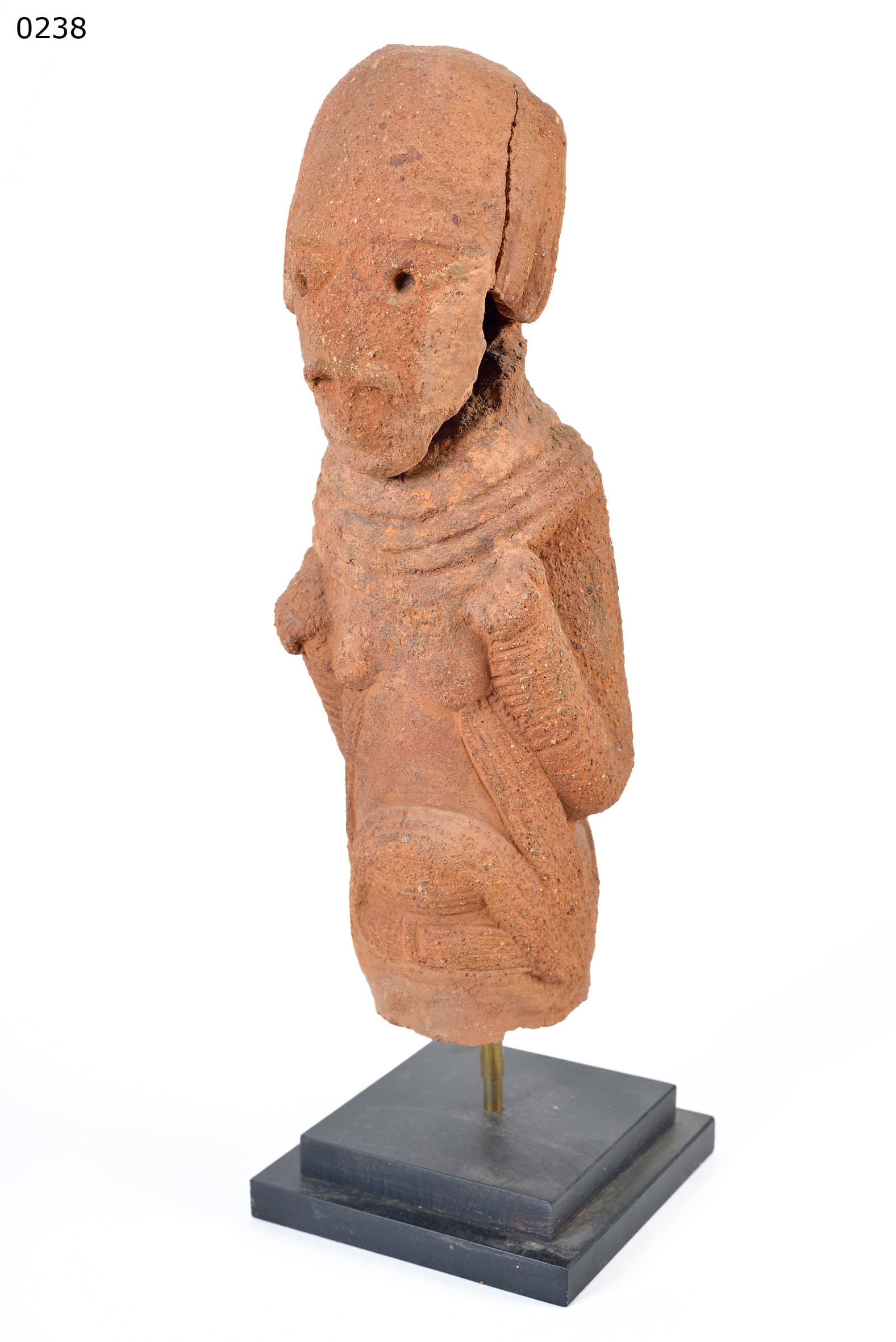
Eine massive, schwere Terrakottafigur (auf ca. 2000 Jahre datiert, 98 cm) aus der Nok-Kultur Nigerias - eine sitzende oder kniende männliche Figur mit klassischen gepiercten D-förmigen Augen, einem markanten Spitzbart und aufwändigem Schmuck.
1. Die Anfänge der afrikanischen Porträtmalerei
Die Nok-Zivilisation (ca. 1500 v. Chr. - 500 n. Chr.) stellt die früheste bekannte Bildhauertradition in Afrika südlich der Sahara dar. Dieses Stück zeigt die charakteristischen Merkmale der Nok-Ästhetik: tief durchbohrte dreieckige (oder D-förmige) Augen und durchbohrte Nasenlöcher. Diese Perforationen waren sowohl stilistisch als auch funktionell - sie ermöglichten das Entweichen heißer Gase aus dem dicken Ton während des Brennens in offenen Gruben, um ein Explodieren der Skulptur zu verhindern.
2. Aristokratische Ikonographie
Die Ikonographie der Figur spricht gegen die Darstellung eines einfachen Bürgerlichen. Der gestylte Bart, die dicken, mehrschichtigen Perlenketten und die komplexen Armbänder deuten auf das Porträt einer hochgestellten Persönlichkeit hin - wahrscheinlich ein Anführer, ein Priester oder ein rituell verehrter Ahnherr. Die schiere Menge an Ton, die zum Bau dieses stark verzierten Körpers verwendet wurde, spiegelt den Reichtum und den Überfluss der Nok-Gesellschaft wider.
3. Monumentale Ausmaße und Brennen
Mit einer Höhe von fast einem Meter ist dies ein außergewöhnlich großes Werk antiker Keramik. Das Brennen eines hohlen Terrakotta-Objekts dieser Größe ohne einen modernen Brennofen zeugt von beachtlichem technischem Geschick und Kontrolle über den Brennvorgang. Es könnte als Mittelpunkt eines Gemeinschaftsschreins oder als Grabmal einer hochgestellten Persönlichkeit gedient haben.
Zusammenfassung
Diese Nok-Statue gilt als bedeutendes archäologisches Zeugnis - ein massives, auf rund 2.000 Jahre geschätztes Terrakotta-Bildnis, das dafür spricht, dass im eisenzeitlichen Nigeria eine hochentwickelte, sozial differenzierte Gesellschaft mit beachtlicher technischer Beherrschung gedieh.
KI-unterstützt erstellt aus Sammlungsgutachten, Objektfotografie und eigener Recherche, redaktionell geprüft. Fehler sind möglich — Hinweise darauf sind uns willkommen. Zum Verfahren →