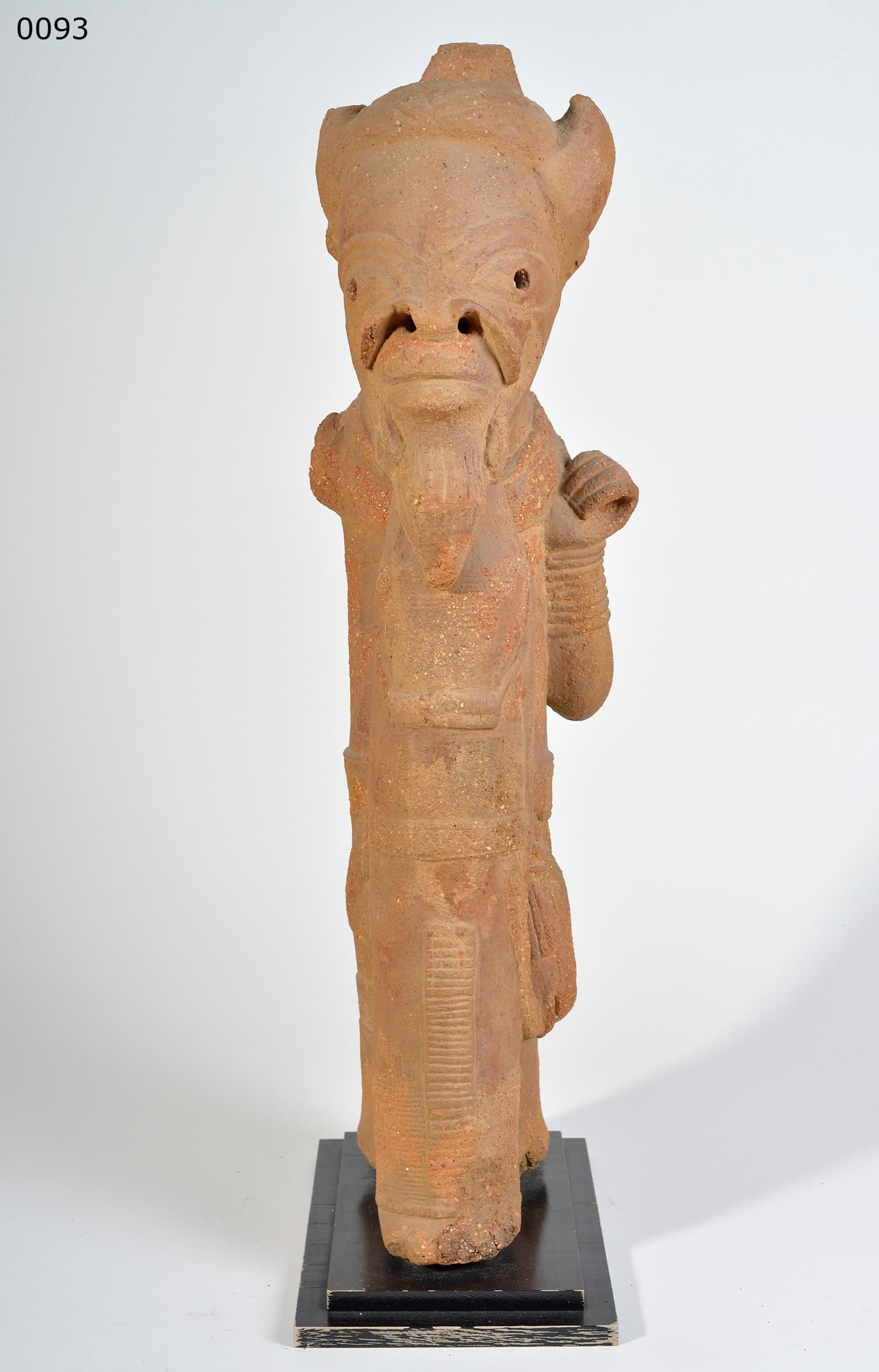
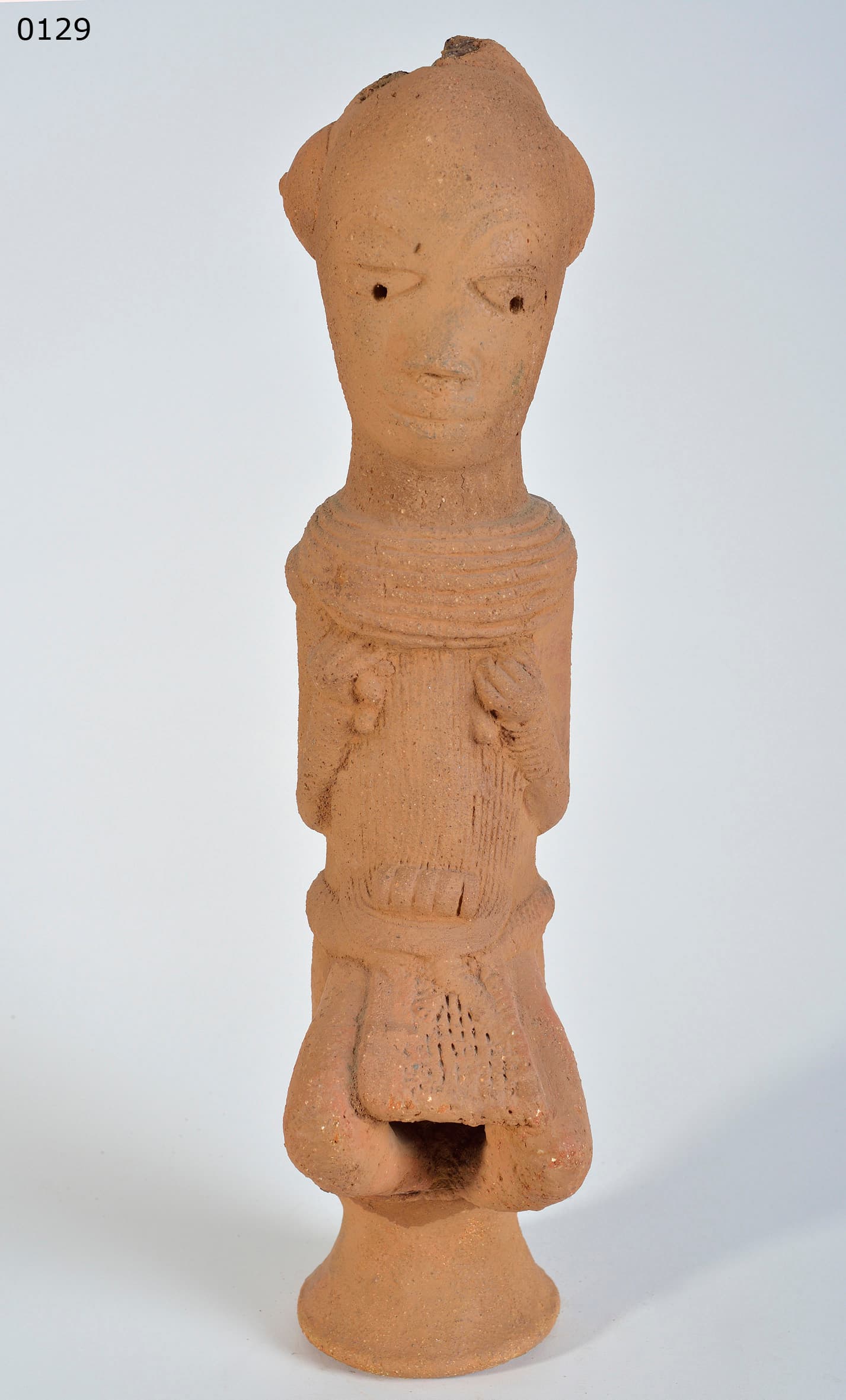
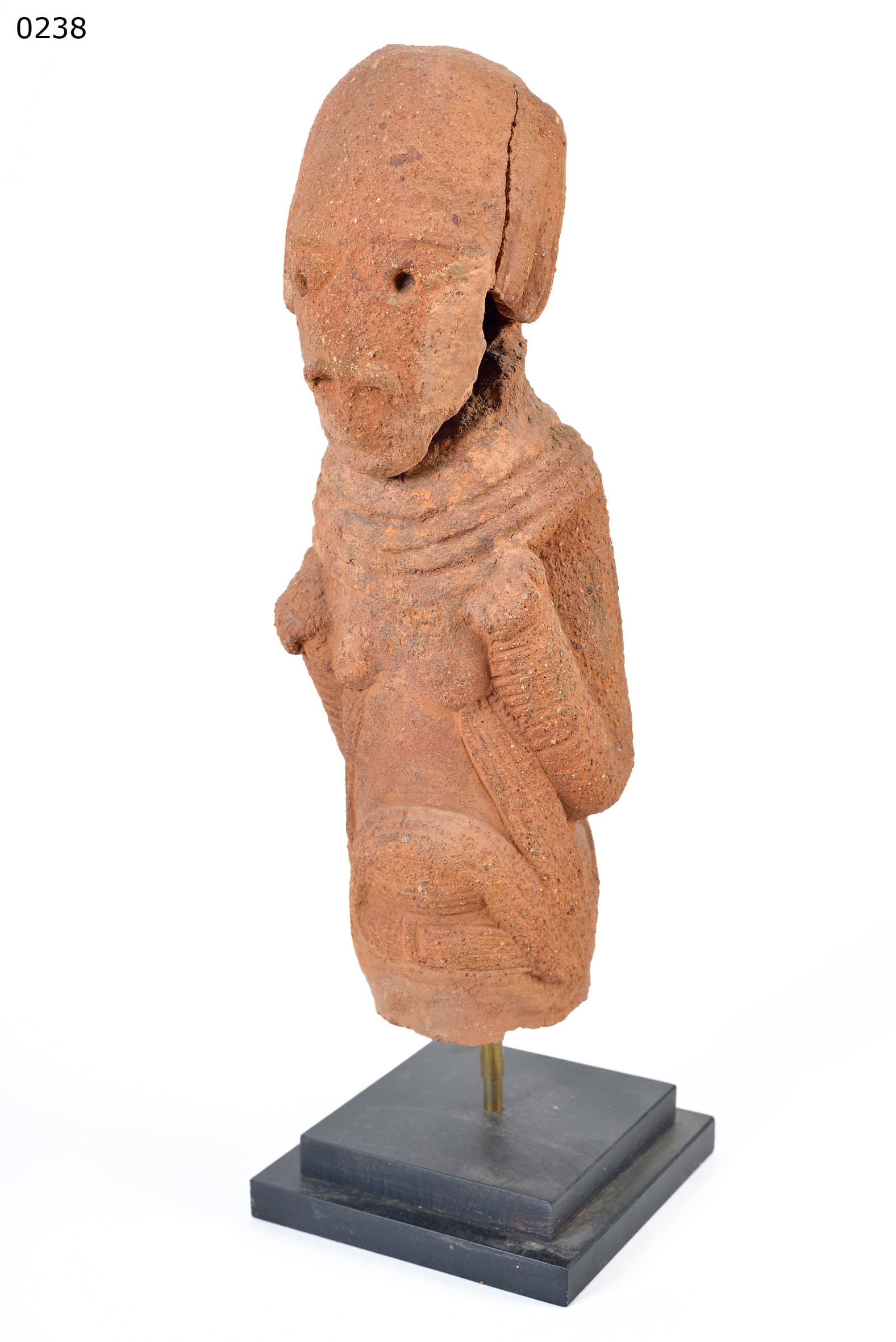
Eine antike Terrakotta-Skulptur (~2000 Jahre alt, 36 cm) aus dem Nok von Nigeria - ein weiblicher Torso und Kopf mit charakteristischen gepiercten dreieckigen Augen, hervorstehenden Brüsten und einer komplexen Stufenfrisur.
1. Die ästhetische Signatur der Nok
Die Nok-Zivilisation (ca. 1500 v. Chr. - 500 n. Chr.) steht für die Anfänge der figurativen Kunst in Afrika südlich der Sahara.
- Der durchbohrte Blick: Das absolute Markenzeichen der Nok-Ästhetik: große dreieckige (oder D-förmige) Augen mit tief durchbohrten Pupillen. Die Nasenlöcher und der Mund sind ebenfalls durchbohrt - ein funktionelles Detail, das es den heißen Gasen ermöglichte, während des Brennens im offenen Feuer aus dem dicken Ton zu entweichen, wodurch die Skulptur nicht explodieren konnte.
2. Hochrangige weibliche Porträtmalerei
- Eine Frau von Rang: Die detaillierte Darstellung ihrer aufwendigen Stufenfrisur, des angedeuteten Schmucks und der hervorstehenden Brüste weist darauf hin, dass sie eine Frau von hohem sozialen Rang darstellt - wahrscheinlich eine Königin-Mutter, eine verehrte Priesterin oder eine Gründerin der antiken Gesellschaft.
- Reichtum in Ton: Die schiere Menge an Ton und die Zeit, die für ihre Verzierung aufgewendet wurde, spiegelt den Reichtum der Nok-Kultur wider.
3. Archäologische Bedeutung
- Zwei Jahrtausende überleben: Figuren dieser Größe (36 cm) sind archäologische Schätze, die rund 2.000 Jahre überdauert haben. Sie waren wahrscheinlich Teil elitärer Grabkomplexe oder zentraler Schreine.
- Charakteristische Merkmale: Der warme, rötlich-orangefarbene Ton und die starken Quarzeinschlüsse (Grog) sind typische Merkmale der frühen nigerianischen Keramiken.
Zusammenfassung
Diese weibliche Nok-Figur gilt als ein herausragendes Zeugnis des afrikanischen Altertums. Sie stützt die Annahme, dass im eisenzeitlichen Nigeria vor rund 2.000 Jahren eine hochgeschichtete, künstlerisch hoch entwickelte Gesellschaft existierte, die weibliche Autorität schätzte.
KI-unterstützt erstellt aus Sammlungsgutachten, Objektfotografie und eigener Recherche, redaktionell geprüft. Fehler sind möglich — Hinweise darauf sind uns willkommen. Zum Verfahren →