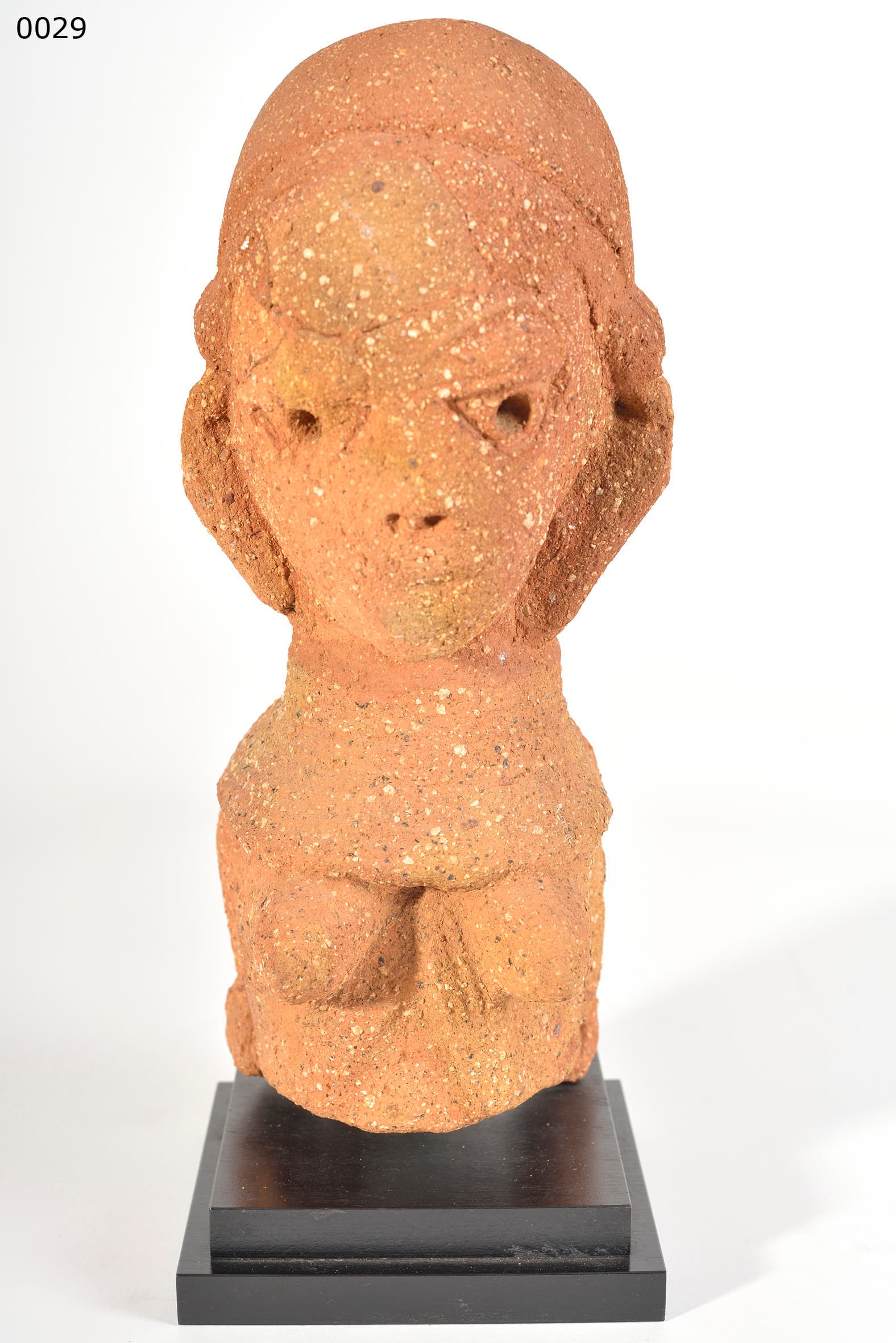
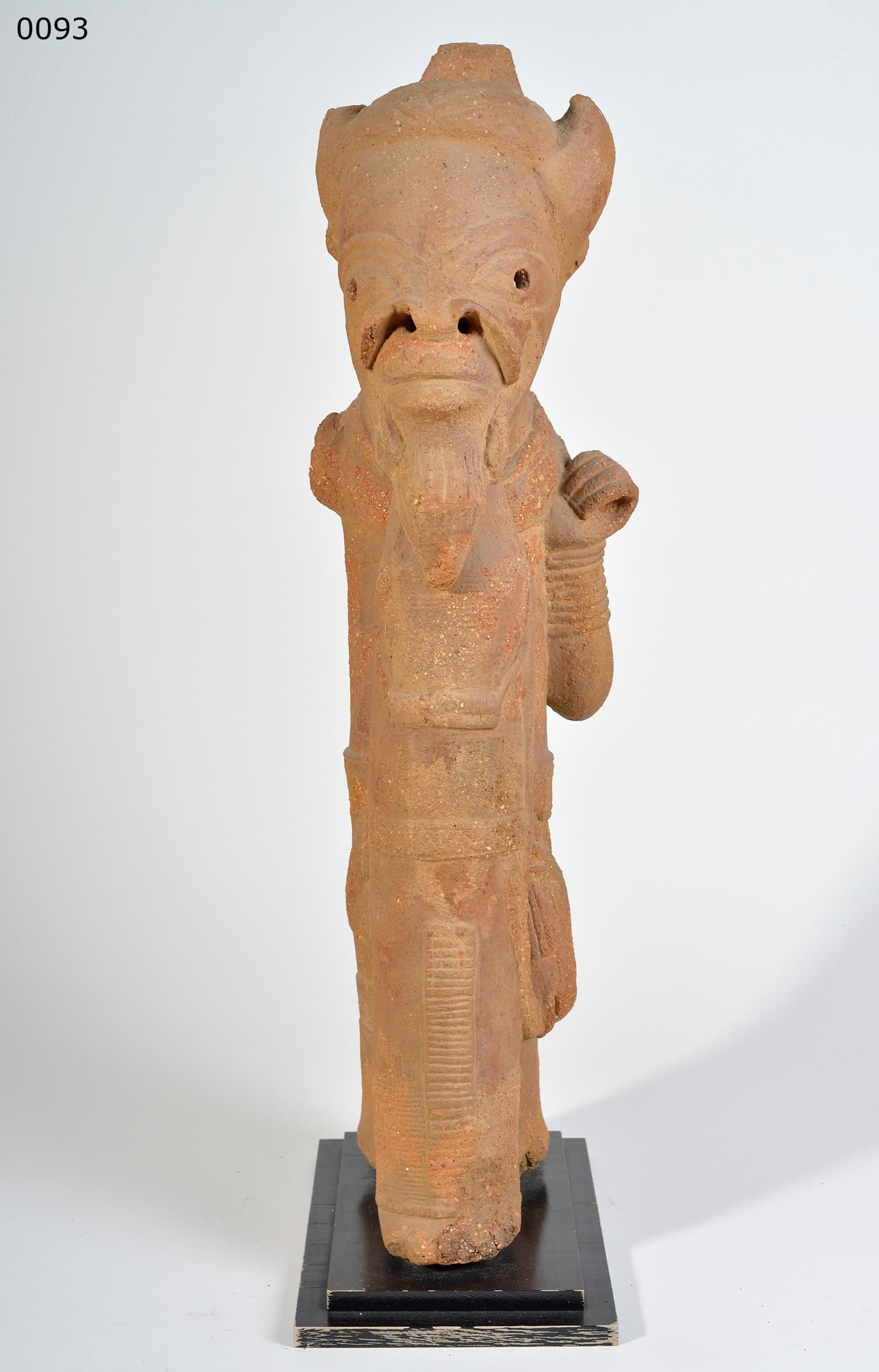
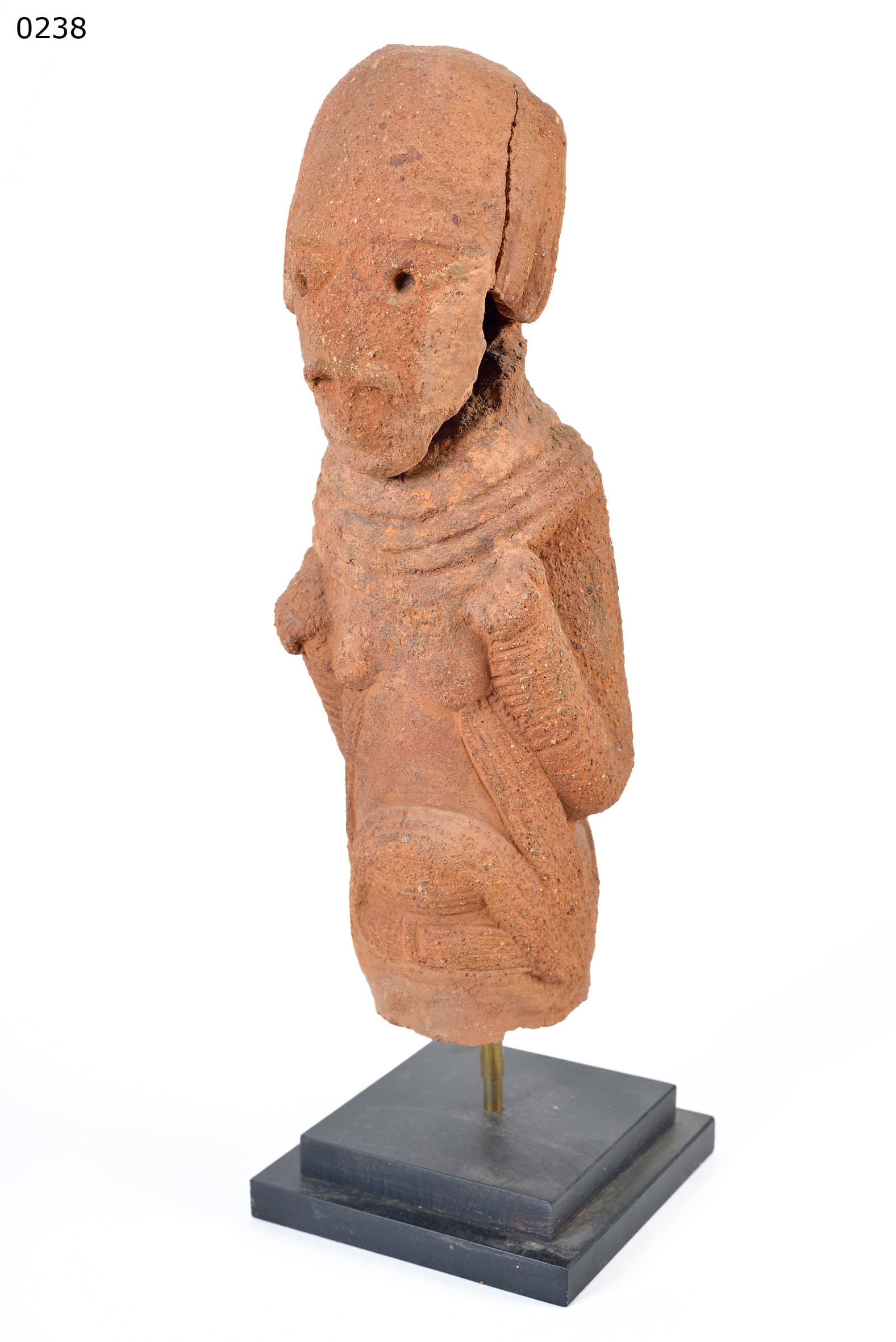
Eine monumentale, auf ein Alter von ca. 2.000 Jahren geschätzte Terrakotta-Skulptur (62 cm) im Nok-Stil aus Nigeria - eine sitzende/kniende männliche Figur mit durchbrochenen, dreieckigen Augen, einer markanten Kieferlinie und dickem, mehrschichtigem Körperschmuck.
1. Die Grundlage der afrikanischen Kunst
Die Nok-Zivilisation (ca. 1500 v. Chr. - 500 n. Chr.) gilt als die früheste bekannte figurative Bildhauertradition in Afrika südlich der Sahara.
- Signatur der Augenform: Die tief durchbohrten dreieckigen (oder D-förmigen) Augen und die durchbohrten Nasenlöcher sind charakteristische Merkmale der Nok-Ästhetik.
- Technische Funktion: Diese Perforationen waren praktisch - sie ermöglichten es den eingeschlossenen Gasen, während des Brennens aus dem dicken Ton zu entweichen, und verringerten so das Risiko eines Zerspringens.
2. Elite-Porträtierung
Das Verzierungsprogramm wird oft als Ausdruck von Reichtum und Macht interpretiert.
- Mehrschichtige Perlen: Schwere, gestapelte Halsketten deuten auf den Zugang zu Handelsnetzen und besondere Privilegien hin.
- Dicke Armbinden und Taillenbänder: Der reiche Schmuck legt nahe, dass es sich um die Darstellung einer hochgestellten Persönlichkeit handeln könnte – etwa eines Anführers, eines Priesters oder einer Ahnenfigur – und weniger um eine gewöhnliche Person.
3. Verwendung als Monumentalschrein
Mit 62 cm ist dies ein außergewöhnlich großes Exemplar dieser antiken Keramiktradition.
- Erstaunliches Brennen: Die Herstellung eines hohlen Terrakotta-Objekts dieser Masse ohne modernen Brennofen erforderte großes technisches Geschick und eine genaue Kontrolle über Brennstoff, Stapelung und Kühlung.
- Mittelpunkt der Gemeinschaft: Es wird angenommen, dass solche Statuen als Mittelpunkt von Schreinen gedient und rituelle Verehrung erfahren haben könnten.
Zusammenfassung
Diese Statue im Nok-Stil stellt ein bedeutendes archäologisches Zeugnis dar. Es handelt sich um ein massives Terrakotta-Objekt, dessen Stil und geschätztes Alter nahelegen, dass im eisenzeitlichen Nigeria eine hochentwickelte Gesellschaft mit bemerkenswerter technischer Beherrschung existierte.
KI-unterstützt erstellt aus Sammlungsgutachten, Objektfotografie und eigener Recherche, redaktionell geprüft. Fehler sind möglich — Hinweise darauf sind uns willkommen. Zum Verfahren →