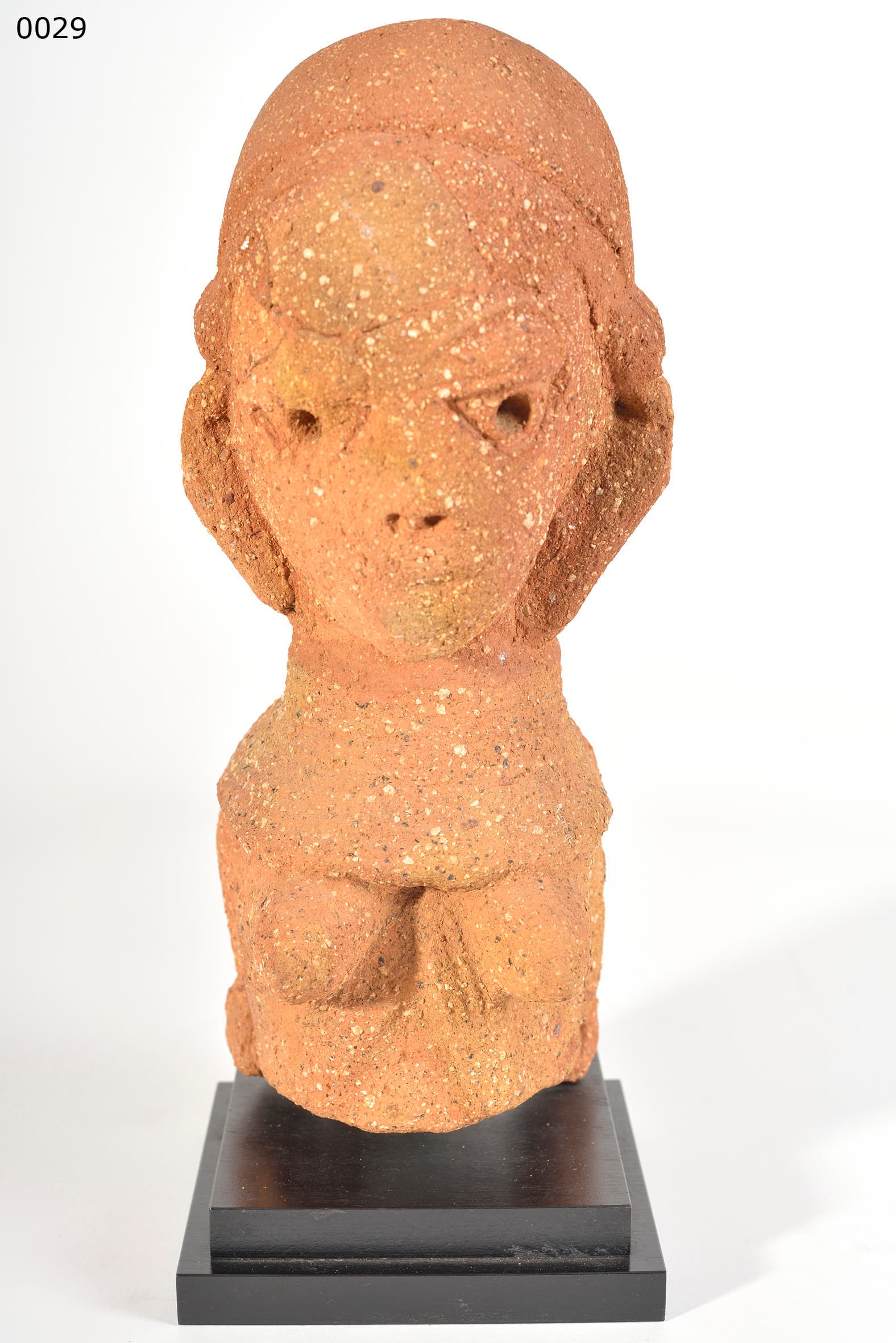
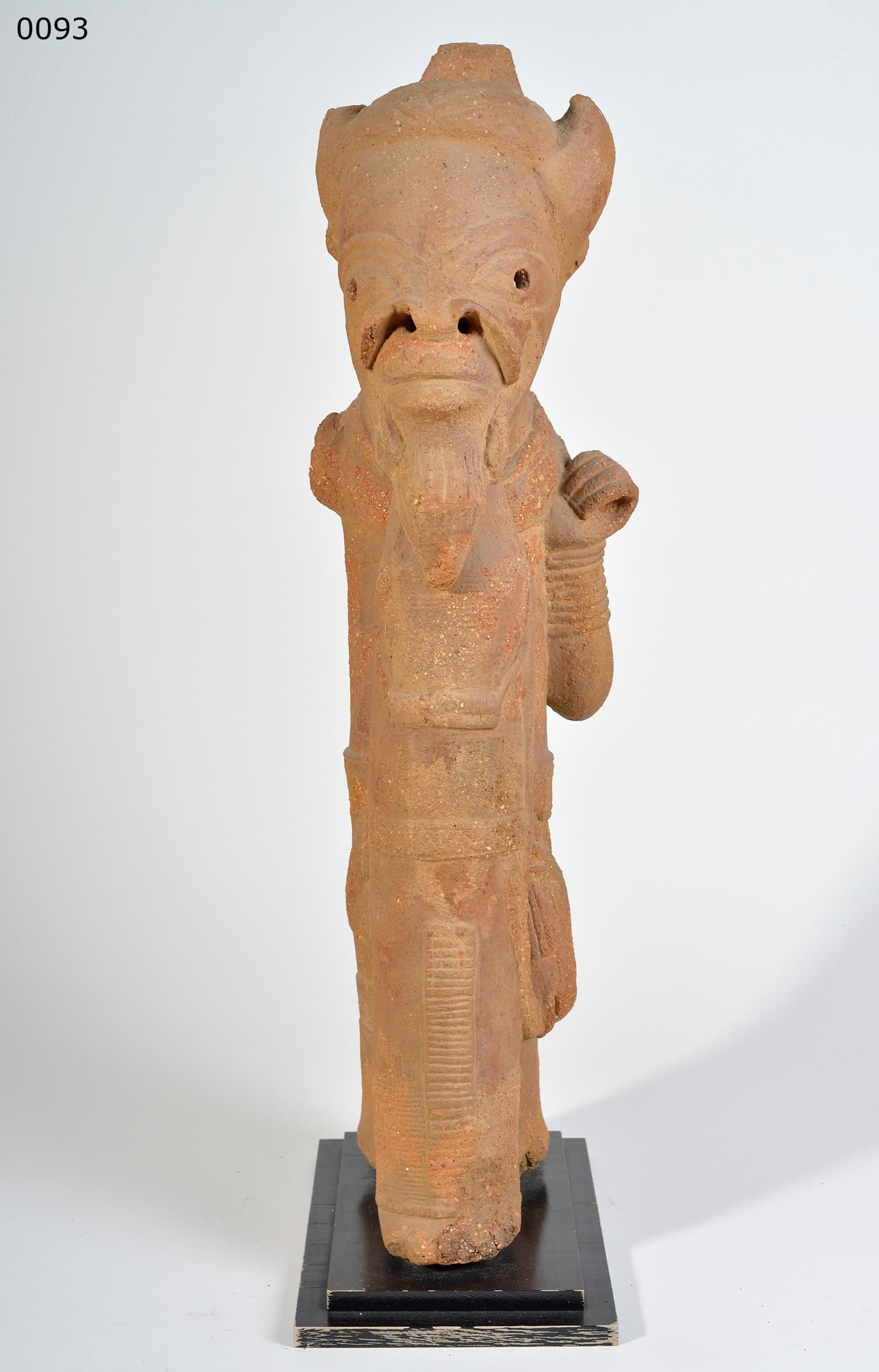
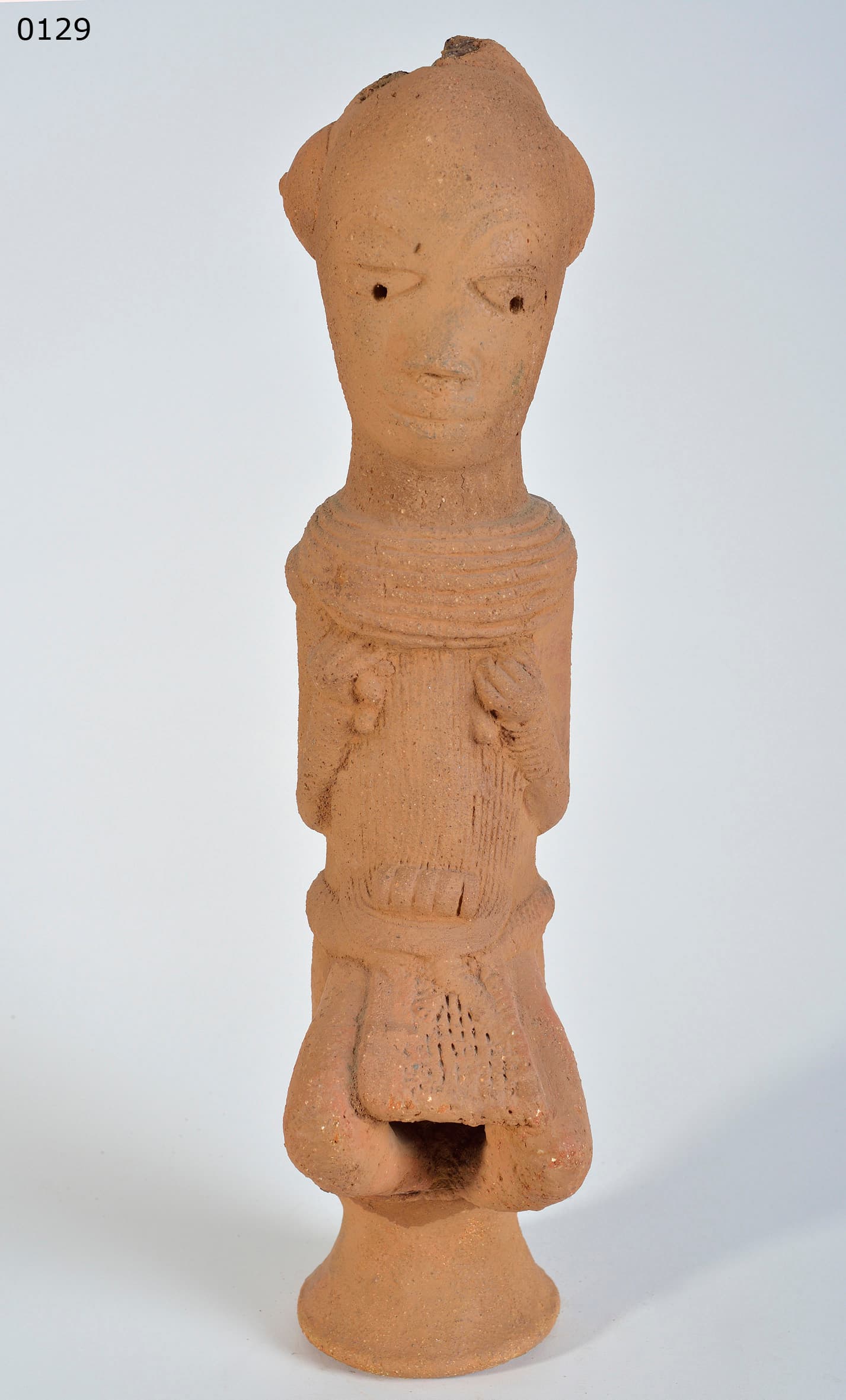
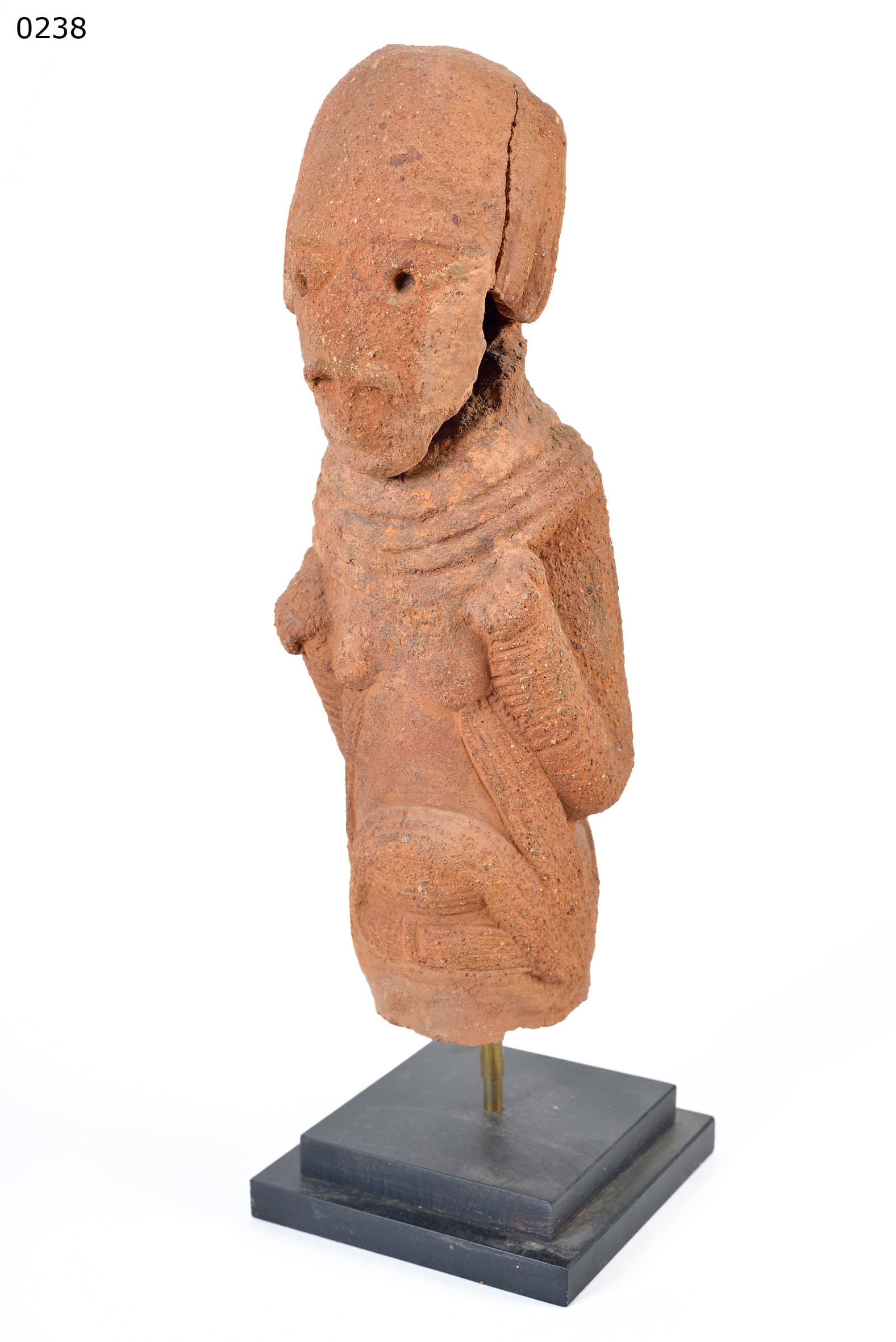
Eine seltene und historisch bedeutende Nok-Terrakotta-Figur (~2000 Jahre alt, 49 cm) aus Nigeria - einem frühen Zentrum der figurativen Kunst in Subsahara-Afrika.
1. Die Anfänge der afrikanischen Porträtkunst
Die Nok-Zivilisation (ca. 1500 v. Chr. - 500 n. Chr.) stellt die Grundlage der figurativen Kunst in Afrika südlich der Sahara dar.
- Der durchbohrte Blick: Das charakteristischste Merkmal der Nok-Kunst ist die Darstellung der Augen - immer dreieckig oder D-förmig, mit tief durchbohrten Pupillen. Die Nasenlöcher und Lippen sind ebenfalls durchbohrt, ein funktionelles Detail, das es den heißen Gasen ermöglichte, aus dem dicken Ton während des Brennens im offenen Feuer zu entweichen und die Skulptur vor dem Explodieren zu bewahren.
2. Aristokratische Ikonographie
Die Ikonographie dieser Figur deutet darauf hin, dass es sich nicht um einen einfachen Bürgerlichen handelt.
- Status in der Verzierung: Die detaillierte Darstellung der komplexen Stufenfrisur und des angedeuteten schweren Schmucks deutet auf das Porträt einer wohlhabenden Person hin - eines Königs, eines verehrten Priesters oder eines vergötterten Gründervaters.
- Reichtum in Ton: Die schiere Menge an Ton, die für den Bau dieses stark verzierten Körpers verwendet wurde, spiegelt den Reichtum und den Überfluss der Nok-Gesellschaft wider.
3. Archäologischer Kontext
- Beherrschung des Feuers: Das Brennen einer hohlen Tonskulptur dieser Größe (49 cm) in einem offenen Lagerfeuer erforderte eine hohe technische Fertigkeit. Der erhaltene rötlich-braune Schlicker und der grob gebrannte Ton sprechen für eine hochentwickelte künstlerische Zunft.
- Schrein oder Grab: Die meisten Nok-Terrakotten wurden zufällig bei Zinnabbauarbeiten in Schwemmland entdeckt. Ihre monumentalen Ausmaße und ihre formale Haltung deuten stark darauf hin, dass sie in Grabstätten oder zentralen Dorfschreinen aufgestellt wurden, um die Ahnen der Gründer zu ehren.
Zusammenfassung
Diese Figur ist ein bedeutendes archäologisches Zeugnis, das das Verständnis der afrikanischen Kunstgeschichte bereichert. Es veranschaulicht, dass in Zentralnigeria bereits Jahrtausende vor dem Kontakt mit den Europäern eine hochentwickelte Kultur existierte, die die Terrakotta-Technik beherrschte.
KI-unterstützt erstellt aus Sammlungsgutachten, Objektfotografie und eigener Recherche, redaktionell geprüft. Fehler sind möglich — Hinweise darauf sind uns willkommen. Zum Verfahren →