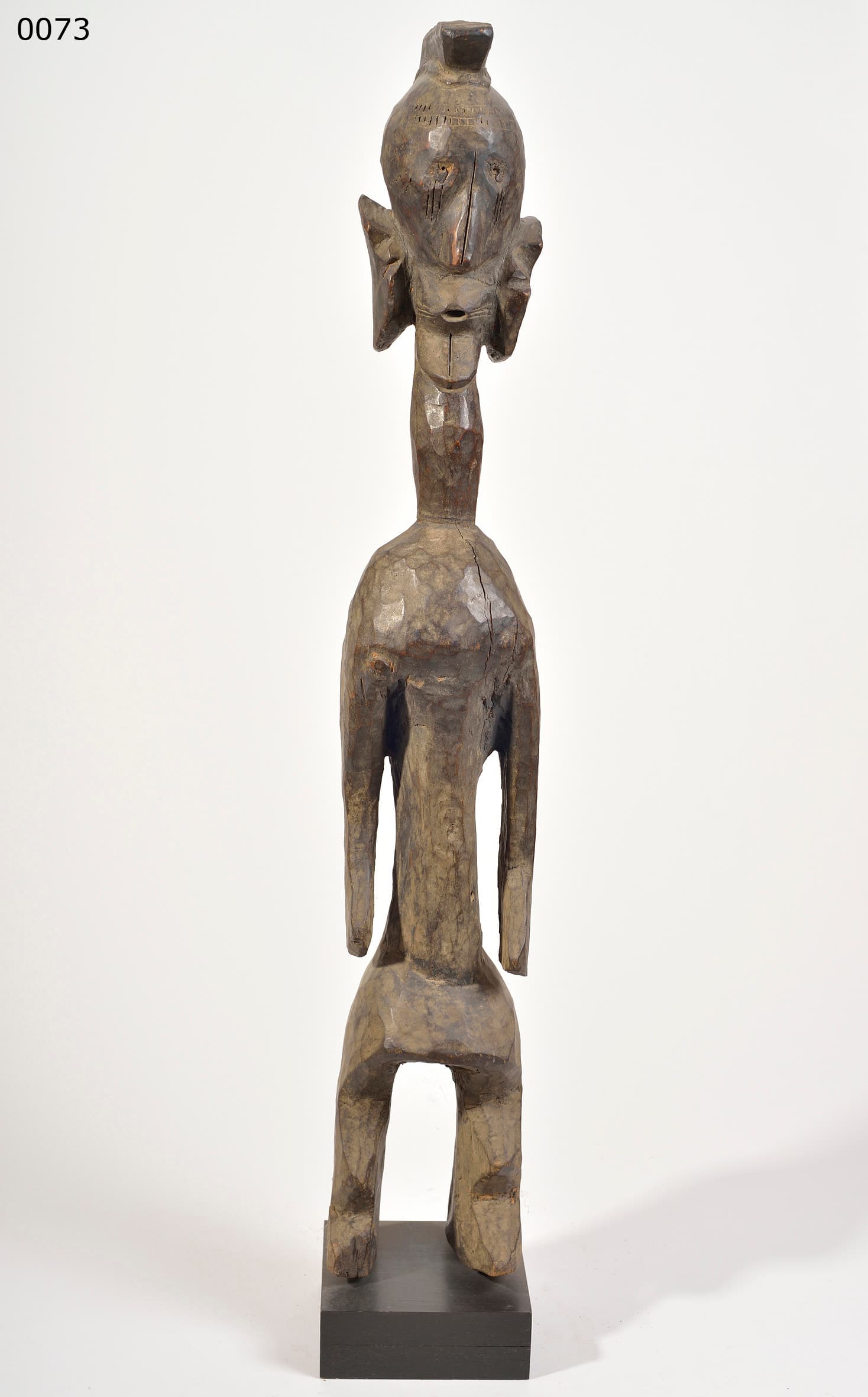
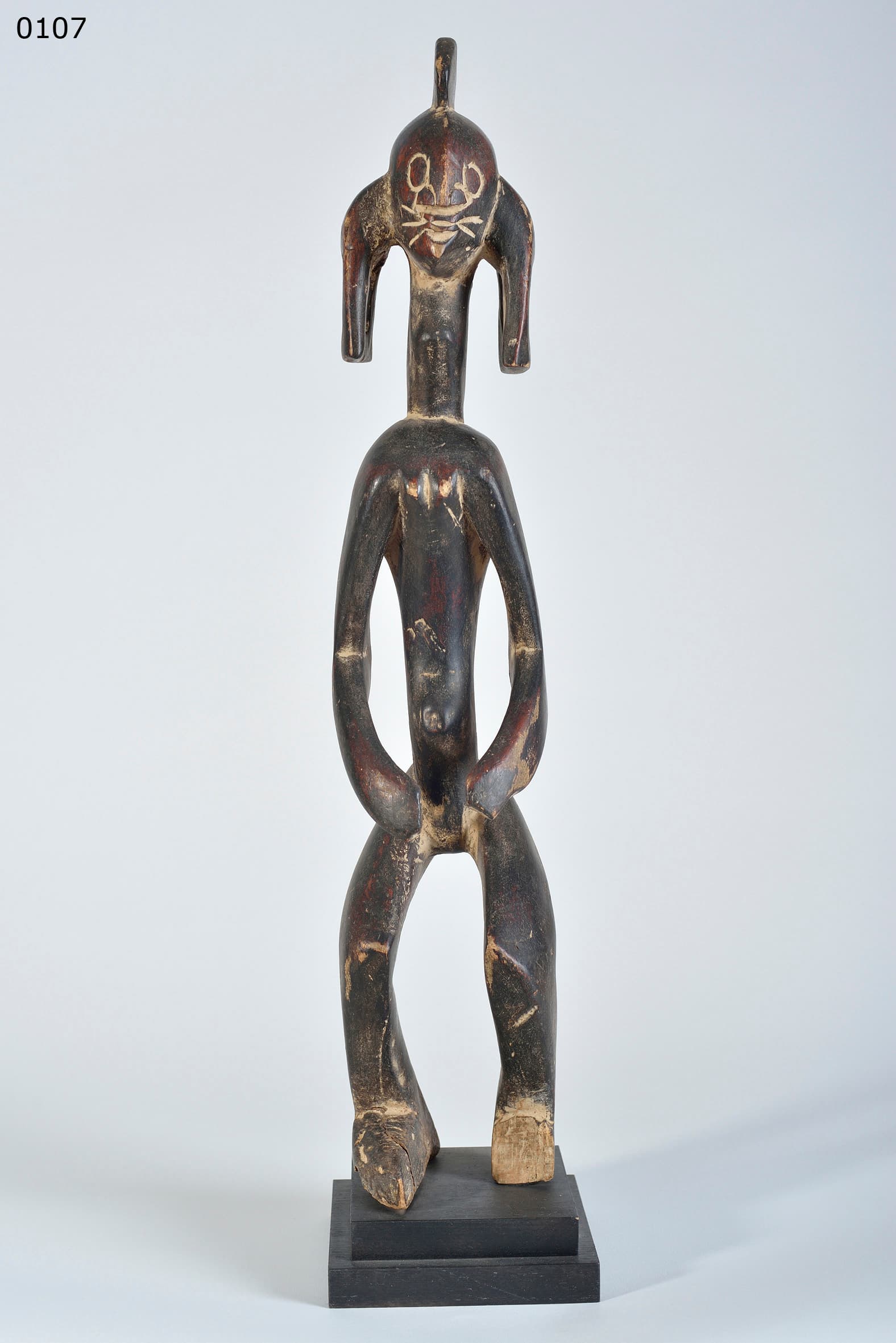
Eine monumentale Mumuye-Ahnenfigur (1. Hälfte 20. Jh., 97 cm) aus Nigeria - radikal geschwungene Abstraktion mit einem langgestreckten, säulenartigen Torso, der von massiven, bandartigen Armen flankiert wird, die sich um den negativen Raum winden, gekrönt von einem stark stilisierten, schirmartigen Wappenkopf und integrierenden Eisenelementen, tief oxidiert und trocken erodiert. Gepaart mit 0419.
1. Aspekte der Negativraum- und Bandgeometrie
Die Mumuye aus dem Benue-Tal stellen einige der dynamischsten Skulpturen Afrikas her.
- Architektonischer Käfig aus Holz: Anstatt Gliedmaßen zu schnitzen, die bündig mit dem Körper abschließen, schnitzt der Künstler lange, bandartige Arme, die sich spiralförmig vom Rumpf wegbewegen und krümmen - so entsteht ein architektonischer Käfig aus Holz um einen Kern aus leerem Raum.
- Kinetische Leichtigkeit: Verleiht der meterhohen Figur ein ausgeprägtes Gefühl von Leichtigkeit, kinetischer Energie und fließendem Ungleichgewicht - die strengen, helmartigen Köpfe und abstrakten Gesichtsebenen haben die Bildhauer des europäischen Expressionismus tiefgreifend beeinflusst.
2. Die Vabong-Gesellschaft und der Regenmacher-Zauber
Historisch fälschlicherweise als bloße landwirtschaftliche Wegweiser identifiziert, werden diese Figuren in der ethnographischen Literatur als aktive spirituelle Werkzeuge der Vabong-Geheimgesellschaft beschrieben.
- Eisen-Integration: Dieses Stück integriert Eisen - ein rituell bedeutsames Material in dieser Region, das mit den Schmiede-Göttinnen verbunden ist.
- Trance-Dialog: Die Statue diente der Überlieferung nach als Kanal für die Kommunikation mit den Ahnen - in Zeiten extremer Krisen, Krankheit oder Dürre trat der Wahrsager in einen physischen, tranceartigen Dialog mit der Statue, indem er ihre bandartigen Arme bewegte und manipulierte, um die Zukunft zu erahnen und den Regen herbeizurufen.
3. Monumentale Austrocknung und irdene Fäulnis
Der physische Zustand der Statue stützt eine Datierung in das frühe 20. Jahrhundert.
- Roh verwitterte Oberfläche: Mumuye-Figuren wurden nicht mit schützenden Ölen eingerieben - sie wurden roh belassen. Infolgedessen ist das dichte Holz einer extremen Austrocknung unterworfen, die eine trockene, pulverige, tief zerklüftete und von der Sonne gebleichte Oberfläche hinterlassen hat.
- Fäulnis des erdbepflanzten Sockels: Der Sockel weist starke ungleichmäßige Fäulnis und Insektenbefall auf - Spuren, die für eine jahrzehntelange Platzierung direkt im Erdboden des Heiligtums des Wahrsagers sprechen.
Zusammenfassung
Zusammen mit ihrem 114 cm hohen Pendant 0419 repräsentiert diese monumentale Mumuye-Figur eine charakteristische Ausprägung der nigerianischen abstrakten Holzschnitzerei - eine bandartige Geometrie, die den negativen Raum einschließt und durch eiserne Elemente ergänzt wird. Ihre ausgeprägten Ausmaße und die tiefe, erdverrottete Patina machen sie zu einem bedeutenden Zeugnis westafrikanischer ritueller Kunst.
KI-unterstützt erstellt aus Sammlungsgutachten, Objektfotografie und eigener Recherche, redaktionell geprüft. Fehler sind möglich — Hinweise darauf sind uns willkommen. Zum Verfahren →