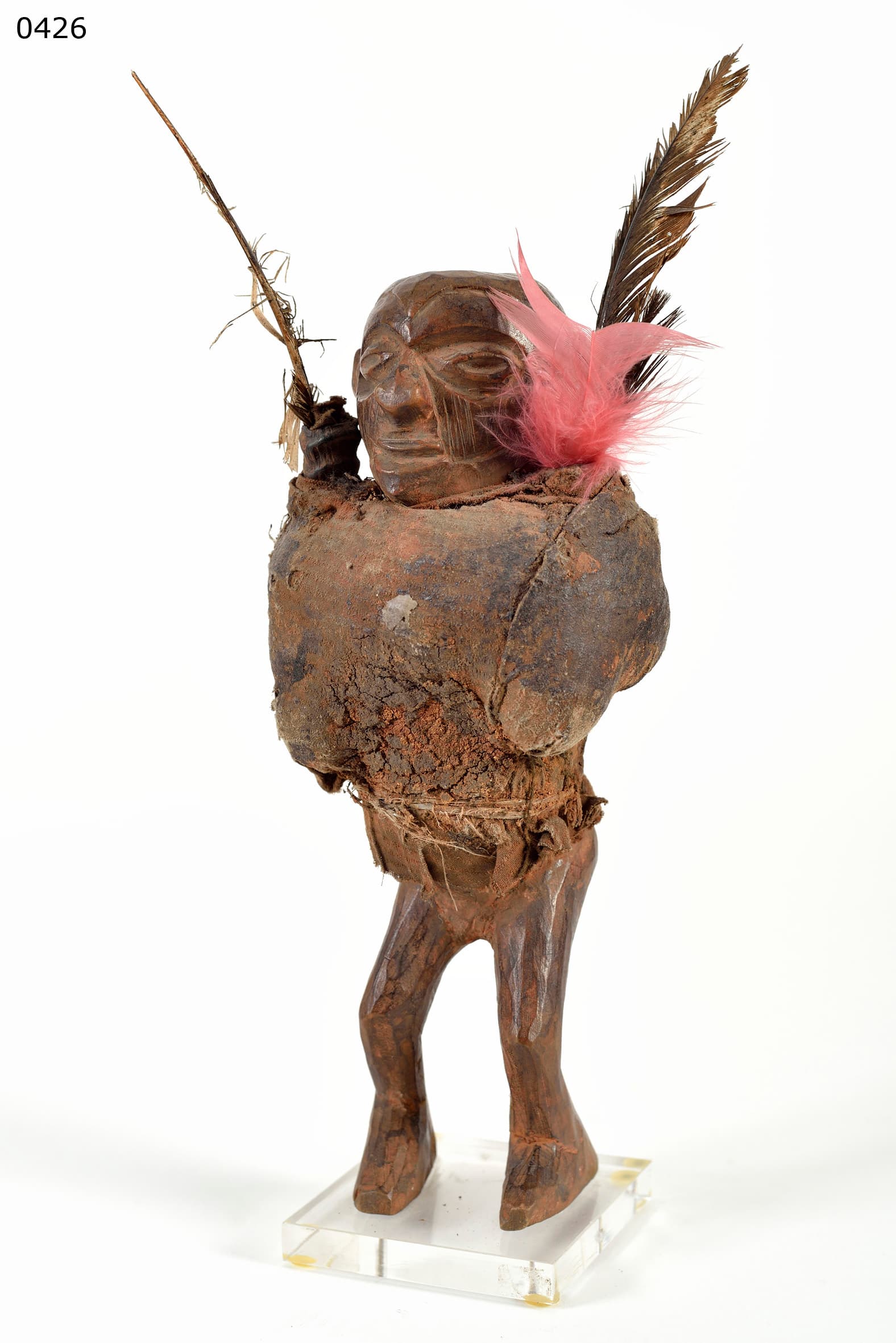
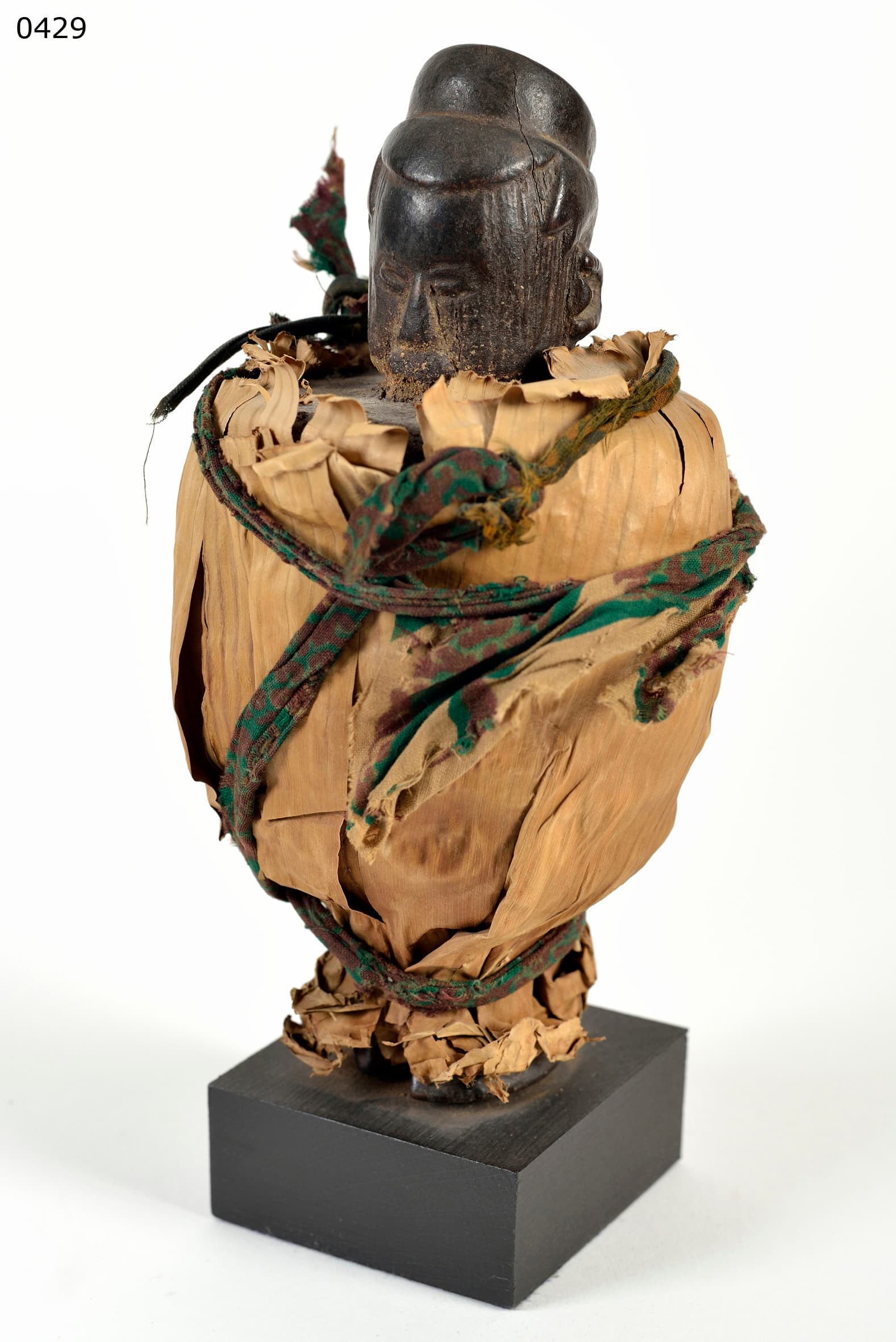
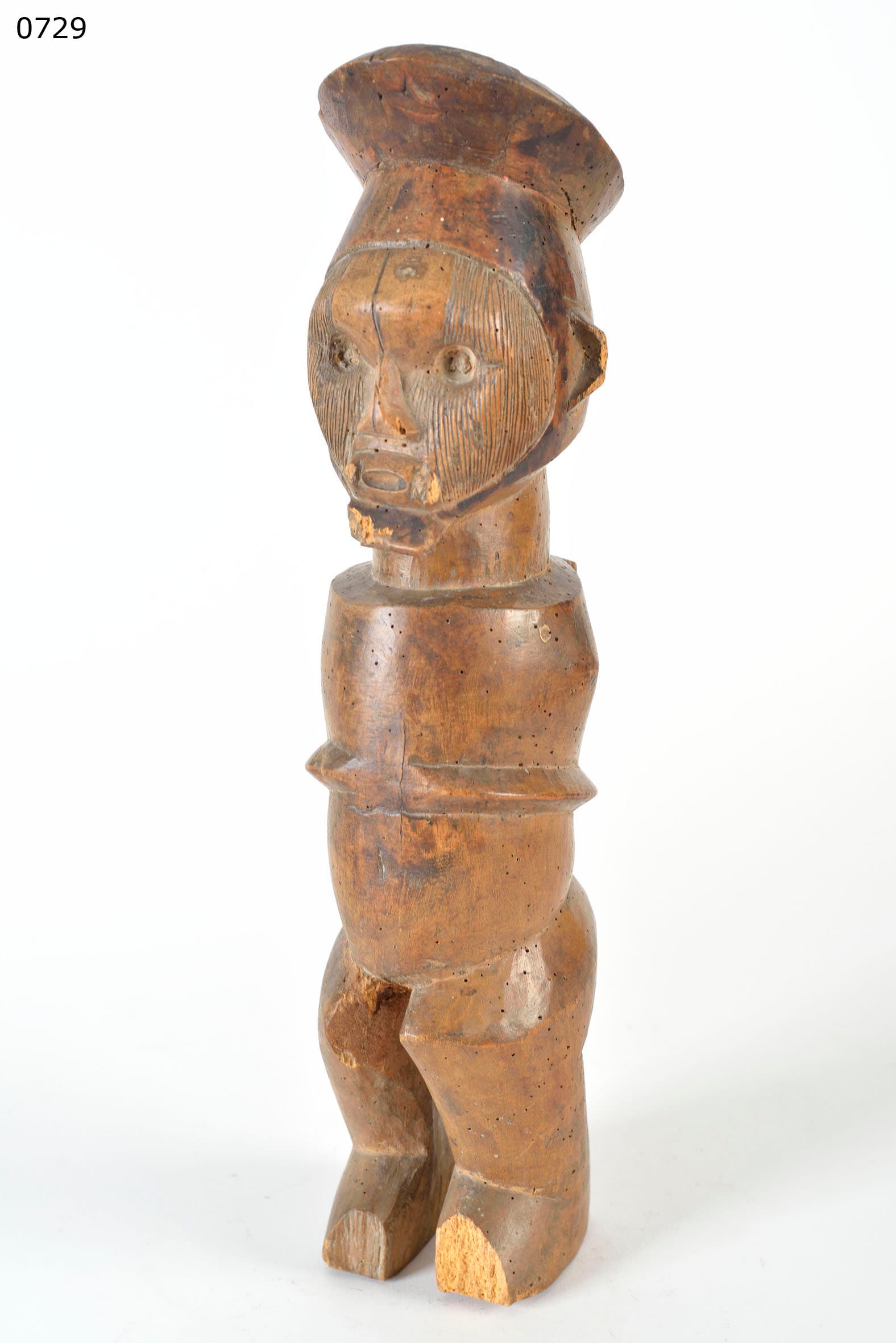
Diese stehende Holzfigur zeigt die klassische, helmartige Kammfrisur der Teke, parallele vertikale Gesichtsnarben und eine ausgeprägte, ausgehöhlte zentrale Vertiefung im Rumpf. Die Figur ist mit kantigen, leicht gebogenen Beinen geschnitzt und trägt auf der gesamten Oberfläche eine tief verrostete, krustige Erdpatina.
1. Ästhetischer Stil und regionale Merkmale
Die Teke (oder Bateke) in der Republik Kongo sind für ihre äußerst strenge, kubistische Auffassung der menschlichen Form bekannt. Diese Figur zeigt die wesentlichen morphologischen Merkmale des Stammes: die fein gerillten, vertikalen Gesichtsnarben, die als mabina bekannt sind, die kantig vorspringende Kieferlinie und den sagittalen Scheitel der Frisur. Die strenge Frontalität und die geometrischen Körperproportionen sollen Stoizismus und mystische Beherrschung ausstrahlen.
2. Rituelle Funktion und religiöse Bedeutung
Diese als Buti oder Biteke bekannten Figuren dienen als Gehäuse für mächtige spirituelle Kräfte. Die hervorstehende Bauchhöhle war ursprünglich mit einem Bilongo gefüllt - einer magischen Ladung aus Erde, tierischen Stoffen und Mineralien, die von einem Nganga (Ritualspezialisten) aufgetragen wurde. Je nach der spezifischen Ladung konnte die Figur einen Haushalt schützen, Krankheiten heilen oder den Erfolg bei der Jagd sichern. Die Tatsache, dass der Hohlraum jetzt leer ist, deutet darauf hin, dass der Geist rituell außer Dienst gestellt wurde.
3. Physische Patina und Altersnachweis
Die Oberfläche dieses Stücks ist spektakulär und mit einer stark brüchigen, rötlich-braunen Kruste überzogen. Dabei handelt es sich nicht um eine natürliche Holzoxidation, sondern um eine stark geschichtete, aufgetragene Patina aus Rotholzpulver (Tukula), Lehm, Palmöl und Opferblut. Die Dichte dieser rituellen Verkrustung sowie das tief oxidierte, dunkle Holz, das an den Stellen sichtbar ist, an denen die Kruste abgetragen wurde, sprechen für eine kontinuierliche rituelle Verwendung, die bis in das frühe 20. Jahrhundert zurückreichen könnte.
Zusammenfassung
Diese Teke-Kraftfigur gilt als ein charakteristisches Beispiel für den zentralafrikanischen Kubismus und die animistische Kunst. Ihre auffälligen geometrischen Merkmale in Verbindung mit einer dichten Opferkruste machen sie zu einem repräsentativen Objekt von ahnenhafter und magischer Autorität.
KI-unterstützt erstellt aus Sammlungsgutachten, Objektfotografie und eigener Recherche, redaktionell geprüft. Fehler sind möglich — Hinweise darauf sind uns willkommen. Zum Verfahren →