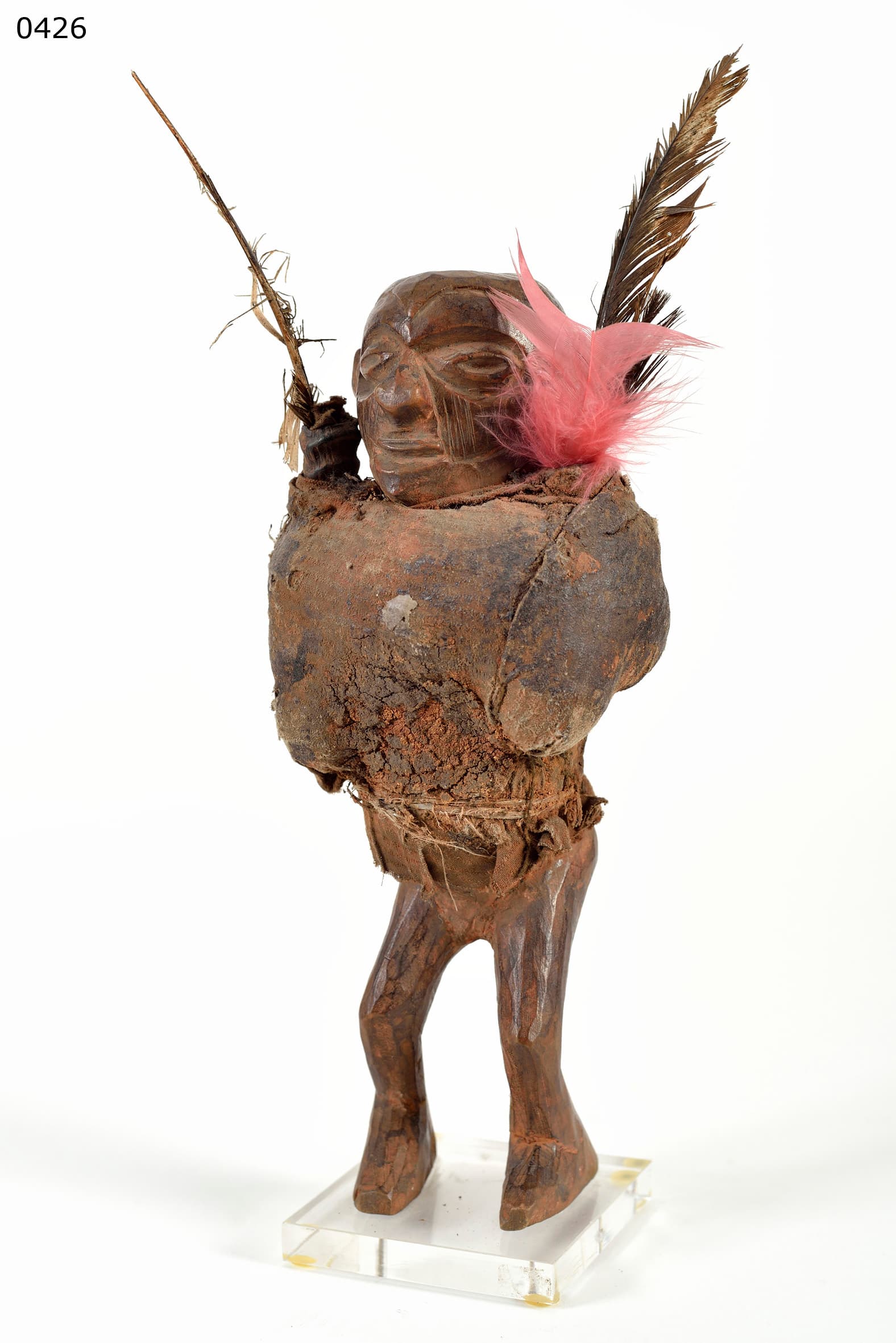
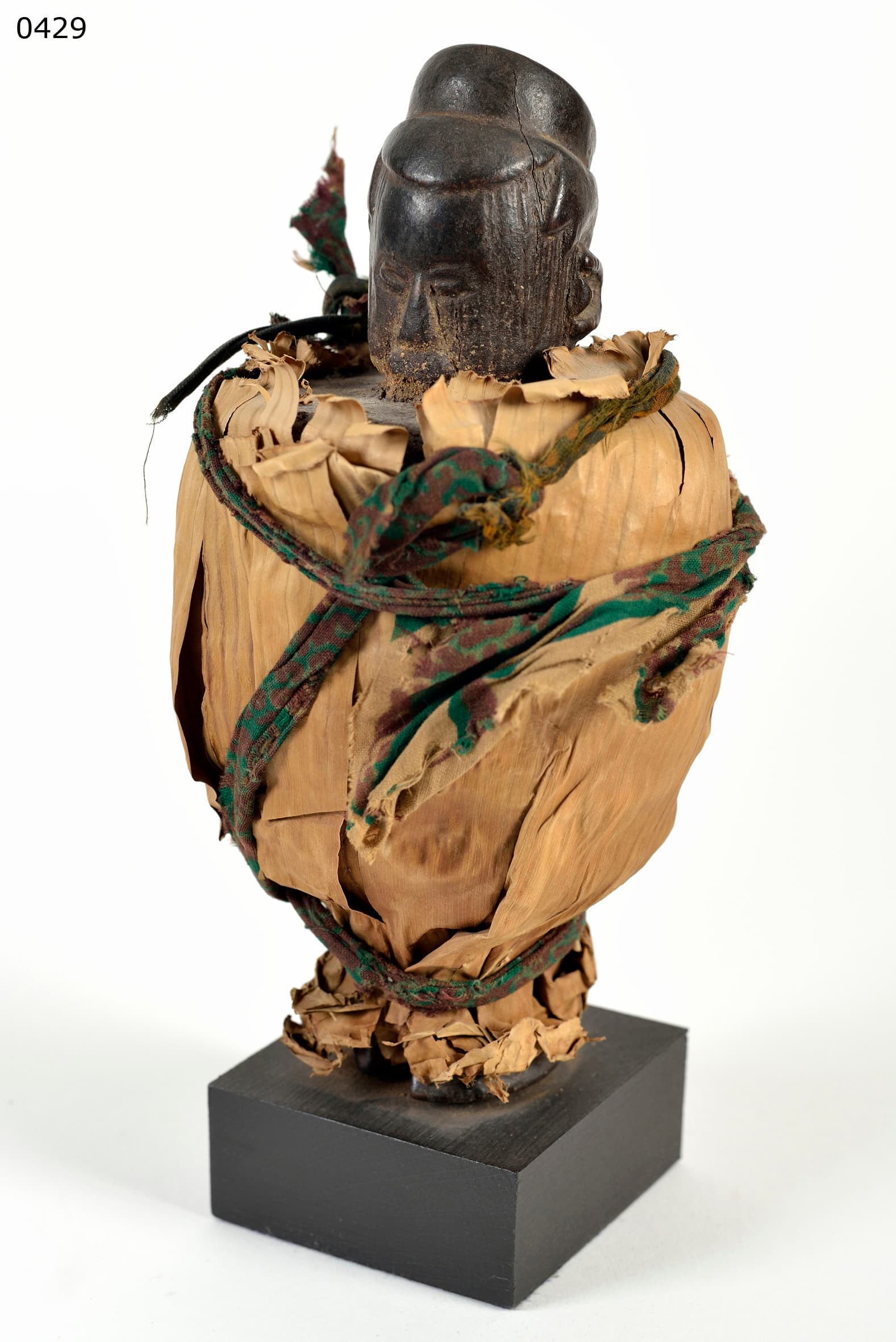
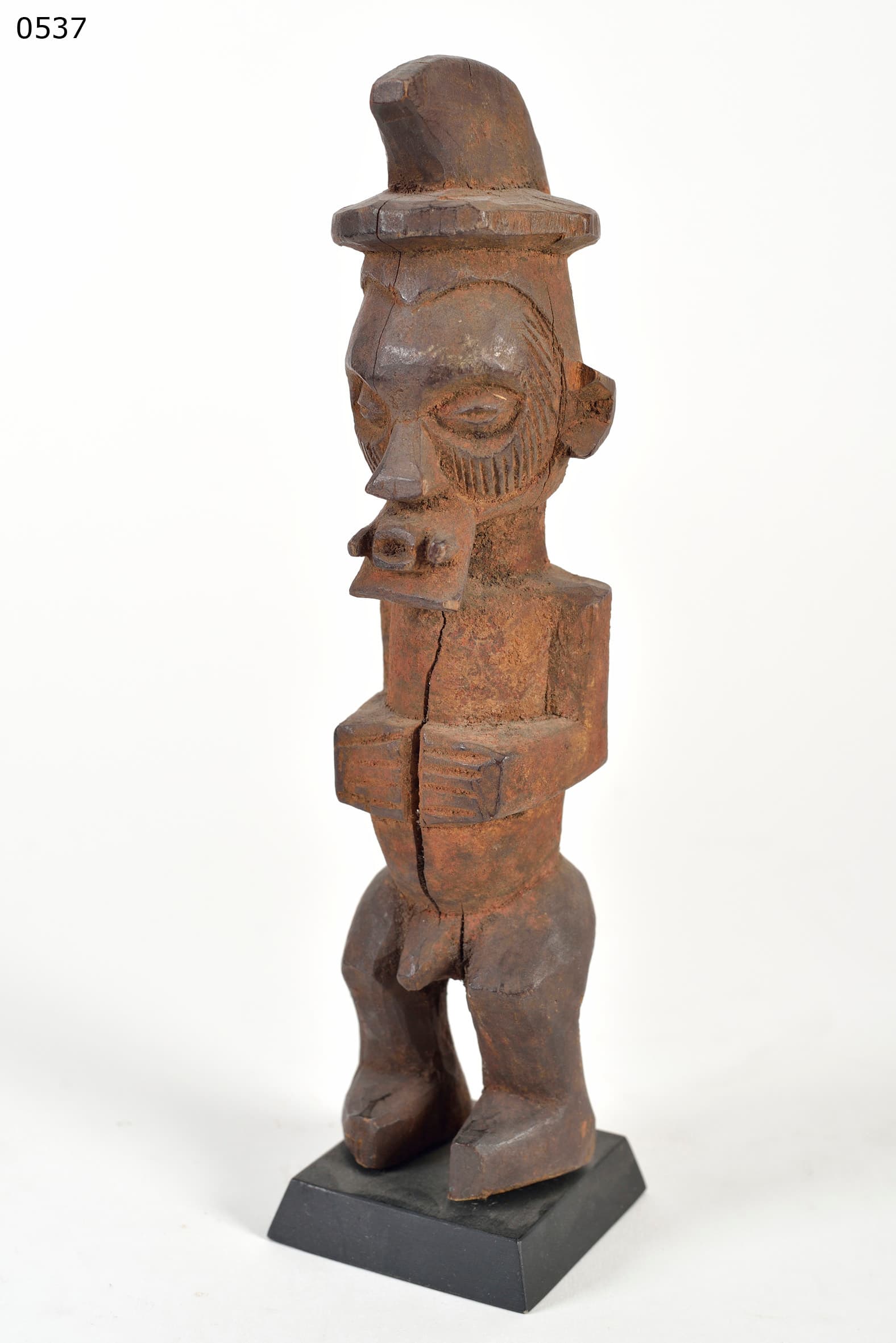
Eine klassische Teke-Holzfigur mit ausgeprägter Kammfrisur und feinen vertikalen Gesichtsnarben, mit einem tonnenförmigen Torso, der für eine magische Ladung vorgesehen war und eine dunkle, alte und verkrustete Patina aufweist.
1. Ästhetischer Stil und regionale Charakteristika
Diese Figur weist die wesentlichen Merkmale der klassischen Teke-Kunst aus der Republik Kongo auf. Das Gesicht ist mit fein eingeritzten, parallelen, vertikalen Skarifikationen (mabina) verziert, und der Kopf ist mit einer unverwechselbaren, kammartigen, helmartigen Frisur versehen, die auf einen hohen gesellschaftlichen Rang hinweist. Die abgewinkelte Haltung mit gebeugten Knien vermittelt ein Gefühl von Bereitschaft und latenter Energie - eine ikonografische Signatur der Teke, die ihre Kraftfiguren von der starr aufrechten Haltung der benachbarten Kongo-Traditionen unterscheidet.
2. Rituelle Funktion und die Mechanik des Buti
In der Teke-Kultur wird eine geschnitzte Holzfigur als leere Hülle betrachtet, bis sie von einem Nganga (Ritualspezialist) ermächtigt wird. Der zylindrische, ungeschnitzte Torso war dazu bestimmt, mit einer heiligen Mischung aus Ton und Pflanzen, Bilongo genannt, gefüllt zu werden, wodurch die Schnitzerei zu einem Buti (Kraftobjekt) wurde. Obwohl die Ladung im Laufe der Zeit erodiert oder entfernt wurde, bleibt der modifizierte Hohlraum als Zeugnis seiner Funktion für Heilung, soziale Kontrolle oder Schutz erhalten. Die sichtbare Vertiefung hat hier selbst dokumentarischen Charakter - sie spricht dafür, dass die Figur im rituellen Kontext genutzt wurde und nicht als rein dekoratives oder zum Verkauf bestimmtes Stück geschnitzt wurde.
3. Physische Patina und Altersindikatoren
Der wichtigste Aspekt der Geschichte dieser Figur ist ihre Veröffentlichung in dem Text "BATEKE" (Seite 366). Diese Publikationsgeschichte verortet das Stück in der wissenschaftlichen Literatur und stützt die Zuschreibung sowie die Alterseinschätzung. In Verbindung mit der tiefen, dunklen und stark oxidierten Patina, die mit einer Entstehung im 19. Jahrhundert vereinbar ist, stellt die Figur ein hervorragend dokumentiertes Beispiel der zentralafrikanischen Machtskulptur dar. Die Tiefe der Patina und ihre Integration in das Holzsubstrat deuten eher auf eine über mehrere Generationen andauernde Nutzung des Schreins hin als auf eine kürzlich erfolgte Oberflächenbehandlung.
Zusammenfassung
Eine gut dokumentierte Teke-Kraftfigur, die die diagnostischen Gesichtsritzungen und rituellen Mechanismen der Region anschaulich illustriert. Die Publikationsgeschichte und die tiefe Patina, die auf das 19. Jahrhundert hindeutet, machen sie zu einem bemerkenswerten Objekt für Sammlungen afrikanischer Kunst.
KI-unterstützt erstellt aus Sammlungsgutachten, Objektfotografie und eigener Recherche, redaktionell geprüft. Fehler sind möglich — Hinweise darauf sind uns willkommen. Zum Verfahren →