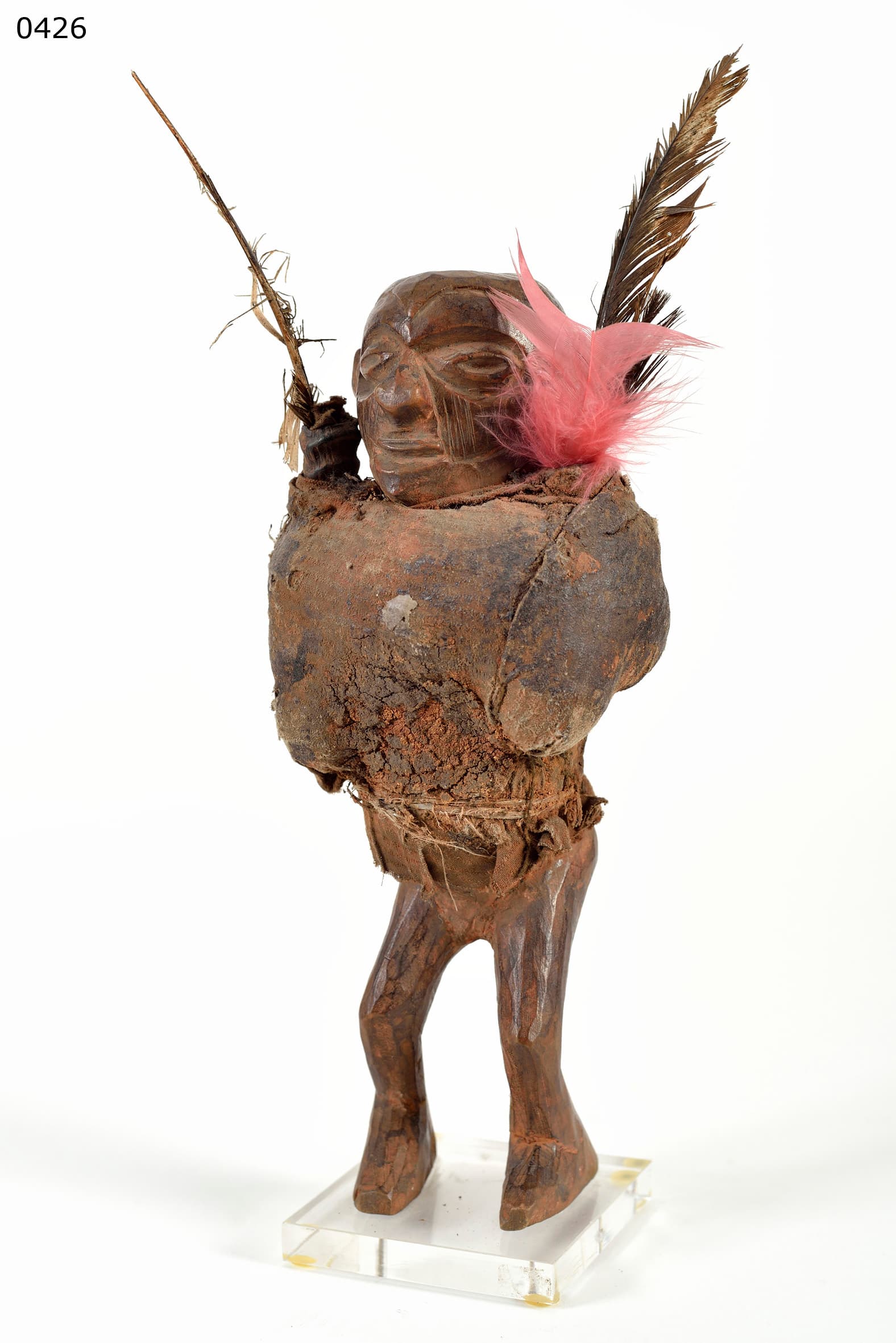
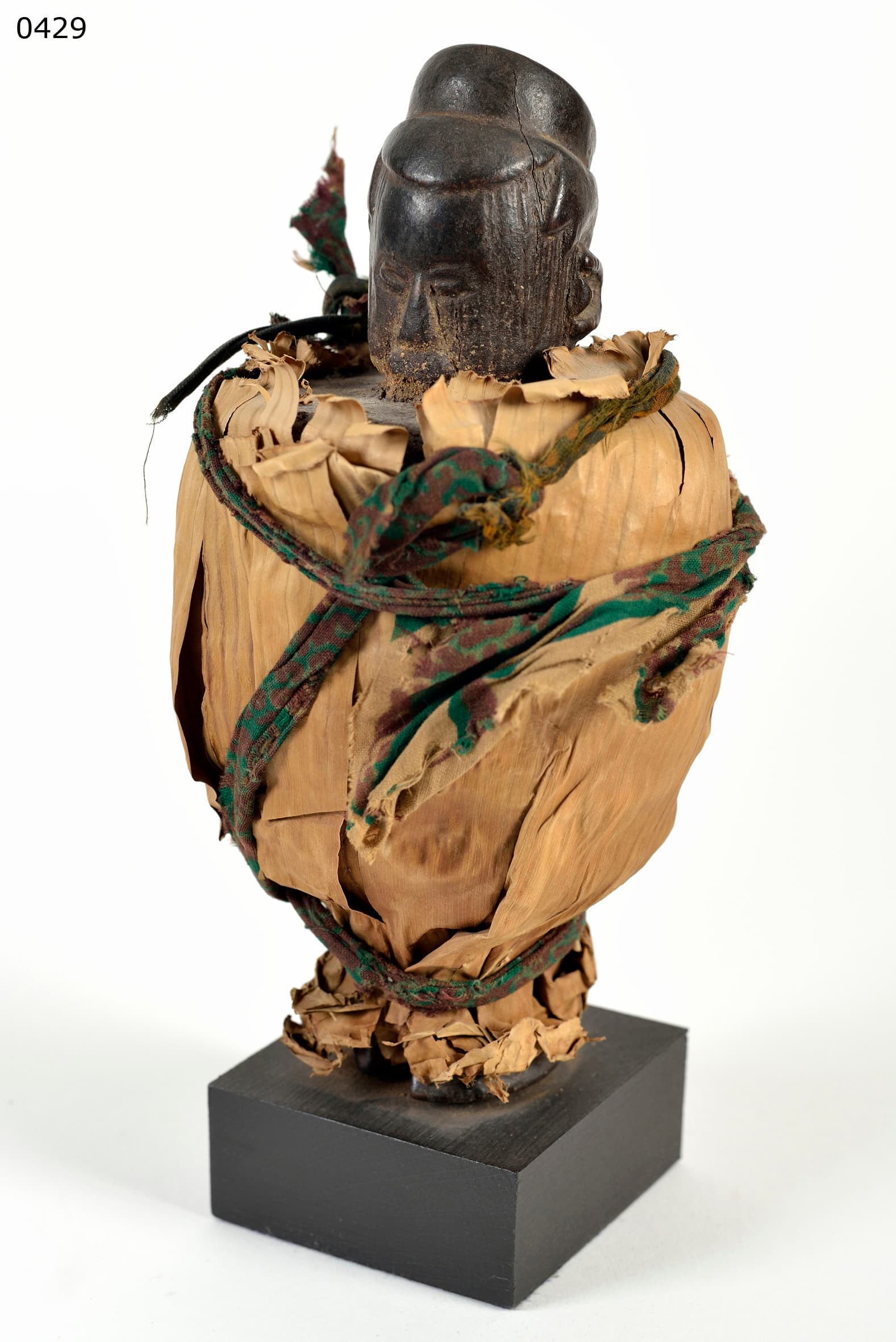
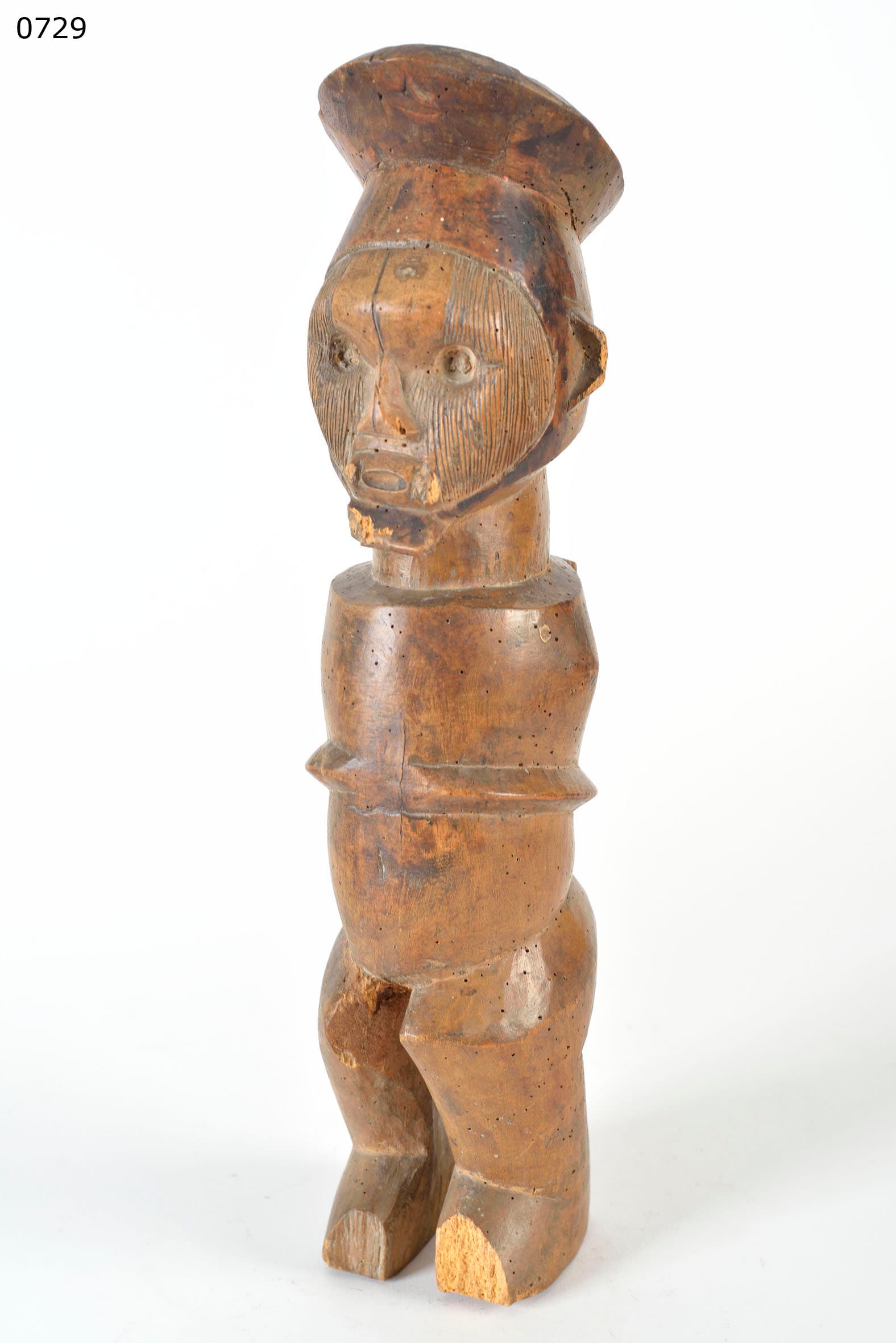
Dieses Objekt besteht aus einem fein geflochtenen, halbkreisförmigen Korbgeflecht, das an einem langen, gebogenen Holzgriff befestigt ist. Die dunkle, glänzende Patina des Holzes und die feste, starre Oxidation der geflochtenen Fasern deuten auf eine intensive Nutzung und ein hohes Alter hin.
1. Ästhetischer Stil und regionale Merkmale
Die Teke-Völker in der Republik Kongo sind für ihre Flechtkunst bekannt, und diese Rhythmusrassel zeigt ihre Fähigkeit, strukturelle Integrität mit akustischer Funktion zu verbinden. Der starre, gewölbte Griff spannt die gewebte Kammer, die Samen oder harte Kieselsteine enthält, passgenau ein. Das dichte, präzise Geflecht aus Rattan und Fasern schafft nicht nur einen dauerhaften Resonanzraum, sondern auch eine anspruchsvolle geometrische Ästhetik, die visuell harmonisch und funktional ist. Die Teke-Korbflechterei steht in einer regionalen Tradition des präzisen Flechtens, die ihre Gebrauchsgegenstände von benachbarten Kongo- oder Kuba-Flechtregistern unterscheidet.
2. Rituelle Funktion und klangliche Architektur
In der Teke-Kultur gelten Rhythmusrasseln als wichtige Werkzeuge für religiöse Spezialisten, Wahrsager (nganga) und Musiker bei Trance- und Heilungszeremonien. Es wird angenommen, dass der scharfe, perkussive Klang den Schleier zwischen der physischen und der spirituellen Welt durchbricht, die Geister der Vorfahren (nkira) herbeiruft und bösartige Kräfte vertreibt. Die schwungvolle Bewegung, die zum Spielen erforderlich ist, diktiert ihr ergonomisches, langgestrecktes Design, das sie während ritueller Handlungen zu einer Verlängerung des eigenen Körpers des Priesters macht.
3. Physische Patina und Altersindikatoren
Ein Hinweis auf das Alter dieses Stücks liegt in der tiefen, glänzenden Patina auf dem hölzernen Griff, die durch die Reibung der Hände des Spielers, die natürliche Öle übertragen, entstanden sein kann. Darüber hinaus hat die gewebte Faser einen steifen, dunklen Oxidationszustand erreicht, der mit einem längeren Aushärten in rauchiger Umgebung vereinbar ist. Das Fehlen moderner synthetischer Bindungen und die nahtlose Integration der organischen Materialien stützen eine Datierung des Instruments in das frühe 20. Jahrhundert.
Zusammenfassung
Diese Teke-Rhythmusrassel zeigt eine feine Verbindung von akustischer Funktion und handwerklicher Gestaltung und veranschaulicht Aspekte des rituellen Lebens der Region. Ihre ausgeprägte Patina und das gealterte Korbgeflecht machen sie zu einem bemerkenswerten ethnomusikologischen Objekt.
KI-unterstützt erstellt aus Sammlungsgutachten, Objektfotografie und eigener Recherche, redaktionell geprüft. Fehler sind möglich — Hinweise darauf sind uns willkommen. Zum Verfahren →