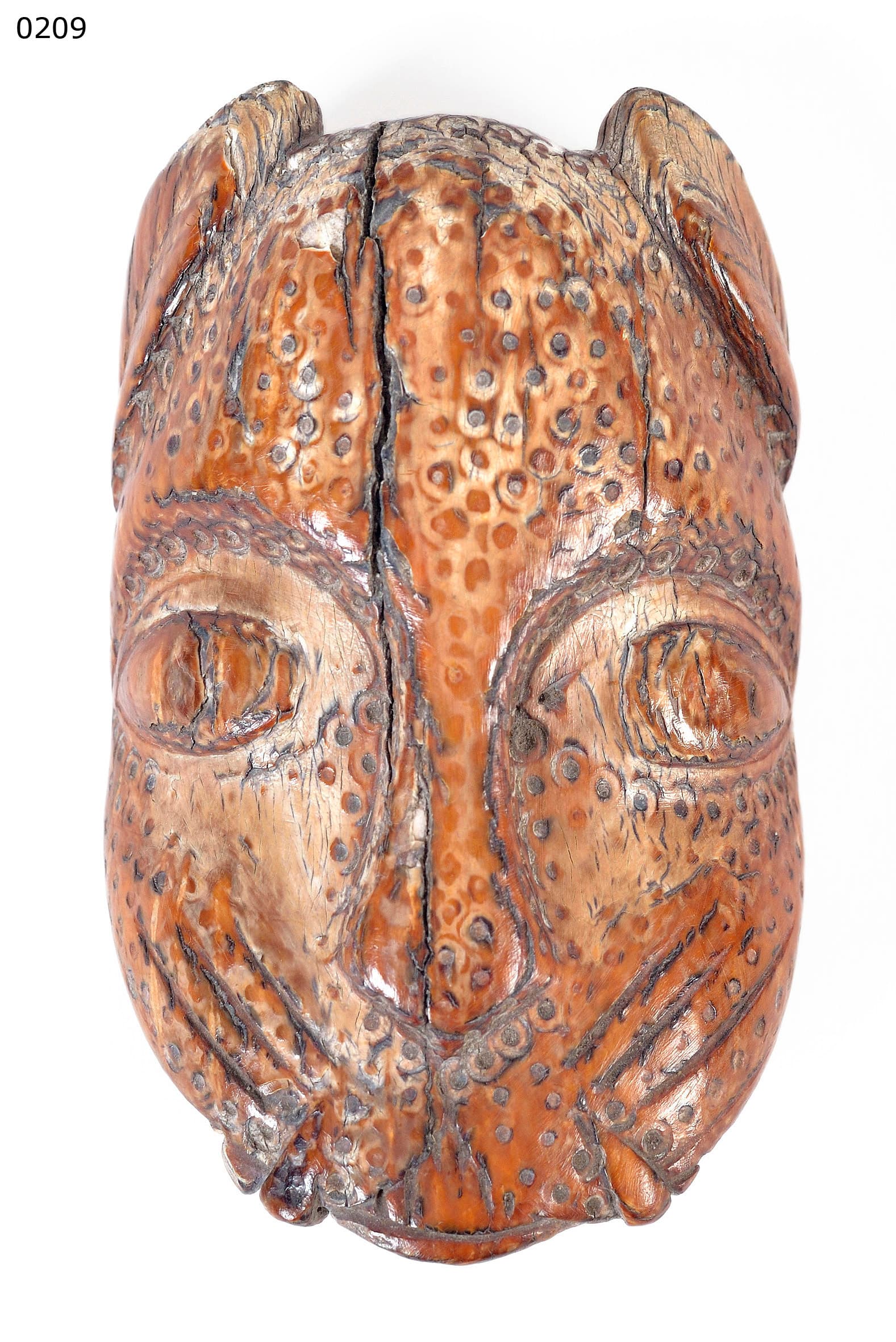
Diese Figur aus Bronzeguss zeigt einen stilisierten, sitzenden Leoparden mit gefletschten Zähnen, aufgestellten Ohren und einem Körper, der mit sich überlappenden konzentrischen Kreisen bedeckt ist, die seine Flecken darstellen. Das schwere Metall hat eine dunkle, erdige Patina mit oxidierten, mattgrünen Vertiefungen.
1. Ästhetischer Stil und regionale Eigenheiten
Das Königreich Benin (Edo) ist weltweit für seine Bronzegüsse im Wachsausschmelzverfahren (cire perdue) bekannt. Diese Leopardenfigur zeigt ein ausgewogenes Verhältnis zwischen königlichem Naturalismus und geometrischer Stilisierung. Das bedrohliche, zähnefletschende Grinsen und die aufmerksame Haltung fangen das rohe Wesen der Katze ein, während die gleichmäßigen, gestanzten Kreise, die ihre Flecken darstellen, die sorgfältige, kontrollierte Ziselierarbeit zeigen, die für die königlichen Bronzegießergilden (Igun Eronmwon) charakteristisch ist, die innerhalb der Palastmauern des Oba arbeiteten.
2. Rituelle Funktion und religiöse Bedeutung
In der Kosmologie von Benin gilt der Leopard (ekpen) als traditioneller "König des Waldes", der den Oba, den König der Stadt, symbolisch widerspiegelt. Der Oba besaß das Monopol auf das Bild des Leoparden, und im Palast wurden lebende Leoparden aufbewahrt, um seine Beherrschung der Natur zu demonstrieren. Bronzeleoparden wie dieser waren striktes königliches Vorrecht und wurden direkt auf den Ahnenaltären früherer Könige aufgestellt, um die spirituelle Pforte zu schützen, den verstorbenen Monarchen zu ehren und besuchende Würdenträger einzuschüchtern.
3. Physische Patina und Altershinweise
Die Bronze wird stilistisch der späten Benin-Periode (18./19. Jahrhundert) zugeordnet und weist Merkmale auf, die für ein hohes metallurgisches Alter sprechen. Im Gegensatz zu modernen touristischen Reproduktionen, die chemisch zu einem hellen Grün patiniert sind, weist dieses Stück eine tiefe, erdige, olivbraune Oxidation auf, die mit einer langen Einwirkung von Feuchtigkeit und Altarruß vereinbar ist. Das Kernmaterial innerhalb des Hohlgusses steht im Einklang mit historischen irdenen Gussmatrizen.
Zusammenfassung
Als ikonisches Symbol des göttlichen Königtums der Edo-Zeit ist dieser Altarleopard aus Bronze ein repräsentatives Beispiel der königlichen Gusstechnik. Seine bedrohliche Präsenz und seine tief oxidierte, historisch gewachsene Patina machen ihn zu einer klassischen Darstellung der Macht, die der Oba von Benin einst ausübte.
KI-unterstützt erstellt aus Sammlungsgutachten, Objektfotografie und eigener Recherche, redaktionell geprüft. Fehler sind möglich — Hinweise darauf sind uns willkommen. Zum Verfahren →