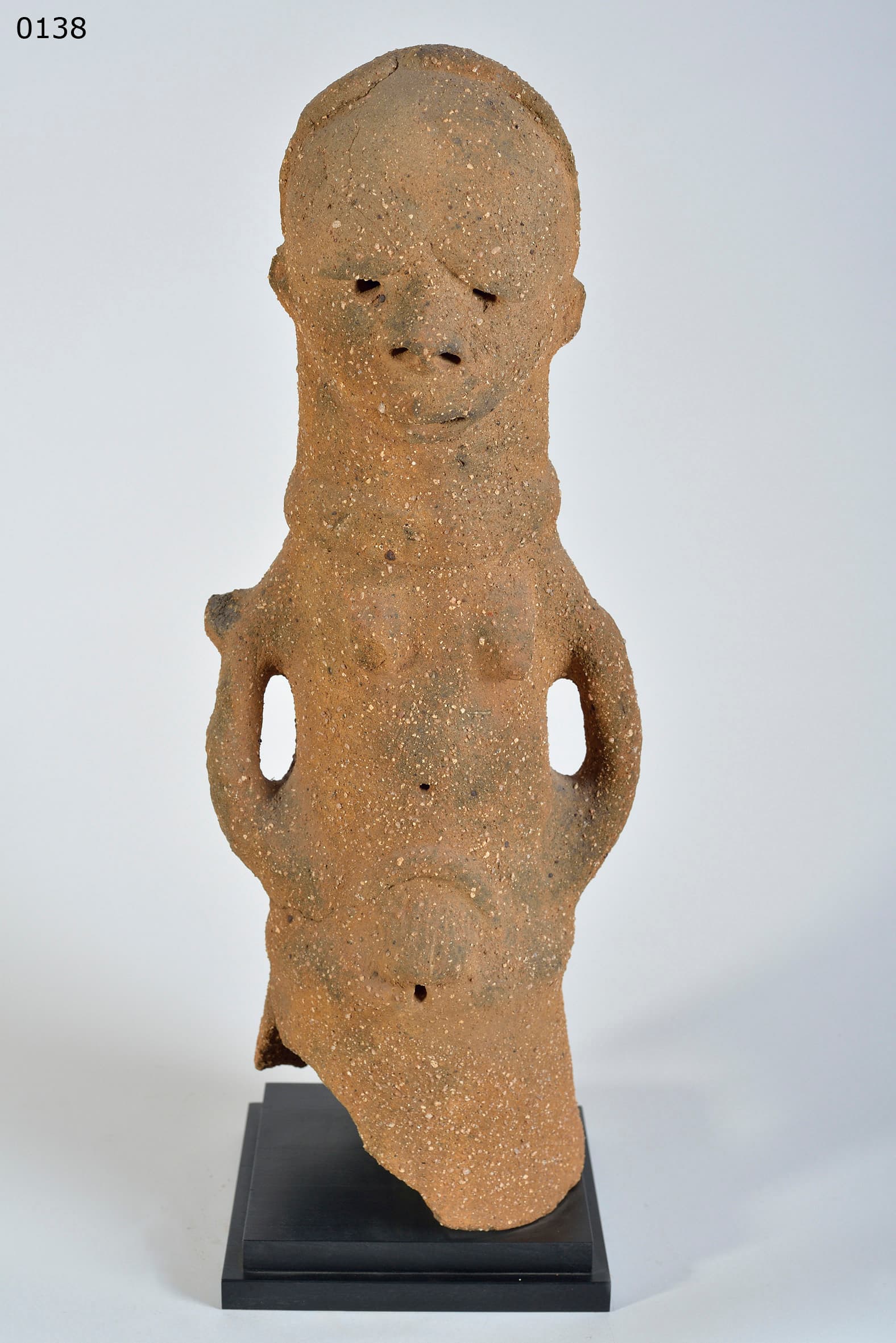
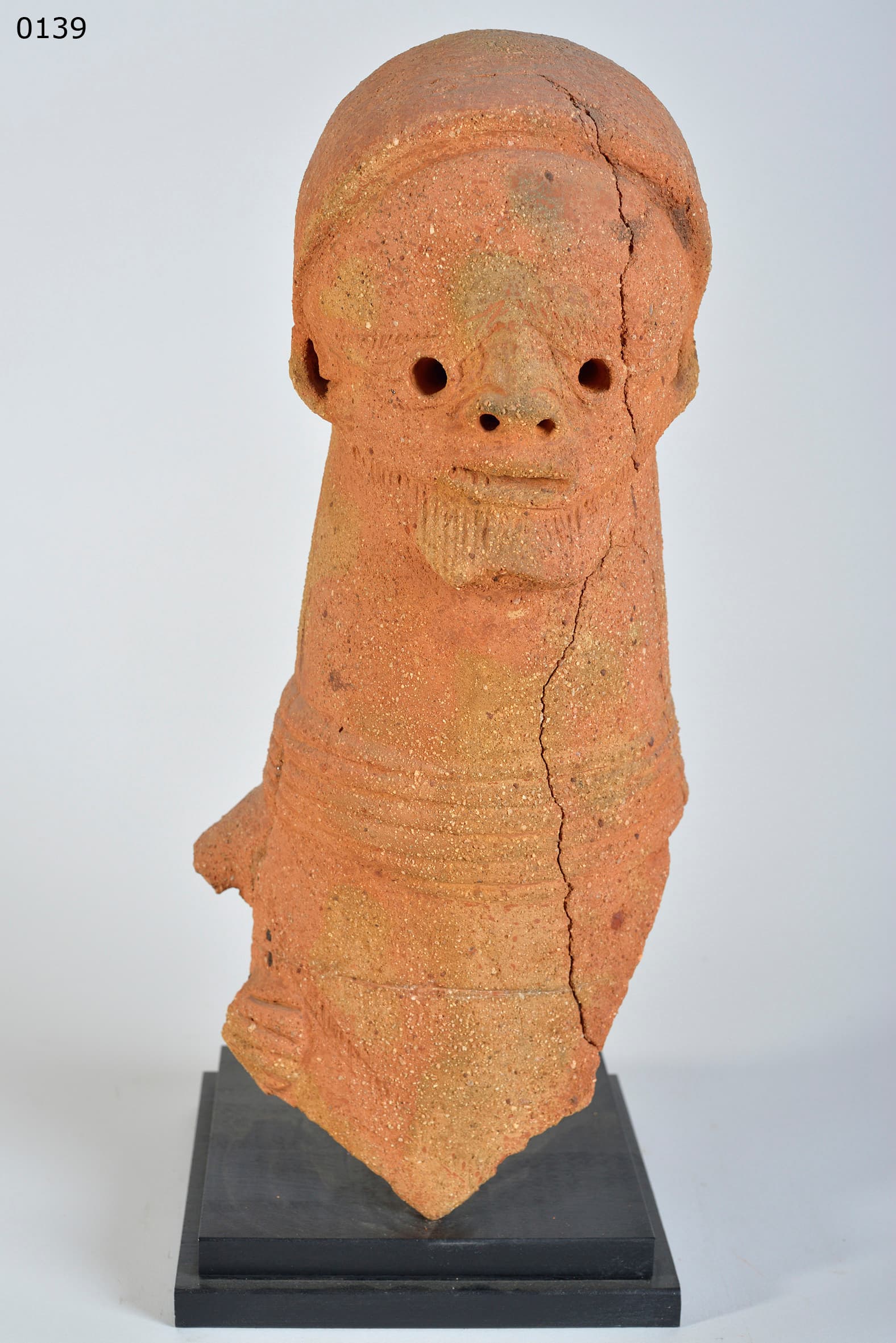
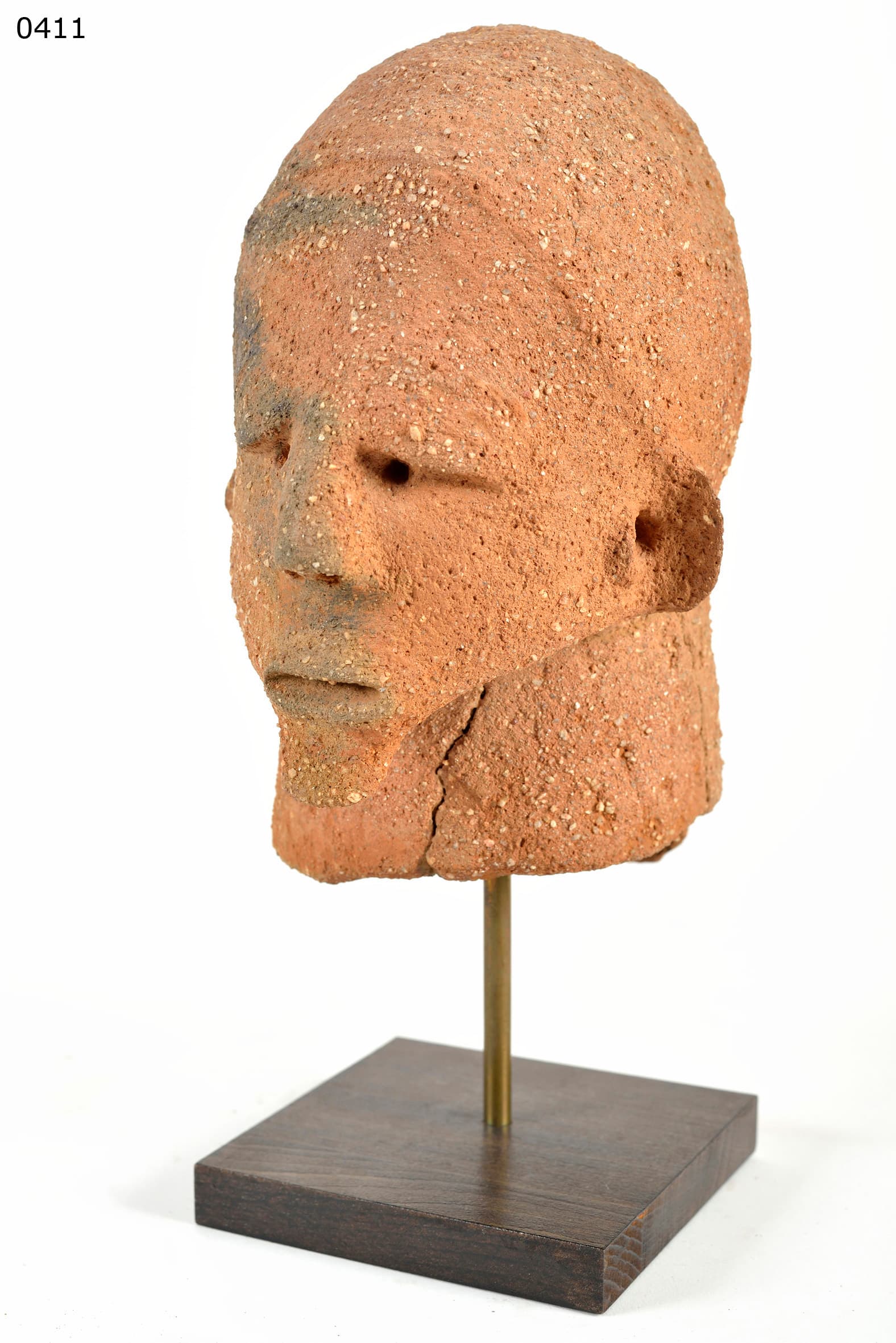
Dieser antike Terrakottakopf zeichnet sich durch strenge, überhängende Brauenlinien, tief eingesetzte geschlitzte Augen und eine längliche, fast zylindrische Kopfform aus. Der Ton ist stark temperiert und enthält große Quarzeinschlüsse, wodurch eine sehr grobe, kiesartige und stark verwitterte Oberfläche entsteht.
1. Ästhetischer Stil und regionale Charakteristika
Die Sokoto-Terrakotta-Tradition (die gleichzeitig mit der Nok- und der Katsina-Kultur von etwa 500 v. Chr. bis 200 n. Chr. in Nordnigeria blühte) zeichnet sich durch ihre strenge, schwerfällige Geometrie aus. Im Gegensatz zu den aufwändigeren Frisuren der Nok sind die Köpfe der Sokoto berühmt für ihre dominanten, monolithischen Brauen, die tiefe Schatten auf die einfachen, schlitzförmigen Augen werfen. Die Verwendung von stark quarzgehärtetem Ton verleiht diesen Stücken eine unverkennbar raue, brutalistische Textur, die die Beständigkeit der Erde betont.
2. Rituelle Funktion und religiöse Bedeutung
Dieser Kopf gehörte ursprünglich zu einer Ganzkörperfigur, die von den frühen eisenzeitlichen Ackerbauern auf Schreinen oder in Bestattungskontexten aufgestellt wurde. Da der Kopf (orí in späteren nigerianischen Kulturen) in Westafrika allgemein als Sitz der Identität, des Schicksals und der spirituellen Macht anerkannt ist, wurden diese Bildnisse wahrscheinlich geschaffen, um verstorbene Führer zu ehren, Fruchtbarkeit für das Land zu suchen und eine physische Verankerung für Schutzgottheiten zu bieten, die die Gemeinschaft vor Krankheiten bewahren.
3. Physische Patina und Altersnachweis
Der physische Zustand dieses Kopfes bestätigt perfekt die Altersschätzung von 2000 Jahren. Der grobkörnige, quarzhaltige Ton ist seit Jahrtausenden Umwelteinflüssen ausgesetzt, die tiefe Lochfraßstellen und die Erosion aller empfindlichen Oberflächendetails zur Folge haben. Die Terrakotta ist verglast und vollständig mit den kalkhaltigen Schichten des alten Lateritbodens verschmolzen, wodurch eine unauslöschliche archäologische Kruste entsteht, die die Bergung aus einer tiefen, alten Grabstätte bestätigt.
Zusammenfassung
Dieser Sokoto-Kopf ist ein Grundpfeiler der afrikanischen Kunstgeschichte und gehört zu den frühesten figurativen Skulpturen des Kontinents. Seine strenge, schwerfällige Abstraktion und die 2000 Jahre alte archäologische Verwitterung machen ihn zu einem musealen Schatz der alten nigerianischen Zivilisation.
KI-unterstützt erstellt aus Sammlungsgutachten, Objektfotografie und eigener Recherche, redaktionell geprüft. Fehler sind möglich — Hinweise darauf sind uns willkommen. Zum Verfahren →