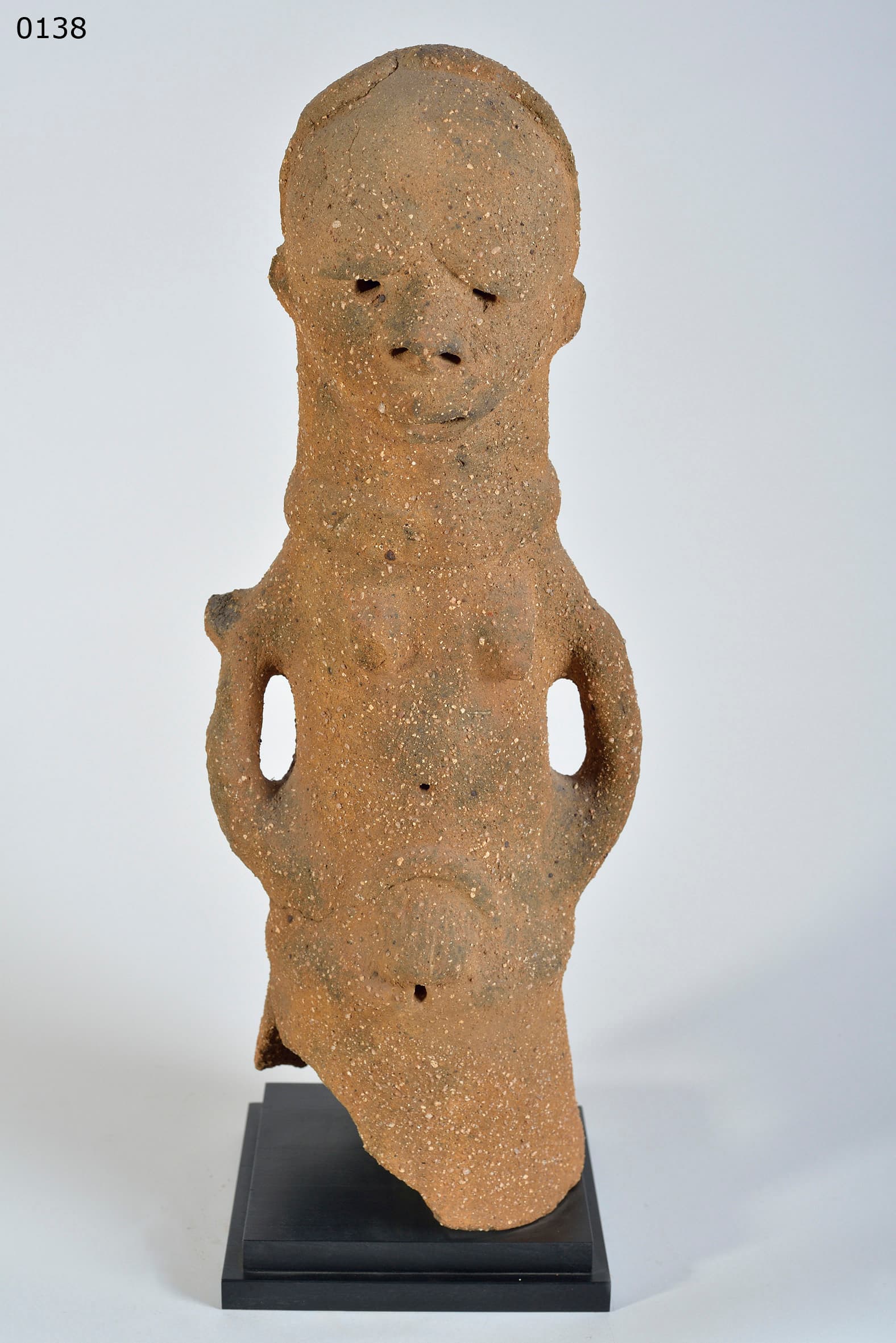
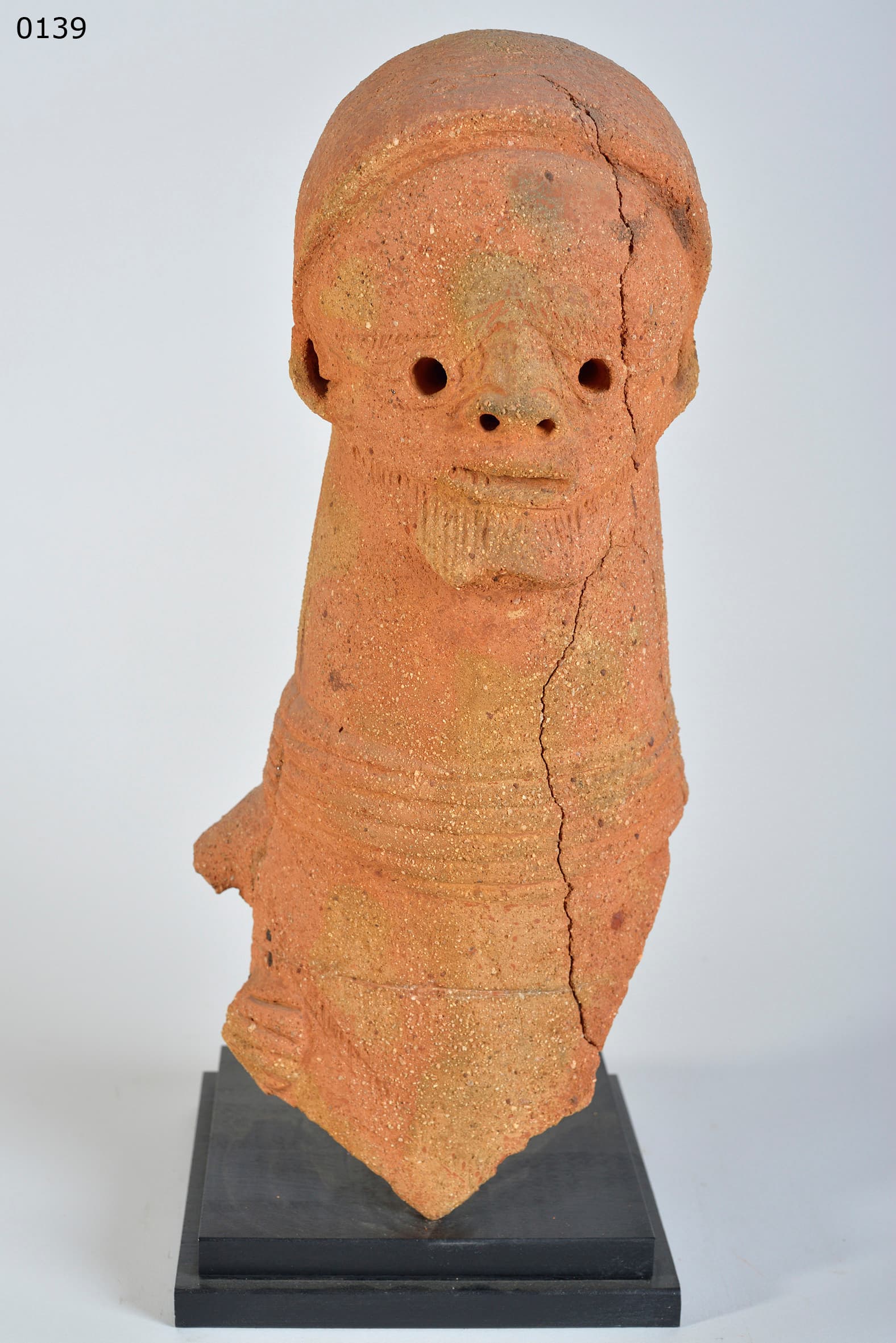
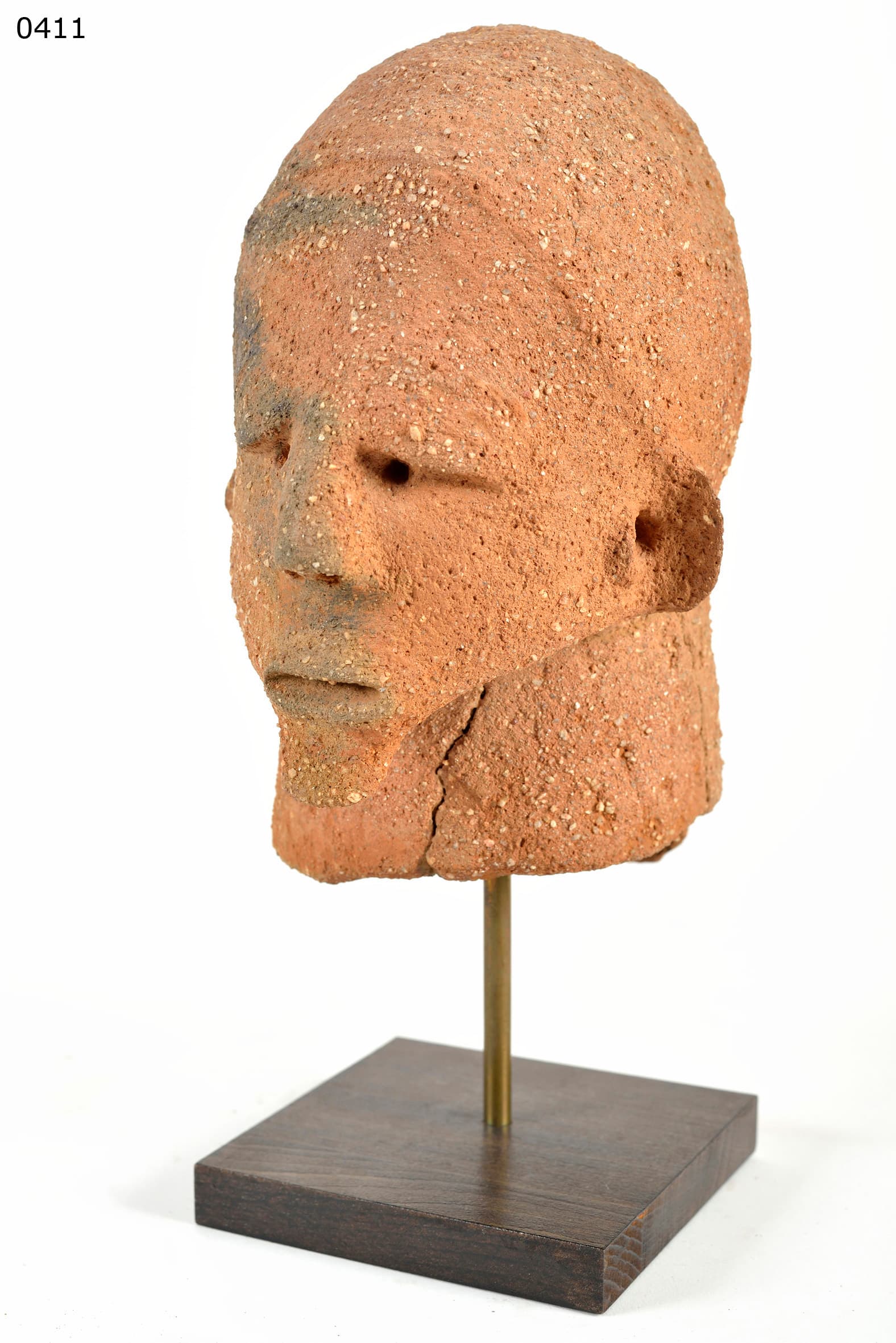
Diese Terrakottaköpfe zeigen die für Sokoto charakteristische Ästhetik, die durch schwere, hervorstehende monolithische Brauen, die tiefliegende, schlitzförmige Augen überschatten, und eine grobe, quarzgesprenkelte Tonmatrix gekennzeichnet ist. Die Oberflächen sind tief erodiert, verkrustet mit gehärteter Erde und mineralischen Ablagerungen, die auf eine sehr lange Lagerung im Boden hindeuten.
1. Ästhetischer Stil und regionale Charakteristika
Die Sokoto-Terrakotta-Tradition, die in Nordnigeria zeitgleich mit der Nok-Zivilisation (ca. 500 v. Chr. bis 200 n. Chr.) verortet wird, zeichnet sich durch ihre strenge, schwerfällige Geometrie aus. Im Gegensatz zu den oft verzierten Frisuren der Nok reduzierten die Bildhauer von Sokoto das menschliche Gesicht auf seine wesentlichen, architektonischen Elemente. Die Verwendung von stark quarzgehärtetem Ton verleiht diesen Stücken eine charakteristisch raue Textur, während die tiefen, horizontalen Schlitze an Augen und Mund - direkt in den nassen Ton geschnitten - kontrastreiche Schatten erzeugen, die die spirituelle Ausdruckskraft gegenüber dem Naturalismus betonen.
2. Rituelle Funktion und religiöse Bedeutung
Diese Köpfe, die stilistisch mit Funden aus alten Grabhügeln und Schreinen assoziiert werden, gehörten vermutlich ursprünglich zu Ganzkörperfiguren, wie sie von frühen eisenzeitlichen Agrargesellschaften geschaffen wurden. Da der Kopf (orí in späteren nigerianischen Kulturen) in Westafrika allgemein als Sitz der Identität, des Schicksals und der spirituellen Macht gilt, wurden diese Bildnisse wahrscheinlich als Ahnengedenkstätten geschaffen. Sie wurden vermutlich auf Altären oder in Gräbern aufgestellt und dienten als Mittler zwischen der lebenden Gemeinschaft und den Kräften der Erde, die für die landwirtschaftliche Fruchtbarkeit und das kosmische Gleichgewicht sorgen sollten.
3. Physische Patina und Altersnachweis
Die physische Beschaffenheit dieser Köpfe ist vereinbar mit einem geschätzten Alter von rund 2.000 Jahren. Der grobkörnige Ton wurde über lange Zeiträume hinweg durch Umwelteinflüsse geprägt, was zu tiefen Löchern und zur Erosion der ursprünglichen Oberflächendetails führte. Die Terrakotta ist teilweise mineralisiert und mit den Schichten des Lateritbodens verbunden, wodurch eine ausgeprägte Kruste entstanden ist, die für eine Lagerung in tiefen, alten stratigraphischen Schichten spricht.
Zusammenfassung
Diese Sokoto-Köpfe werden zu den frühen figurativen Skulpturen des Kontinents gezählt und gelten als bedeutende Zeugnisse der afrikanischen Kunstgeschichte. Ihre strenge, schwerfällige Abstraktion und die ausgeprägte Verwitterung machen sie zu repräsentativen Beispielen der alten nigerianischen Zivilisation.
KI-unterstützt erstellt aus Sammlungsgutachten, Objektfotografie und eigener Recherche, redaktionell geprüft. Fehler sind möglich — Hinweise darauf sind uns willkommen. Zum Verfahren →