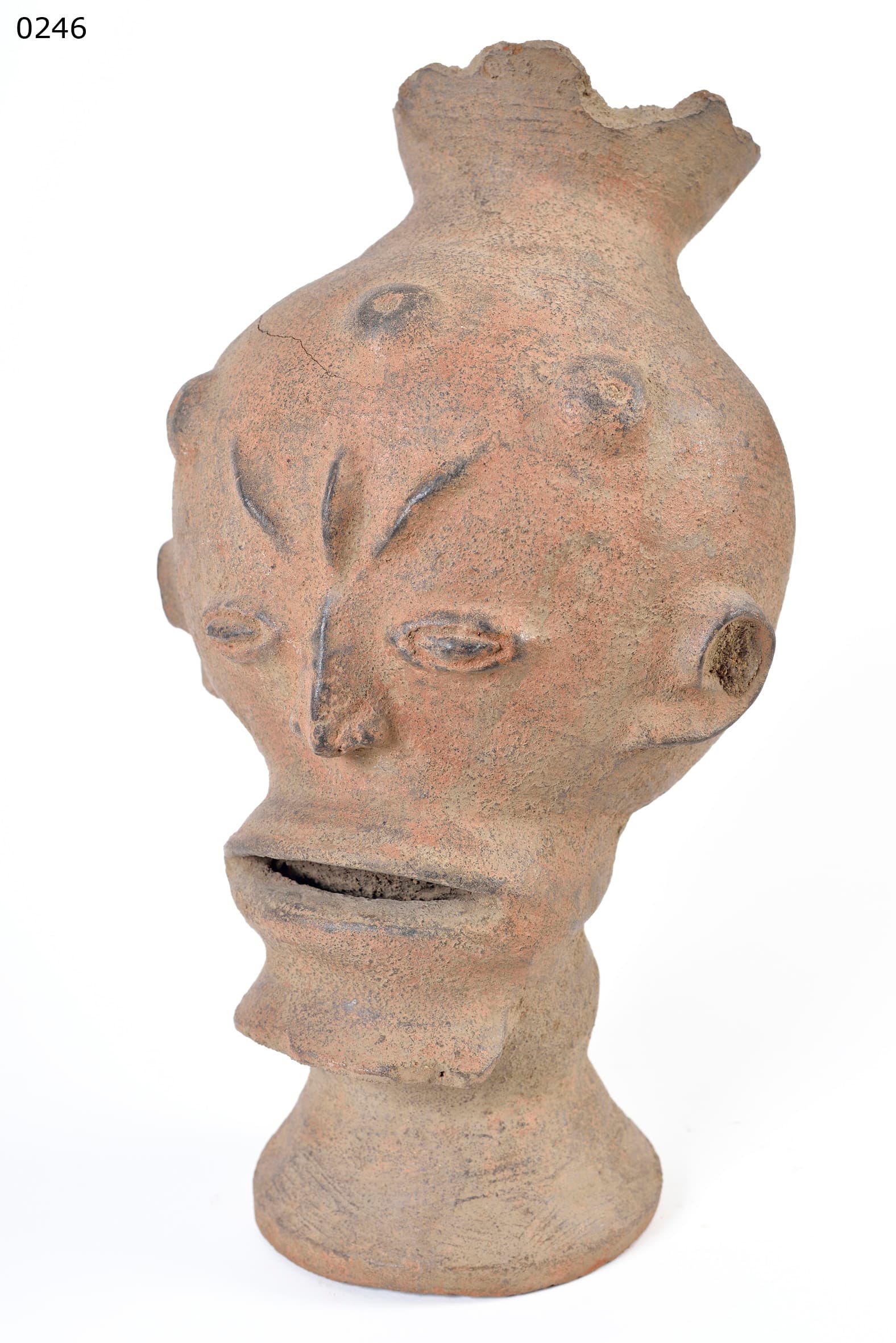
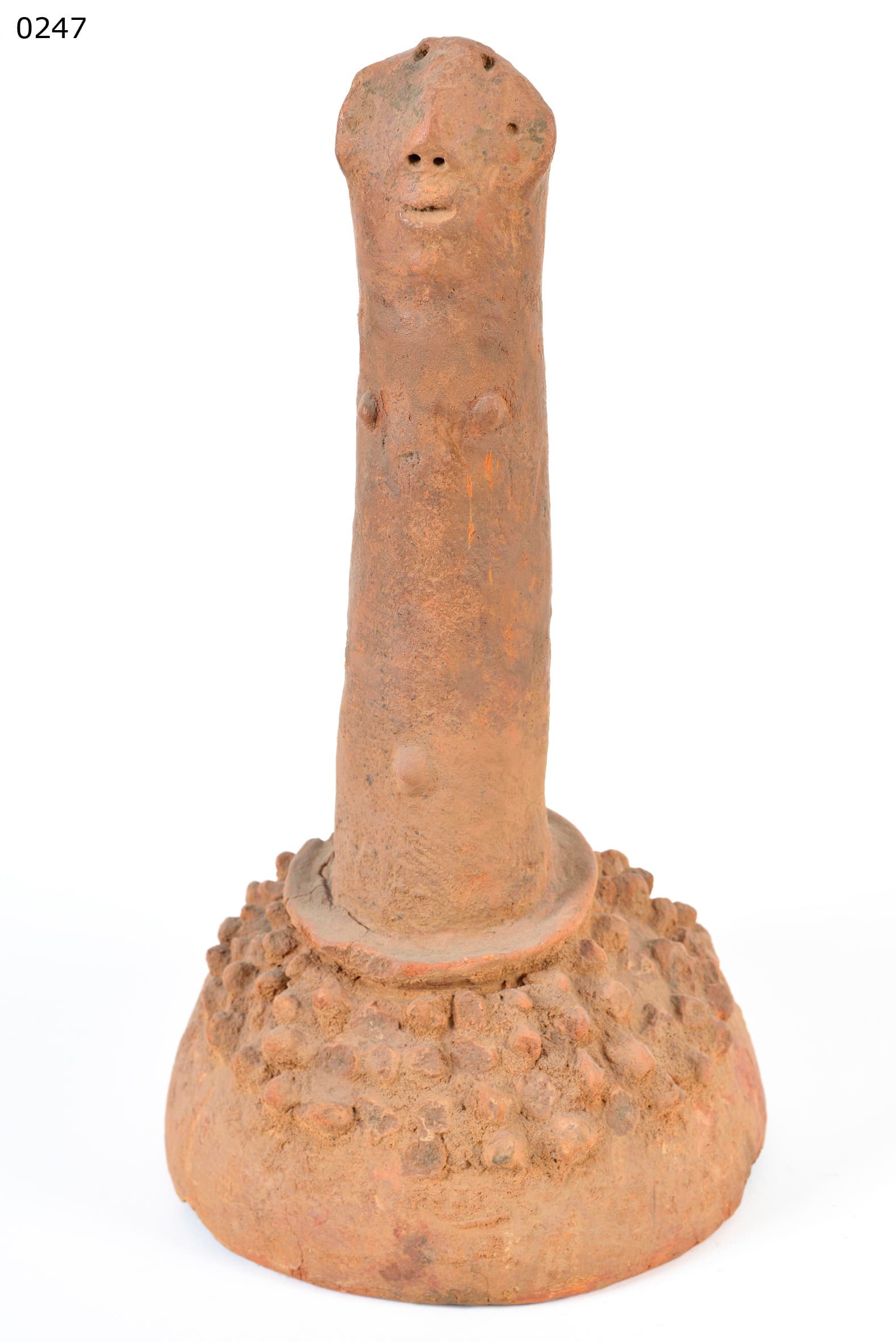
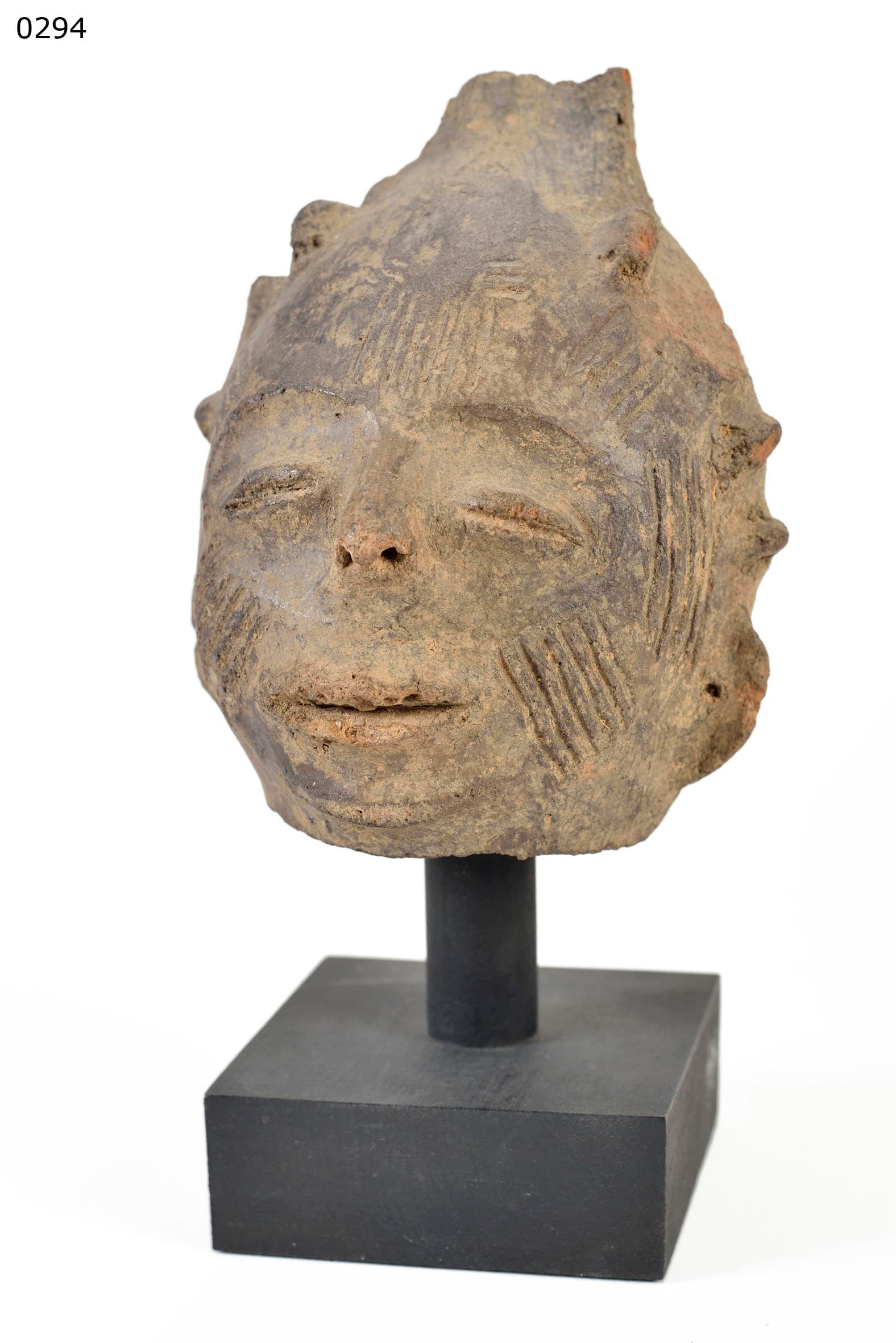
Diese beiden Terrakottaköpfe aus gebranntem Ton weisen die klassischen abgeflachten, mondförmigen Gesichter des Akan-Stils auf, mit zarten Kaffeebohnen-Augen, markant geschwungenen Brauen und stark beringten, säulenförmigen Hälsen. Beide weisen erhebliche archäologische Abnutzungserscheinungen auf, wobei der poröse Ton Schichten von Erde und Kalkablagerungen enthält.
1. Ästhetischer Stil und regionale Charakteristika
Bei diesen Stücken handelt es sich um typische mma- oder nsodie-Terrakotten, die eine der bedeutendsten Formen der Grabkunst bei den Akan-Völkern (einschließlich der Ashanti, Fante und Twifo) in Ghana darstellen. Die extreme Abstraktion des Gesichts in eine flache, scheibenartige Ebene wird oft so interpretiert, dass sie ein idealisiertes spirituelles Porträt gegenüber einer realistischen körperlichen Abbildung bevorzugt. Die tief eingeschnittenen Ringe um den Hals sind ein wichtiges kulturelles Motiv; sie werden traditionell als Fettrollen gedeutet, die bei den Akan als Zeichen für Wohlstand, Schönheit und aristokratisches Wohlergehen gelten.
2. Rituelle Funktion und religiöse Bedeutung
Diese Terrakotten wurden traditionell nach dem Tod einer königlichen oder elitären Person in Auftrag gegeben und von spezialisierten Töpferinnen angefertigt. Sie wurden nicht mit dem Leichnam begraben, sondern in einem heiligen Hain (asensie oder "Ort der Töpfe") außerhalb des Dorfes aufgestellt. Umgeben von Kochgefäßen und Trankopfern boten diese Statuen eine irdische Ruhestätte für die Seele des Ahnen und dienten als Mittelpunkt der jährlichen Trauerrituale, bei denen dem Verstorbenen Palmwein und Gebete dargebracht wurden.
3. Physische Patina und Altershinweise
Die starke Fragmentierung und die Oberflächenerosion stehen im Einklang mit einer Datierung aus dem 12. bis 18. Jahrhundert. Da die Terrakotta in einem Waldschrein unter freiem Himmel den Elementen ausgesetzt war und anschließend unter der sich ansammelnden Vegetation und Erde begraben wurde, hat sie immensen Umweltbelastungen standgehalten. Die Bruchstellen an den Hälsen sind alt und im Laufe der Zeit geglättet worden, und die Tonmatrix ist von unablösbaren, verkalkten Tonablagerungen durchdrungen.
Zusammenfassung
Diese Akan-Nsodie-Köpfe sind eindrucksvolle Miniaturmonumente ghanaischer königlicher Begräbnisriten. Ihre stilisierten Mondgesichter und die tiefgreifende Degradierung der Tonerde stellen eine greifbare Verbindung zur jahrhundertelangen Ahnenverehrung in den heiligen Hainen her.
KI-unterstützt erstellt aus Sammlungsgutachten, Objektfotografie und eigener Recherche, redaktionell geprüft. Fehler sind möglich — Hinweise darauf sind uns willkommen. Zum Verfahren →