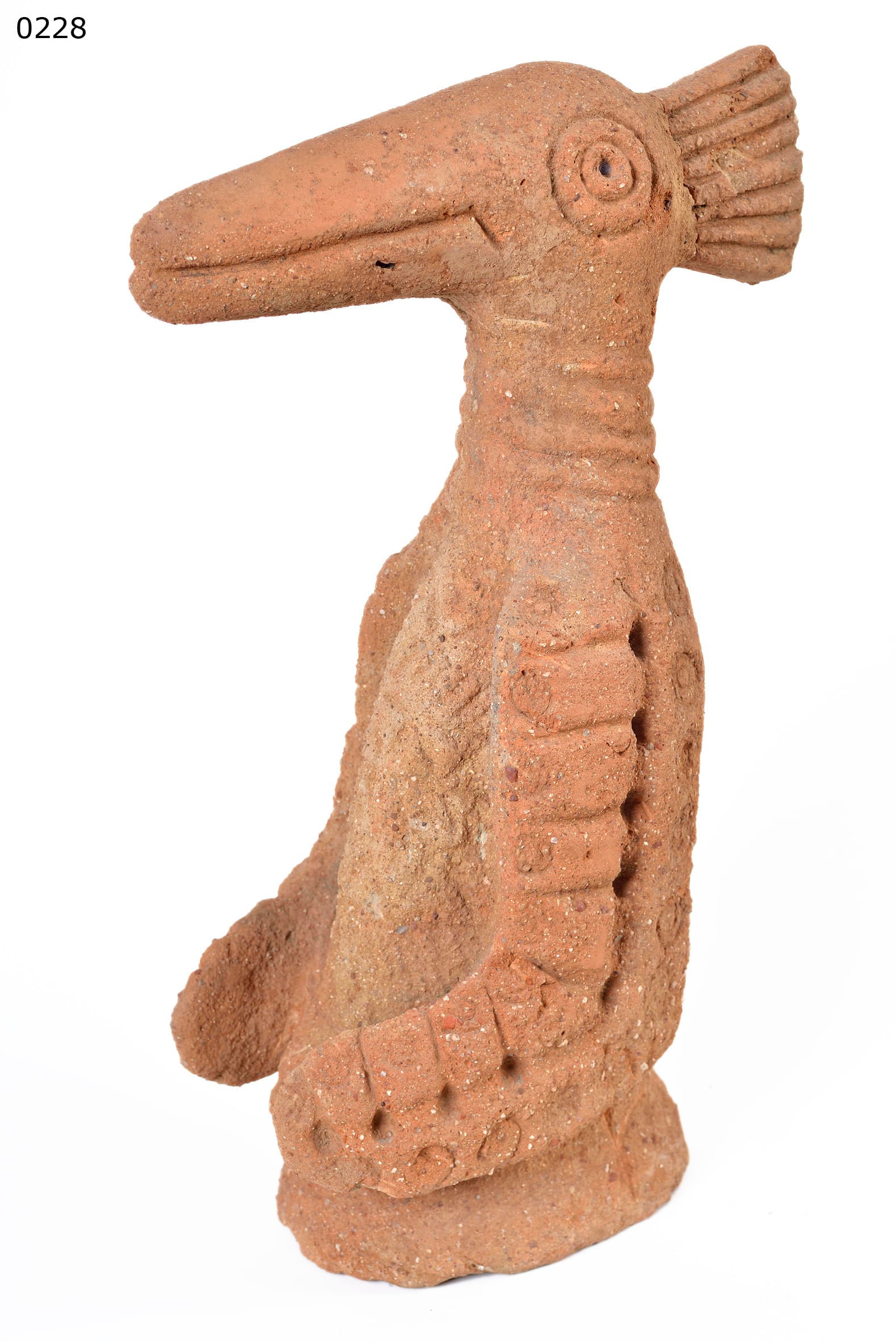
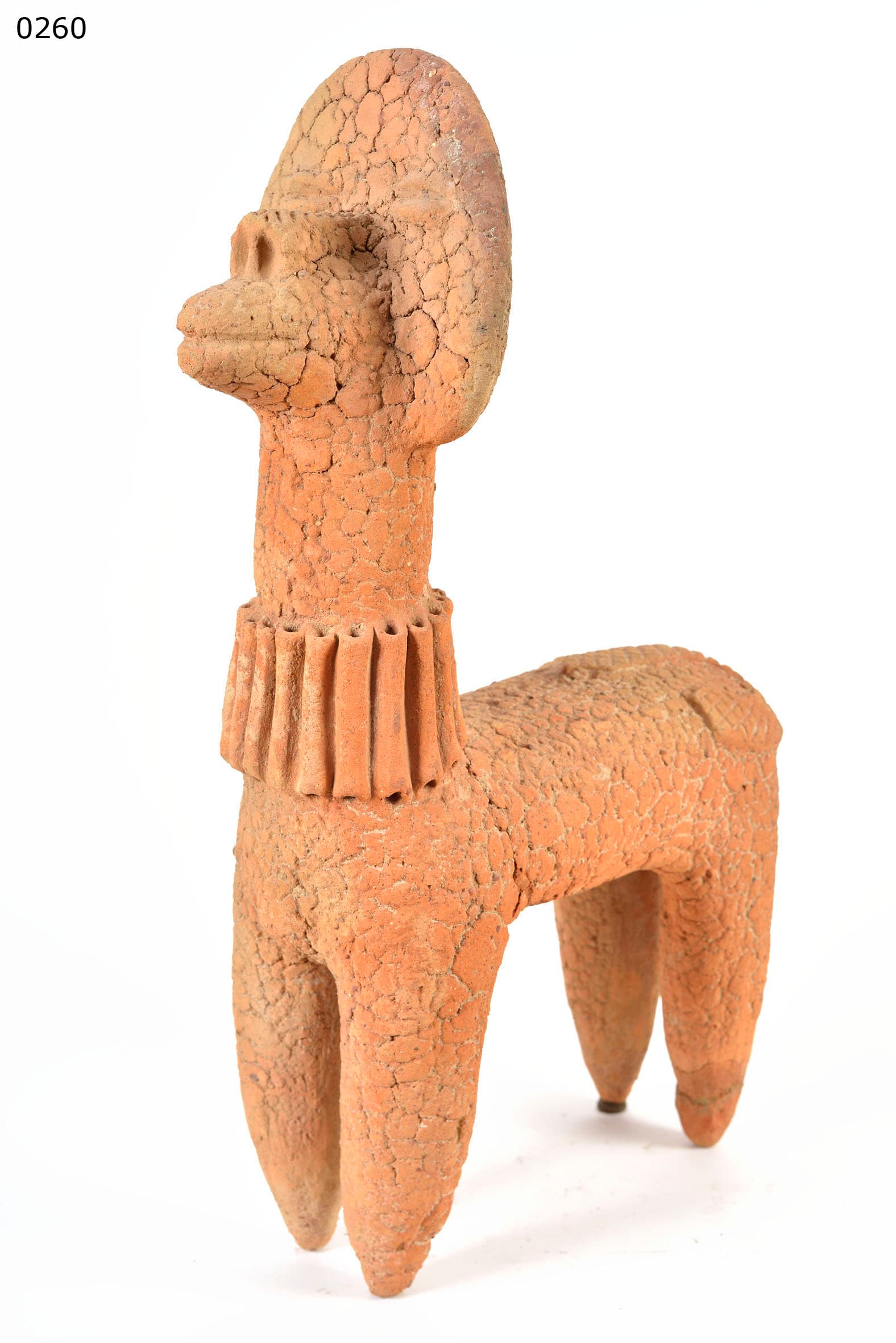
Dieser längliche Terrakottakopf zeigt den klassischen Djenne-Jeno-Stil mit einem vorspringenden, stilisierten Kinn, tiefliegenden, eingeschnittenen Kaffeebohnenaugen und modellierten Gesichtskonturen. Der alte Ton ist stark mit einer trockenen, verkalkten irdenen Patina überzogen und zeigt deutliche archäologische Verwitterungsspuren.
1. Ästhetischer Stil und regionale Charakteristika
Dieses Stück ist ein klassisches Merkmal der Antike des Binnen-Niger-Deltas (Djenne-Jeno), einer Zivilisation, die lange vor dem Kontakt mit Europa in Zentral-Mali blühte. Der Künstler hat einen stark idealisierten, transzendenten Ausdruck erreicht, indem er das Gesicht radikal verlängerte und das Kinn nach vorne schob. Die Augen, die durch Pressen und Einschneiden in den nassen Ton entstehen, werfen tiefe Schatten, die der Figur eine düstere, in sich gekehrte Schwere verleihen. Diese Streckung ist ein Merkmal der malischen Antike und unterscheidet sich völlig von dem Naturalismus der südnigerianischen Terrakotten.
2. Rituelle Funktion und religiöse Bedeutung
Diese Terrakottafiguren, die in den alten städtischen Zentren und in den Überschwemmungsgebieten des Niger ausgegraben wurden, spielten eine zentrale Rolle im religiösen und häuslichen Leben der Menschen in Djenne. Sie wurden häufig in die Wände oder Fundamente von Lehmziegelhäusern eingelassen oder auf Hausaltären aufgestellt. Sie dienten als schützende Ahnenfiguren und wurden angerufen, um die katastrophalen Krankheiten und Seuchen abzuwehren, die in der Vergangenheit das dicht besiedelte Delta heimsuchten, und um die Fruchtbarkeit der umliegenden Überschwemmungsgebiete zu gewährleisten.
3. Physische Patina und Altersnachweis
Die Datierung auf das 12. bis 16. Jahrhundert wird durch den Zustand des gebrannten Tons stark unterstützt. Der ursprüngliche glatte Schlicker der Terrakotta ist durch das jahrhundertelange Vergraben in der sauren malischen Erde weitgehend verbraucht worden. Die gesamte Matrix ist nun hochgradig porös, mit mikroskopisch kleinen Wurzelspuren übersät und von einer verkalkten, unbeweglichen Kruste aus gehärteter Erde umgeben. Dieser Grad der Mineralisierung und des Materialabbaus spricht für eine archäologische Herkunft.
Zusammenfassung
Dieser Kopf aus Djenne ist ein tiefgründiges Relikt der frühesten städtischen Zivilisationen Westafrikas. Seine elegante, langgestreckte Abstraktion und seine charakteristische archäologische Patina machen ihn zu einem bedeutenden Zeugnis der alten malischen spirituellen Kunstfertigkeit.
KI-unterstützt erstellt aus Sammlungsgutachten, Objektfotografie und eigener Recherche, redaktionell geprüft. Fehler sind möglich — Hinweise darauf sind uns willkommen. Zum Verfahren →