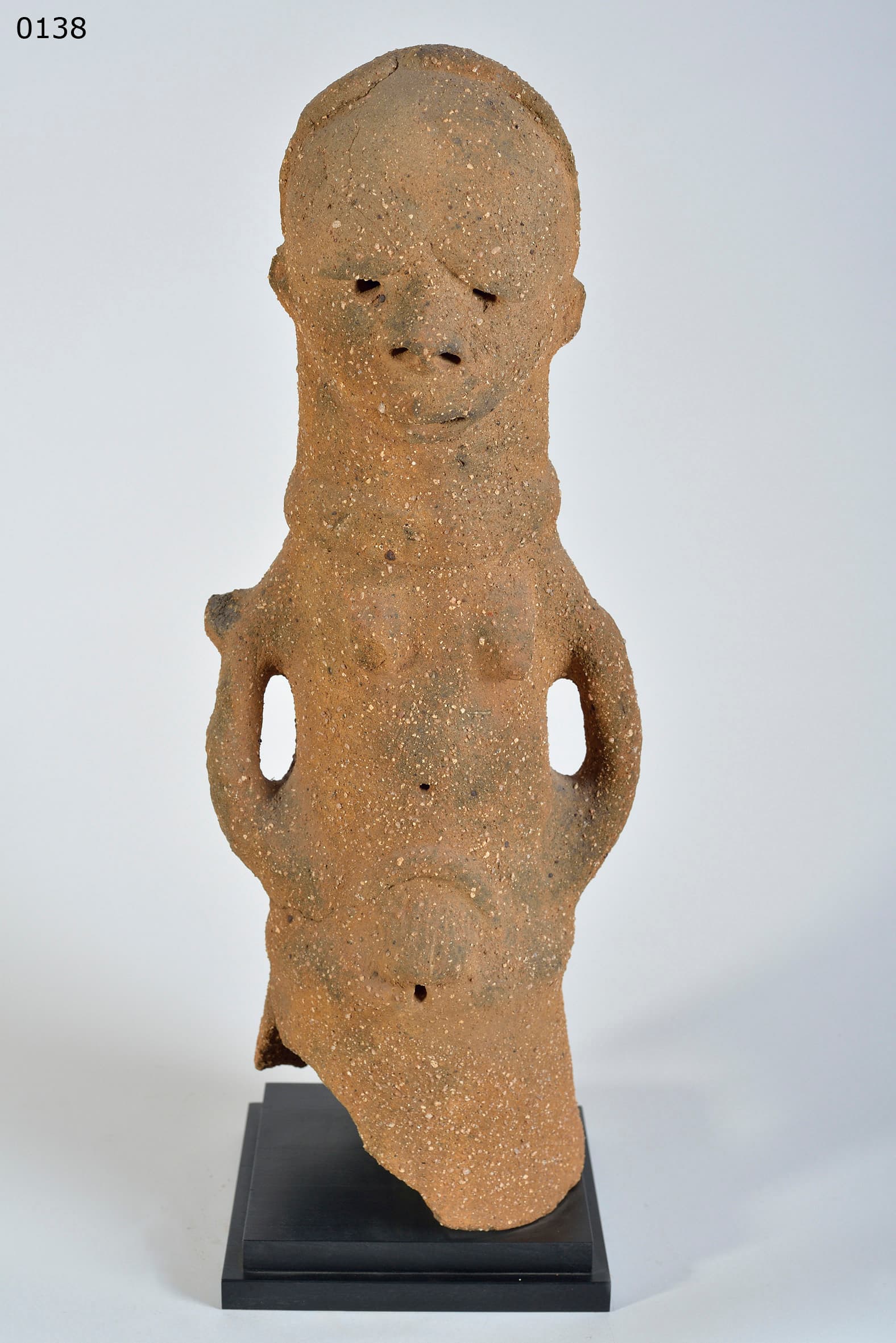
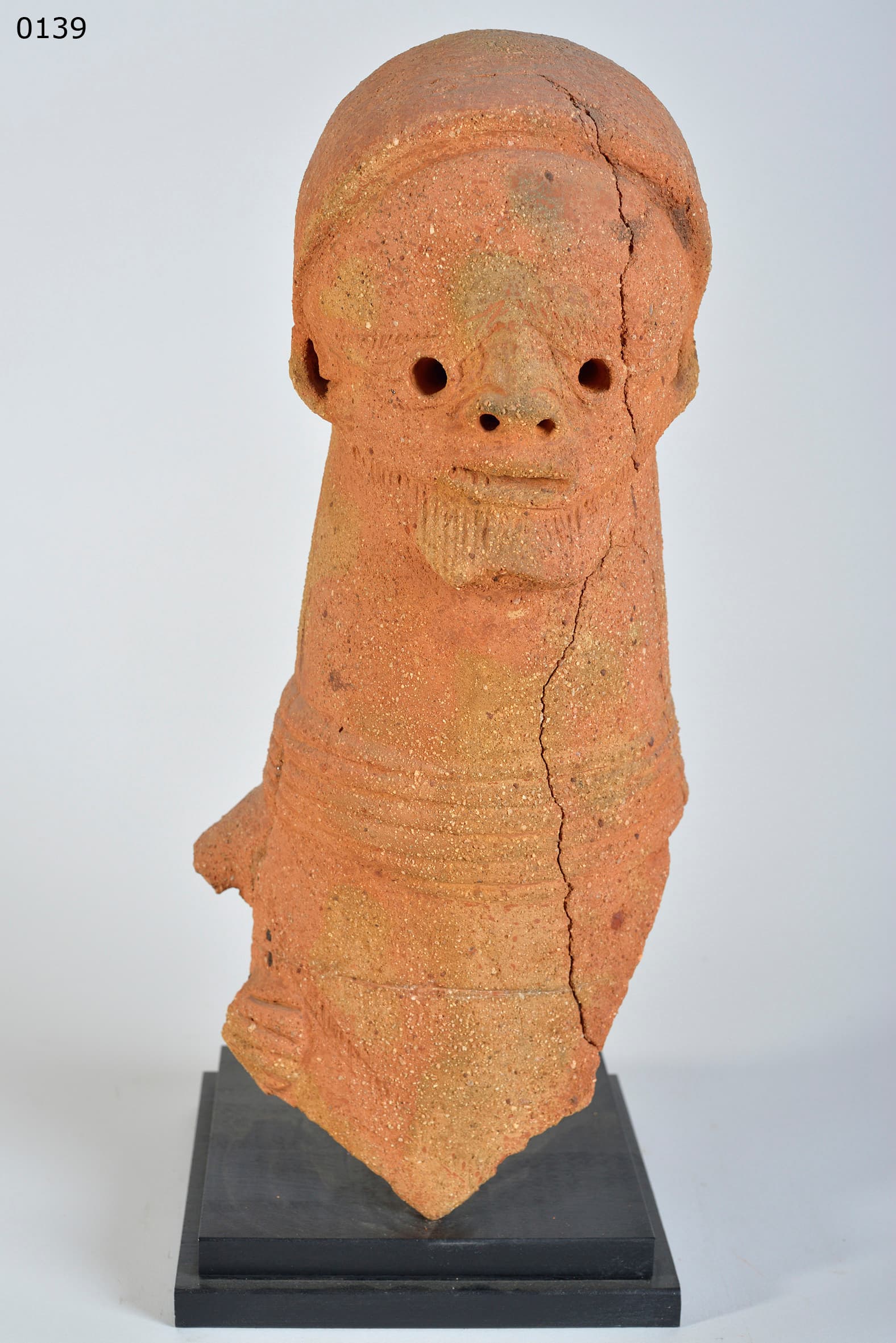
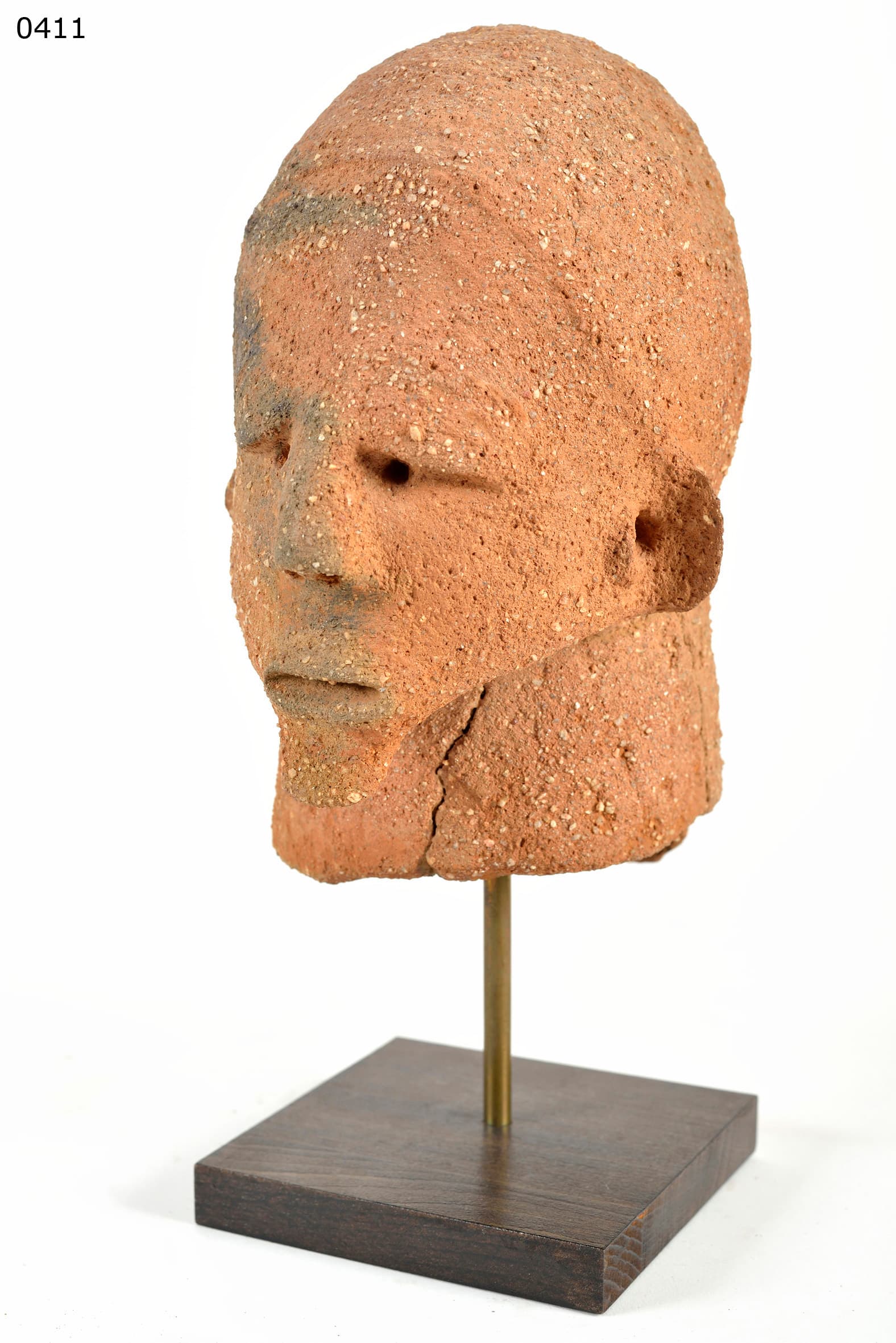
Dieser antike Terrakottakopf zeigt die charakteristische Physiognomie der Sokoto, mit einer schweren, überhängenden Stirn, die die durchbohrten, schlitzförmigen Augen vollständig verdeckt, und einem markanten, vorspringenden Kinn. Der gebrannte Ton ist tief erodiert und weist eine raue, quarzhaltige Textur auf, die mit alter Erde verschmolzen ist.
1. Ästhetischer Stil und regionale Eigenheiten
Die Sokoto-Terrakotten, die die archäologische Bühne mit der Nok-Kultur teilen, sind sofort an ihrer strengen, architektonischen Abstraktion zu erkennen. Der Bildhauer hat die Gesichtszüge auf schwere geometrische Flächen reduziert und tiefe horizontale Einschnitte für Augen und Mund verwendet, um intensive, kontrastreiche Schatten zu erzeugen, die eine spirituelle Schwere ausstrahlen. Das Fehlen aufwendiger Verzierungen in Verbindung mit den schweren, unnachgiebigen Brauen verleiht der Sokoto-Kunst eine brutalistische, beeindruckende Präsenz, die in der afrikanischen Antike einzigartig ist.
2. Rituelle Funktion und religiöse Bedeutung
Ursprünglich war dieser Kopf Teil eines Ganzkörperbildes, das in einem antiken Schrein oder Grabhügel aufgestellt wurde und als ewiger Anker für die Geister der Ahnen diente. In den frühen westafrikanischen Gesellschaften der Eisenzeit waren diese Figuren entscheidend für die Kommunikation mit dem Göttlichen. Da der Kopf traditionell als Träger des Schicksals und der spirituellen Essenz einer Person angesehen wird, hatte die Figur die Aufgabe, landwirtschaftliche Erträge zu sichern, die Siedlung zu schützen und katastrophale Krankheiten abzuwenden.
3. Physische Patina und Altershinweise
Die physischen Merkmale sprechen für ein Alter von rund 2.000 Jahren. Die stark temperierte Tonmatrix hat sich durch die jahrtausendelange Vergrabung erheblich verändert und einen porösen, verglasten Kern hinterlassen. Schichten von kalzifiziertem Lateritboden und Mineralblüten sind untrennbar mit den Vertiefungen der Terrakotta verschmolzen, ein archäologischer Zustand, der sich kaum künstlich nachbilden lässt und eine Gewinnung aus tiefem stratigrafischem Boden nahelegt.
Zusammenfassung
Dieser Sokoto-Kopf ist ein beeindruckendes, brutalistisches Überbleibsel einer der frühesten komplexen Zivilisationen in Subsahara-Afrika. Seine geometrische Strenge und seine tiefgreifende archäologische Verkrustung machen ihn zu einem wichtigen Stück alter nigerianischer Geschichte.
KI-unterstützt erstellt aus Sammlungsgutachten, Objektfotografie und eigener Recherche, redaktionell geprüft. Fehler sind möglich — Hinweise darauf sind uns willkommen. Zum Verfahren →