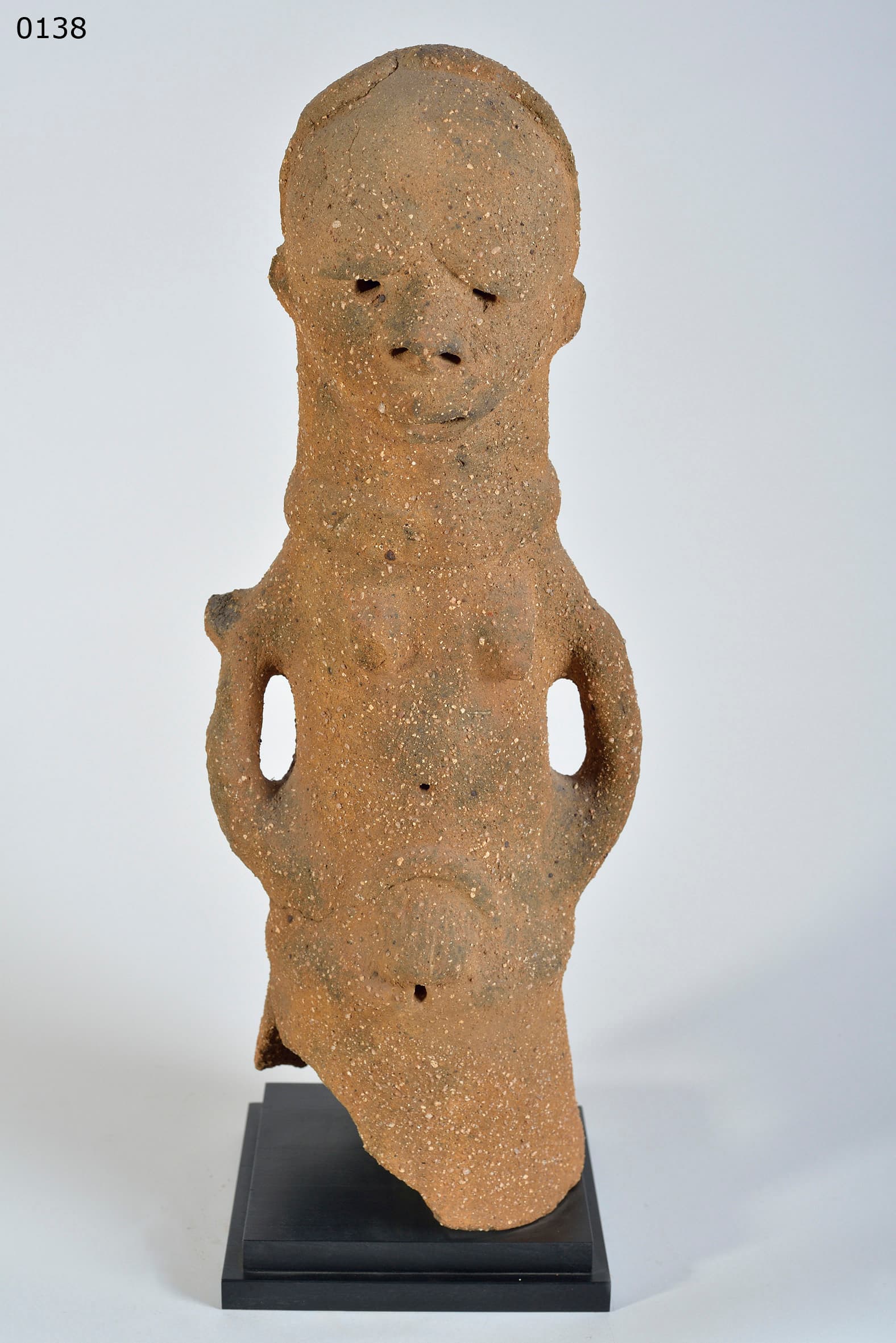
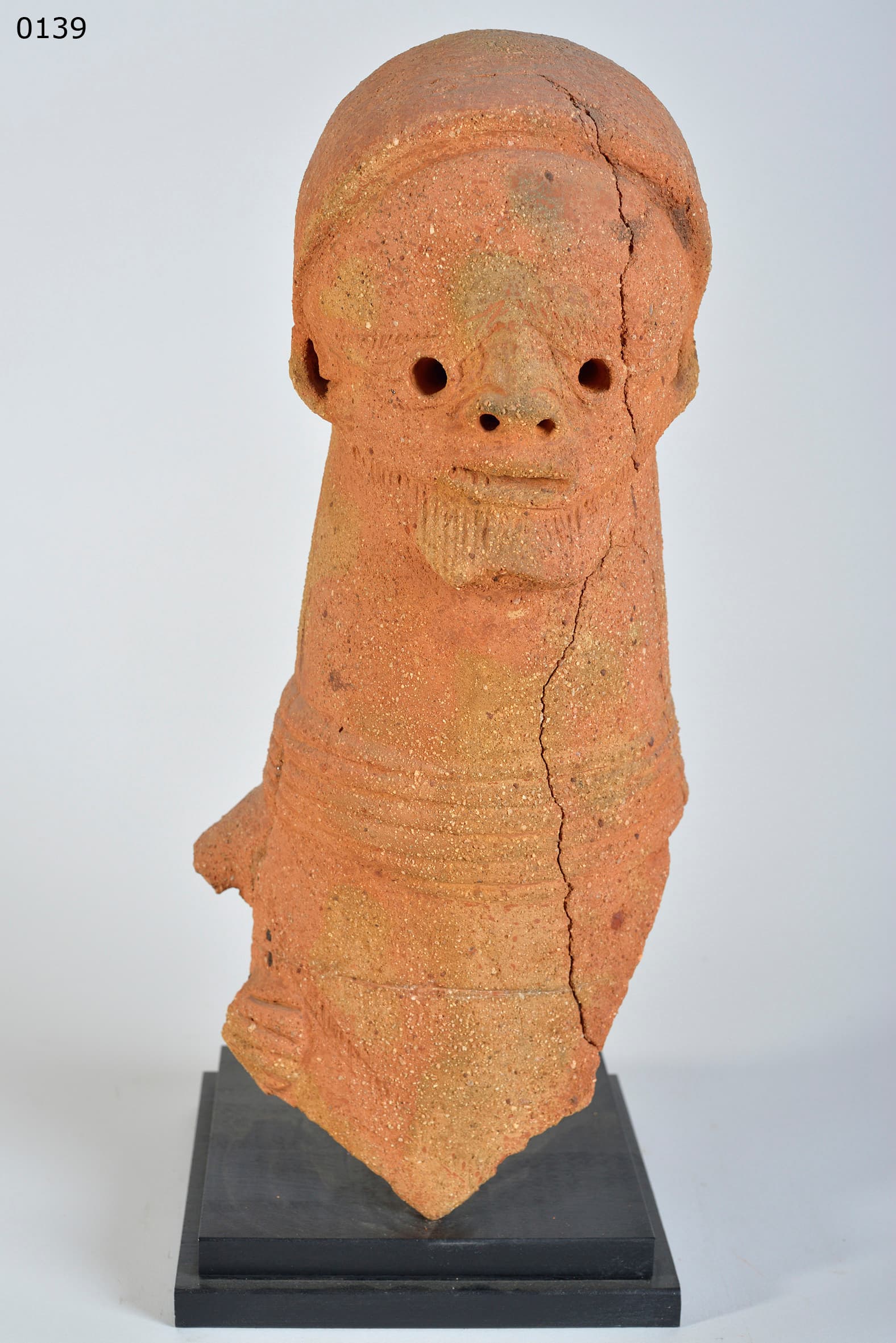
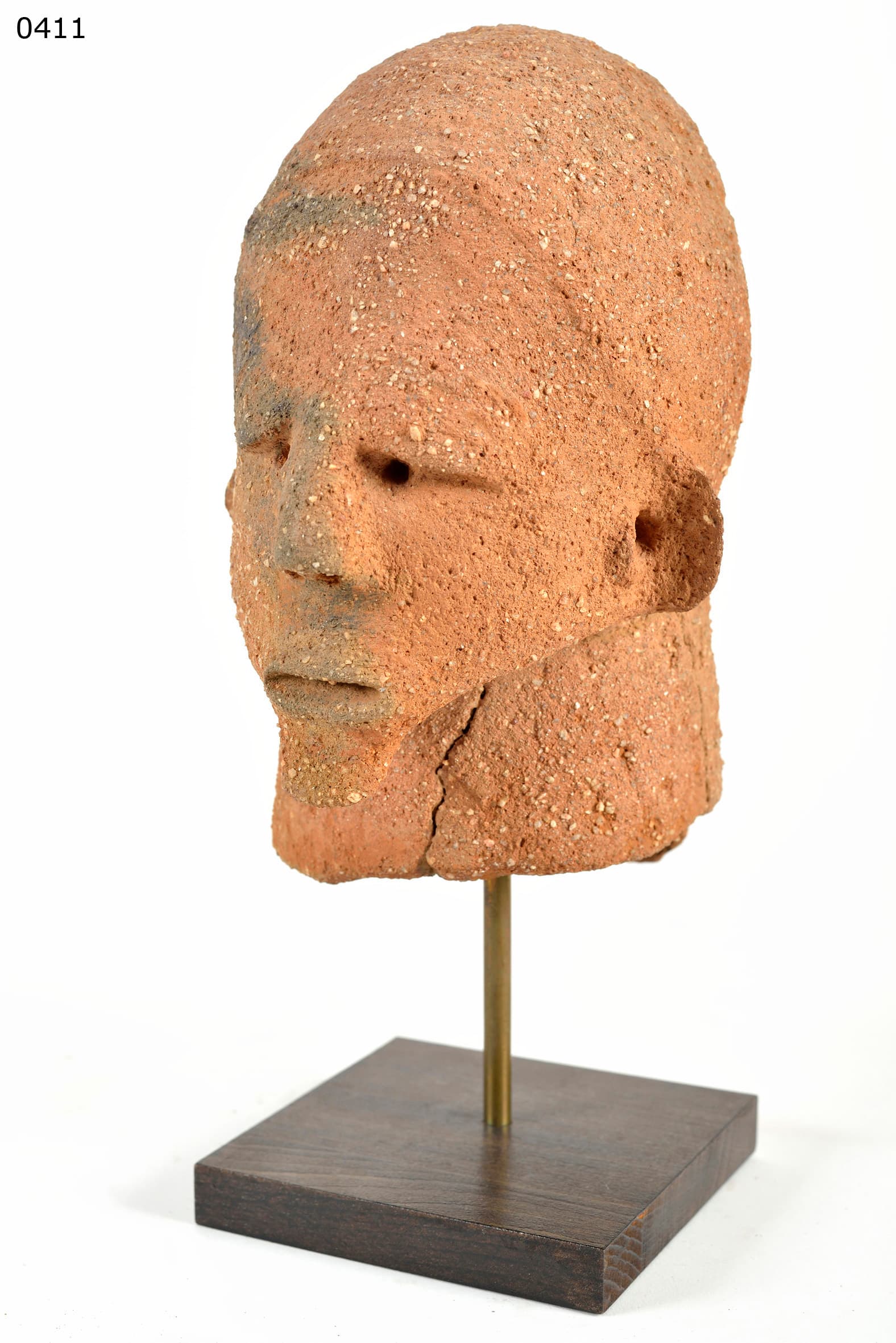
Dieser monumentale Terrakottakopf zeichnet sich durch eine strenge, überhängende Stirn aus, die tiefe Schatten auf durchbohrte, horizontal geschlitzte Augen und einen dicken, stark stilisierten Mund wirft. Die hochporöse, quarzvergütete Tonmatrix ist von einer alten Schicht kalzifizierter, rötlich-brauner Erde überzogen.
1. Ästhetischer Stil und regionale Züge
Die Sokoto-Ästhetik, die mit der alten Nok-Zivilisation in Nordnigeria einhergeht, ist für ihre kompromisslose, brutalistische Geometrie bekannt. Der Künstler hat das Gesicht aus massiven, sich überschneidenden Flächen konstruiert und dabei bewusst auf feine Details verzichtet, um eine schwere, architektonische Schwere zu erreichen. Durch das Einschneiden der Augen und des Mundes direkt in den dicken, nassen Ton entstehen intensive, kontrastreiche Hohlräume. Die starke Beimischung von Quarzsand verleiht dem Sokoto-Ton seine prägende, raue Textur.
2. Rituelle Funktion und religiöse Bedeutung
Diese Terrakottafiguren, die aus den Überresten prähistorischer Schreine und Grabhügel ausgegraben wurden, waren für die frühen Ackerbauern der Eisenzeit lebenswichtige Objekte der Fürbitte. Der Kopf, der als spirituelles Zentrum der menschlichen Existenz galt, stand im Mittelpunkt des Bildnisses. Diese Skulpturen, die zu Ehren der vergöttlichten Vorfahren aufgestellt wurden, dienten als physische Gefäße für Geister, die den Auftrag hatten, Regen zu bringen, die Fruchtbarkeit der Ernten zu gewährleisten und katastrophale Plagen von der Gemeinschaft abzuwehren.
3. Physische Patina und Altersnachweis
Der physische Zustand dieses Kopfes stützt die Annahme eines Alters von rund 2.000 Jahren. Der niedrig gebrannte Ton war extremen Umweltbelastungen ausgesetzt, verglaste und wurde hochporös, als sich sein ursprünglicher Schlicker in der sauren Erde auflöste. Mikroskopische Wurzelabdrücke und dicke, nicht entfernbare Schichten kalzifizierter Lateriterde sind chemisch in die Vertiefungen der Augen und des Mundes eingeschmolzen, ein deutliches archäologisches Indiz, das für eine Gewinnung des Kopfes aus tiefen stratigrafischen Schichten spricht.
Zusammenfassung
Dieser Sokoto-Kopf, ein bemerkenswertes Zeugnis des prähistorischen Westafrikas, strahlt eine Aura geistiger Autorität aus. Seine schweren, brutalistischen Flächen und die ausgeprägten archäologischen Verkrustungen machen ihn zu einem bedeutenden historischen Objekt.
KI-unterstützt erstellt aus Sammlungsgutachten, Objektfotografie und eigener Recherche, redaktionell geprüft. Fehler sind möglich — Hinweise darauf sind uns willkommen. Zum Verfahren →