Diese drei hoch aufragenden, schmiedeeisernen Stäbe (Asen genannt) haben lange, schwere Mittelschäfte, die in breiten, schirmartigen runden Plattformen enden. Die Plattformen sind stark mit kleinen, geschmiedeten Eisenfiguren, Tieren und baumelnden Metallelementen verziert. Das Eisen ist gleichmäßig mit einer dicken, dichten und schuppigen rotbraunen Oxidation überzogen.
1. Ästhetischer Stil und regionale Merkmale
Diese Objekte gelten als charakteristische Beispiele der königlichen Fon-Schmiedekunst aus dem Königreich Dahomey (der heutigen Republik Benin). Der Asen verwendet die Struktur eines Regenschirms - ein universelles westafrikanisches Symbol für Königtum und Schutz - und ist aus schwerem, geschmiedetem Eisen gefertigt. Die Besonderheit der dahomeyschen Schmiedekunst zeigt sich in den komplexen Miniatur-Dioramen, die auf den Plattformen aufgebaut sind. Diese kleinen geschmiedeten Elemente fungieren als visuelle Sprichwörter oder spezifische Identifikationsmerkmale für den Verstorbenen und verwandeln einen schweren Eisenstab in eine zarte, erzählerische Skulptur.
2. Rituelle Funktion und Geheimbundkontext
Asen sind tragbare Gedenkaltäre, die bestimmten, elitären Vorfahren gewidmet sind. Nach einem Todesfall beauftragt die Familie einen Schmied mit dem Schmieden des Stabs, in den Symbole eingearbeitet werden, die den Beruf, den Charakter oder die Abstammung des Verstorbenen widerspiegeln. Die Stäbe werden direkt in den Boden der den Ahnen gewidmeten Schreinhäuser (dexoxo) eingepflanzt. Sie dienen als buchstäbliche Verbindung zwischen den Lebenden und den Toten; bei jährlichen Bräuchen werden Trankopfer aus Alkohol, Wasser und Tierblut direkt über die oberste Plattform gegossen, um die Ahnen zu "füttern" und ihren Segen zu erhalten.
3. Physische Patina und Altersnachweis
Eine Datierung dieser drei Asen in das 19. Jahrhundert wird durch ihren ausgeprägten metallurgischen Verfall nahegelegt. Das Eisen hat eine dicke, schwere und tief entsteinte Rostschicht aus Hämatit und Limonit entwickelt. Die zarten baumelnden Elemente und die kleinen Figuren auf den Plattformen sind stark korrodiert, und einige Kanten sind durch jahrzehntelange Oxidation und angesammelte Opfertränke abgestumpft oder verschmolzen. Dieser Grad an körnigem, organischem Rost spricht für eine langjährige Aufstellung in dahomeyschen Erdschreinen.
Zusammenfassung
Diese drei Fon Asen sind eindrucksvolle, monumentale Beispiele der erzählerischen Eisenschmiedekunst. Ihre hoch aufragenden, schirmartigen Formen und ihre tief oxidierte Opferpatina machen sie zu anschaulichen Zeugnissen der königlichen Ahnenverehrung im ehemaligen Königreich Dahomey.
KI-unterstützt erstellt aus Sammlungsgutachten, Objektfotografie und eigener Recherche, redaktionell geprüft. Fehler sind möglich — Hinweise darauf sind uns willkommen. Zum Verfahren →

Seltene Kraftfigur (verwendet in VOODOO-Zeremonien)
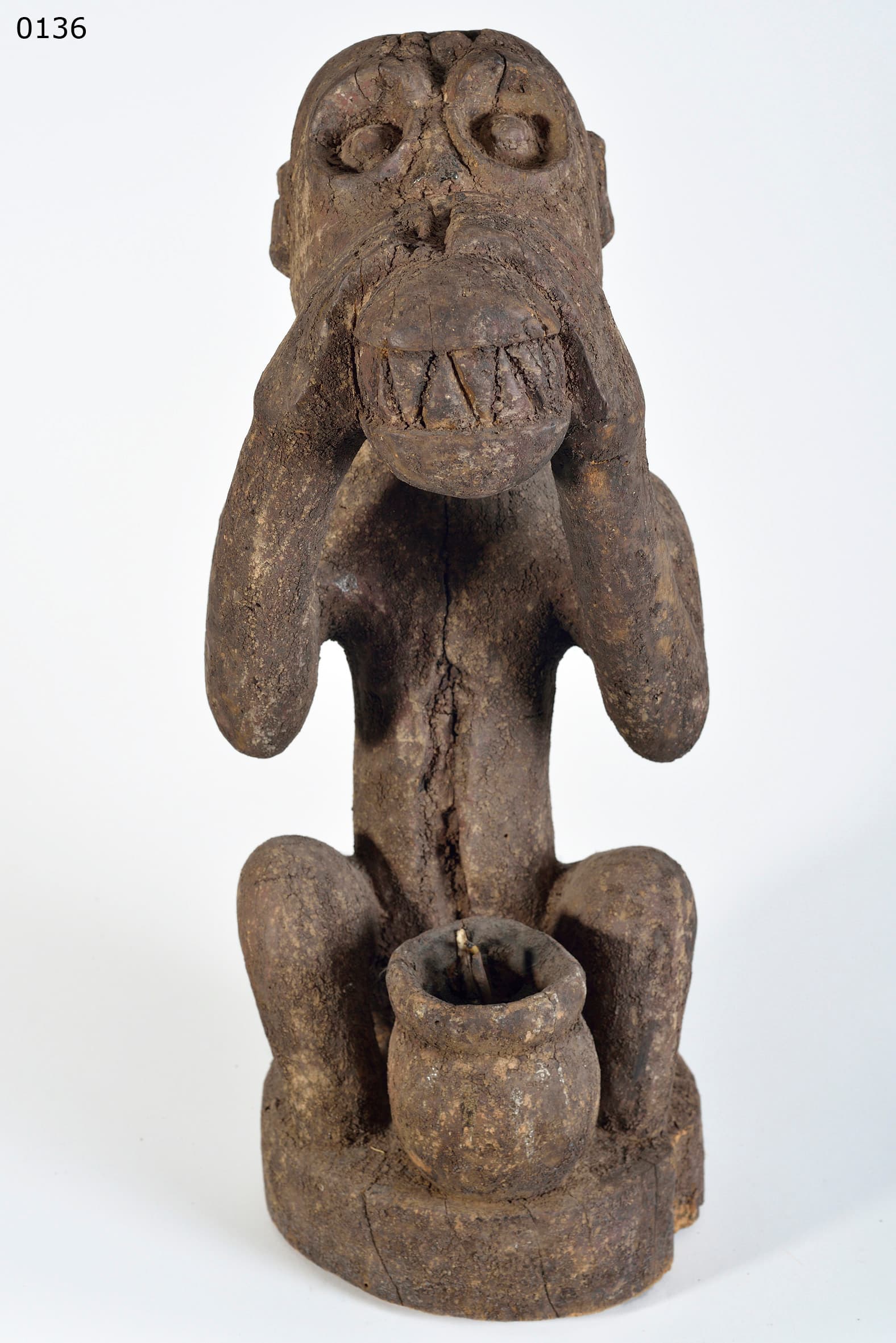
Affenschreinfigur
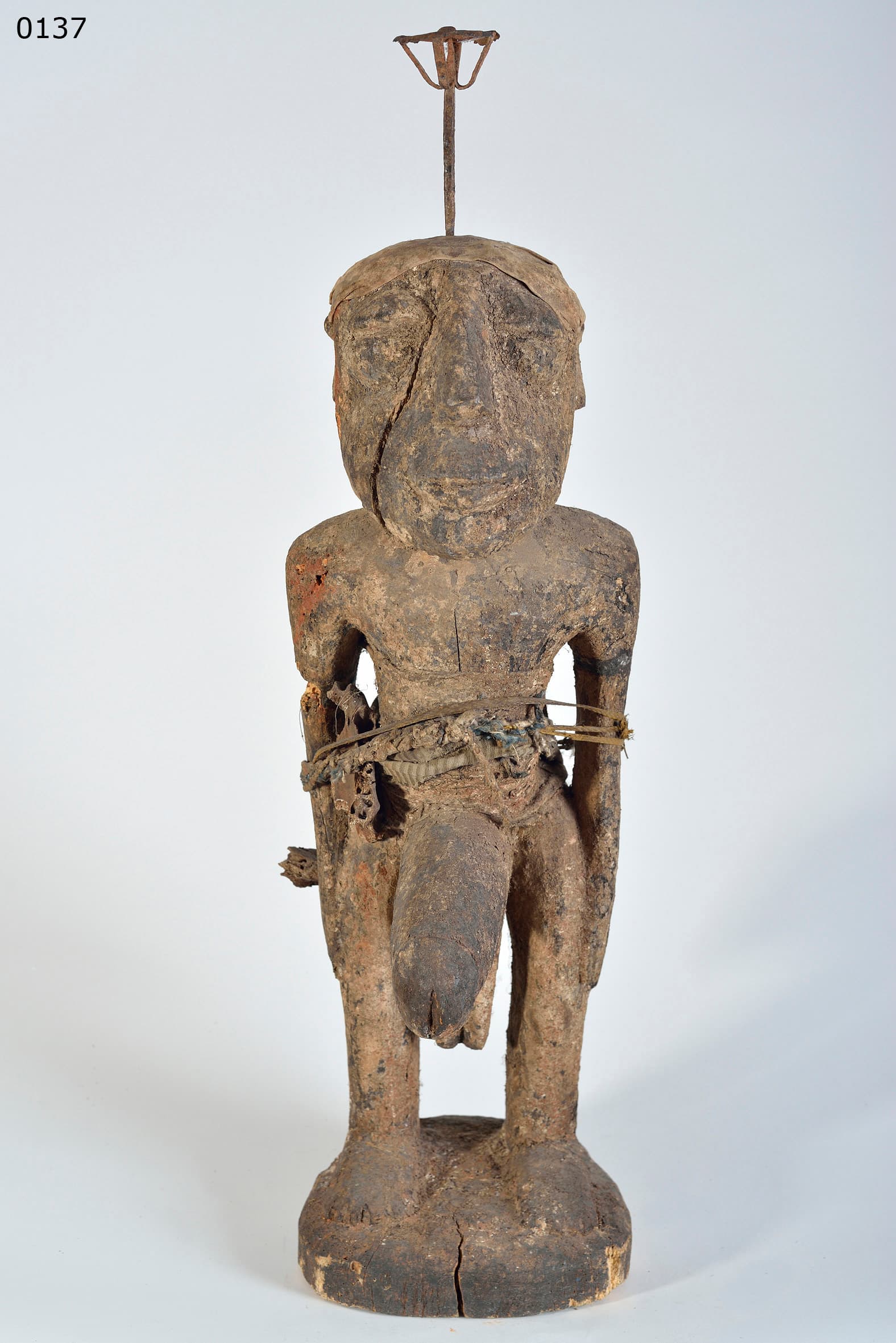
BOCIO-Statue (wird bei Voodoo-Zeremonien verwendet)
